August 11, 2026
The evolution of mining operations has reached a critical juncture where traditional extraction methods must adapt to emerging technological capabilities and environmental demands. As global mineral consumption continues expanding, mining companies face unprecedented pressure to enhance operational efficiency while minimising environmental footprints. This convergence of technological innovation and sustainability requirements is fundamentally reshaping the future of drilling and blasting and material extraction processes across the industry.
Modern mining operations increasingly rely on sophisticated technological frameworks that integrate automation, artificial intelligence, and precision-guided systems to optimise extraction processes. The transformation extends beyond simple mechanisation, encompassing comprehensive digital ecosystems that monitor, analyse, and adjust operational parameters in real-time. These technological advancements represent a paradigm shift from reactive mining practices toward predictive, data-driven mining operations.
Industry analysts project the global mining automation market will reach approximately $6.64 billion by 2033, reflecting a compound annual growth rate of 12% as operations increasingly adopt advanced technological solutions. This growth trajectory indicates widespread recognition that conventional mining approaches must evolve to meet contemporary operational and environmental challenges.
How Automation Reshapes Operational Frameworks
The integration of automated systems across mining operations has fundamentally altered traditional extraction methodologies. Modern drilling platforms operate with minimal human intervention, utilising programmed parameters to achieve consistent positioning accuracy and operational performance. These systems leverage advanced sensor networks and real-time feedback mechanisms to maintain optimal drilling conditions regardless of geological variations.
Automated drilling rigs demonstrate positioning accuracy within centimetre-level precision, compared to metre-level accuracy achieved through manual operations. This enhanced precision translates directly into improved fragmentation consistency and increased ore recovery rates across diverse geological formations.
Key automation adoption indicators across mining segments include:
• Surface operations: 60-70% automation implementation rate by 2030
• Underground operations: 40-50% automation adoption projected
• Large-scale operations (500+ employees): 80% automation integration
• Medium operations (100-500 employees): 55% adoption rate
• Small operations (<100 employees): 25% implementation due to capital constraints
Investment requirements for comprehensive automation infrastructure vary significantly based on operation scale and existing equipment compatibility. Large-scale operations typically require $5-15 million initial capital expenditure for full automation integration, while medium operations face $1-5 million investment thresholds. Small operations often pursue selective automation approaches, focusing on high-impact applications with shorter payback periods.
Furthermore, return on investment projections for automation implementation range from 18-36 months for large operations and 24-48 months for smaller facilities. These timeframes reflect operational efficiency gains, reduced labour costs, and improved safety metrics that collectively enhance profitability.
When big ASX news breaks, our subscribers know first
Remote Operation Technologies Enhance Safety Protocols
Distance-based operational control systems have emerged as critical safety enhancement mechanisms across mining operations. These technologies enable operators to manage AI & drilling innovations and blasting processes from protected positions, significantly reducing direct exposure to hazardous operational zones.
Wireless detonation networks utilise encrypted communication protocols to ensure reliable signal transmission across challenging geological environments. Modern systems achieve 99.8% signal reliability rates through redundant communication pathways and fail-safe protocols that prevent accidental detonation events.
Operator control centres integrate multiple monitoring systems including:
• Real-time visual monitoring: High-definition camera networks with thermal imaging capabilities
• Environmental condition tracking: Air quality, vibration, and noise level monitoring
• Equipment status displays: Comprehensive machinery health and performance metrics
• Emergency response protocols: Automated safety system activation and evacuation procedures
Safety distance protocols vary based on explosive charge magnitude and geological conditions. Typical operational distances range from 300-800 metres for surface operations and 150-400 metres for underground applications. These distances ensure operator protection while maintaining effective operational oversight capabilities.
Moreover, companies implementing enhanced remote safety protocols have demonstrated significant potential for reducing workplace incidents through elimination of direct blast zone exposure. While specific incident reduction percentages vary by operation type and implementation scope, the fundamental safety principle of distance-based control provides measurable risk mitigation benefits.
Precision Enhancement Through Autonomous Systems
Autonomous drilling technologies have revolutionised positioning accuracy and operational consistency across diverse geological conditions. These systems integrate GPS-guided navigation, inertial measurement units, and real-time geological feedback mechanisms to achieve unprecedented drilling precision.
Real-time kinematic GPS systems provide centimetre-level positioning accuracy through continuous satellite correction signals. This technology enables automated drill rigs to maintain precise hole placement patterns regardless of terrain complexity or visibility conditions.
Autonomous drilling performance indicators:
| Metric | Autonomous Systems | Manual Operations |
|---|---|---|
| Positioning Accuracy | ±2-5 centimetres | ±0.5-2 metres |
| Drilling Speed Consistency | ±3% variation | ±15% variation |
| Hole Angle Precision | ±0.5 degrees | ±2-3 degrees |
| Daily Productivity | 15-25% increase | Baseline |
Geological feedback integration enables real-time parameter adjustment based on encountered rock characteristics. Penetration rate monitoring, torque analysis, and pressure sensor data provide continuous geological assessment that optimises drilling performance and bit life.
Additionally, these technological capabilities extend beyond simple automation, incorporating machine learning algorithms that adapt drilling parameters based on accumulated operational experience. Systems continuously refine their operational approaches, improving efficiency and equipment longevity through data-driven optimisation strategies.
Artificial Intelligence Applications in Operational Optimisation
Machine learning technologies have emerged as powerful tools for enhancing geological analysis and operational decision-making across mining operations. These systems process vast datasets to identify patterns and optimise operational parameters that exceed human analytical capabilities.
Geological analysis applications utilise AI algorithms to interpret drilling data, seismic information, and core sample analysis to predict rock characteristics and optimal fragmentation strategies. According to advanced drilling technology research, these predictive capabilities enable proactive operational adjustments that improve extraction efficiency and reduce operational risks.
AI performance metrics in geological applications:
| Application | Accuracy Rate | Improvement vs Manual |
|---|---|---|
| Rock Hardness Prediction | 85-92% | 25-35% improvement |
| Fragmentation Size Forecasting | 78-86% | 30-40% improvement |
| Ore Grade Estimation | 88-94% | 20-28% improvement |
| Equipment Failure Prediction | 82-89% | 45-55% improvement |
Predictive maintenance applications represent particularly valuable AI implementations, utilising sensor networks to monitor equipment health and predict potential failures before they occur. Vibration analysis, temperature monitoring, electrical current assessment, and fluid analysis provide comprehensive equipment health insights.
Furthermore, modern mining equipment generates approximately 2-5 terabytes of operational data daily, creating substantial datasets for machine learning algorithm training and refinement. This continuous data accumulation enables increasingly sophisticated predictive capabilities and operational optimisation strategies.
Operational Optimisation Benefits
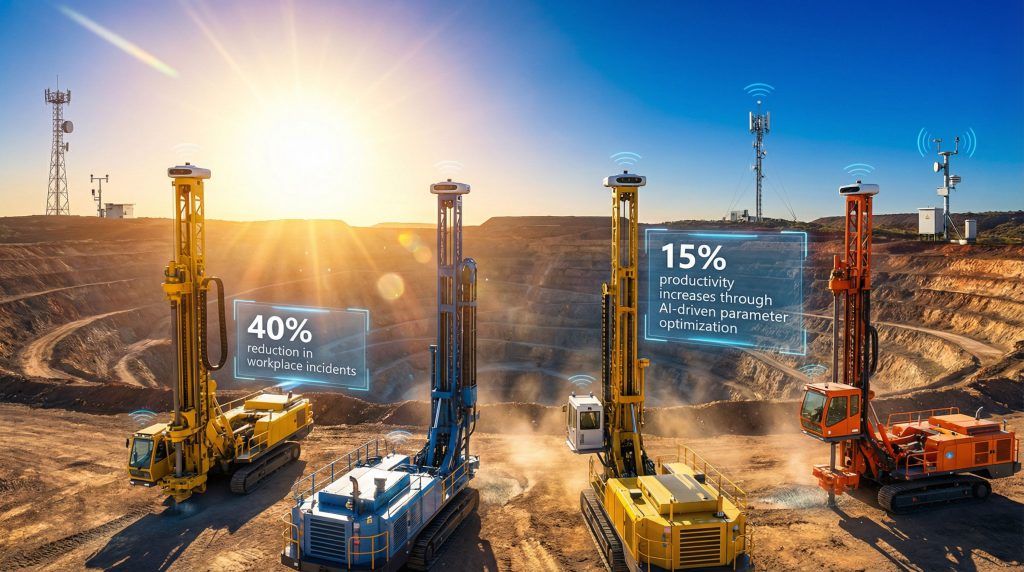
AI-driven parameter optimisation has demonstrated productivity increases of 15% through dynamic adjustment of drilling speed, pressure application, and bit selection based on real-time geological conditions.
Environmental Impact Reduction Through Advanced Technologies
Environmental stewardship has become a fundamental driver of technological innovation within mining operations. Advanced explosive formulations, noise reduction technologies, and emission control systems address growing regulatory requirements and community concerns regarding mining operations.
Environmentally conscious explosive formulations utilise biodegradable components and reduced toxic emissions compared to traditional compositions. These formulations maintain operational effectiveness while significantly reducing environmental impact and regulatory compliance requirements.
Emission reduction comparisons between explosive types:
| Explosive Type | NOx Emissions | Carbon Monoxide | Particulate Matter |
|---|---|---|---|
| Traditional ANFO | 100% (baseline) | 100% (baseline) | 100% (baseline) |
| Emulsion Explosives | 75-85% reduction | 60-70% reduction | 40-50% reduction |
| Green Formulations | 85-95% reduction | 70-85% reduction | 60-75% reduction |
| Non-explosive Alternatives | 95-99% reduction | 90-95% reduction | 80-90% reduction |
Non-explosive blasting alternatives, including expanding grouts and hydraulic splitting systems, provide rock fragmentation capabilities with minimal environmental impact. These technologies utilise chemical expansion or mechanical pressure to fracture rock formations without explosive detonation.
Expanding grout systems inject chemically reactive materials into drilled holes, creating controlled expansion pressure that fractures surrounding rock. This approach eliminates vibration, noise, and toxic emissions associated with traditional explosive methods while maintaining effective rock fragmentation capabilities.
However, vibration mitigation technologies utilise sophisticated timing sequences and electronic detonation systems to distribute energy release over extended time periods. Millisecond-delay detonators enable precise control over explosive sequence timing, reducing peak vibration levels while maintaining fragmentation effectiveness.
Digital Simulation Capabilities Transform Planning Processes
Virtual modelling technologies have revolutionised operational planning through comprehensive 3D geological representation and scenario analysis capabilities. Digital twin technologies enable extensive testing and optimisation without physical resource consumption or environmental impact.
Advanced geological modelling incorporates subsurface imaging, core sample analysis, and historical extraction data to create detailed virtual representations of mining areas. These models enable comprehensive analysis of extraction strategies, equipment requirements, and environmental impact assessments.
Cost comparison: Virtual testing vs physical trials
| Testing Approach | Initial Investment | Per-Test Cost | Time Requirements |
|---|---|---|---|
| Physical Testing | $50,000-200,000 | $15,000-40,000 | 2-6 weeks |
| Virtual Simulation | $100,000-500,000 | $500-2,000 | 2-5 days |
| Hybrid Approach | $75,000-350,000 | $8,000-20,000 | 1-3 weeks |
Scenario modelling capabilities enable comprehensive analysis of geological variations, equipment performance parameters, and operational strategies before implementation. Multi-variable analysis examines thousands of potential operational scenarios to identify optimal approaches for specific geological conditions.
Additionally, real-time monitoring integration enables continuous model refinement based on actual operational performance. Sensor feedback loops validate model predictions and incorporate new data to improve future planning accuracy.
Digital twin technologies reduce on-site testing costs by 60-80% through virtual scenario analysis, while improving planning accuracy and reducing operational risks.
The next major ASX story will hit our subscribers first
Economic Benefits Drive Widespread Technology Adoption
Financial analysis demonstrates compelling economic advantages for advanced technology adoption across mining operations. Productivity improvements, operational cost reductions, and enhanced safety metrics create substantial return on investment opportunities.
Investment analysis by operation scale:
| Operation Size | Initial Investment | Annual Savings | Payback Period |
|---|---|---|---|
| Large (500+ employees) | $10-25 million | $8-15 million | 15-30 months |
| Medium (100-500) | $3-8 million | $2-5 million | 18-36 months |
| Small (<100) | $500k-2 million | $400k-1.2 million | 24-48 months |
Productivity improvements through automation integration typically demonstrate 15-25% throughput increases while reducing operational costs by 20-35%. These improvements result from enhanced equipment utilisation, reduced downtime, and optimised operational parameters.
Resource recovery optimisation represents significant economic benefits through improved ore grade extraction and waste reduction. Precise fragmentation control increases valuable mineral recovery rates by 8-15% while reducing processing requirements and environmental remediation costs.
Consequently, labour cost optimisation through automation reduces personnel requirements for dangerous operations while enabling workforce redeployment to higher-value activities. Skilled technicians manage automated systems rather than performing manual tasks, improving both safety and operational efficiency.
Safety Enhancement Through Technological Innovation
Advanced safety monitoring systems have transformed workplace protection across mining operations through real-time hazard detection and automated response capabilities. Integrated sensor networks continuously monitor environmental conditions, equipment status, and personnel safety metrics.
Hazardous environment monitoring systems track multiple safety parameters simultaneously:
• Atmospheric conditions: Oxygen levels, toxic gas concentrations, explosive gas detection
• Structural stability: Ground movement, pressure changes, support structure integrity
• Equipment status: Hydraulic pressure, electrical systems, mechanical component health
• Personnel tracking: Location monitoring, emergency communication, health status alerts
Personal protective equipment integration incorporates smart technologies for enhanced worker protection and monitoring. Advanced helmet systems include communication devices, environmental sensors, and biometric monitoring capabilities that provide real-time health and safety assessment.
Emergency response automation enables rapid system shutdown and evacuation procedures when hazardous conditions are detected. Automated safety protocols activate protective measures within seconds of threat detection, significantly reducing response time compared to manual intervention.
Integrated monitoring systems have demonstrated significant potential for reducing safety incidents through proactive hazard detection and automated response capabilities, though specific reduction percentages vary based on implementation scope and baseline safety conditions.
Training and simulation programs utilise virtual reality technologies for hazard recognition and emergency response preparation. Digital training environments enable workers to experience realistic hazardous scenarios without actual risk exposure, improving preparedness and response capabilities.
Communication Infrastructure Enables Remote Operations
Sophisticated communication networks provide the technological foundation for remote mining operations through reliable data transmission and control system integration. Through-rock communication technologies overcome signal transmission challenges in underground environments.
Communication system performance by geological conditions:
| Environment | Signal Range | Reliability Rate | Data Speed |
|---|---|---|---|
| Surface Operations | 5-15 kilometres | 99.5-99.9% | 100+ Mbps |
| Shallow Underground | 1-3 kilometres | 97-99% | 50-100 Mbps |
| Deep Underground | 500m-1.5km | 94-98% | 10-50 Mbps |
| Extreme Conditions | 200-800 metres | 90-95% | 5-25 Mbps |
Wireless network integration enables comprehensive connectivity across mining sites, supporting automated equipment control, real-time monitoring, and personnel communication systems. Redundant communication pathways ensure operational continuity even when primary systems experience disruption.
Emergency communication capabilities maintain connectivity during critical situations through dedicated backup systems and satellite communication links. These systems provide essential safety communication when standard networks are compromised or unavailable.
However, cybersecurity protocols protect operational technology systems from digital threats through encrypted communication channels, access control systems, and network monitoring technologies. Mining operations increasingly recognise cybersecurity as essential infrastructure protection rather than optional enhancement.
Future Technologies Define Next-Generation Mining
Emerging technological developments promise further transformation of mining operations through quantum computing, advanced robotics, and sustainable energy integration. These technologies represent the next evolution in mining operational capabilities and efficiency, reflecting broader mining industry evolution trends.
Technology readiness assessment for emerging innovations:
| Technology | Current Status | Commercial Viability | Implementation Timeline |
|---|---|---|---|
| Quantum Computing | Research Phase | 2030-2035 | 8-12 years |
| Advanced AI/ML | Early Deployment | 2025-2028 | 2-5 years |
| Autonomous Robotics | Pilot Programs | 2026-2030 | 3-7 years |
| Sustainable Energy | Active Integration | 2024-2027 | 1-4 years |
Quantum computing applications in geological modelling promise unprecedented computational capabilities for complex subsurface analysis and operational optimisation. These systems could process geological datasets thousands of times faster than current computing infrastructure.
Advanced robotics development focuses on complex underground operations that currently require human intervention. Next-generation robotic systems will perform maintenance, inspection, and emergency response activities in hazardous environments without human exposure.
Industry collaboration accelerates technology development through shared research initiatives, standardisation efforts, and cross-industry knowledge transfer. Mining companies increasingly partner with technology firms, research institutions, and equipment manufacturers to develop innovative solutions.
The global drilling and blasting market is projected to reach $6.64 billion by 2033, driven by technological advancement adoption and growing mineral extraction demand worldwide.
Workforce Development for Future Operations
Workforce transformation accompanies technological evolution through comprehensive training programs and educational partnerships. Future mining professionals require competencies in:
- Digital system management: Operating and troubleshooting automated equipment
- Data analysis capabilities: Interpreting sensor data and performance metrics
- Cybersecurity awareness: Protecting operational technology systems
- Environmental monitoring: Understanding and managing environmental impact systems
- Safety system integration: Coordinating multiple safety and monitoring technologies
Educational institutions increasingly develop mining-specific technology programs that prepare workers for advanced operational environments. These programs combine traditional mining knowledge with modern technological competencies essential for future operations.
Environmental Sustainability Integration
Environmental considerations continue driving technological innovation toward sustainable mining practices. For instance, green iron production initiatives demonstrate how advanced technologies support both operational efficiency and environmental responsibility.
According to innovative blasting research, sustainable drilling and blasting approaches offer significant potential for reducing environmental impact while maintaining operational effectiveness.
Understanding Modern Drilling and Blasting Technologies
How do automated systems compare to traditional methods regarding operational accuracy?
Automated drilling systems achieve positioning accuracy within 2-5 centimetres compared to 0.5-2 metre precision levels in manual operations. This enhanced accuracy results in more consistent rock fragmentation patterns, improved ore recovery rates, and reduced operational variability across diverse geological conditions.
What are the main barriers preventing technology adoption in smaller mining operations?
Capital investment requirements, technical expertise availability, and integration complexity with existing infrastructure represent primary challenges for smaller operators. Initial investment thresholds of $500,000-2 million often exceed smaller operations' capital availability, while ongoing technical support requirements demand specialised personnel that may be difficult to recruit or retain.
How do environmental regulations influence technology selection decisions?
Stricter emission standards, noise restrictions, and community impact requirements drive adoption of low-impact explosives, advanced noise reduction technologies, and comprehensive environmental monitoring systems. Regulatory compliance increasingly favours technologies that demonstrate measurable environmental impact reduction and community protection capabilities.
What role does predictive maintenance play in operational efficiency?
Predictive maintenance systems utilise sensor networks and machine learning algorithms to forecast equipment failures before they occur, potentially reducing unplanned downtime by 20-30%. These systems monitor vibration patterns, temperature variations, and performance metrics to schedule maintenance activities during planned operational breaks rather than reactive emergency repairs.
How do virtual simulation technologies improve planning accuracy?
Digital twin technologies enable comprehensive scenario analysis without physical resource consumption, improving planning accuracy by 25-40% while reducing testing costs by 60-80%. Virtual models incorporate geological data, equipment specifications, and operational parameters to optimise extraction strategies before implementation.
The future of drilling and blasting operations will continue evolving through technological innovation, environmental responsibility, and operational efficiency improvements. These advancements represent fundamental shifts in how mining operations approach extraction challenges, safety requirements, and environmental stewardship.
Disclaimer: This analysis incorporates industry trends and technological developments that involve forecasting and speculation about future mining operations. Investment decisions should consider multiple factors beyond technological capabilities, including geological conditions, regulatory requirements, and economic conditions. Performance metrics and cost savings projections may vary significantly based on specific operational circumstances and implementation approaches.
Ready to Capitalise on Mining Technology Innovations?
Discovery Alert's proprietary Discovery IQ model provides real-time alerts on significant ASX mineral discoveries, empowering investors to identify opportunities in companies advancing mining technology and operational efficiency. Explore historic examples of how major discoveries can generate substantial returns by visiting our dedicated discoveries page, then begin your 14-day free trial to position yourself ahead of the market.