May 13, 2026

Understanding the Strategic Context Behind G7 Critical Minerals Coordination
The Geopolitical Chess Board of Resource Security
In an era defined by decarbonisation, advanced manufacturing, and technological rivalry, critical minerals have become the keystone of economic and national security planning. The Australia critical minerals G7 meeting represents a watershed moment in global resource diplomacy, as nations scramble for reliable access to these essential materials. China's striking dominance shapes the global landscape: current figures indicate that China controls between 47% and 87% of the world's refining capacity for essential materials such as copper, lithium, cobalt, graphite, and rare earth elements.
This overarching control creates a formidable chokepoint for international supply chains, particularly affecting sectors that underpin military defence, semiconductors, and renewable energy. Furthermore, recent developments underscore the urgency of developing a comprehensive critical minerals strategy.
Recent developments underscore the urgency. In January 2026, China began restricting exports of strategic rare earths and rare earth-containing permanent magnets to Japanese enterprises, alongside halting dual-use component exports to the Japanese military. This move draws a direct historical parallel to the 2010 rare earth embargo targeting Japan, which sent shockwaves through global markets, causing price surges and industrial slowdowns.
The G7—comprising the United States, United Kingdom, Japan, France, Germany, Italy, Canada, and the European Union—has thus elevated minerals diplomacy to a top-tier strategic issue. This intensification is driven by the West's acute dependency on Chinese refining capabilities, making supply chain resilience not just an economic concern but a vital security imperative.
Key Factors Driving Vulnerability:
- Dual-use materials: Many critical minerals serve both civilian and military ends, creating cross-sector risk profiles
- Strategic stockpile gaps: Few G7 nations hold adequate reserves of these materials, leaving vulnerabilities in the event of a supply cut
- Sectoral exposure: Defense aerospace and chip manufacturing require specific mineral grades, where substitution is often impossible
Australia's Emerging Role as the "Critical Minerals Superpower"
Australia's geology is rich with opportunity; its lithium, cobalt, and rare earth reserves rival the largest globally. Yet, a majority of these minerals currently depart its shores unprocessed, with China historically serving as the gateway for value-added refining. However, establishing Australia's strategic reserve could fundamentally alter this dynamic.
A landmark $US8.5 billion (AUD $12.7 billion) Australia-US agreement initiated in October 2025 signals a pivotal strategic shift. This arrangement launches a robust project pipeline designed to secure the West's access to vulnerable metals, including rare earths and lithium. Following this announcement, Europe, Japan, South Korea, and Singapore expressed partnership interest, aiming to diversify supply options and mitigate risk.
Australia's Strategic Pillars:
- Resource endowment: World-leading lithium (notably at Talison Lithium's Greenbushes), rare earths, and copper reserves
- Processing gap: Minimal domestic refining; China refines the majority of Australia's critical mineral output
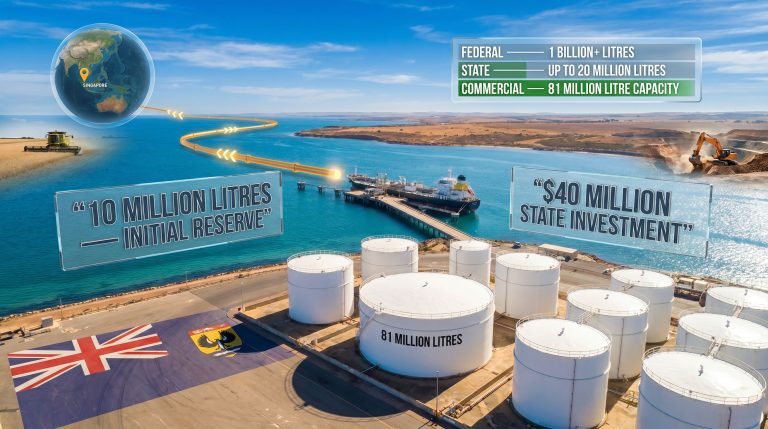
- Strategic reserves: Frameworks in development to buffer against supply shocks, addressing both defense and civilian use cases
The opportunity goes beyond extraction. By investing in upstream processing and advanced materials manufacturing, Australia is positioned to move up the value chain, tapping new revenue streams and bolstering workforce skills in processing technologies. Meanwhile, the European CRM facility development demonstrates how allied nations are working to reduce dependency on Chinese processing.
When big ASX news breaks, our subscribers know first
What Strategic Outcomes Could Emerge from the Washington Meeting?
The G7 finance ministers' meeting in Washington (January 13, 2026), hosted by US Treasury Secretary Scott Bessent, marks the highest-profile coordinated attempt yet to address these vulnerabilities. While specific joint financing proposals or binding outcomes are yet to be disclosed, three major scenarios could redefine the structure of global critical minerals supply chains.
Scenario 1 – Coordinated Investment Framework
- Joint financing facilities: Creation of multi-country funds for mine-to-market supply chains
- Risk-sharing: Pooling financial and technical risks for processors and refiners in non-Chinese jurisdictions
- Technology alliances: Agreements for disseminating refining technologies among allies
Disclaimer: Specific details of any investment frameworks will depend on future G7 official communiques and released policy papers.
Scenario 2 – Supply Chain Diversification Mandates
- Government procurement: Mandating a minimum share of critical minerals from allied providers in public contracts
- Stockpiling: Harmonised reserve and emergency release strategies among G7 members
- Contingency protocols: Creating plans for rapid re-shoring or trans-shipment in case of geopolitical disruptions
Policy details will be confirmed post-meeting via official G7 or national statements.
Scenario 3 – Counter-China Industrial Policy
- Coordinated export restrictions: Targeted at countries using mineral exports as geopolitical leverage
- Subsidies and incentives: Providing funds and tax breaks for domestic and allied mineral processing facilities
- Joint research: Accelerating alternative extraction and processing technology development
Current evidence shows China's dual leverage: it dominates processing but depends significantly on raw imports. This mutual dependence creates opportunities for strategic balancing through coordinated industrial policy.
How Might China Respond to Intensified G7 Coordination?
Potential Chinese Countermeasures
China's toolbox for counteraction is well established. Besides recent 2026 export restrictions, historical precedent demonstrates its willingness to employ minerals as geopolitical instruments—Japan's 2010 experience with rare earth embargoes caused global risk recalibration overnight. As of 2026, China continues meeting its commercial commitments to US firms, but selective application of controls showcases its flexible leverage.
China's own vulnerabilities should not be overlooked. While it leads in processing, China still imports significant volumes of raw materials—creating reciprocal exposure. Should the G7 and allies succeed in rerouting significant upstream supply, China could face higher input costs or supply uncertainties.
Potential Response Scenarios:
- Intensified export controls or broadening bans on specific dual-use or high-value products
- Diversification of its own supply through intensified deals in Africa, Latin America, and Central Asia
- Investment in recycling to reduce reliance on imported raw concentrates
Market Disruption Scenarios
Efforts at bifurcating mineral supply chains may elevate price volatility, with speculative trading amplifying swings during geopolitical confrontations. Western-aligned and China-aligned supply networks could emerge, causing shifts in investment flows, especially into jurisdictions advertising policy stability or compliance with environmental and social governance (ESG) standards.
In addition, the US-China trade impact on mineral markets could intensify as both sides seek to reduce strategic dependencies.
Warning: These scenarios hinge on unpredictable actor behaviour and market sentiment. Price and supply outcomes are subject to global shocks and reactions not entirely within the control of G7 or Chinese policymakers.
What Are the Economic Implications for Global Markets?
Investment Capital Requirements Analysis
Meeting global demand for secure and diversified critical minerals supply chains carries tremendous upfront capital costs:
| Infrastructure Category | Estimated Investment Need | Timeline |
|---|---|---|
| New Mining Operations | $200-300 billion | 5-10 years |
| Processing Facilities | $150-250 billion | 3-7 years |
| Recycling Infrastructure | $50-100 billion | 2-5 years |
Disclaimer: These are indicative estimates based on industry forecasts and require cross-validation with official IEA, World Bank, and industry group projections. Actual needs may vary by commodity, geography, and technical approach.
Regional Winner-Loser Analysis
- Australia stands to gain significantly from moving beyond mere extraction into value-added processing, supported by a $12.7 billion project pipeline and strong multinational partnership interest
- African producers could benefit from fresh investment flows and technology transfer, but face the risk of becoming dependent on a single bloc if partnerships lack reciprocity or value-added provisions
- Latin America's "Lithium Triangle" (Argentina, Bolivia, Chile) is strategically positioned, but must calibrate between competing G7- and China-led deals amid growing global demand for battery materials
Which Industries Will Experience the Greatest Transformation?
Defense and Aerospace Sector Implications
Critical minerals underpin nearly every aspect of next-generation weapons systems and aerospace manufacturing. Components such as jet engines, guidance systems, and advanced armour all require rare earths and specialty metals with few practical substitutes. The importance of energy transition security extends beyond civilian applications into military readiness.
- Supply chain security protocols: Defense contractors are likely to face stricter sourcing requirements, with strategic stockpiles prioritised for national security uses
- Stockpiling initiatives: National governments may classify certain minerals—such as neodymium, samarium, and dysprosium—as essential for defence readiness, driving up stockpiling demand and influencing prices
Renewable Energy Transition Acceleration
The energy transition will intensify demand for graphite, lithium, cobalt, and several rare earths. Wind turbines, for example, rely on neodymium and dysprosium in permanent magnets. Solar panels increasingly require silver and high-purity silicon, raising questions about future supply security.
- Battery supply chain localisation: To reduce risk, Western firms are expanding upstream battery material supply within trusted jurisdictions
- Technology innovation: Efforts are under way to develop alternative chemistries, such as sodium-ion batteries, though these are not yet commercial scale for many applications
Semiconductor Manufacturing Realignment
Semiconductor fabrication relies on high-purity materials like gallium, indium, and various rare earths. Material security protocols are expected to tighten:
- Regional hub development: Localising supply chains—especially in the US, EU, and parts of Asia—will continue, supported by investment legislation such as the CHIPS Act
- Technology transfer restrictions: National security considerations may restrict cross-border knowledge sharing, with implications for global fab expansion and equipment supply chains
How Will This Reshape Australia's Economic Strategy?
From Resource Exporter to Value-Added Producer
Australia's transformation from a commodities exporter into an advanced materials hub will depend on targeted investment in domestic processing capacity. Expansion beyond raw extraction, especially in lithium and rare earth refining, can deliver increased value capture and job creation. The $12.7 billion project pipeline is only the beginning—true economic resilience will require:
- Significant skills training: Expanding vocational and university programmes to close technical workforce gaps in chemistry, metallurgy, and manufacturing
- Infrastructure buildout: Integrating rail, port facilities, and grid energy supply to support processing plants and downstream manufacturers
- Cost competitiveness: Maintaining regulatory incentives to offset Australia's higher labour and energy costs compared to established refining hubs
Strategic Partnership Expansion Beyond the US
Interest from Europe, Japan, South Korea, and Singapore highlights Australia's new strategic leverage. These relationships are likely to deepen with:
- Enhanced alignment with EU's Critical Raw Materials Act supply chain requirements
- Technology and knowledge exchange agreements with Japan and South Korea, building on their advanced processing and battery industries
- Singapore's potential to serve as a regional finance, trading, and processing hub, particularly for value-added intermediate commodities
The next major ASX story will hit our subscribers first
What Are the Long-Term Geopolitical Implications?
Alliance Structure Evolution
As critical minerals underpin the balance of economic and military power, they are fast becoming central to alliance frameworks. Integration with AUKUS, the Quad, or Five Eyes could create a multi-layered security umbrella, potentially expanding to include other resource-rich democratic partners. Furthermore, the Australia critical minerals G7 meeting could serve as a template for future coordination mechanisms.
Key drivers for expansion include:
- Compliance with ESG and transparency standards
- Technical and educational capacity for value-added processing
- Demonstrated commitment to reliable, diversified supply for allies
Global South Positioning Dynamics
- African nations and Latin American states are actively seeking new partners to ensure fair value from their resources and reduce the risks of dependency
- Southeast Asian countries may look to develop rare earth processing hubs, balancing between China's economic gravity and Western market access
- Diplomatic competition could accelerate, with Global South producers using their endowments to play major powers against each other for technology transfer and investment terms
Risk Assessment and Mitigation Strategies
Implementation Challenges
Key Risk Factors:
- Massive upfront capital needs, surpassing most individual government budgets
- Long project development timelines (often 5-10 years) clash with the immediacy of supply risks
- Skills shortages in high-tech processing fields could impede facility ramp-ups
- Compliance with stringent environmental, social, and governance standards raises project costs and complexity
These challenges are highlighted across IEA, World Bank, and industry consultant analyses, and require measured mitigation strategies.
Success Probability Factors
- Policy consistency: Long-term investment depends on political continuity beyond single election cycles
- Private sector incentives: Alignment of public support and commercial reward is essential to attract risk capital
- Technology breakthroughs: Cost-competitive alternatives (e.g., new extractive processes, recycling) could shift comparative advantage
- International cohesion: Coordinated structures must withstand economic downturns and shifting national interests
No single factor guarantees success—winning strategies will integrate technical, financial, and diplomatic efforts, sustained over decades.
Conclusion: Navigating the Critical Minerals Transformation
Strategic Recommendations for Stakeholders
- Investors should target vertically integrated, multi-jurisdictional projects offering exposure across mining, processing, and recycling
- Policymakers need to prioritise support mechanisms that de-risk long-term capital investments and foster rapid skills development
- R&D entities should focus on recycling, alternative material technologies, and efficient processing breakthroughs
- All parties must cultivate resilient international partnerships, emphasising trust, transparency, and ESG alignment to anchor the next era of critical minerals supply chains
The Australia-India G7 partnership announcement demonstrates how the Australia critical minerals G7 meeting is expanding beyond traditional G7 boundaries to include strategic Indo-Pacific partners.
Disclaimer: Data and projections in this article reflect the most current evidence as of January 2026 but are subject to future policy releases, geopolitical shifts, and technology developments.
Further information and ongoing analysis on Australia critical minerals G7 meeting and the nation's strategy for supply chain resilience can be accessed via government resources and reputable industry platforms.
Ready to Position Yourself Ahead of Critical Minerals Market Shifts?
Discovery Alert's proprietary Discovery IQ model delivers real-time alerts on significant ASX critical minerals discoveries, instantly empowering subscribers to identify actionable opportunities ahead of the broader market. With the G7's coordinated push for supply chain diversification creating new investment dynamics, understanding which discoveries can generate substantial returns becomes crucial by exploring Discovery Alert's dedicated discoveries page.