June 23, 2026
The semiconductor revolution has created unprecedented dependencies on materials that barely existed in commercial markets decades ago. Among these strategic resources, gallium occupies a unique position where geological scarcity intersects with technological necessity, creating supply vulnerabilities that ripple through defence systems, telecommunications infrastructure, and emerging energy technologies. Recent developments, including a significant gallium supply deal with Mitsubishi, demonstrate how companies are responding to these challenges through strategic partnerships.
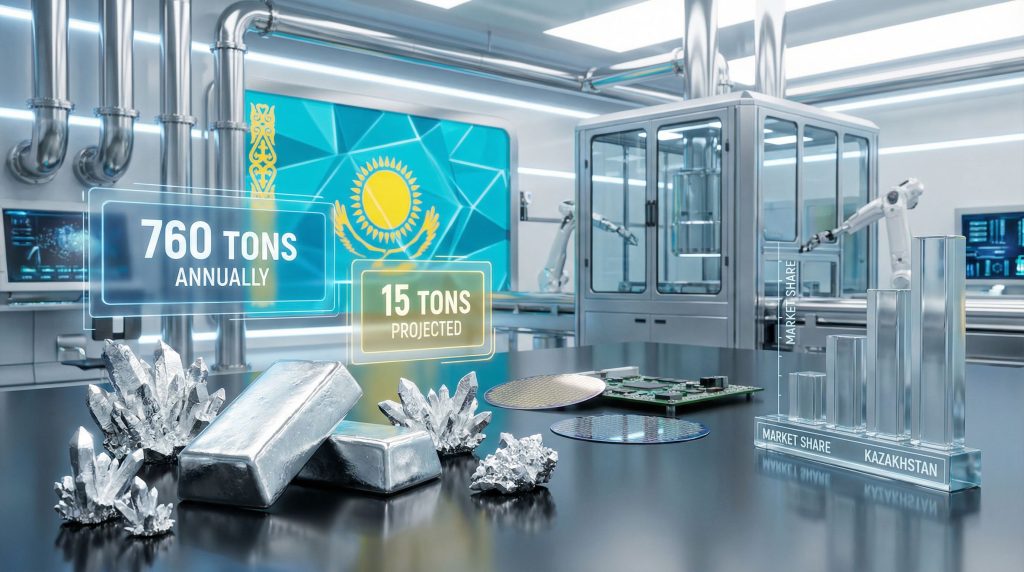
Current global gallium production reaches approximately 760 metric tons annually, according to US Geological Survey data, with concentration levels that would concern any risk analyst. This market structure reflects both the specialised nature of gallium extraction and the geopolitical implications of critical mineral control in an increasingly connected world.
The strategic significance of alternative supply chains becomes apparent when examining how modern economies depend on materials where substitution options remain limited or economically unviable. Furthermore, understanding these dynamics requires examining both the technical requirements driving demand and the emerging solutions addressing supply concentration risks.
Global Gallium Market Structure and Supply Dependencies
The gallium market demonstrates extreme concentration characteristics that distinguish it from traditional commodity markets. China dominates global production with approximately 720 metric tons of the total 760-ton annual output, while Japan, Korea, and Russia collectively contribute roughly 40 metric tons to global supply chains.
This concentration pattern creates systemic vulnerabilities for industries dependent on gallium-based components. The US Geological Survey includes gallium on its Critical Minerals List due to its importance to economic and national security. Consequently, the European Commission designates gallium as having both high supply risk and high economic importance under its Critical Raw Materials Act.
The semiconductor industry's dependence on gallium compounds creates irreplaceable supply requirements where alternative materials cannot match performance specifications in high-frequency and high-temperature applications.
Defence and aerospace manufacturers face particularly acute exposure to supply disruptions. This is because gallium arsenide components in radar systems and missile guidance electronics have no viable substitutes. Similarly, the expansion of 5G telecommunications infrastructure relies heavily on gallium nitride semiconductors for millimetre-wave applications where silicon-based alternatives cannot function effectively.
The market's technical barriers to entry compound supply concentration risks. Gallium production requires specialised extraction processes from aluminium or zinc processing byproducts, creating significant capital and technical knowledge requirements for new entrants seeking to establish production capabilities.
When big ASX news breaks, our subscribers know first
Strategic Significance of Kazakhstan's Emerging Production Capacity
Kazakhstan's entry into gallium production represents a meaningful shift in global supply dynamics, despite the relatively modest scale of planned output. Eurasian Resources Group's facility will produce 15 metric tons annually starting in Q3 2026, positioning Kazakhstan to become the world's second-largest gallium producer after China.
The mathematical significance of this capacity becomes clear when analysed against current market structure. Kazakhstan's 15-ton annual production would represent approximately 2-3% of global market share. However, more importantly, it would nearly double non-Chinese production capacity from the current 40-ton baseline.
Global Gallium Production Projections (2027)
| Producer | Current Output | Projected 2027 | Market Share |
|---|---|---|---|
| China | ~720 tons | 750-800 tons | 85-90% |
| Kazakhstan (ERG) | 0 tons | 15 tons | 2-3% |
| Japan/Korea/Russia | ~40 tons | 45-50 tons | 5-8% |
Geographic diversification benefits extend beyond simple supply arithmetic. Kazakhstan's production targets OECD country markets, providing manufacturers in North America, Western Europe, and allied Asia-Pacific nations with supply sources that align with their regulatory and strategic requirements.
The timing of Kazakhstan's market entry coincides with growing awareness among Western manufacturers of supply chain vulnerabilities in critical materials. This convergence of supply availability and demand for secure sourcing creates market conditions favourable to premium pricing for geopolitically aligned production.
Export Control Regimes and Trading Dynamics
China's evolving export control framework for gallium illustrates how critical minerals have become instruments of economic statecraft. Recent policy adjustments following diplomatic engagement between Presidents Xi Jinping and Donald Trump resulted in suspension of direct export bans. Nevertheless, licensing requirements remain in effect, offering valuable export controls insights into broader market dynamics.
The distinction between absolute bans and licensing requirements carries significant operational implications for global supply chains. Licensing systems enable selective supply allocation based on geopolitical considerations whilst maintaining administrative control over material flows to strategic competitors or sensitive end-uses.
Current export licensing procedures require Chinese companies to obtain government approval for gallium shipments. This creates potential delays and uncertainty for international buyers. Consequently, this administrative friction incentivises long-term supply agreements with non-Chinese producers, even when pricing premiums apply.
Market participants have learned to differentiate between spot market accessibility and supply reliability. Chinese gallium may trade at lower spot prices. However, procurement strategies increasingly value supply security and regulatory predictability over pure cost optimisation.
Mitsubishi's Strategic Supply Chain Positioning
Mitsubishi Corporation's long-term gallium supply deal with Mitsubishi reflects systematic Japanese corporate response to historical supply disruptions. Japanese manufacturers experienced significant operational challenges during previous critical mineral export restrictions. As a result, this drove organisational changes toward supply diversification and strategic stockpiling.
The partnership structure leverages Mitsubishi Corporation's role as supply chain intermediary for Japanese manufacturing ecosystems. As a major trading house, Mitsubishi can aggregate gallium demand across multiple electronics manufacturers. This provides negotiation leverage and risk distribution that individual companies could not achieve independently.
Japanese corporate supply strategies typically maintain 3-6 month inventory buffers for critical materials. This is enabled by long-term contract structures that provide pricing predictability and volume certainty. This approach contrasts with opportunistic spot market purchasing, which offers lower average costs but higher volatility exposure.
The undisclosed contract terms suggest customised supply arrangements that balance ERG's production capabilities with Mitsubishi's customer requirements. Such flexibility indicates sophisticated supply chain planning that extends beyond simple buyer-seller relationships toward strategic partnerships.
Technology Applications Driving Gallium Demand Growth
Semiconductor manufacturing requirements drive the majority of gallium consumption through specialised compounds that enable performance characteristics impossible with conventional silicon technology. Gallium arsenide (GaAs) and gallium nitride (GaN) semiconductors operate at frequencies above 10 GHz and withstand temperature extremes where silicon components fail.
Defence and Aerospace Applications:
• Radar systems requiring high-frequency target detection and tracking capabilities
• Missile guidance electronics with precision navigation requirements
• Military communications systems operating in contested electronic environments
• Satellite electronics exposed to radiation and extreme temperature variations
Commercial Technology Integration:
• 5G infrastructure deployment utilising millimetre-wave frequency bands
• Electric vehicle power electronics for charging systems and power conversion
• Renewable energy inverters requiring high-efficiency power management
• Optoelectronic components including LEDs and laser diodes for telecommunications
The expansion of electric vehicle markets creates particularly significant demand drivers for GaN semiconductors. Modern EV charging infrastructure and on-board power converters increasingly utilise gallium-based components for efficiency improvements that directly impact vehicle range and charging speeds.
Furthermore, 5G network deployment across developed economies requires GaN-based RF semiconductors for base station operation. This is particularly crucial in millimetre-wave applications where network capacity and coverage depend on gallium compound performance characteristics.
Integrated Production Economics and Value Creation
ERG's approach to gallium production demonstrates sophisticated resource optimisation through integrated aluminium industry operations. The company extracts gallium as a byproduct during bauxite processing for alumina production, creating multiple revenue streams from shared processing infrastructure.
This integration model provides significant economic advantages over standalone gallium operations. Fixed costs for bauxite handling, processing facilities, and logistics infrastructure support both aluminium and gallium production. Consequently, this improves overall project economics and reduces gallium production costs.
Byproduct Revenue Stream Benefits:
• Lower capital requirements compared to dedicated gallium projects
• Shared infrastructure costs across multiple product lines
• Diversified revenue sources reducing dependence on single commodity pricing
• Operational efficiency through integrated processing workflows
The Bayer process used in alumina refining concentrates gallium in process liquors, where specialised recovery techniques can achieve commercial purity levels. This technical approach explains why aluminium producers dominate gallium supply chains globally, as the chemistry and infrastructure requirements align naturally.
Processing efficiency advantages in Kazakhstan include competitive energy costs, established mining infrastructure, and geographic positioning between major consumer markets in Europe and Asia. These factors support long-term production economics even during periods of gallium price volatility.
The next major ASX story will hit our subscribers first
Investment Implications for Critical Mineral Markets
Valuation frameworks for gallium projects require analysis beyond traditional commodity investment metrics. They must incorporate geopolitical risk premiums, supply security value, and strategic positioning relative to end-use industries. The emergence of alternative supply sources creates opportunities for premium pricing relative to concentrated production centres.
Key Valuation Factors:
• Production capacity scaling potential within existing infrastructure
• Geographic and political risk assessments for different supply sources
• Customer contract duration and pricing structure stability
• Regulatory alignment with end-user compliance requirements
Market development scenarios present multiple pathways for gallium investment returns. Each is driven by different underlying assumptions about geopolitical stability, technology adoption rates, and supply chain restructuring priorities among major manufacturers.
Scenario Analysis Framework:
-
Accelerated Diversification: Western manufacturers rapidly adopt non-Chinese sources despite pricing premiums, driven by supply security concerns and regulatory requirements.
-
Price Stabilisation: Increased global production capacity moderates gallium price volatility, benefiting manufacturers but potentially reducing producer margins.
-
Technology Substitution: Research breakthroughs in alternative materials reduce gallium dependency in specific applications, altering long-term demand projections.
Investment timing considerations must account for the three-year development timeline between ERG's announced plans and projected production start dates. Early-stage positioning in critical mineral supply chains offers potential advantages. However, this requires patience for returns realisation.
These developments align closely with broader strategies outlined in current critical minerals pivot initiatives across the industry.
Influence on Future Critical Mineral Partnership Models
The ERG-Mitsubishi agreement establishes precedents for how OECD supply chain partnerships might evolve across other critical minerals. Long-term contract structures that balance supply security with pricing predictability could become standard frameworks for strategic material procurement.
Risk-sharing mechanisms between producers and consumers may become more sophisticated as both parties recognise mutual benefits from supply chain stability. Producers gain revenue predictability and customer commitment, whilst consumers secure supply access and price protection against volatility.
Government policy support for supply diversification initiatives appears increasingly likely across developed economies. Strategic material considerations now influence trade policy, industrial development incentives, and international partnership frameworks in ways that were uncommon in previous decades.
Regional Development Implications:
• Kazakhstan's positioning as alternative supplier for critical minerals
• Central Asian resource development strategies aligned with OECD market access
• Infrastructure investment requirements for scaling production capacity
• Integration with existing aluminium industry operations for efficiency gains
The successful implementation of this supply partnership could accelerate similar agreements across other critical materials. This is particularly relevant where supply concentration creates strategic vulnerabilities for consumer nations and economic opportunities for producer countries.
These initiatives complement ongoing developments in European supply strategies and defense materials strategy frameworks.
Production Implementation Challenges and Risk Assessment
Technical implementation risks for ERG's gallium production timeline include processing technology integration, quality control systems for semiconductor-grade specifications, and logistics infrastructure for international distribution to OECD markets.
The third-quarter 2026 production start date requires successful completion of extraction equipment installation, process optimisation, and quality certification procedures. Any delays in these technical milestones could impact contract delivery commitments and market positioning relative to competing suppliers.
Operational Risk Categories:
• Processing technology performance meeting commercial specifications
• Quality control systems achieving semiconductor industry requirements
• Transportation and logistics for international distribution networks
• Regulatory compliance across multiple export and import jurisdictions
Market risks include potential changes in export control regimes, demand fluctuations across key industries, and competitive responses from existing suppliers. The gallium market's small size means that relatively minor supply or demand changes can create significant price impacts.
Environmental compliance requirements may become more stringent as critical mineral production scales globally. Mining operations face increasing scrutiny regarding environmental impact, worker safety, and community engagement. This requires ongoing investment in operational standards.
In addition, these challenges underscore the importance of initiatives like Australia's strategic minerals reserve in ensuring supply security.
Understanding Gallium Supply Chain Fundamentals
Why is gallium considered a critical mineral?
Gallium's unique properties make it irreplaceable in high-frequency semiconductors, radar systems, and defence electronics. It has extremely limited substitution options available for most applications. Its chemical characteristics enable electronic devices to operate at frequencies and temperatures where silicon-based alternatives cannot function effectively.
How does this supply agreement affect global gallium pricing?
Additional supply sources typically moderate price volatility by reducing market concentration. However, ERG's 15-ton annual production represents a relatively small percentage of global demand. The primary value lies in supply security for manufacturers willing to accept premium pricing for geopolitical stability.
What makes Kazakhstan attractive for critical mineral production?
Kazakhstan offers political stability, established mining infrastructure, competitive energy costs, and strategic geographic positioning between major consumer markets in Europe and Asia. The country's existing aluminium industry provides natural integration opportunities for gallium extraction as a byproduct.
How do export controls impact gallium trading?
Export licensing requirements create administrative friction and uncertainty for international buyers, even when direct bans are not in effect. This regulatory complexity incentivises manufacturers to secure alternative supply sources despite potentially higher costs.
What industries drive the strongest gallium demand growth?
5G telecommunications infrastructure, electric vehicle power electronics, defence systems modernisation, and renewable energy applications create the most significant demand expansion opportunities. Each sector requires specialised gallium compounds that cannot be replaced with conventional semiconductor materials.
Recent market developments, including ERG's gallium supply agreement with Mitsubishi, demonstrate how companies are securing alternative supply sources. Furthermore, this trend reflects broader industry recognition of supply chain vulnerabilities in critical mineral markets.
This analysis is provided for informational purposes only and should not be construed as investment advice. Critical mineral markets involve significant risks including geopolitical factors, technology changes, and regulatory developments that could materially impact supply chains and pricing.
Are You Monitoring Critical Mineral Supply Chain Opportunities?
Discovery Alert's proprietary Discovery IQ model delivers real-time notifications on significant ASX mineral discoveries, including critical minerals like gallium that are reshaping global supply chains. Stay ahead of emerging opportunities in the strategic minerals sector by beginning your 30-day free trial today and gain immediate access to actionable insights that could position you advantageously in tomorrow's essential resource markets.