June 25, 2026
Understanding Queensland's Strategic Energy Position
Australia's eastern gas markets stand at a critical inflection point, with supply-demand fundamentals driving unprecedented exploration activity across Queensland's diverse geological basins. The state's position as the nation's dominant LNG exporter places it at the center of both domestic energy security and international market dynamics. Current market analysis indicates that gas exploration in Queensland has intensified significantly as industry forecasts project demand outstripping supply from 2028 onwards across Australia's east coast markets. Furthermore, understanding the broader context of energy exports challenges helps illuminate the strategic importance of these developments.
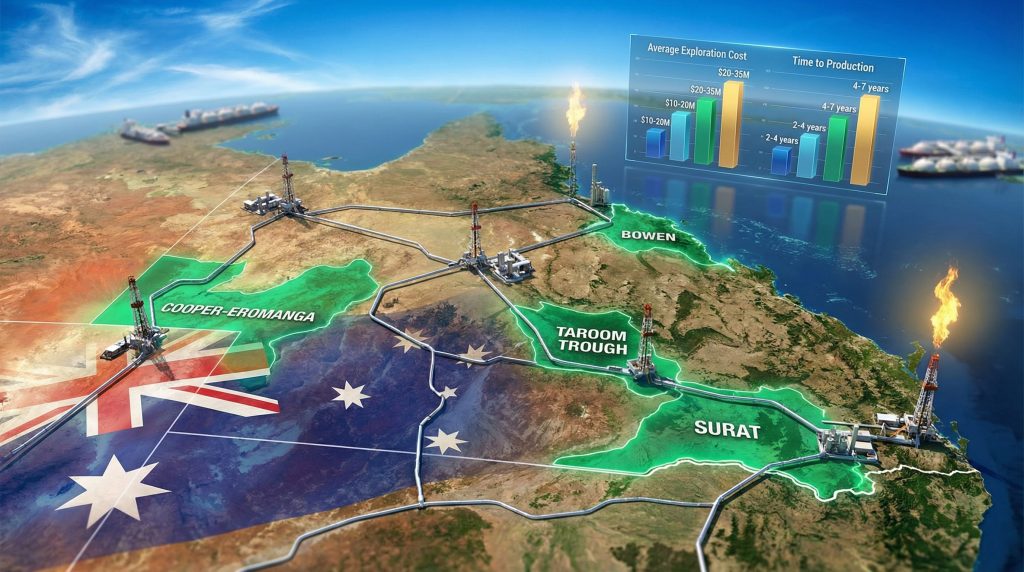
Queensland's geological diversity spans multiple productive basins, each offering distinct resource characteristics and development opportunities. The Surat Basin continues to anchor coal seam gas production, while the Bowen Basin provides additional conventional and unconventional resources. The Cooper-Eromanga Basin, extending across the Queensland-South Australia border, represents one of Australia's most established hydrocarbon provinces with proven infrastructure connectivity to major pipeline networks.
Market dynamics driving current exploration expansion reflect broader structural changes in Australia's energy landscape. Aging field production decline in established areas has created supply gaps that new exploration must address. The Queensland government's recent appointment of preferred tenderers across multiple basin areas demonstrates active policy support for accelerated resource development to address these market fundamentals. Additionally, considering the gas price forecast provides crucial insights into the economic drivers behind this expansion.
When big ASX news breaks, our subscribers know first
Queensland's Geological Basins: Comparative Analysis for Gas Development
Cooper-Eromanga Basin Strategic Positioning
The Cooper-Eromanga Basin represents Queensland's most mature gas exploration province, with established geological understanding and proven resource potential. Recent government appointments in January 2026 designated Santos Ltd. and Beach Energy Ltd. units as preferred tenderers for three gas exploration areas within this basin, reflecting continued industry confidence in the region's hydrocarbon prospectivity.
Cross-border opportunities with South Australia enhance the basin's strategic value through existing pipeline infrastructure and processing facilities. The geological formations within the Cooper-Eromanga system have demonstrated consistent productivity over decades of development, with multiple reservoir horizons providing diversified drilling targets for exploration programs.
Infrastructure connectivity advantages distinguish the Cooper-Eromanga Basin from emerging exploration areas. Existing pipeline networks, compression facilities, and processing infrastructure reduce development lead times and capital requirements for new discoveries. Consequently, this infrastructure advantage creates favourable economics for both major integrated companies and smaller exploration entities seeking rapid development pathways.
Taroom Trough: Australia's Emerging Oil Province
The Taroom Trough has emerged as Queensland's most significant new exploration frontier, with government officials characterising the area as potentially becoming Australia's first major oil province since the 1970s. Recent appointments of Omega Oil & Gas Ltd., Tri-Star Stonecroft Pty, and a Beach Energy Ltd. unit as preferred tenderers for three exploration areas underscore the strategic importance placed on this emerging hydrocarbon province.
Market response to Taroom Trough developments has been notably positive, with Omega Oil & Gas shares rising as much as 19% following the February 2026 announcement, representing the company's largest single-day percentage gain since September 2025. This market reaction reflects investor recognition of the significant value potential within this previously underexplored geological formation.
Geological characteristics distinguishing the Taroom Trough from established Australian oil provinces require specialised exploration approaches and technological applications. The area's unique structural setting and potential reservoir characteristics suggest both opportunities and challenges for unconventional resource development. However, proximity to existing processing facilities and transport infrastructure provides development advantages, though the specific distances and capacity constraints require detailed technical assessment.
Surat and Bowen Basin Expansion Opportunities
Coal seam gas development within the Surat and Bowen basins continues to represent core production capacity for Queensland's domestic and export markets. Integration opportunities with existing operations provide operational efficiencies and reduced development costs for expansion projects within these established producing areas.
Environmental considerations and regulatory frameworks governing Surat and Bowen basin development have evolved significantly, incorporating lessons learned from earlier CSG development phases. Water management strategies, environmental offset requirements, and community engagement protocols now represent standard components of development planning within these basins.
The following table summarises key characteristics across Queensland's primary gas exploration regions:
| Basin | Development Stage | Primary Resource | Infrastructure Access | Exploration Timeline |
|---|---|---|---|---|
| Cooper-Eromanga | Mature | Conventional Gas | Established | 3-5 years |
| Taroom Trough | Emerging | Oil/Gas | Moderate | 4-7 years |
| Surat Extension | Active | Coal Seam Gas | Excellent | 2-4 years |
| Bowen Expansion | Active | Mixed Resources | Good | 2-5 years |
Economic Drivers of Queensland Gas Exploration Investment
Supply-Demand Market Fundamentals
Critical market timing factors are reshaping investment priorities across Queensland's gas exploration sector. Industry forecasts indicate that demand for gas on Australia's east coast will outstrip supply from 2028 onwards, creating approximately a two-year urgency window for new supply development initiatives. This supply shortage projection stems primarily from aging field production decline in established basins, coupled with growing domestic demand and ongoing LNG export commitments.
Queensland government policy positioning emphasises gas exploration expansion as essential to addressing local shortfalls and energy affordability concerns. The state's approach links new supply development directly to consumer pricing objectives, arguing that increased production capacity will put downward pressure on energy prices for domestic users. In addition, the ongoing industry innovation trends demonstrate how technological advancement is creating new opportunities for efficient resource extraction.
Enhanced government approvals and domestic reservation policies represent key regulatory mechanisms affecting investment returns and market allocation decisions. These policy frameworks influence the balance between LNG export opportunities and domestic market obligations, creating complex planning requirements for exploration companies and their financing partners.
Investment Climate and Risk-Return Analysis
Current exploration licensing costs and government incentive structures reflect Queensland's competitive positioning relative to other Australian jurisdictions and international exploration opportunities. Risk-adjusted returns vary significantly across different basin types, with established provinces like Cooper-Eromanga offering lower geological risk but potentially limited upside potential, while emerging areas such as the Taroom Trough present higher risk profiles with correspondingly greater potential returns.
Capital requirements for development phases spanning exploration through production create significant financial planning challenges for companies across all scales. Exploration costs typically range from AUD $10-35 million depending on basin complexity and drilling requirements, while development capital can reach hundreds of millions for major discoveries requiring new infrastructure development.
Leading Companies in Queensland's Gas Exploration Expansion
Major Integrated Player Positioning
Santos Ltd. has established strategic positioning across multiple Queensland basins through recent preferred tenderer appointments in the Cooper-Eromanga region. The company's appointment alongside Beach Energy for three gas exploration areas in January 2026 demonstrates continued confidence in Santos' technical capabilities and financial capacity for complex exploration programs.
Beach Energy Ltd. has emerged as the most diversified player in Queensland's current exploration expansion, with separate corporate units appointed as preferred tenderers in both the Cooper-Eromanga basin and Taroom Trough areas. This dual appointment strategy suggests Beach Energy's portfolio approach to managing different geological formations and risk profiles across Queensland's exploration opportunities.
The appointment of established players alongside emerging exploration companies suggests Queensland government strategy to distribute exploration opportunities across companies of different scales and risk tolerance levels. This approach potentially maximises exploration coverage while ensuring adequate technical expertise and financial resources are available for successful development.
Emerging Exploration Companies and Market Response
Omega Oil & Gas Ltd. represents the most prominent emerging player in Queensland's current exploration expansion, securing preferred tenderer status for one Taroom Trough exploration area. The significant market response following this appointment, with shares rising 19% in Sydney trading, demonstrates investor recognition of the opportunity value and confidence in the company's ability to execute exploration programs.
Tri-Star Stonecroft Pty, characterised as closely held, represents the private capital participation in Queensland's exploration expansion. The company's appointment for Taroom Trough exploration suggests successful demonstration of technical capabilities and financial adequacy despite its private ownership structure.
Emerging company participation in gas exploration in Queensland provides diversification benefits for the overall exploration program while potentially introducing innovative approaches and specialised expertise. However, the financial and technical capacity of smaller players to manage complex exploration programs requires careful evaluation and potentially structured support arrangements.
Regulatory Frameworks Shaping Queensland Gas Development
State Government Policy Architecture
Queensland's Liberal National Party government has positioned expanded oil and natural gas exploration as central to the state's economic development and energy security objectives. The government's explicit commitment to unlocking future supply and putting downward pressure on energy prices reflects political prioritisation of resource development over alternative energy strategies.
Recent regulatory actions, including the February 2026 appointment of preferred tenderers across multiple basins, demonstrate active government support for accelerated exploration timelines. However, specific details regarding streamlined approval processes, environmental review procedures, and permitting conditions require additional documentation beyond currently available sources.
The government's characterisation of the Taroom Trough as potentially becoming Australia's first major oil province since the 1970s suggests strategic intent to distinguish Queensland's resource potential from other Australian jurisdictions. This positioning may influence regulatory priorities and resource allocation for supporting exploration activities. Furthermore, incorporating effective investment strategy components becomes essential for companies navigating these opportunities.
Federal-State Regulatory Coordination
Australian Domestic Gas Security Mechanism provisions and Environmental Protection and Biodiversity Conservation Act requirements create complex multi-jurisdictional approval processes for gas exploration and development projects. Coordination between federal and state regulatory authorities affects approval timelines and operational conditions for exploration companies.
Native title considerations and cultural heritage obligations represent significant regulatory requirements affecting exploration planning and community engagement strategies. These requirements particularly impact exploration areas in previously undeveloped regions where baseline consultation and agreement processes may require extended timelines.
Technical Challenges in Queensland Gas Exploration
Geological and Engineering Considerations
Unconventional resource extraction techniques required for coal seam gas operations in the Surat and Bowen basins present ongoing technical challenges related to water management, pressure maintenance, and production optimisation. These technical requirements influence development costs and operational complexity for both established and emerging exploration areas.
Enhanced recovery methods for mature fields within established basins like Cooper-Eromanga require sophisticated reservoir management and technological applications. Secondary and tertiary recovery techniques can extend field life and improve ultimate recovery factors, but require significant capital investment and technical expertise. For instance, AI drilling innovations are revolutionising operational efficiency and precision in these complex environments.
Water management represents a critical technical challenge across all Queensland gas exploration areas, particularly for coal seam gas operations requiring large-scale water extraction and treatment. Environmental compliance and water disposal capacity constraints affect both operational costs and development feasibility for exploration projects.
Infrastructure Development Requirements
Pipeline capacity and compression facility availability create potential bottlenecks for new gas discoveries, particularly in emerging exploration areas without established infrastructure connectivity. Development of new pipeline infrastructure requires significant capital investment and regulatory approvals that can extend project development timelines.
Processing plant capacity and technological specifications must accommodate varying gas compositions and production rates from different geological formations. Flexibility in processing capabilities becomes particularly important for areas like the Taroom Trough where resource characteristics may differ significantly from established Queensland gas production.
The next major ASX story will hit our subscribers first
Queensland's Role in Australia's Energy Security Framework
Domestic Energy Supply Resilience
Regional gas market integration across Australia's eastern states positions Queensland as a critical supplier for both industrial and residential consumers. The projected supply shortage from 2028 onwards intensifies Queensland's importance in maintaining energy security for the broader Australian economy.
Strategic reserve considerations and emergency supply protocols require adequate development of Queensland's gas resources to provide supply flexibility during market disruptions or seasonal demand variations. This energy security role influences both government policy priorities and investment attractiveness for exploration companies.
Industrial user supply agreements and long-term contracting arrangements depend on reliable gas supply from Queensland's producing basins. Manufacturing sector competitiveness and employment levels across eastern Australia are directly affected by gas availability and pricing from Queensland sources.
Export Revenue and Economic Impact
Queensland's LNG export industry generates substantial revenue streams for both state and federal governments through royalties, taxes, and economic multiplier effects. Continued exploration success maintains Queensland's competitive position in global LNG markets and supports regional economic development objectives.
Regional development opportunities in rural communities benefit from gas exploration and development activities through employment generation, local procurement, and infrastructure investment. These economic impacts extend beyond direct energy sector employment to include supporting services, accommodation, and community development.
Investment Strategies Across Stakeholder Types
Institutional Investment Approaches
Risk-return profiles across different exploration stages require sophisticated portfolio management approaches for institutional investors seeking exposure to Queensland gas exploration opportunities. Early-stage exploration investments offer potentially high returns but carry significant geological and market risks requiring careful diversification strategies.
Environmental, Social, and Governance (ESG) compliance requirements increasingly influence institutional investment decisions in gas exploration projects. Investors must balance energy security and economic returns with environmental commitments and social licence considerations affecting long-term project viability.
Portfolio diversification benefits within the energy sector can be achieved through exposure to different Queensland basins, development stages, and company types. This diversification approach manages geological risk while maintaining exposure to the sector's growth potential.
Retail Investor Access Points
Listed exploration companies with Queensland exposure provide retail investors with access to gas exploration opportunities through established equity markets. Companies like Omega Oil & Gas Ltd., Santos Ltd., and Beach Energy Ltd. offer different risk-return profiles and geological exposures for retail investment portfolios.
Infrastructure funds focusing on gas pipeline investments and processing facilities provide exposure to Queensland's gas sector through essential infrastructure assets. These investments typically offer more stable returns compared to direct exploration exposure while benefiting from sector growth.
Energy sector ETFs with Australian gas exposure allow retail investors to achieve diversified exposure to gas exploration in Queensland through managed fund structures. This approach reduces individual company risk while maintaining participation in sector growth opportunities.
Queensland Gas Exploration Outlook Through 2030
Strategic Success Factors
Basin selection based on geological and economic criteria represents the primary success factor for exploration companies operating in Queensland. Understanding reservoir characteristics, infrastructure connectivity, and regulatory requirements across different basins enables optimal resource allocation and risk management.
Regulatory navigation and community engagement excellence increasingly determine project success beyond purely geological factors. Companies demonstrating environmental responsibility and stakeholder engagement capabilities achieve better regulatory outcomes and social licence maintenance.
Technology adoption for competitive cost structures enables exploration companies to maintain profitability across varying commodity price cycles. Digital transformation, automation capabilities, and innovative extraction techniques provide competitive advantages in increasingly complex operating environments.
Market Timing and Risk Management
The critical supply shortage timeline beginning in 2028 creates specific market timing opportunities for companies capable of accelerated development schedules. Projects achieving production capacity before this deadline capture premium pricing and market positioning advantages.
Policy stability and long-term investment confidence depend on continued government support for gas exploration in Queensland across potential political changes. Investors must evaluate political risk alongside geological and market factors when assessing Queensland exploration opportunities.
Joint venture structures for capital and technical risk sharing represent optimal approaches for managing the scale and complexity of Queensland gas exploration projects. These partnerships combine financial resources, technical expertise, and risk distribution to improve project success probability.
Disclaimer: This analysis is based on publicly available information and should not be considered investment advice. Gas exploration involves significant geological, market, and regulatory risks that may result in partial or total loss of investment. Prospective investors should conduct independent due diligence and consult qualified professionals before making investment decisions. Market projections and supply-demand forecasts are subject to significant uncertainty and may not reflect actual future conditions.
Ready to Invest in the Next Major Energy Discovery?
Discovery Alert's proprietary Discovery IQ model delivers real-time alerts on significant ASX mineral discoveries, including energy and resource companies positioned to capitalise on Queensland's expanding gas exploration opportunities. Begin your 14-day free trial today and discover why historic mineral discoveries can generate substantial returns by exploring Discovery Alert's dedicated discoveries page.