August 22, 2026
When Coal Becomes a Liability: Understanding China's Deepest Mining Safety Failures
Across the long arc of industrial history, few extractive sectors have exacted a greater human toll than underground coal mining. From the colliery disasters of nineteenth-century Britain to the gas explosion at Chinese coal mine sites that have periodically shaken China's coal heartlands, the pattern is disturbingly familiar: pressure to produce, safety systems stretched beyond their design tolerances, and workers caught between economic necessity and mortal risk. What changes across eras is the scale, the technology available to prevent catastrophe, and the political accountability that follows.
What rarely changes fast enough is the underlying culture of production-first decision-making that converts preventable incidents into mass tragedies. Furthermore, the coal supply challenges facing China and the global market add additional complexity to an already fraught safety landscape.
The May 2026 explosion at the Liushenyu coal mine in Qinyuan County, Shanxi Province, is exactly this kind of tragedy rendered at modern Chinese scale.
When big ASX news breaks, our subscribers know first
How Deadly Was the Liushenyu Mine Explosion — and Where Does It Rank Historically?
Key Statistics From the Shanxi Disaster at a Glance
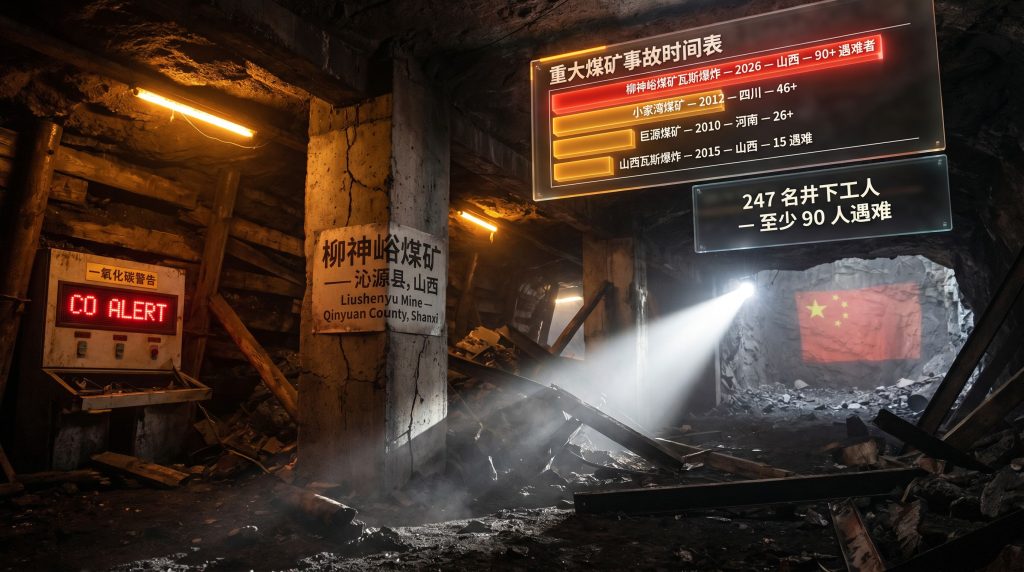
When the blast tore through the Liushenyu mine on May 23, 2026, 247 workers were underground. According to Xinhua, China's state news agency, the confirmed death toll reached at least 90 people, making this the deadliest recorded mining disaster in China in more than a decade. The explosion was preceded by a carbon monoxide alert, indicating that dangerous gas levels had already been detected before the detonation occurred.
| Metric | Detail |
|---|---|
| Location | Liushenyu Mine, Qinyuan County, Shanxi Province |
| Date of Incident | May 23, 2026 |
| Workers Underground at Time of Blast | 247 |
| Confirmed Fatalities | At least 90 |
| Pre-Explosion Warning | Carbon monoxide alert issued |
| Mine Supervisor Status | Arrested pending investigation |
| National Response | Nationwide safety directive issued |
Rescue operations continued for days following the blast, with emergency crews searching for potential survivors among the wreckage. Video footage circulated online showing multiple ambulances positioned near the mine entrance, providing a stark visual representation of the scale of the emergency response.
How the 2026 Shanxi Disaster Compares to China's Deadliest Mine Explosions
| Incident | Year | Province | Fatalities |
|---|---|---|---|
| Liushenyu Mine Gas Explosion | 2026 | Shanxi | 90+ |
| Xiaojiawan Coal Mine Disaster | 2012 | Sichuan | 46+ |
| Juyuan Coal Mine Explosion | 2010 | Henan | 26+ |
| Shanxi Gas Explosion | 2015 | Shanxi | 15 killed, 9 injured |
The 2026 disaster surpasses every documented Chinese coal mine gas explosion in the past decade by a significant margin. This comparison raises a deeply uncomfortable question: have the safety reforms implemented in the wake of earlier tragedies been consistently and adequately enforced, or do they represent paper commitments without operational substance?
The approximately 36% mortality rate among workers underground at the time of the Liushenyu blast suggests either a particularly powerful explosion or systemic failures in emergency evacuation response that would typically allow for greater survival rates in comparable incidents.
Why Does China's Coal Industry Remain One of the World's Most Dangerous?
The Structural Safety Deficit in Underground Coal Mining
China's coal sector operates at a scale that strains any safety framework. Shanxi Province alone extracted more than one billion tonnes of coal in the year preceding the explosion, accounting for roughly one-third of China's total national output. At this production intensity, the pressure on ventilation infrastructure, regulatory enforcement capacity, and workforce protection becomes extraordinary.
Three systemic factors consistently emerge in the forensic analysis of Chinese coal mine fatalities:
- Inadequate ventilation systems that allow methane and carbon monoxide to accumulate beyond explosive thresholds before detection or evacuation
- Regulatory enforcement gaps arising from local government economic dependencies on coal revenue, which create incentive structures that prioritise output over compliance
- Corruption and profit-driven shortcuts that treat worker safety protocols as optional costs rather than non-negotiable operational standards
Despite significant improvements since the early 2000s, when annual Chinese coal mine death tolls routinely exceeded 5,000 workers, fatality rates per million tonnes of coal produced in China remain elevated relative to comparable major producers including Australia and the United States. China's progress has been real but incomplete, and the Liushenyu disaster confirms that the underlying vulnerabilities have not been resolved.
The Role of Gas Accumulation in Underground Explosions
Understanding why gas explosions happen with such frequency in Chinese mines requires a working knowledge of the chemistry and physics at play underground.
- Underground coal seams continuously emit methane (firedamp) and carbon monoxide as coal is extracted and surrounding rock is disturbed
- Methane becomes explosive at concentrations between approximately 5% and 15% in air — a relatively narrow but critically dangerous band
- Carbon monoxide at typical mine concentrations is not itself explosive, but it is a primary asphyxiant and serves as an early indicator of dangerous combustion conditions underground
- The Liushenyu explosion was preceded by a documented carbon monoxide alert, suggesting gas levels had already breached safe operational thresholds before the detonation
- Industry safety protocols require immediate evacuation upon such alerts — the failure of this protocol to prevent mass casualties is a central focus of the ongoing investigation
Technical note: Approximately 70% of China's coal reserves are located at depths exceeding 600 metres, compared to roughly 30% in the United States. Greater extraction depth increases methane pressure, accelerates outgassing rates, and amplifies the technical complexity of ventilation management. This geological reality is not an excuse for safety failures, but it is a material factor in understanding why Chinese mines present structurally elevated explosion risks.
Ventilation Technology and the Infrastructure Gap
A less-discussed contributor to China's disproportionate accident rate is the architectural design of ventilation systems in older mining operations. Many Chinese mines, particularly smaller and older facilities, rely on centralised ventilation designs rather than the distributed systems employed in modern Western operations. Distributed systems allow operators to isolate and address gas accumulation in specific mine sections without compromising airflow across the entire underground network — a critical capability when a warning alert is received.
Centralised systems, by contrast, are slower to respond to localised gas events and harder to reconfigure rapidly in an emergency. Combined with gas monitoring equipment that in many operations lacks the sensor redundancy standard in Australian or American mines, the result is a system where warning windows are narrower and response times are slower — a combination that can transform a manageable alert into a catastrophic explosion. Consequently, the mining risk and waste management frameworks employed in more advanced mining jurisdictions offer instructive contrasts to China's current approach.
What Is China's Strategic Dependence on Coal — and Why Does It Complicate Reform?
China's Dual Identity: The World's Largest Coal Consumer and Renewable Energy Producer
No country occupies a more contradictory position in the global energy landscape than China. It is simultaneously:
- The world's largest producer and consumer of coal, accounting for more than 50% of global coal consumption
- The world's largest annual greenhouse gas emitter, a designation directly tied to coal combustion at industrial scale
- The world's leading producer of renewable energy, with unmatched installed capacity in solar, wind, and hydropower
Coal provides approximately 56% of China's total energy consumption despite the country's ambitious renewable expansion. This dual reality creates a structural policy tension that shapes every aspect of the mining safety debate: decarbonisation ambitions exist alongside near-term energy security imperatives, and coal remains the backbone of industrial and residential power supply across vast inland regions where grid alternatives remain underdeveloped. China's coal plant strategy illustrates how deeply embedded this dependency remains in national energy planning.
Why Shanxi Province Sits at the Centre of China's Energy Economy
Shanxi's relationship with coal is not merely economic — it is existential. The province's industrial identity, tax base, employment structure, and local political economy are inseparable from coal extraction. This creates a dangerous conflict of interest in safety regulation:
- Local governments in coal-dependent regions face competing pressures — enforcing strict safety standards risks production halts, revenue shortfalls, and regional employment shocks
- The officials responsible for issuing shutdowns and safety citations are often the same officials who depend on coal royalties and production taxes to fund public services
- This structural conflict has been documented repeatedly in post-disaster investigations as a contributing factor to regulatory leniency before incidents occur
The pattern observed after the Liushenyu explosion — a mine supervisor arrested, a presidential directive issued, a national safety campaign announced — is the standard response choreography. What it does not address is this embedded conflict of interest, which persists long after the cameras leave and the regulatory attention moves on.
How Has the Chinese Government Responded — and Is It Enough?
Xi Jinping's Nationwide Safety Directive: Scope and Implications
Following the Liushenyu explosion, authorities confirmed that President Xi Jinping had issued a directive instructing regions and departments across China to conduct thorough investigations of workplace hazards, maintain heightened industrial safety vigilance, and take proactive measures to prevent recurrence of major accidents. The supervising official responsible for overseeing the mine was arrested shortly after the blast, with CGTN confirming the detention while the cause of the explosion remained under investigation.
This response follows the recognisable architecture of Chinese post-disaster governance: swift accountability at the operational level combined with a national safety campaign signalling top-level concern. Whether it translates into durable structural reform is a different question entirely.
The Pattern of Post-Disaster Responses in China's Mining Sector
Analysts observing China's mining governance over decades have identified a recurring post-disaster cycle. Immediate site-level arrests are followed by presidential directives, temporary production suspensions, and national safety campaigns. These responses demonstrate governmental responsiveness but have not historically generated the structural reforms — independent inspection regimes, sustained ventilation investment, and robust anti-corruption enforcement — that would break the underlying cycle.
Key investigative questions that regulators must address in the Liushenyu case include:
- Was the carbon monoxide alert acted upon in accordance with established emergency evacuation protocols?
- What do inspection records from the 12 months preceding the explosion reveal about the mine's compliance history?
- Were ventilation systems certified, operational, and functioning at designed capacity at the time of the blast?
- Did production targets or operator economic pressure influence the decision not to evacuate following the carbon monoxide warning?
- What is the documented maintenance history of the mine's gas monitoring equipment?
These questions matter because the answers will determine whether this disaster was an isolated failure of individual judgement or evidence of systemic institutional breakdown. Historical precedent in Chinese mining incidents suggests the latter is considerably more likely.
What Are the Broader Labour Safety and Human Rights Implications?
The Human Cost of Coal: A Decade of Recurring Tragedy
China's underground coal workforce numbers in the millions, concentrated disproportionately in economically disadvantaged inland provinces where alternative employment is scarce. This demographic reality has significant implications for safety culture:
- Workers in underground coal operations frequently lack independent union representation capable of enforcing safety refusals without threat of job loss
- Whistleblower protections for miners who report unsafe conditions remain structurally weak across most of China's mining regions
- Compensation frameworks for the families of killed or injured miners vary considerably by province and operator, with no uniform national standard ensuring adequate support
- The combination of limited worker mobility, high economic dependency on mining employment, and weak legal protections creates conditions where workers may continue operating in known danger rather than risk reporting concerns
International Labour Standards and China's Mining Sector
The International Labour Organization has long classified underground coal mining among the highest-risk occupational categories globally. China's fatality rates per million tonnes produced, while significantly improved from the catastrophic levels of the early 2000s, remain well above those of comparable major producers. This gap is not primarily geological or technical — it reflects policy choices about inspection independence, enforcement consistency, and the political weight assigned to worker safety relative to production output.
The structural absence of independent mine inspection systems — free from the economic conflicts of interest that local governments carry — represents the most consequential unrealised reform in China's mining safety policy landscape. In addition, broader discussions around mining sustainability transformation underscore how far the sector must still travel to meet modern safety and environmental benchmarks.
The next major ASX story will hit our subscribers first
What Does This Disaster Signal for China's Energy Transition Timeline?
The Safety-Transition Paradox
China has committed to peaking carbon emissions before 2030 and achieving carbon neutrality by 2060. This trajectory requires a managed phase-down of coal dependency at scale. However, the transition period itself creates a specific and underappreciated safety risk: as investment capital, regulatory attention, and policy energy shift toward renewables, existing coal operations may face reduced safety investment precisely when continued operation demands greater — not lesser — vigilance.
This creates what analysts might call a safety-transition paradox:
- Accelerating the energy transition reduces long-term structural exposure to coal mine hazards
- But during the transition period, while coal operations continue at scale, deferred maintenance and reduced regulatory focus on a sector perceived as declining can create elevated accident risk
- The Liushenyu disaster may be an early signal of this dynamic, occurring as China's energy policy attention is directed increasingly toward clean energy infrastructure rather than legacy coal safety reform
Furthermore, the broader shift toward energy transition in mining presents both opportunities and obligations for operators navigating this complex period.
Key Takeaways for Policy and Industry Observers
The gas explosion at Chinese coal mine operations like Liushenyu cannot be adequately understood as a localised operational failure. It is a systemic indicator of the risks embedded in operating one of the world's largest and most complex coal industries under conditions of economic pressure, regulatory inconsistency, and accelerating energy transition demands.
| Reform Priority | Current Status | Structural Challenge |
|---|---|---|
| Independent mine inspection regimes | Largely absent in many regions | Local government economic conflicts of interest |
| Distributed ventilation system upgrades | Inconsistent across mine classes | Capital cost versus production economics |
| Gas monitoring redundancy standards | Below Western peer benchmarks | Regulatory enforcement gaps |
| Worker whistleblower protections | Structurally weak | Absence of independent union representation |
| Compensation standardisation | Province-dependent variation | No uniform national framework |
Several policy levers remain underutilised:
- Independent mine inspection regimes, structurally separated from local government economic interests, represent the highest-leverage single reform available
- Mandatory distributed ventilation system standards for all operating mines above a certain depth or scale would directly address the primary technical failure mode in most gas explosion incidents
- International engagement on occupational safety standards in China's mining sector remains an underdeveloped dimension of multilateral trade and labour diplomacy
The frequency with which gas explosions at Chinese coal mines reach catastrophic scales is not an inevitable consequence of geology or production volume. It is a consequence of institutional choices about where safety investment is directed, whose interests regulatory systems prioritise, and whether accountability after disasters generates genuine structural change or simply cycles back to the same starting conditions.
Frequently Asked Questions: Gas Explosions at Chinese Coal Mines
What causes a gas explosion at a Chinese coal mine?
Gas explosions in underground coal mines occur when methane or carbon monoxide accumulates to dangerous concentrations in enclosed underground spaces. When these gases mix with oxygen and encounter an ignition source — an electrical fault, mechanical friction, or spontaneous combustion — a rapid combustion reaction propagates through the accumulated gas. Inadequate ventilation is the most common contributing factor, and the risk is compounded by depth, geological composition, and the adequacy of gas monitoring systems.
Why does China experience more coal mine accidents than other major producers?
China's elevated accident rate reflects a combination of geological factors, such as deeper coal seams with higher methane pressure, and institutional factors including inconsistent regulatory enforcement, local government economic dependencies on coal production, and workforce conditions that limit safety reporting. The sheer scale of China's operations amplifies the statistical impact of any systemic vulnerability. Research published in peer-reviewed safety and accident analysis journals consistently highlights these compounding institutional and geological pressures.
Has China improved coal mine safety over time?
Measurable improvement has occurred since the early 2000s, when annual coal mine deaths routinely exceeded 5,000 workers. However, the 2026 Liushenyu disaster demonstrates that structural vulnerabilities, particularly in gas management, ventilation infrastructure, and regulatory enforcement, remain active risks despite decades of reform initiatives.
What happens to mine operators after a fatal explosion in China?
Site-level supervisors and managers typically face immediate arrest. Broader investigations examine compliance history, inspection records, and potential corruption. Production licence revocations and criminal prosecutions are common outcomes. Critics note, however, that accountability tends to concentrate at the operational level while the institutional conditions enabling such disasters receive less sustained reform attention.
What is the significance of the carbon monoxide alert before the Liushenyu explosion?
The alert is significant because it indicates that dangerous gas conditions were detected before the explosion occurred. Established safety protocols mandate immediate evacuation upon such alerts. The failure of those protocols to prevent mass casualties — with 247 workers still underground at the time of the blast — is a central focus of the investigation and raises serious questions about both emergency response procedures and the culture of safety compliance at the mine.
Disclaimer: This article draws on confirmed reporting from Xinhua and CGTN state media, Al Jazeera, and established industry data. Casualty figures and investigative findings may be updated as the investigation progresses. Historical comparisons and forward-looking analysis regarding China's energy transition and safety reform trajectory represent informed analytical perspectives, not definitive predictions. Readers should consult primary regulatory and governmental sources for updated policy information.
Want To Stay Ahead of the Next Major ASX Mineral Discovery?
While China's coal sector grapples with systemic safety failures and an accelerating energy transition, the shift toward alternative commodities is creating significant discovery opportunities on the ASX — and Discovery Alert's proprietary Discovery IQ model delivers real-time alerts the moment significant mineral discoveries are announced, ensuring subscribers can act before the broader market. Explore historic discovery returns on Discovery Alert's dedicated discoveries page and begin your 14-day free trial to secure an immediate market edge.