May 21, 2026
Australia's gas-to-liquids industry presents complex strategic opportunities as the nation grapples with growing liquid fuel import dependence while possessing world-class natural gas reserves. The intersection of energy security and technological innovation creates challenging choices that require careful navigation as development windows continue to narrow.
Understanding Australia's Gas-to-Liquids Technology Landscape
The Fischer-Tropsch synthesis process represents one of the most established pathways for converting natural gas into liquid hydrocarbons. This catalytic conversion technology, originally developed in 1920s Germany, transforms synthetic gas into diesel, gasoline, lubricants, and specialty chemicals through carefully controlled chemical reactions.
Australia's energy profile creates an intriguing paradox: the nation possesses world-class natural gas reserves while importing over 90% of its refined liquid fuels. This dependency gap has intensified as domestic crude oil production faces depletion projections by 2030, creating urgent strategic vulnerabilities.
The technical foundation of gas-to-liquids processing involves two primary stages. Initial reforming converts natural gas into synthesis gas, followed by Fischer-Tropsch catalysis that produces liquid hydrocarbons. Modern iron-based catalyst systems can achieve conversion efficiencies optimised for specific gas compositions found in Australian fields.
When big ASX news breaks, our subscribers know first
Historical Challenges That Derailed Early Australian GTL Initiatives
The early 2000s marked a period of significant interest in Australian GTL development, with major international players proposing substantial projects. Shell's 2001 proposal outlined a facility capable of producing 75,000 barrels per day of liquid fuel, while Chevron partnered with South African specialist Sasol on competing development scenarios.
These initiatives faced formidable economic barriers that ultimately proved insurmountable. Capital intensity requirements exceeded $10-15 billion for commercial-scale facilities, while feedstock cost volatility created unpredictable long-term project economics.
Furthermore, technology licensing costs from proven international providers and competition from LNG exports offering more attractive returns on gas resources presented additional challenges. The policy environment also presented timing challenges during this critical development window.
However, government intervention frameworks remained insufficient during critical development windows. Meanwhile, global oil price fluctuations undermined long-term project viability assessments as established GTL operations in the Middle East and Africa created competitive pressures for market positioning.
Current Technical Pathways for Australian GTL Implementation
Modern GTL technology has evolved significantly since the early 2000s proposals. Current feasibility models examine modular processing approaches suitable for Australia's distributed gas discoveries and smaller domestic market scale, reflecting broader industry evolution trends.
Northern Territory Development Scenarios
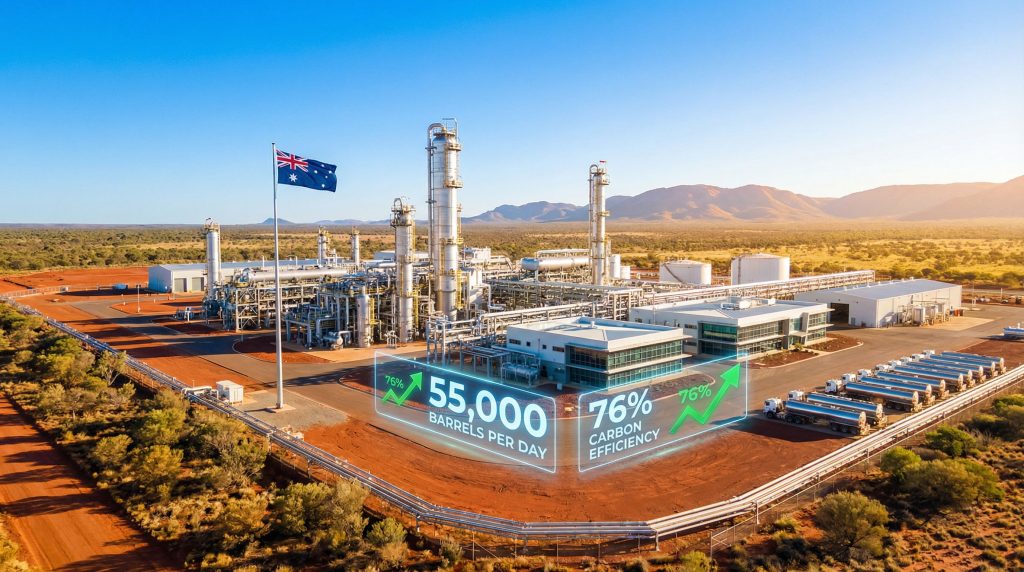
Recent feasibility studies have examined a 55,000 barrel-per-day Fischer-Tropsch facility utilising iron-based catalyst systems specifically adapted for Australian gas compositions. This integrated approach would combine fuel production with power generation capabilities, delivering 425 MW baseload capacity plus 200 MW peaking power.
Technical specifications indicate potential carbon efficiency targets of 76% with projected simple returns on investment reaching 21% under favourable conditions. These projections assume optimised slurry phase distillate processes that yield premium diesel products meeting international quality standards.
Modular Technology Advantages
Scalable processing units offer advantages for Australia's energy landscape through flexible deployment suitable for smaller gas discoveries and integration potential with existing natural gas processing infrastructure. In addition, offshore platform applications for stranded reserve monetisation and staged development approaches minimising initial capital exposure provide strategic benefits.
Australian Energy Companies Positioned for GTL Development
Several major Australian energy companies have conducted feasibility assessments and research partnerships exploring GTL implementation possibilities. The technology provider landscape includes local engineering firms developing Australian-specific solutions alongside international partnerships with proven GTL operators.
Research collaborations between universities and industry players have advanced pilot project development in Western Australia and Northern Territory regions. For instance, these partnerships demonstrate how effective investment strategies can accelerate technology deployment.
Key Industry Players:
- Woodside Energy: Feasibility studies with LNG infrastructure synergy
- Santos: Research partnerships leveraging Gladstone operations
- Origin Energy: Technology assessments with market distribution access
Global GTL Operations Providing Australian Benchmarks
International GTL facilities offer operational benchmarks for potential Australian development, demonstrating both technical feasibility and economic models under various conditions. These operations provide valuable insights into technology transfer opportunities.
Sasol Secunda Complex Performance Metrics
South Africa's Sasol Secunda facility represents the world's largest GTL operation, processing over 180,000 barrels per day through hybrid coal-to-liquids and gas-to-liquids technologies. Decades of operational experience in challenging environments provide relevant lessons for Australian climate and resource conditions.
Shell Pearl GTL Operational Data
Qatar's Pearl GTL facility processes 1.6 billion cubic feet of natural gas daily, producing 140,000 barrels per day of liquid products. Desert operations offer particularly relevant parallels for Australian conditions, with proven technology transfer opportunities for local adaptation.
These international operations demonstrate critical success factors including integrated power generation, premium product marketing, and operational efficiency optimisation that could inform Australian project development. Moreover, they highlight potential decarbonisation benefits through cleaner fuel production pathways.
Economic Viability Models for Australian GTL Projects
Financial viability for Australian gas-to-liquids industry development depends on multiple revenue stream optimisation and strategic policy alignment. Economic models must account for unique Australian market conditions and cost structures.
Revenue diversification strategies include premium diesel production targeting transport sector demand and high-value lubricant manufacturing for industrial applications. Furthermore, specialty chemical co-products enhance overall project returns while carbon credit generation through cleaner fuel production pathways provides additional value.
Government Policy Integration Opportunities
Strategic fuel reserve mandates could create guaranteed demand foundations for GTL projects. Tax incentive structures supporting domestic production, combined with infrastructure development partnerships, could significantly reduce capital requirements and improve project economics.
Energy security legislation prioritising local fuel sources would provide long-term market stability. However, integrated approaches combining GTL with renewable energy systems could access additional policy support mechanisms.
The next major ASX story will hit our subscribers first
Strategic Development Locations Across Australia
Geographic positioning significantly influences GTL project viability through feedstock access, infrastructure availability, and market proximity considerations. The selection of appropriate development locations remains crucial for project success.
Northern Territory Competitive Advantages
The Beetaloo Sub-basin gas discoveries provide abundant feedstock potential for large-scale GTL development. Proximity to Asian export markets enables surplus production monetisation, while existing pipeline infrastructure reduces development costs. Regional workforce development and supply chain establishment offer additional economic benefits.
Western Australia Integration Opportunities
Offshore gas reserves present opportunities for platform-based GTL processing, leveraging established energy sector expertise and supply chains. Port facilities enable efficient product distribution, with integration potential alongside existing LNG operations providing operational synergies.
Implementation Timeline Scenarios for Australian GTL
Development timelines for Australian gas-to-liquids industry projects depend on policy support, financing arrangements, and technology deployment strategies. Two primary pathways emerge from current analysis.
Accelerated Development Pathway (2027-2031)
An accelerated timeline requires immediate project approval and financing secured through public-private partnerships. Proven technology licensing from established international operators combined with streamlined environmental approvals and pre-committed offtake agreements with major users could enable rapid deployment.
Standard Development Cycle (2028-2033)
A standard development approach involves comprehensive feasibility studies and detailed engineering design. Staged construction minimises financial exposure while technology adaptation addresses specific Australian operating conditions. Premium product positioning develops specialised market segments over time.
According to the Australian Strategic Policy Institute, Australia's domestic crude oil reserves may be depleted by 2030, creating urgent requirements for alternative liquid fuel production capabilities.
Environmental Considerations for Australian GTL Development
Environmental impact assessment forms a critical component of GTL project evaluation, particularly regarding carbon footprint and water resource management in Australian conditions. These considerations increasingly influence project viability.
Carbon Efficiency Optimisation
GTL products typically contain lower sulfur content than conventional refined products, reducing emissions during combustion. Energy efficiency improvements through integrated facility design can optimise overall carbon performance, while carbon capture and storage integration offers additional environmental benefits.
Lifecycle analysis comparing GTL products to imported fuel alternatives must account for transportation emissions. Consequently, refinery processing impacts and domestic production benefits require comprehensive environmental assessment.
Water Resource Management
Process water requirements present particular challenges in arid Australian development regions. Advanced recycling systems can minimise environmental impact while protecting groundwater resources in sensitive areas. Sustainable operations design must address water scarcity constraints common in potential development locations.
Strategic Energy Security Implications
GTL development could fundamentally alter Australia's energy security profile through reduced import dependence and enhanced supply chain resilience. The Climate Council notes the strategic importance of domestic fuel production capabilities.
National Security Benefits
Domestic fuel production capabilities provide critical resilience during supply chain disruptions, particularly affecting military and emergency services operations. Regional economic development in resource-rich areas creates additional strategic value through workforce retention and industrial capacity building.
Economic Multiplier Effects
Direct employment during construction and operational phases generates substantial economic activity. In addition, indirect job creation in supporting industries amplifies regional benefits while technology development capabilities could position Australia as a GTL knowledge exporter.
Investment Framework Opportunities
Multiple investment models could support Australian gas-to-liquids industry development, ranging from private sector leadership to government partnership arrangements. These frameworks must balance commercial viability with strategic objectives.
Private sector participation models include joint venture structures sharing development risks among multiple parties. Technology licensing and specialised engineering services provision, downstream integration through product marketing networks, and financial services supporting project phases offer diverse opportunities.
Furthermore, government partnership frameworks through public-private partnerships could reduce initial capital requirements while maintaining commercial viability. Strategic investment through sovereign wealth funds, combined with infrastructure development supporting multiple projects, could create industry-wide benefits.
Critical Success Factors for Australian GTL Industry Development
Several key factors will determine whether Australia can successfully establish a viable gas-to-liquids industry within the current strategic window. These factors require coordinated attention from government and industry stakeholders.
Policy Coherence and Long-term Commitment
Consistent policy signals across federal and state levels are essential for investor confidence. Long-term energy security strategies must integrate GTL development with broader fuel security objectives, while regulatory frameworks should streamline approval processes without compromising environmental standards.
Technology Adaptation and Local Capability
Successful GTL implementation requires technology adaptation for Australian gas compositions and operating conditions. Building domestic engineering and operational expertise reduces long-term costs while creating exportable knowledge capabilities that enhance national competitiveness.
Market Development and Product Positioning
Premium product positioning targeting specialised applications could justify higher production costs compared to imported alternatives. Fleet operator partnerships and industrial user agreements provide market foundation for initial production phases, ensuring sustainable demand growth.
Despite significant potential, current analysis suggests Australia faces a narrowing window for establishing a competitive gas-to-liquids industry. The combination of increasing liquid fuel import dependence, domestic resource depletion timelines, and extended development periods creates urgent strategic choices for policymakers and industry participants seeking to enhance national energy resilience.
Disclaimer: This analysis contains forward-looking statements and industry projections that involve inherent uncertainties. Investment decisions should consider comprehensive risk assessment and professional financial advice. Economic projections, technical specifications, and timeline estimates are subject to market conditions, regulatory changes, and technological developments that may differ from current expectations.
Want to Stay Ahead of Energy Sector Discoveries?
Discovery Alert instantly delivers notifications on significant ASX mineral and energy discoveries using its proprietary Discovery IQ model, helping investors identify emerging opportunities in companies developing critical energy technologies. Begin your 14-day free trial today at Discovery Alert to gain immediate market insights across over 30 commodities, including energy minerals essential for Australia's strategic fuel security.