July 24, 2026
Australia's petroleum infrastructure operates within a framework of interconnected vulnerabilities that extends far beyond traditional emergency response protocols. When critical energy facilities face operational disruptions, the cascading effects reveal systemic weaknesses in supply chain resilience that have developed over decades of policy decisions prioritising cost efficiency over strategic redundancy. The recent blaze at Geelong oil refinery exemplifies how single infrastructure incidents can expose national fuel security vulnerabilities.
What Makes Oil Refinery Fire Response Different from Standard Industrial Emergencies?
Industrial fire incidents at petroleum facilities require specialised response protocols that distinguish them fundamentally from conventional manufacturing emergencies. The recent blaze at Geelong oil refinery demonstrates how hydrocarbon fires demand unique suppression methodologies and coordination frameworks.
Emergency response teams must deploy foam suppression systems specifically engineered for liquid fuel fires, which behave differently from solid material combustion. These systems require specialised training protocols that go beyond standard industrial firefighting certifications.
Emergency Response Hierarchy for Petroleum Facilities
The response structure for refinery incidents operates through multiple escalating tiers:
- Tier 1: On-site fire suppression systems with trained facility personnel
- Tier 2: Regional fire services equipped with hydrocarbon-specific training
- Tier 3: State emergency coordination managing supply chain implications
- Tier 4: National fuel security protocols activating import coordination
The VIVA Energy incident on April 16, 2026 activated all four tiers simultaneously. Fire Rescue Victoria deployed 50 firefighters to suppress the blaze that originated in the motor gasoline production section around 11pm local time. The fire burned through the night, forcing complete production shutdown at one of Australia's two operational refineries.
Specialised Equipment Requirements for Refinery Fires
Petroleum facility fires necessitate equipment specifications that differ markedly from standard industrial response gear:
- Heat-resistant protective equipment rated for petroleum environments
- Explosion-proof communication systems preventing ignition risks
- Air monitoring technology for toxic gas detection and personnel safety
- Specialised foam delivery systems designed for liquid hydrocarbon suppression
The compartmentalised nature of refinery operations, as evidenced by VIVA Energy's ability to maintain some production units while others remained offline, demonstrates the critical importance of containment systems in preventing cascade failures across interconnected processing areas.
When big ASX news breaks, our subscribers know first
Why Australia's Fuel Security Framework Remains Vulnerable to Single-Point Failures
Australia's petroleum infrastructure concentration creates systemic vulnerabilities that the Geelong incident exposed with stark clarity. The nation's fuel security depends on just two operating refineries, making every facility a critical single point of failure in the domestic supply chain. Furthermore, these vulnerabilities connect to broader OPEC production impact considerations affecting global oil markets.
Current Domestic Refining Capacity Analysis
| Facility | Location | Daily Capacity | Market Share | Primary Products |
|---|---|---|---|---|
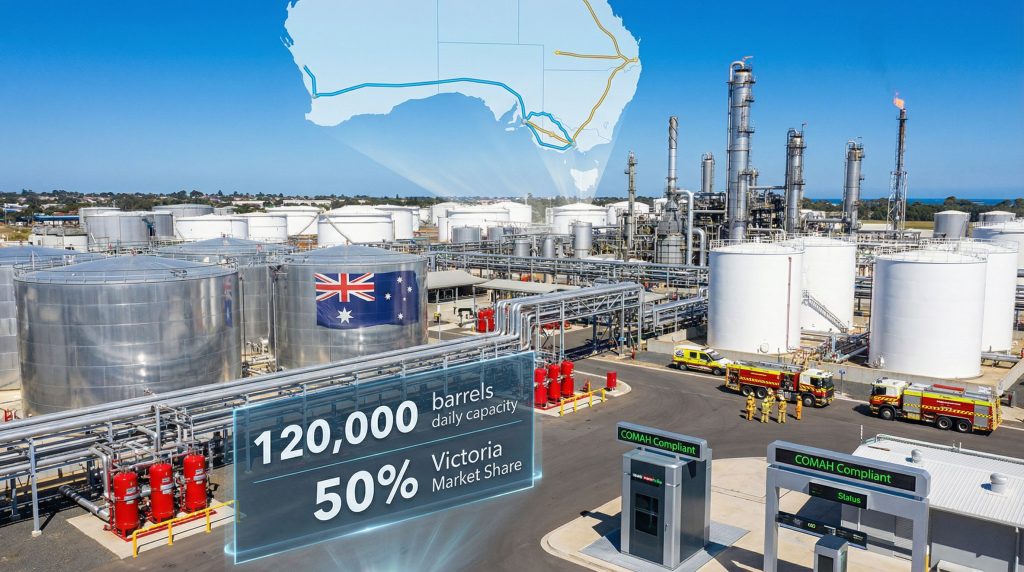
| Geelong Refinery | Victoria | 120,000 barrels | 50% Victoria, 10% National | Petrol, diesel, jet fuel |
| Lytton Refinery | Queensland | 109,000 barrels | 40% Queensland | Petrol, diesel |
The VIVA Energy Geelong facility supplies 50% of Victoria's fuel and 10% of Australia's national supply. When this single facility experiences operational disruption, the immediate impact cascades through regional distribution networks serving 1,300 Shell petrol stations across the continent.
VIVA Energy's role as Australia's only aviation fuel manufacturer creates additional vulnerability for the aviation sector. The company's total 25% national market share means that production disruptions at Geelong directly affect fuel availability across multiple transport sectors simultaneously.
Import Dependency Metrics
Australia's structural reliance on international fuel markets has reached critical levels:
- Current import reliance: Approximately 90% of liquid fuels sourced internationally
- Geographic concentration: Limited refining capacity in two facilities only
- Supply route vulnerability: Primary imports from Singapore, South Korea, Japan refineries
- Strategic timing: Incident occurred during regional supply pressure from geopolitical tensions
Energy Minister Chris Bowen's assessment that the timing was problematic reflects the broader context of existing supply constraints. The incident occurred during a period when Australia's refining capacity was already under pressure from international market disruptions and oil price stagnation factors.
What Industrial Safety Standards Apply to Australian Petroleum Refineries?
Australian petroleum facilities operate under multiple overlapping regulatory frameworks designed to prevent major accidents and ensure operational safety. The complexity of these requirements reflects the high-risk nature of large-scale hydrocarbon processing operations.
Regulatory Compliance Framework
Key regulatory structures governing refinery operations include:
- COMAH (Control of Major Accident Hazards) regulations for high-risk facilities
- AS 1940-2017 standards for storage and handling of flammable liquids
- Work Health and Safety Act 2011 industrial safety requirements
- Major Hazard Facilities licensing and continuous inspection protocols
These frameworks require facilities to maintain comprehensive safety management systems covering everything from equipment maintenance schedules to emergency response procedures. Compliance involves regular third-party audits and government inspections to verify adherence to safety standards.
Fire Prevention and Detection Systems
Modern refinery safety systems incorporate multiple layers of protection:
- Continuous gas monitoring throughout all processing units and storage areas
- Automated shutdown systems triggered by temperature and pressure threshold breaches
- Fire water deluge systems with dedicated high-capacity pumping infrastructure
- Emergency isolation valves designed to contain fuel spread and minimise incident scope
The compartmentalised impact of the blaze at Geelong oil refinery, where some production units continued operating while others remained offline, suggests these containment systems functioned as designed to prevent facility-wide shutdown.
How Do Refinery Fires Impact Downstream Supply Chain Operations?
Petroleum supply chains operate with minimal inventory buffers, making refinery disruptions immediately visible across distribution networks. The interconnected nature of fuel logistics means that production interruptions at major facilities create ripple effects throughout regional and national markets. However, these domestic challenges intersect with broader international trends including US oil production decline patterns.
Immediate Market Response Mechanisms
Supply chain operators activate several response protocols during refinery incidents:
- Terminal storage drawdown to maintain short-term distribution continuity
- Import acceleration from established international trading partnerships
- Cross-regional redistribution via pipeline and road transport networks
- Emergency sourcing from alternative suppliers and facilities
VIVA Energy CEO Scott Wyatt's confidence that imported fuel would cover production shortfalls demonstrates the industry's reliance on international markets for emergency supply response. However, this dependency creates cost pressures and supply timing uncertainties.
Aviation Industry Vulnerability Assessment
The aviation sector faces particular exposure due to concentration in jet fuel production:
- Production concentration: VIVA Energy serves as Australia's only aviation fuel manufacturer
- Limited storage capacity: Airports typically maintain 7-14 days of consumption inventory
- Service impact: Qantas had already reduced capacity by 5% prior to the incident due to existing fuel concerns
- Alternative sourcing: Import terminals provide backup supply routes with longer delivery timelines
The timing of the Geelong incident, following existing service reductions by major airlines, illustrates how supply chain vulnerabilities compound during periods of market stress.
What Emergency Protocols Activate During Critical Infrastructure Incidents?
Critical infrastructure incidents trigger coordinated response mechanisms involving multiple government agencies and industry participants. These protocols aim to maintain essential services whilst managing broader economic and security implications. Additionally, such incidents occur within the context of wider economic pressures including tariffs and inflation impact considerations.
Government Response Coordination
Emergency response involves multiple federal and state agencies:
- Department of Industry, Science and Resources monitors national fuel security implications
- Australian Energy Market Operator coordinates supply chain optimisation
- Emergency Management Australia manages cross-jurisdictional response protocols
- Competition and Consumer Act provisions enable temporary market coordination
Energy Minister Chris Bowen's immediate public statements regarding supply impact and alternative sourcing demonstrate the government's active monitoring role during infrastructure emergencies.
Industry Mutual Aid Agreements
Private sector coordination operates through established mutual assistance frameworks:
- Fuel company cooperation for emergency supply sharing arrangements
- Terminal access agreements allowing competitor product distribution
- Transport fleet coordination optimising delivery efficiency during disruptions
- Technical expertise sharing for incident response and recovery planning
These agreements enable rapid resource deployment whilst maintaining competitive market structures during normal operations.
How Do Fire Investigation Teams Determine Root Causes in Petroleum Facilities?
Post-incident investigations at petroleum facilities require specialised expertise combining process engineering, metallurgy, and human factors analysis. The complexity of refinery operations demands comprehensive examination of multiple potential failure modes.
Technical Analysis Methodology
Investigation teams employ systematic approaches to incident analysis:
- Process flow reconstruction identifying potential ignition sources and failure sequences
- Equipment failure analysis including metallurgical examination and corrosion assessment
- Human factors evaluation reviewing operational procedures and training adequacy
- Environmental conditions assessment examining weather, maintenance schedules, and operational context
The Geelong incident's origin in the motor gasoline production section provides investigators with a specific process area to examine for equipment degradation, procedural failures, or design inadequacies.
Common Failure Modes in Refining Operations
Historical incident analysis reveals recurring patterns in refinery fires:
- Hydrocarbon leak ignition resulting from equipment degradation or maintenance issues
- Static electricity discharge during fuel transfer and handling operations
- Hot work incidents occurring during scheduled or emergency maintenance activities
- Control system malfunctions leading to process parameter deviations
Understanding these failure modes helps investigators focus examination efforts on the most probable root causes whilst ensuring comprehensive analysis of all potential contributing factors.
The next major ASX story will hit our subscribers first
What Economic Implications Follow Major Refinery Incidents?
Major refinery incidents create immediate and extended economic consequences affecting facility operators, supply chain participants, and broader market stability. The financial impact extends beyond direct operational losses to encompass market volatility and strategic planning implications. Moreover, these incidents reflect broader trade war oil market impact dynamics affecting global energy markets.
Direct Financial Impact Assessment
| Cost Category | Immediate Impact | Extended Impact | Recovery Timeline |
|---|---|---|---|
| Production Loss | $2-5M per day | Equipment replacement costs | 3-12 months |
| Emergency Response | $500K-1M | Investigation and legal costs | 6-24 months |
| Supply Chain Disruption | Regional price volatility | Import cost increases | 1-6 months |
VIVA Energy's stock price movement to approximately $2.53 per share following the incident announcement reflects immediate market assessment of operational and financial impact. The company's $4.131 billion market capitalisation provides context for evaluating the incident's proportional significance.
Insurance and Risk Management Considerations
Major facility incidents engage multiple insurance mechanisms:
- Business interruption coverage compensating for lost production revenue
- Public liability protection addressing potential environmental and third-party impacts
- Supply chain insurance covering downstream customer disruption costs
- Reputation management expenses for brand protection and market confidence restoration
The comprehensive nature of modern industrial insurance reflects the interconnected risks associated with critical infrastructure operations.
How Can Australia Strengthen Energy Security Against Infrastructure Disruptions?
Enhancing Australia's energy security requires addressing structural vulnerabilities in petroleum infrastructure whilst developing alternative supply mechanisms. Strategic planning must balance immediate operational needs with long-term resilience objectives.
Strategic Reserve Enhancement Options
Multiple approaches can improve supply chain resilience:
- Increased storage capacity at major import terminals and distribution points
- Geographic diversification reducing concentration risk in refining capabilities
- Alternative fuel pathways including biofuels and synthetic production options
- Regional cooperation agreements with Asia-Pacific partners for emergency supply sharing
The current 90 days consumption equivalent strategic reserve capacity provides some buffer, but geographic concentration in import terminals creates additional vulnerability points requiring attention.
Technology Solutions for Resilience
Advanced monitoring and control systems offer enhanced operational safety:
- Predictive maintenance systems using IoT sensors and artificial intelligence analytics
- Digital twin modelling for process optimisation and comprehensive risk assessment
- Advanced fire suppression technology including water mist and inert gas systems
- Remote monitoring capabilities enabling early incident detection and response
These technologies can help prevent incidents whilst providing faster response capabilities when emergencies occur.
What Lessons Can Other Critical Infrastructure Sectors Learn?
The petroleum sector's experience with infrastructure vulnerability provides valuable insights for other critical industries facing similar concentration risks and supply chain dependencies.
Cross-Industry Risk Management Principles
Key risk management concepts apply across infrastructure sectors:
- Single-point-of-failure identification across all mission-critical systems and processes
- Redundancy planning ensuring alternative pathways for essential service delivery
- Emergency response integration between public and private sector capabilities
- Supply chain mapping to understand vulnerability concentrations and interdependencies
The immediate activation of import sourcing following the Geelong incident demonstrates the importance of pre-established alternative supply relationships.
Best Practice Implementation Framework
Effective infrastructure resilience requires systematic approaches:
- Regular scenario testing through tabletop exercises and live emergency drills
- Stakeholder coordination protocols established before incidents occur rather than during crisis response
- Communication strategies maintaining public and market confidence during disruptions
- Recovery planning with clear timelines and responsibility allocation amongst participants
The coordinated response involving VIVA Energy, government agencies, and emergency services illustrates the value of pre-established coordination mechanisms. In addition, the widespread coverage of the incident across multiple news platforms demonstrates the national significance of such infrastructure events.
The blaze at Geelong oil refinery serves as a stark reminder of Australia's energy infrastructure vulnerabilities. Consequently, this incident highlights the urgent need for strategic diversification and enhanced emergency preparedness across critical sectors. Furthermore, the rapid response coordination demonstrates existing capability whilst revealing areas requiring strengthened resilience planning for future infrastructure security.
This analysis is for informational purposes only and should not be considered as investment advice. Market participants should conduct independent research and consult qualified professionals before making financial decisions. Infrastructure investment involves significant risks including regulatory changes, operational disruptions, and market volatility.
Ready to Invest in the Next Major Mineral Discovery?
Discovery Alert instantly alerts investors to significant ASX mineral discoveries using its proprietary Discovery IQ model, turning complex mineral data into actionable insights. Begin your 14-day free trial today to position yourself ahead of the market and understand why historic discoveries can generate substantial returns by exploring Discovery Alert's dedicated discoveries page.