July 20, 2026

Geographic Chokepoints and Energy Infrastructure Vulnerabilities
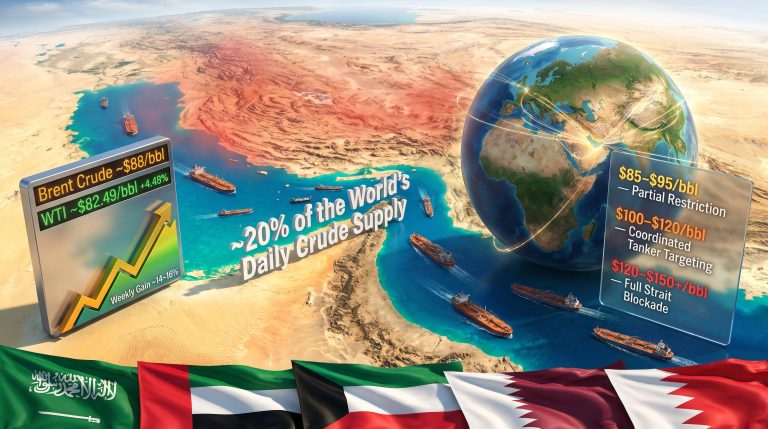
The US-Israeli war with Iran and Strait of Hormuz closure represents one of the most significant threats to global energy markets, as supply chains become increasingly concentrated through critical maritime passages. The interconnected nature of modern energy systems creates cascading risks that extend far beyond traditional crude oil disruptions, encompassing refined products, liquefied natural gas, and petrochemical supplies that underpin industrial economies worldwide.
Energy security analysts recognise that contemporary supply disruptions represent fundamentally different challenges compared to historical crises. While past energy shocks primarily affected crude oil flows, today's integrated energy infrastructure creates multi-product vulnerabilities that can simultaneously impact transportation fuels, heating supplies, and industrial feedstocks across multiple continents.
When big ASX news breaks, our subscribers know first
Strategic Maritime Passages and Energy Transit Volumes
The concentration of energy flows through narrow maritime chokepoints creates systemic risks that have intensified as global demand has more than doubled since the 1970s. Furthermore, critical waterways now handle substantially larger volumes of crude oil, refined products, and liquefied natural gas compared to previous decades when energy markets were more regionally focused.
Key Transit Statistics:
• Approximately 20% of global oil transit passes through the Strait of Hormuz
• Qatar's LNG exports represent roughly one-fifth of global liquefied natural gas production
• Gulf-based refineries supply jet fuel to Africa, Europe, and Asia
• Regional energy infrastructure handles over 12 million barrels per day during normal operations
The strategic importance of these passages has grown dramatically since the 1990s, when many current energy export facilities were constructed. In addition, Qatar's entry into the LNG market in 1996 exemplifies how energy infrastructure development has created new dependencies that did not exist during earlier crisis periods.
Historical Energy Crisis Comparisons and Supply Disruption Analysis
Energy supply disruptions throughout history demonstrate escalating complexity and scale as global energy consumption patterns have evolved. Moreover, modern crisis scenarios involve simultaneously disrupted crude oil, natural gas, refined fuel, and fertilizer supplies, exposing vulnerabilities created by decades of rising demand and deeper international trade relationships.
Historical Supply Disruption Comparison:
| Crisis Period | Peak Daily Loss (Million BPD) | Global Demand Share | Primary Products Affected |
|---|---|---|---|
| 1973-74 Arab Oil Embargo | 4.5 | 8.2% | Crude oil primarily |
| 1978-79 Iranian Revolution | 5.6 | 9.8% | Crude oil primarily |
| 1991 Gulf War | 4.3 | 7.1% | Crude oil primarily |
| Contemporary Scenarios | 12.0+ | 11.5% | Multi-product disruption |
The cumulative impact assessment reveals significant differences in disruption patterns. According to International Energy Agency and US Department of Energy data, the 1978-79 Iranian Revolution resulted in approximately 4.27 billion barrels of cumulative losses over three years, representing an average production drop of 3.9 million barrels per day from 1978 to 1981.
However, earlier energy shocks of the 1970s caused lasting economic damage and weakened governments, remaining prominent in the collective memory of industrialised nations that experienced months of fuel shortages and lengthy queues at petrol stations.
Cumulative Loss Analysis:
• Iranian Revolution (1978-79): 4.27 billion barrels over three years
• Arab Oil Embargo (1973-74): 530-650 million barrels over five months
• Gulf War (1991): 516 million barrels over four months
• Russia-Ukraine Impact (2022): 1 million barrels per day at peak disruption
Multi-Sector Energy Supply Chain Vulnerabilities
Modern energy markets face integrated supply chain risks that extend far beyond crude oil production disruptions. Consequently, the Middle East's expanded role as a supplier of finished fuels creates new dependencies that were largely absent during historical energy crises of the 1970s and 1980s.
Contemporary Multi-Product Vulnerabilities:
• Refined Products: Gulf refineries built in recent decades serve as key global fuel suppliers
• Natural Gas: LNG industry expansion since the 1990s creates new disruption pathways
• Petrochemicals: Fertilizer production disruptions affect global agricultural supply chains
• Industrial Feedstocks: Chemical processing facilities depend on Middle Eastern hydrocarbon inputs
The world consumes substantially more natural gas than during the oil shocks of the 1970s-1990s, when the LNG industry was nascent and Qatar had not yet begun exporting liquefied natural gas.
Regional supply vulnerabilities initially manifest through shortages affecting Asia and Africa, contrasting with historical patterns where North American and European markets bore the primary impact of energy disruptions. For instance, this geographic shift reflects evolving trade relationships and infrastructure development patterns over the past several decades.
Evolution of Global Energy Market Structure
Energy market fundamentals have transformed dramatically since the major supply shocks of previous decades. Furthermore, global oil demand has nearly doubled from 50-60 million barrels per day in the 1970s to over 104 million barrels per day in current projections, while spare production capacity has become increasingly constrained.
Structural Market Evolution Framework:
| Market Factor | 1970s Era | Contemporary Period |
|---|---|---|
| Global Oil Demand | 50-60 million BPD | 104+ million BPD |
| LNG Industry Scale | Nascent development | 400+ million tonnes annually |
| Spare Capacity Flexibility | Saudi Arabia, UAE swing production | Limited emergency response capability |
| Supply Chain Integration | Regional focus | Global interconnectedness |
The International Energy Agency, established following the Arab oil embargo to advise industrialised countries on energy supply and security, now manages emergency oil stocks across member nations. Additionally, the organisation can deploy strategic stockpiles to stabilise prices and offset supply disruptions, with emergency release capabilities of up to 400 million barrels.
Emergency response mechanisms have evolved to include coordinated strategic reserve deployment, member country stockpile management systems, and market stabilisation intervention strategies that were undeveloped during earlier crisis periods.
Regional Impact Assessment and Supply Security Analysis
Different regions face varying degrees of vulnerability to energy supply disruptions based on import dependencies, alternative supply access, and strategic reserve capabilities. However, Asian markets demonstrate particularly acute exposure to Middle Eastern energy supplies across multiple product categories.
Asia-Pacific Supply Dependencies:
• China: Among world's top oil consumers with significant Gulf import reliance
• Japan and South Korea: Heavy dependence on LNG imports for electricity generation
• India: Substantial crude oil import requirements from Middle Eastern suppliers
• Southeast Asia: Limited domestic refining capacity relative to demand growth
European energy resilience has been tested through recent diversification efforts following the 2022 Ukraine crisis, which triggered a comprehensive reassessment of supply security priorities. European countries scrambled to reduce dependence on Russian oil and gas, with Russian oil output declining by approximately 9% during April 2022 according to US Energy Information Administration data.
African market vulnerabilities centre on refined product import dependencies, particularly jet fuel supplies that support aviation networks and economic development across the continent.
The next major ASX story will hit our subscribers first
What are Spare Production Capacity and Emergency Response Capabilities?
Current spare production capacity represents a critical constraint in managing major supply disruptions. Traditional swing producers face technical and political limitations that reduce their ability to compensate for large-scale supply losses compared to historical periods when reserve capacity was more abundant.
Emergency Production Response Analysis:
| Producer | Current Output | Maximum Sustainable Capacity | Response Timeline |
|---|---|---|---|
| Saudi Arabia | 11.5 million BPD | 12.5 million BPD | 30-90 days |
| United Arab Emirates | 3.2 million BPD | 4.2 million BPD | 60-120 days |
| Kuwait | 2.8 million BPD | 3.2 million BPD | 90+ days |
| US Shale Production | Variable output | Market-dependent | 6-12 months |
During contemporary crisis scenarios like a US-Israeli war with Iran and Strait of Hormuz closure, countries with traditionally flexible spare capacity may themselves be affected by maritime chokepoint closures, eliminating their ability to provide emergency production increases that helped stabilise markets during previous disruptions.
Economic Impact Modelling and Price Transmission Mechanisms
Energy supply disruptions transmit economic impacts through multiple channels, including direct energy price increases, inflation pass-through effects, and macroeconomic adjustments that affect growth, employment, and monetary policy responses. Consequently, understanding these mechanisms becomes critical for policy planning and the oil price rally analysis during crisis periods.
Price Impact Assessment Framework:
• Historical Price Elasticity: Demand destruction thresholds vary by economic sector
• Strategic Reserve Effectiveness: Emergency releases provide temporary price stabilisation
• Market Sentiment Amplification: Speculation and fear-based trading magnify price volatility
• Currency and Trade Balance Effects: Energy-importing nations face balance of payments pressures
Central bank policy responses to sustained energy price increases involve complex trade-offs between controlling inflation and maintaining economic growth. Furthermore, these responses have different implications for interest rates, currency stability, and fiscal policy coordination, particularly when considering US natural gas forecast scenarios.
Geopolitical Risk Assessment and Market Psychology
Energy markets increasingly incorporate geopolitical risk premiums that reflect the probability of supply disruptions, infrastructure vulnerabilities, and potential conflict escalation in key producing regions. Risk assessment methodologies must account for multiple scenario pathways and their respective economic implications, especially regarding oil price movements trade war dynamics.
Risk Modelling Components:
• Conflict Escalation Probability: Assessment of diplomatic resolution prospects
• Infrastructure Vulnerability: Critical facility protection and redundancy analysis
• Alternative Supply Development: Timeline for emergency supply route activation
• Market Psychology Factors: Investor positioning and media coverage impact on price discovery
Moreover, hedge funds and institutional investors adjust positioning based on geopolitical developments, creating potential disconnects between physical market fundamentals and financial market pricing that can persist for extended periods. According to recent ceasefire negotiations, diplomatic efforts continue amid ongoing tensions.
Long-Term Strategic Implications and Policy Evolution
Major energy supply disruptions accelerate strategic policy evolution across multiple dimensions, including domestic production investment priorities, international cooperation frameworks, and critical infrastructure protection strategies. Additionally, these disruptions highlight the importance of US oil production decline planning and mitigation strategies.
Strategic Policy Development Areas:
• Reserve Capacity Optimisation: Balancing cost and security considerations in stockpile management
• Supply Chain Diversification: Reducing concentration risks through alternative supplier development
• Technology Innovation: Advanced crisis response capabilities and market stabilisation tools
• International Cooperation: Enhanced coordination mechanisms among energy-importing nations
Market structure adaptation involves supply chain diversification imperatives, renewable energy transition acceleration, and energy efficiency investment drivers that collectively reduce vulnerability to traditional hydrocarbon supply disruptions. Furthermore, the US-Israeli war with Iran and Strait of Hormuz closure scenario underscores the critical importance of energy security transition planning.
Investment Strategy Considerations and Market Dynamics
Energy supply disruptions create complex investment implications across multiple asset classes, sectors, and geographic regions. Consequently, investors must navigate volatility while identifying opportunities that emerge from structural market changes and policy responses.
Investment Strategy Framework:
• Energy Security Infrastructure: Strategic petroleum reserves, alternative fuel production, pipeline capacity
• Technology Solutions: Energy efficiency systems, renewable energy expansion, smart grid development
• Regional Market Positioning: Geographic diversification based on supply security assessments
• Currency and Commodity Hedging: Risk management for energy price volatility exposure
Long-term investment themes include domestic energy production capabilities, infrastructure resilience projects, and technology platforms that enhance energy system flexibility and crisis response effectiveness. However, the potential for a US-Israeli war with Iran and Strait of Hormuz closure remains a significant risk factor that must be incorporated into comprehensive investment planning strategies.
Disclaimer: This analysis incorporates hypothetical scenarios for illustrative purposes and should not be construed as investment advice. Energy market conditions, geopolitical situations, and economic impacts are subject to rapid change. Historical data and projections are based on publicly available sources and may not reflect current market conditions. Readers should consult qualified professionals before making investment or policy decisions based on energy market analysis.
Looking to Capitalise on Energy Market Disruptions?
Discovery Alert's proprietary Discovery IQ model delivers real-time alerts on significant ASX mineral discoveries, including critical energy metals and resources that could benefit from global supply chain disruptions. Understand why major mineral discoveries can generate substantial returns during periods of geopolitical uncertainty, then begin your 14-day free trial to position yourself ahead of market volatility.