May 13, 2026
## Geographic Constraints and Energy Dependencies
Geographic constraints and energy dependencies intersect at critical maritime chokepoints where regional disruptions can trigger cascading effects across global supply chains. In this environment, geopolitical tension in the Strait of Hormuz plays a key role, influencing not only regional security but also global economic dynamics. Furthermore, strategic waterways are natural points of vulnerability that attract asymmetric challenges, making crisis management a multifaceted endeavour.
## Understanding the Strategic Importance of Maritime Chokepoints
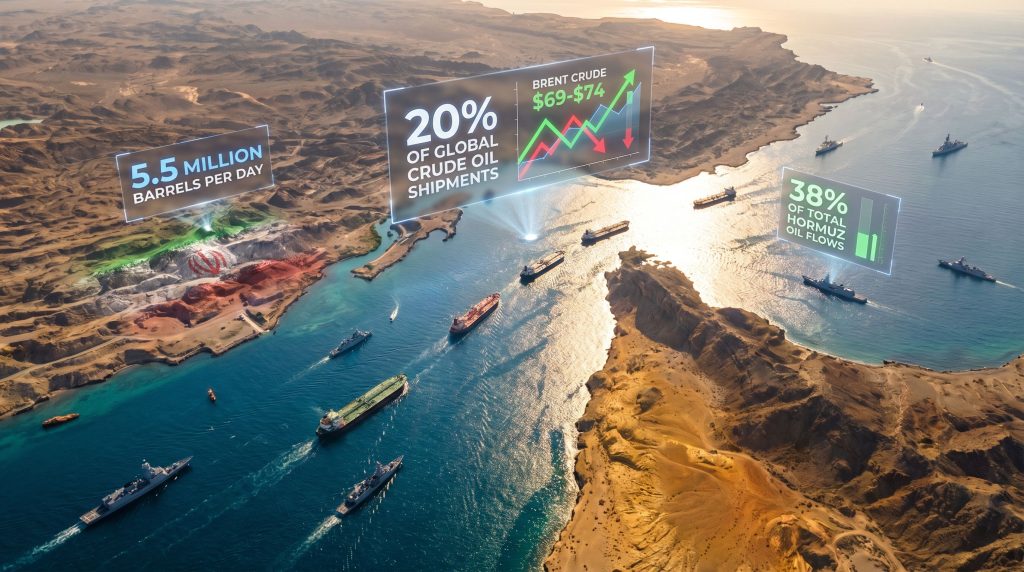
Maritime chokepoints function as critical nodes in global energy infrastructure where geographic constraints create concentrated vulnerability. For instance, the Strait of Hormuz exemplifies this phenomenon, serving as the primary transit corridor for approximately 20% of global oil flows. In addition, market participants closely monitor oil price dynamics to gauge how swiftly prices adjust in response to potential interruptions in energy supply.
The strategic significance extends beyond simple transit volume. The waterway connects Persian Gulf production centres, which contain approximately 48% of global proven oil reserves, with international consumption markets, particularly in Asia. Consequently, disruption scenarios affect not only immediate energy supplies but also long-term strategic planning for energy-dependent economies.
Energy transit through the Strait demonstrates the vulnerability inherent in concentrated infrastructure dependencies. When tensions escalate, oil prices respond immediately to perceived supply risks rather than actual shortages, as seen when Brent crude briefly reached $100 per barrel during previous episodes. This price sensitivity highlights that market players account for risk premiums even when actual volumes remain available.
The concentration of energy flows through a single waterway creates systemic risk extending far beyond regional boundaries. Asian economies that rely heavily on Middle Eastern exports are particularly exposed, with China consuming approximately one-third of total Hormuz flows. This reliance compels nations to adopt robust global trade impact measures and strategic planning to mitigate potential disruptions.
## What Makes the Strait of Hormuz Vulnerable to Disruption?
### Geographic and Strategic Constraints
The Strait's narrow dimensions create inherent vulnerability that cannot be fully mitigated by technology or diplomacy. At its narrowest point, the channel spans roughly 33 kilometres, thus forcing commercial shipping into concentrated transit lanes that are easier to monitor and, consequently, tariff market effects can be felt during increased scrutiny.
Water depth and navigation constraints further compound these vulnerabilities. Large crude carriers must adhere to established lanes, creating predictable bottlenecks where ships become susceptible to interdiction. Moreover, alternative routes, although available, require an additional 15 days transit time and impose cost premiums between 20-30%, keeping the risks high even when contingency plans are in place.
Additionally, the absence of immediate alternative infrastructure exacerbates the problem. While nations maintain strategic petroleum reserves, these serve only as temporary buffers against disruptions of around one-fifth of global oil flows, thereby not completely offsetting the inherent risks.
### Naval and Military Considerations
Asymmetric warfare capabilities allow regional actors to challenge conventional shipping norms despite their limited naval resources. Anti-ship missile systems, agile patrol craft, and irregular warfare tactics significantly increase operational risks. Recent incidents, such as Iran seizing two vessels, illustrate how rapid escalation can occur while both Tehran and Western powers implement simultaneous shipping restrictions.
Furthermore, the effectiveness of such asymmetric deterrence hinges on creating credible costs for any potential intervention. Regional forces thus strategically balance the need for escalation against the risk of provoking overwhelming international responses. In addition, a steady international naval presence, despite its benefits, cannot completely neutralise the threat from irregular tactics employed by smaller forces.
## How Do Current Tensions Manifest in Market Dynamics?
### Oil Price Volatility Patterns
Energy markets have repeatedly demonstrated their sensitivity to fluctuations emerging from the Strait region. For example, during periods of heightened risk, Brent crude prices surged to $100 per barrel. The price formation during these times hinges on mechanisms that include:
• Immediate spot adjustment in response to current supply constraints
• Incorporation of risk premiums for anticipated future disruptions
• Inventory signalling based on expectations regarding storage drawdowns
These components indicate that market participants are not only reacting to present shortages but are also hedging against future uncertainties. Additionally, the dynamics of energy security strategies further accentuate risk-assessment models.
### Supply Chain Risk Assessment
Despite significant regional constraints affecting roughly 20% of global oil flows, many major consumption centres have not yet experienced proportional shortages. This observation implies that measures such as alternative sourcing, temporary inventory drawdowns, and adaptive demand adjustment mechanisms offer short-term resilience. For instance, countries like Japan, South Korea, and India actively manage their strategic petroleum reserves while also forging alternative supply arrangements, although these efforts are limited by inherent geographic dependencies.
Moreover, extended shipping routes create additional logistical challenges by adding 15 days to transit times and incurring higher costs. Consequently, industries dependent on reliable delivery schedules face broader operational risks. This interplay between extended transit delays and the principles of supply chain management emphasises the underlying vulnerabilities that are often catalysed by such disruptions.
## What Strategic Scenarios Could Emerge from Escalating Tensions?
### Graduated Escalation Model
Scenario modelling reveals several potential escalation pathways for the Strait crisis. One plausible model is the Graduated Escalation Model, which unfolds in predictable phases where regional actors intermittently increase pressure:
-
Administrative Pressure:
• Enhanced vessel inspections creating transit delays
• Increased documentation requirements and processing times
• Selective targeting of specific flag states or cargo types -
Economic Coercion:
• Implementation of transit fees or port charges
• Preferential treatment for allied nations’ vessels
• Insurance cost escalations affecting risk calculations -
Selective Restriction:
• Temporary closure affecting specific vessel categories
• Partial lane closures during peak periods
• Time-limited restrictions maintaining minimal commercial access -
Complete Interdiction:
• Total closure triggering international interventions
• Potential military confrontations with external naval forces
• Conflict escalation that extends beyond maritime boundaries
This model relies on carefully managed escalations, whereby regional actors balance leverages without triggering a full-scale international response.
### Diplomatic Resolution Framework
An alternative pathway focuses on diplomatic resolves that address longstanding disputes while sustaining energy transit. However, with current peace talks stalled, significant breakthroughs remain elusive. For instance, nations may face energy transition challenges that complicate discussions further. Successful resolution mechanisms typically involve:
• Face-saving measures for all parties
• Third-party guarantees from influential powers
• Economic incentive packages to offset revenue losses
• Rigorous monitoring protocols to ensure compliance
Additionally, the involvement of external authoritative bodies, such as the UN Conference on Trade and Development, could facilitate consensus by highlighting the severity of global trade disruptions affecting international markets.
### Alternative Route Development
Alternative routes, such as the Cape of Good Hope option, provide temporary relief but impose substantial economic costs. The extended transit adds 15 days of travel time along with cost penalties ranging from 20-30%. Other alternatives include developing pipelines or expanding strategic reserves, yet these measures require significant capital and long planning horizons. In addition, recent studies provide comprehensive hormuz crisis details that underscore the broader implications of such shifts.
## How Do Regional Powers Navigate These Strategic Challenges?
### Iranian Strategic Positioning
Iran demonstrates calculated risk management by balancing its capacity for disruption with the need to avoid triggering a comprehensive international response. Its recent seizure of vessels highlights both its military capabilities and risk tolerance in the face of international scrutiny. Iranian positioning is driven by several factors, including:
• Economic leverage through control of the waterway
• Deployment of asymmetric capabilities against superior conventional forces
• Intensive management of escalation risks
• Diplomatic flexibility allowing simultaneous negotiation and pressure
By maintaining a delicate balance, Iran ensures that its actions remain within thresholds that deter immediate international military intervention while exerting credible influence.
### Gulf State Adaptation Strategies
Gulf states have also adopted contingency measures to mitigate their exposure to potential disruptions. For instance, regions such as Saudi Arabia have maintained transit capacities of around 5.5 million barrels per day through the Strait. Their adaptation strategies include:
• Developing alternative export infrastructures via Red Sea and Mediterranean pipelines
• Enhancing domestic storage capacities to maintain production during crises
• Diversifying transportation methods to reduce reliance on a single route
• Coordinating diplomatically with international security collaborators
These strategies, although effective in some respects, highlight the persistent challenge of managing concentrated infrastructure risks.
### International Coalition Responses
International responses have underscored a commitment to deterrence without provoking further escalation. Western nations, while maintaining a robust naval presence, rely on multilateral coordination to ensure stability. Their response strategies typically encompass:
• Deterrence through strategic naval deployments
• Coordination among energy-dependent coalition members
• Economic sanctions and diplomatic isolation measures
• Preparedness for potential military contingencies
Such responses require ongoing recalibration in response to evolving threat assessments and diplomatic signals.
## What Economic Implications Extend Beyond Energy Markets?
### Global Inflation Pressures
Energy price volatility has significant ripple effects on global inflation. Sectors such as transportation, manufacturing, and retail endure cost pressures that ultimately lead to higher consumer prices. When energy cost spikes contribute to inflation, central banks face tricky policy choices. In addition, higher oil prices naturally prolong inflation concerns and push back expectations for interest rate adjustments.
### Currency and Financial Market Effects
Safe-haven flows during heightened tensions further intensify market volatility, particularly impacting emerging markets. Typically, assets in stable reserve currencies appreciate while energy-dependent emerging markets face depreciation pressures as trade balances widen. Observations of these dynamics have also contributed to global trade impact assessments that monitor shifts in market confidence.
### Trade Route Diversification Costs
Alternative shipping routes, despite being viable, incur substantial logistical and operational costs. Extended voyage durations, increased fuel expenditures, and higher insurance premiums collectively burden firms reliant on seamless global trade. These structural inefficiencies underscore the economic pressures inherent in diverting from established energy transit corridors.
## How Do Major Powers Manage Competing Interests?
### Chinese Energy Security Calculations
As the largest consumer of Hormuz crude, China faces a complex balancing act. Its heavy reliance demands extensive diplomatic engagement and the development of alternative sourcing methods. Measures include expanding strategic reserves, investing in infrastructure projects, and engaging in regional supply coordination. A careful assessment of these strategies remains critical, as any further escalation in geopolitical tension in the Strait of Hormuz could prompt radical shifts in global energy trade dynamics.
### European Strategic Dilemmas
European Union nations confront dual challenges: maintaining alliance solidarity while ensuring domestic energy security. The EU’s strategic response involves accelerating renewable energy initiatives, diversifying import partnerships, and realigning policy frameworks to cushion the impact of Middle Eastern supply uncertainties. Such adaptations underscore the region’s long-term commitment to reducing its vulnerability to concentrated infrastructure risks.
### Asian Consumer Coordination
Countries like Japan, South Korea, and India actively coordinate their responses to potential supply disruptions. Their collaborative measures include:
• Joint management of strategic petroleum reserves
• Coordinated alternative sourcing to stabilize market prices
• Shared infrastructure utilisation for refined product imports
• Diplomatic efforts with energy-producing nations
This level of coordination is essential for managing future scenarios, particularly if sustained geopolitical tension in the Strait of Hormuz persists.
## What Risk Mitigation Strategies Are Most Effective?
### Diversification Approaches
Comprehensive risk mitigation requires a multi-pronged approach. Among the most effective are:
• Alternative Supply Sources (2–5 years): Offering high effectiveness by reducing geographic concentration
• Pipeline Development (5–10 years): Involving high capital investment yet promising substantial risk reduction
• Strategic Reserve Expansion (1–2 years): Providing a moderate buffer during supply disruptions
• Floating Storage Solutions (6–18 months): Affording flexible, temporary deployment options
A portfolio approach combining these strategies offers a more resilient framework against unpredictable shocks.
### Technology and Infrastructure Solutions
Advanced monitoring systems are central to improving crisis responses. Key technological initiatives include:
• Real-time vessel tracking for rapid rerouting
• Automated inventory management to optimise storage utilisation
• Predictive risk assessment to flag early disruption indicators
• Alternative routing optimisation to minimise cost penalties during shifts
These technological solutions complement traditional strategies, enhancing overall operational agility.
## How Should Investors and Businesses Prepare for Strait-Related Volatility?
### Portfolio Risk Assessment
Business leaders in energy-dependent sectors must adopt robust scenario planning and hedging strategies. Their risk assessments should cover:
• Direct energy cost exposure along the supply chain
• Supply chain vulnerabilities due to extended transit times
• Currency risks from fluctuating import costs
• Competitive repositioning in volatile market environments
Thorough analysis and proactive management of these factors are key to resilience.
### Supply Chain Resilience Building
Developing contingency sourcing strategies and maintaining elevated inventories is essential. Techniques that strengthen resilience include:
• Supplier diversification to avoid overreliance on single sources
• Expanded buffer inventories for critical components
• Alternative logistics arrangements to ease transit disruptions
• Effective crisis communication protocols for operational cohesion
Investment in these measures, though initially costly, provides a strategic safeguard against potential supply chain shocks.
### Currency and Commodity Hedging
Financial instruments such as energy price futures and currency forwards serve as vital risk management tools. Additionally, inflation-linked securities can mitigate broader cost escalations. A balanced hedging strategy is essential for companies facing multi-dimensional exposures during crisis periods.
## What Long-Term Structural Changes May Emerge?
### Energy Transition Acceleration
Persistent Strait tensions could accelerate the pace of renewable energy adoption. In response, initiatives such as:
• Renewable capacity expansion
• Increased electric vehicle uptake
• Electrification of industrial processes
• Investment in energy storage solutions
could redefine global energy markets. As nations push forward on these fronts, the convergence of energy security and sustainability goals becomes more pronounced.
### Geopolitical Realignment Possibilities
Regional power dynamics may evolve as countries seek to reduce dependency on critical maritime corridors. Potential shifts include:
• Formation of alternative energy partnerships
• Increased infrastructure investment cooperation
• New security cooperation agreements
• Accelerated technology sharing arrangements
These anticipated realignments may eventually lead to broader international restructuring.
### Infrastructure Development Priorities
Finally, long-term investment strategies are likely to prioritise:
• Pipeline infrastructure bypassing chokepoints
• Port capacity enhancements for alternative routing
• Expanded storage facilities
• Renewable infrastructure development
The ongoing evolution of geopolitical tension in the Strait of Hormuz continues to shape discussions around these investments.
In conclusion, effective management of the present challenges relies on multi-layered strategies that blend immediate crisis response with long-term planning. As geopolitical tension in the Strait of Hormuz remains a critical influence, organisations and nations must remain agile and forward-thinking. Preparedness now will ensure better resilience against both current shocks and future structural changes.
Ready to Capitalise on Energy Market Volatility?
Discovery Alert's proprietary Discovery IQ model delivers real-time alerts on significant ASX mineral discoveries, including critical energy transition commodities that often surge during geopolitical crises like those affecting the Strait of Hormuz. Begin your 14-day free trial today to position yourself ahead of market volatility and identify actionable investment opportunities as global energy dynamics reshape commodity markets.