May 22, 2026
Geographic Positioning Strategy in Battery Materials Processing
NextSource Materials' strategic selection of the United Arab Emirates for battery anode production represents a calculated approach to leverage Middle Eastern logistics advantages while establishing operations outside Chinese-dominated supply chains. The company's $291 million investment in Abu Dhabi targets positioning as the largest non-Asian anode producer, with full facility capacity reaching 30,000 tonnes per annum of anode active material.
Furthermore, this positioning aligns with broader battery metals investment trends prioritising supply chain diversification across critical materials sectors.
Industrial Infrastructure Advantages Within ICAD Framework
Industrial City Abu Dhabi provides established manufacturing infrastructure supporting rapid facility deployment. The pre-existing industrial building acquisition eliminates typical 24-36 month greenfield construction timelines common in battery materials processing facilities. This approach reduces project risk while accelerating time-to-market for anode material production.
The UAE's streamlined regulatory environment for industrial projects contrasts with more complex frameworks in North America and Europe. ICAD hosts over 550 industrial facilities across 17 specialized sectors, providing proven logistics infrastructure including dedicated utilities, waste management systems, and proximity to Khalifa Port, which handles over 2 million TEU containers annually.
Equipment procurement logistics benefit from established Middle Eastern trade routes and reduced shipping complexities compared to alternative jurisdictions. Long-lead processing equipment delivery coordination becomes more manageable within ICAD's established industrial ecosystem, where specialized equipment handling and installation services are readily available.
Front-End Engineering and Technology Integration
The Front-End Engineering Design progression encompasses process flow diagrams, equipment specifications, utility requirements, and detailed cost estimation before final investment decision implementation. This phase typically requires 6-9 months for facilities of comparable scale in battery materials processing, establishing critical technical parameters for operational success.
Technology transfer implementation leverages proven East Asian processing methodologies with established track records supplying Tesla and Toyota supply chains. Additionally, these methodologies incorporate sustainable battery recycling principles that enhance overall environmental performance while maintaining production quality.
Quality certification systems must achieve automotive-grade specifications, typically requiring 12-18 months from initial sample submission to production approval with major OEMs. The established technology partnerships provide operational expertise supporting production optimization and customer qualification processes.
When big ASX news breaks, our subscribers know first
Phased Development Approach for Capital Optimization
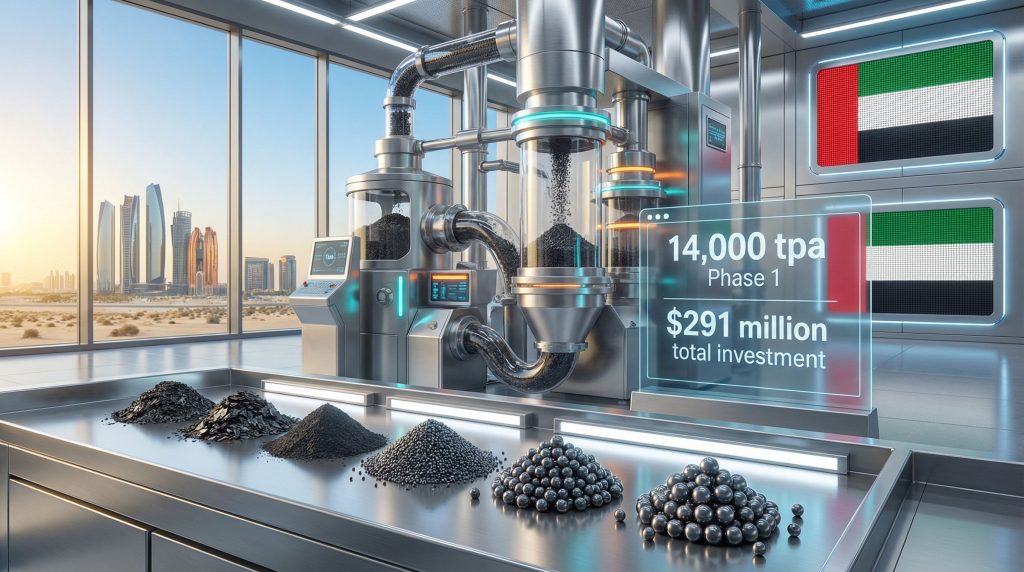
Modular expansion strategies enable demand validation while optimizing capital deployment across multiple development phases. Phase 1 targets 14,000 tonnes per annum with production commencement in Q4 2026, while Phase 2 expansion reaches full 30,000 tpa capacity by early 2028.
Phase 1 Operational Framework and Market Validation
Initial capacity deployment focuses on establishing processing know-how and quality certification with anchor customers. The binding offtake agreement with Mitsubishi Chemical secures 9,000 tonnes per annum (representing 64% of Phase 1 capacity), providing revenue certainty while retaining 5,000 tpa for additional customer diversification.
Key Phase 1 Metrics:
- Production target: 14,000 tpa anode active material
- Committed offtake: 9,000 tpa to Mitsubishi Chemical
- Uncommitted capacity: 5,000 tpa for market expansion
- Target commissioning: Q4 2026
- Estimated investment: ~$200 million
Working capital requirements during ramp-up include feedstock inventory (typically 2-3 months supply), work-in-process materials, and finished goods inventory for customer qualification. Battery-grade anode material production typically requires 6-12 months of commissioning and qualification testing to achieve automotive-grade specifications.
However, recent developments in battery recycling breakthrough technologies suggest that circular economy integration could reduce feedstock requirements over time.
Phase 2 Expansion Economics and Scaling Strategy
The 21-month gap between Phase 1 commissioning and Phase 2 target completion allows for operational optimization and market demand validation. This timeline enables processing parameter refinement, customer base expansion, and working capital optimization before full-scale deployment.
Capital efficiency metrics favour the phased approach, with Phase 2 expansion requiring approximately $91 million additional investment to double facility capacity. This represents improved capital intensity per additional tonne compared to greenfield development alternatives.
Phase 2 deployment depends on market demand validation, customer qualification pipeline development, and operational performance optimization from Phase 1. The modular expansion approach provides flexibility to adjust timing based on market conditions and customer requirements.
Processing Technology Integration and Competitive Positioning
Battery anode material production requires sophisticated multi-stage processing to transform natural flake graphite into spherical particles suitable for lithium-ion battery applications. NextSource's technology integration leverages proven East Asian processing methodologies while adapting them to UAE operational requirements.
Spheronization and Purification Technical Requirements
The transformation process begins with spheronization, converting flake graphite into spherical particles typically 10-20 microns in diameter. This geometric transformation improves packing density and electrochemical performance in battery cells, directly influencing energy density and charging characteristics.
Processing Stage Specifications:
| Stage | Technical Requirement | Quality Target |
|---|---|---|
| Spheronization | 10-20 micron diameter | Spherical morphology |
| Purification | Chemical/thermal treatment | >99.95% carbon purity |
| Coating | Protective carbon layer | 1-5% by weight |
| Classification | Size distribution control | Customer specifications |
Chemical purification achieves battery-grade specifications typically exceeding 99.95% carbon purity, removing impurities that could degrade battery performance. Coating application forms protective surface layers improving cycling stability and reducing side reactions with battery electrolytes.
Quality control systems encompass particle size distribution analysis, purity testing via inductively coupled plasma analysis, electrochemical performance testing in coin cells, and surface morphology characterisation. These systems ensure consistent automotive OEM specification compliance.
Technology Partnership Value and Operational Integration
The integration of proven processing technology represents strategic de-risking, as Asian manufacturers dominate global anode production with established, validated processes. Technology transfer agreements typically include process know-how, equipment specifications, and operational training support for successful implementation.
Operational expertise integration supports production optimization through established processing parameters, troubleshooting protocols, and performance benchmarking. This approach accelerates learning curves while reducing typical commissioning challenges associated with novel processing technologies.
Competitive advantages emerge through proven processing techniques with established customer validation. The technology partnerships provide operational credibility while enabling rapid scaling to meet automotive industry quality requirements.
Vertical Integration Strategy Through Feedstock Control
Integration from mine to processed anode material enables value capture across the supply chain while maintaining quality control and supply security. The Molo mine in Madagascar produces high-quality flake graphite called "SuperFlake," providing feedstock characteristics suitable for battery applications.
Madagascar SuperFlake Characteristics and Supply Integration
Madagascar's graphite deposits are recognised for high-grade, large-flake material with excellent crystallinity characteristics that influence downstream processing efficiency and final anode performance. The "SuperFlake" designation suggests flake graphite specifications meeting battery-grade requirements for size distribution and carbon content.
Feedstock Conversion Requirements:
- Conversion ratio: 2.5-3.0 kg flake graphite concentrate per 1 kg spherical graphite
- Full facility requirement: 75,000-90,000 tpa flake graphite concentrate
- Battery-grade specifications: >90% carbon content, low impurities
- Quality consistency: Controlled flake size distribution
Phase 1 production ramp-up at Molo mine supports downstream facility feedstock requirements, though full facility capacity will require supplemental third-party sourcing. This hybrid approach provides supply security while maintaining sourcing flexibility for operational continuity.
In addition, developments in battery-grade lithium refining demonstrate similar vertical integration strategies across battery materials supply chains.
Supply Chain Optimisation and Risk Management
Transportation logistics from Madagascar to UAE utilise Indian Ocean shipping routes, requiring careful coordination of shipping schedules, container logistics, and inventory management. Quality consistency maintenance throughout the transportation process demands specialised handling protocols and storage procedures.
Inventory management strategies balance supply security against working capital optimisation, typically maintaining 2-3 months feedstock inventory to manage supply variability. Alternative feedstock sourcing arrangements provide operational continuity insurance against potential supply disruptions.
The vertical integration approach enables margin capture while providing supply chain transparency increasingly required by automotive manufacturers. This positioning supports premium pricing for supply chain security and traceability compared to merchant market alternatives.
Market Positioning in Non-Asian Anode Production
NextSource battery anode facility strategic positioning targets the emerging demand for geographically diversified battery materials supply chains outside traditional Chinese manufacturing centres. Western automotive OEMs increasingly seek non-Chinese supply sources due to supply chain resilience requirements, regulatory incentives, and corporate diversification mandates.
Competitive Landscape and Market Share Capture
China controls approximately 90% of global spherical graphite processing capacity, creating significant market concentration risk for battery manufacturers. NextSource's 30,000 tpa capacity at full Phase 2 deployment positions the company to capture meaningful market share in non-Asian production.
The Mitsubishi Chemical offtake agreement provides validation of processing capabilities and market positioning. Mitsubishi Chemical operates as processor and supplier to major battery manufacturers globally, indicating NextSource's material meets intermediate processing specifications for automotive applications.
Global Market Context:
- Chinese market share: >90% spherical graphite processing
- Global synthetic graphite capacity: ~1.5 million tpa
- Global natural graphite anode capacity: ~600,000 tpa
- North American/European capacity: Limited operational facilities
Geographic diversification benefits support premium pricing for supply chain security, particularly as automotive manufacturers implement localisation requirements and supply chain transparency mandates. Consequently, the UAE facility positioning provides strategic access to both European and North American markets.
Supply Chain Integration and Customer Strategy
Material flow follows established industry patterns: NextSource Abu Dhabi facility produces spherical graphite, Mitsubishi Chemical performs final processing and coating, followed by delivery to battery cell manufacturers. This structure accommodates customer-specific processing requirements while maintaining operational efficiency.
Beyond Mitsubishi Chemical, customer pipeline development for the remaining 21,000 tpa capacity becomes critical for Phase 2 success. Western battery manufacturers increasingly seek qualified non-Asian suppliers to meet automotive OEM diversification requirements.
Cost structure competitiveness versus Chinese production depends on operational efficiency, feedstock costs, and market premiums for supply chain diversification. The integrated supply chain approach provides cost advantages while meeting transparency requirements increasingly demanded by automotive customers.
Modular Expansion Through Mauritius Operations
The complementary Mauritius facility represents a lower-capital pilot strategy with built-in operational flexibility. At $12 million equipment investment for 3,600 tpa capacity, this facility provides strategic optionality while testing alternative market approaches.
Risk Management Through Geographic Diversification
Capital intensity of approximately $3,333 per annual tonne for Mauritius operations compares favourably to the Abu Dhabi facility's $9,700 per annual tonne. This differential reflects smaller-scale, potentially modular equipment packages without the same automation or integration levels.
Facility Comparison Metrics:
| Facility | Capacity | Investment | Capital Intensity | Status |
|---|---|---|---|---|
| Abu Dhabi Phase 1 | 14,000 tpa | ~$200M | $14,286/tpa | Equipment arriving |
| Abu Dhabi Phase 2 | 30,000 tpa total | $291M total | $9,700/tpa | FEED stage |
| Mauritius | 3,600 tpa | $12M | $3,333/tpa | EIA pending |
Transportable equipment design enables factory fabrication, shipping, and on-site installation while reducing civil construction requirements. This approach provides strategic flexibility to relocate operations if permitting, market access, or operational challenges emerge.
Modular Processing Approach and Market Flexibility
The modular facility design enables faster deployment timelines compared to traditional fixed installations. Containerised or skid-mounted processing equipment supports rapid commissioning while maintaining operational flexibility for market adaptation.
Environmental Impact Assessment processes navigate regulatory requirements for facility establishment, though lease termination options protect capital deployment flexibility. Equipment portability supports strategic pivot capabilities if alternative locations provide superior operational advantages.
The smaller scale enables market testing for specific customer segments or regional requirements without major capital commitments. This approach supports market validation while maintaining strategic flexibility for larger-scale deployment decisions.
The next major ASX story will hit our subscribers first
Investment Implications and Strategic Value Creation
NextSource's integrated strategy combines vertical supply chain control, proven technology partnerships, and geographic diversification to capture emerging opportunities in battery materials markets. The $291 million total investment targets significant returns through market positioning and operational excellence.
Capital Deployment and Return Optimisation
The phased development approach optimises capital efficiency while managing market and operational risks. Phase 1 deployment with 64% pre-committed offtake provides revenue certainty supporting investment returns while retaining capacity for market expansion.
Working capital requirements encompass inventory management across the integrated supply chain, from Madagascar feedstock through finished anode materials. The vertical integration approach requires careful balance between supply security and capital efficiency.
Investment Timeline and Milestones:
- Q4 2026: Phase 1 production commencement (14,000 tpa)
- Early 2028: Phase 2 completion (30,000 tpa total)
- Final Investment Decision: Based on FEED completion
- Return projections: Through vertical integration benefits
Return on invested capital depends on operational efficiency, market pricing, and successful customer diversification beyond initial Mitsubishi Chemical commitments. The integrated approach provides margin capture opportunities while meeting automotive industry transparency requirements.
Furthermore, this aligns with broader lithium industry innovations that support technological advancement across battery supply chains.
Competitive Positioning in Critical Materials Supply Chains
Battery materials market growth projections support expansion strategies as EV adoption accelerates globally. Supply chain security premiums in automotive sourcing decisions favour geographically diversified suppliers with proven operational capabilities.
Technology partnership value creation leverages established processing capabilities with automotive OEM validation. Market timing advantages in non-Chinese anode material production position NextSource to capture market share as diversification requirements intensify.
The strategic positioning enables premium pricing for supply chain transparency and security while building long-term customer relationships. However, operational success supports potential expansion into additional battery materials processing or geographic market development.
In conclusion, the first equipment shipment arrival marks a significant milestone in NextSource battery anode facility development, demonstrating concrete progress toward commercial production targets.
This analysis is based on publicly available information and company disclosures. Investment decisions should consider additional due diligence regarding market conditions, operational risks, and competitive dynamics in battery materials markets.
Searching for Battery Materials Investment Opportunities?
Discovery Alert's proprietary Discovery IQ model delivers instant alerts on significant ASX mineral discoveries, including emerging opportunities in battery metals and critical materials sectors. Stay ahead of market developments by exploring historic examples of major discoveries that have generated substantial returns, and begin your 30-day free trial today to position yourself at the forefront of battery materials investment opportunities.