May 21, 2026
The Geological Foundation of Critical Materials Supply
Modern industrial economies face unprecedented challenges securing reliable access to critical materials needed for clean energy transitions and advanced manufacturing. Traditional supply chains for aluminum production, semiconductor components, and renewable energy infrastructure increasingly concentrate risk in geopolitically sensitive regions while generating substantial environmental waste. This convergence of supply security concerns and sustainability requirements has elevated attention toward alternative mineral sources that can deliver both strategic advantages and environmental benefits.
Among emerging solutions, Greenland anorthosite deposits represent a potentially transformative resource for multiple industrial sectors. Unlike conventional feedstocks that dominate current supply chains, anorthosite offers unique processing characteristics that eliminate waste streams while providing access to high-purity materials essential for advanced applications. The strategic positioning of these deposits within stable Arctic jurisdictions further enhances their appeal for industries seeking to reduce supply chain vulnerabilities.
When big ASX news breaks, our subscribers know first
What Is Anorthosite and Why Does It Matter for Global Supply Chains?
The Geological Foundation of Industrial Innovation
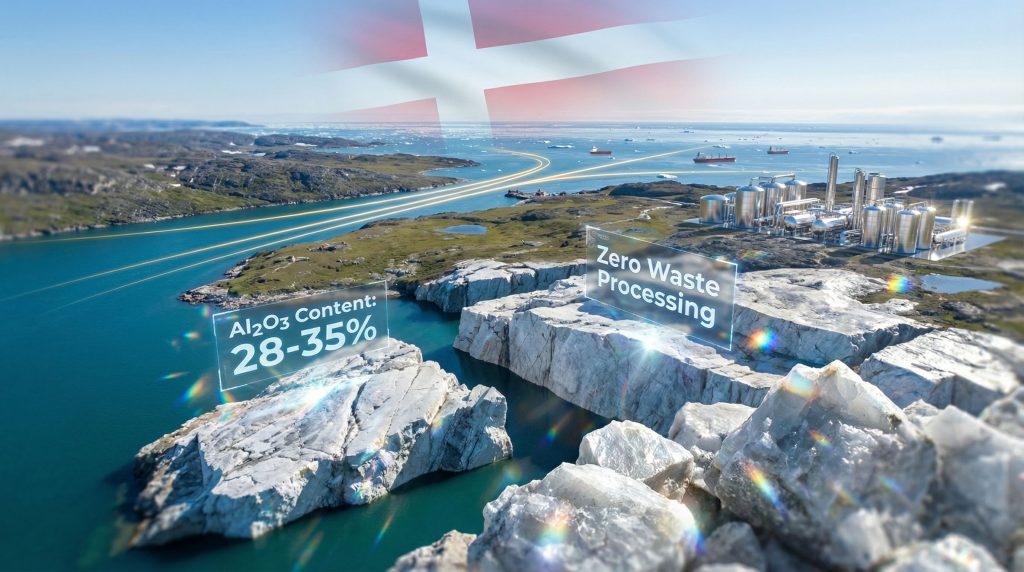
Anorthosite represents a distinctive class of igneous rock characterized by its predominant composition of calcium-rich plagioclase feldspar. This geological formation occurs through specific crystallization processes that concentrate aluminum-bearing minerals while maintaining exceptionally low impurity levels. The resulting rock contains aluminum oxide concentrations of approximately 32% within a matrix that facilitates efficient extraction using conventional hydrometallurgical techniques.
The global distribution of industrial-grade anorthosite remains remarkably limited, with economically viable deposits identified in only select regions including Greenland, Norway, and Finland. This scarcity stems from the precise geological conditions required for anorthosite formation, specifically the slow cooling of calcium-rich magmas under stable crustal conditions. The Grønne Berg project in Greenland exemplifies these optimal characteristics, featuring ore bodies with exceptional uniformity and minimal overburden requirements.
The strategic importance of anorthosite emerges from its fundamental processing advantages over traditional aluminum sources. While bauxite processing generates substantial waste streams requiring complex environmental management, anorthosite extraction utilizes the entire mineral composition. Furthermore, the calcium-rich feldspar composition reacts efficiently in both aluminum and cement applications, contrasting sharply with sodium-rich feldspars that create processing complications and reduced yields.
Critical Material Classification and Strategic Importance
Aluminum's designation as a critical metal across major industrial economies including the United States, European Union, and Canada underscores the strategic significance of alternative aluminum sources. Current global aluminum production relies heavily on bauxite deposits concentrated in tropical regions, creating supply chain vulnerabilities for northern hemisphere manufacturing centers. These dependencies become particularly acute during geopolitical tensions or transportation disruptions that can severely impact industrial operations.
Anorthosite's aluminum oxide content of 32% positions it competitively within the spectrum of industrial aluminum sources. While lower than premium bauxite grades that can reach 60% aluminum oxide, anorthosite compensates through superior processing characteristics and minimal waste generation. The consistently low iron content below 1% eliminates quality control challenges that plague variable-grade conventional sources.
The processing simplicity of anorthosite extends beyond aluminum extraction to encompass multiple co-product recovery pathways. Hydrochloric acid leaching efficiently separates aluminum compounds while simultaneously generating calcium silicate and amorphous silica suitable for construction and industrial applications. This comprehensive utilization eliminates the tailings management issues that constitute major operational and environmental costs for traditional mineral processing operations.
Mineral Source Comparison:
| Mineral Source | Al₂O₃ Content | Iron Content | Processing Waste | Geographic Distribution |
|---|---|---|---|---|
| Greenland Anorthosite | 32% | <1% | Zero tailings | Arctic regions |
| Premium Bauxite | 45-60% | Variable | Substantial red mud | Tropical/subtropical |
| Kaolin | 35-40% | 2-5% | Moderate tailings | Global distribution |
| Conventional Feldspar | 18-25% | Variable | Processing residues | Widespread |
How Does Greenland Anorthosite Transform Industrial Processing?
Zero-Waste Processing Technologies
The hydrometallurgical processing of anorthosite represents a paradigm shift from conventional mineral extraction methodologies that generate substantial waste streams. Hydrochloric acid leaching efficiently dissolves aluminum-bearing minerals from the anorthosite matrix while maintaining the structural integrity of valuable co-products. This selective dissolution process contrasts dramatically with the high-temperature, energy-intensive approaches required for bauxite processing.
The elimination of tailings production addresses one of mining's most persistent environmental challenges. Traditional aluminum production from bauxite generates red mud waste at ratios that can exceed 1.5 tonnes per tonne of alumina produced. These alkaline residues require permanent storage facilities and pose long-term environmental monitoring requirements that extend mine closure obligations indefinitely. However, anorthosite processing eliminates these concerns entirely while generating commercially valuable co-products.
Calcium silicate recovery from anorthosite processing creates opportunities for construction industry integration. This material serves as a direct substitute for portland cement components while providing superior performance characteristics in specific applications. The simultaneous production of amorphous silica opens additional revenue streams in industrial filler markets, water treatment systems, and specialty chemical applications.
Multi-Industry Application Framework
The versatility of anorthosite-derived products enables entry into industrial value chains at multiple integration points. Primary aluminum producers can utilize smelter-grade alumina as a direct replacement for bauxite-derived feedstock without requiring infrastructure modifications. This compatibility eliminates the capital barriers that often prevent sourcing transitions in established industrial operations.
High-purity alumina production from anorthosite reaches specifications of 99.99% aluminum oxide, meeting the stringent requirements for semiconductor, LED, and advanced ceramics applications. These markets demand consistent quality parameters that anorthosite's geological uniformity readily provides. Consequently, the low variability in feedstock composition translates directly to reduced quality control costs and improved production yields for downstream processors.
Aluminum trihydrate production addresses specific market segments including water purification systems and fire retardant applications. These established markets provide stable demand profiles that complement the higher-value applications while maximizing resource utilization efficiency. The flexibility to adjust product mix based on market conditions enhances project economics and reduces commodity price exposure.
Processing Innovation and Environmental Benefits
The surface mining characteristics of anorthosite deposits eliminate the overburden removal requirements that characterize many conventional mineral operations. Direct extraction from exposed rock faces reduces land disturbance footprints while minimizing ecosystem disruption. This operational simplicity extends to processing facilities that can be designed with smaller environmental footprints than conventional concentration plants.
The complete utilization of anorthosite feedstock without generating persistent waste streams represents a fundamental advancement in sustainable mineral processing that addresses both environmental and economic optimization objectives.
Energy consumption patterns for anorthosite processing favor decentralized operations utilizing renewable power sources. The moderate temperature requirements for hydrochloric acid leaching contrast favorably with the high-temperature calcination processes essential for bauxite refining. This characteristic becomes particularly advantageous when coupled with Greenland's abundant hydroelectric potential.
Co-product integration strategies can further optimize processing economics through cascading utilization approaches. Calcium silicate production for local construction markets reduces transportation costs while supporting regional economic development. Amorphous silica applications in specialty markets command premium pricing that enhances overall project returns.
What Are the Geopolitical Advantages of Greenlandic Anorthosite?
Northern Hemisphere Supply Chain Optimization
The geographical positioning of Greenlandic anorthosite deposits provides fundamental advantages for major manufacturing centers concentrated in North America and Europe. Traditional aluminum supply chains extending from equatorial bauxite sources to northern industrial consumers involve transportation distances exceeding 10,000 nautical miles through multiple maritime chokepoints. These extended supply routes create vulnerability to disruptions while generating substantial carbon emissions from bulk carrier operations.
Grønne Berg's proximity to major northern manufacturing centers reduces shipping distances by thousands of nautical miles compared to Australian or West African bauxite sources. The year-round deep-water port access eliminates seasonal shipping restrictions that affect many Arctic resource projects. This transportation advantage translates to reduced logistics costs, shorter inventory cycles, and improved supply chain predictability for downstream users.
The strategic location only 30 kilometers from promising hydroelectric development sites provides potential access to abundant renewable energy. This proximity enables carbon-neutral processing operations that align with increasingly stringent environmental requirements for industrial supply chains. In addition, the combination of clean energy access and reduced transportation emissions creates compelling sustainability advantages for environmentally conscious manufacturers.
Regulatory Environment and Investment Stability
Greenland's mining regulatory framework operates under a combination of autonomous Greenlandic administration and cooperative relationships with European legal structures. This dual governance approach provides investors with transparent permitting processes while maintaining alignment with international environmental and social standards. Mineral rights administration through direct Greenlandic authorities eliminates bureaucratic complications that can delay project development in more complex jurisdictions.
The streamlined pathway for exploitation permit acquisition contrasts favorably with increasingly complex approval processes in many traditional mining jurisdictions. Clear regulatory timelines and predictable assessment criteria enable more accurate project development scheduling and capital planning. This regulatory efficiency becomes particularly valuable for industrial users requiring assured supply security for long-term production planning.
Political risk assessment favors Greenlandic operations through stable democratic institutions and established rule of law. The absence of resource nationalism trends that affect some traditional suppliers provides additional investment security. Long-term supply contract negotiation benefits from predictable regulatory environments that support multi-decade commercial relationships.
Strategic Resource Diversification Benefits
Supply chain resilience strategies increasingly emphasise geographical diversification to reduce concentration risks in critical material sourcing. Anorthosite from Greenland enables northern hemisphere aluminum producers to establish alternative supply sources that complement rather than compete with existing procurement strategies. This diversification approach reduces exposure to disruptions affecting single-source supply chains while maintaining operational flexibility.
The development of Arctic mineral resources supports broader strategic objectives for northern nations seeking to reduce dependence on distant suppliers. These supply security considerations extend beyond commercial factors to encompass national economic resilience and industrial base maintenance. Furthermore, anorthosite development contributes to these objectives while providing market-competitive alternatives for private sector users.
Critical material security benefits extend to allied nations through cooperative development approaches that share both risks and benefits. The stable political environment and established international relationships facilitate multinational investment structures that distribute supply access across multiple economies. This collaborative approach strengthens supply chain resilience for entire industrial ecosystems rather than individual companies.
Which Industries Benefit Most from Anorthosite Integration?
Aluminum Production Sector Transformation
Primary aluminum smelting operations represent the most direct application for anorthosite-derived alumina, offering seamless integration into existing production infrastructure. Smelter-grade alumina from anorthosite provides equivalent performance characteristics to bauxite-derived feedstock while eliminating the red mud waste management challenges that impose increasing costs and environmental liabilities on conventional operations. This compatibility enables aluminum producers to diversify their feedstock sources without requiring capital investments in modified processing equipment.
Aluminum trihydrate production from anorthosite serves specialized markets including water treatment systems and fire retardant applications. These industrial segments value the consistent purity levels and predictable supply availability that anorthosite processing provides. Water purification applications particularly benefit from the low iron content that eliminates filtration complications and extends system operational life.
The elimination of waste generation costs provides aluminum producers with operational advantages that compound over facility lifespans. Red mud disposal requirements impose ongoing environmental monitoring and remediation obligations that extend decades beyond mine closure. However, anorthosite processing eliminates these long-term liabilities while generating valuable co-products that contribute additional revenue streams.
Advanced Materials Manufacturing
High-purity alumina production reaching 99.99% aluminum oxide specifications enables entry into semiconductor and electronics markets that demand exceptional material quality. LED substrate manufacturing requires aluminum oxide with minimal impurities that could affect optical performance or device reliability. Anorthosite's geological uniformity provides the consistent feedstock quality essential for these precision applications.
Lithium-ion battery component manufacturing increasingly relies on high-purity aluminum compounds for separator materials and electrode additives. The automotive electrification trend drives substantial demand growth for these materials, creating market opportunities for alternative aluminum sources. Anorthosite-derived high-purity alumina can capture premium pricing in these expanding markets while supporting clean energy technology deployment.
Advanced ceramics applications for aerospace and defence systems require aluminum compounds with verified purity levels and minimal trace element contamination. These demanding specifications often eliminate conventional aluminum sources that contain variable impurity levels. Consequently, anorthosite's consistent composition and processing control provide the quality assurance required for critical applications.
Construction and Infrastructure Applications
E-glass fibre manufacturing for wind energy applications benefits significantly from anorthosite's low iron content and consistent chemical composition. Wind turbine blade production requires glass fibres with minimal quality variations that could affect structural performance or operational lifespan. The magnetic separation processing step for anorthosite produces E-glass feedstock that meets these demanding specifications while reducing production costs through improved yield rates.
Automotive lightweighting initiatives increasingly incorporate glass fibre reinforcement to achieve fuel efficiency objectives while maintaining safety performance. The transportation sector's transition toward electric vehicles creates additional demand for lightweight materials that extend battery range. Therefore, anorthosite-derived E-glass materials support these industry trends while providing domestic supply sources for automotive manufacturers.
Refractory cement production from anorthosite eliminates carbon dioxide emissions associated with conventional portland cement manufacturing. This CO₂-free characteristic addresses construction industry sustainability requirements while providing superior performance in high-temperature applications. Infrastructure projects requiring durable, low-carbon materials find anorthosite-derived cement particularly attractive for long-term performance and environmental compliance.
Industry Application Matrix:
Aluminum Applications:
- Primary smelter feedstock
- High-purity electronics grades
- Battery component materials
- Water treatment chemicals
Advanced Materials:
- Semiconductor substrates
- LED manufacturing components
- Aerospace ceramics
- Defence system materials
Construction Materials:
- Wind turbine blade fibres
- Automotive reinforcement
- CO₂-free refractory cement
- Infrastructure applications
How Does Anorthosite Support Clean Energy Transitions?
Wind Energy Infrastructure Applications
The renewable energy sector's rapid expansion creates unprecedented demand for specialized materials that combine performance characteristics with environmental sustainability. Wind turbine blade manufacturing requires E-glass fibres produced from consistent, high-quality feedstock to ensure structural integrity under extreme operational conditions. The development of sustainable mining practices has become increasingly important as Greenland anorthosite's low iron content below 1% produces E-glass materials with superior optical and mechanical properties compared to conventional sources.
Offshore wind installations face particularly demanding material requirements due to marine environment exposure and maintenance accessibility challenges. E-glass fibres from anorthosite provide enhanced durability characteristics that extend blade operational lifespans while reducing maintenance frequencies. The resulting operational cost savings become particularly significant for offshore installations where maintenance interventions involve substantial logistical costs.
Grid infrastructure components supporting renewable energy integration require materials that withstand variable loading conditions and environmental stresses. Aluminum products from anorthosite provide the corrosion resistance and strength characteristics essential for transmission line components and electrical system housings. The domestic supply advantages reduce dependence on imported materials for critical energy infrastructure.
Electric Vehicle Supply Chain Integration
The automotive industry's electrification transition demands high-purity aluminum compounds for battery separator materials and thermal management systems. Lithium-ion battery manufacturing requires aluminum oxide with specifications that exceed conventional industrial grades to ensure battery safety and performance. Anorthosite processing can achieve these demanding purity levels while providing supply chain security for domestic vehicle manufacturers.
Vehicle lightweighting strategies increasingly incorporate aluminum components to offset battery weight penalties while maintaining structural performance. The consistent quality characteristics of anorthosite-derived aluminum enable precision casting and forming operations that optimise component design for weight reduction. These advantages become particularly important for electric vehicles where weight directly affects operating range and energy efficiency.
Charging infrastructure development requires specialised materials for high-voltage electrical systems and weatherproof enclosures. Aluminum products from anorthosite provide the electrical conductivity and environmental durability essential for reliable charging station operations. In addition, the domestic supply availability supports rapid charging network expansion without dependence on imported materials.
Solar Energy System Components
Photovoltaic cell manufacturing utilises high-purity aluminum compounds in both semiconductor substrates and electrical interconnection systems. The precision required for solar cell production demands consistent material quality that eliminates processing variations affecting conversion efficiency. Anorthosite's geological uniformity provides the feedstock consistency essential for optimised solar cell manufacturing.
Solar installation systems require aluminum framing and mounting components that withstand decades of outdoor exposure while maintaining structural integrity. The corrosion resistance and strength characteristics of anorthosite-derived aluminum provide optimal performance for these long-term applications. Furthermore, domestic supply sources reduce cost variability and delivery uncertainties for large-scale solar projects.
Energy storage system integration requires specialised aluminum components for battery housings and thermal management systems. Grid-scale storage installations demand materials that combine electrical performance with environmental durability. Anorthosite-derived aluminum products meet these demanding requirements while supporting supply chain localisation for energy storage deployments.
The next major ASX story will hit our subscribers first
What Challenges Face Anorthosite Market Development?
Technical Processing Optimisation
Commercial-scale anorthosite processing requires systematic optimisation of extraction parameters to achieve consistent product quality across multiple output streams. Hydrochloric acid concentration, reaction temperature profiles, and residence time optimisation demand extensive piloting to establish operating parameters that maximise recovery while minimising processing costs. These technical development requirements involve substantial capital investments and extended timelines before commercial production can commence.
Quality control systems for simultaneous production of aluminum compounds, calcium silicate, and amorphous silica present complex engineering challenges. Each product stream requires distinct purity specifications and particle size distributions that must be achieved through coordinated processing controls. The integration of multiple separation and purification systems increases operational complexity compared to single-product mineral processing operations.
Scale-up considerations extend beyond individual processing units to encompass integrated facility design that optimises material flows and energy consumption. The coordination of mining operations, primary processing, and product finishing requires sophisticated logistics systems that maintain product quality while minimising handling costs. These operational integration challenges become particularly complex for facilities producing multiple product grades simultaneously.
Market Penetration Strategies
Customer qualification processes for anorthosite-derived products involve extensive testing and certification procedures that can extend over multiple years. Industrial users require comprehensive performance validation before committing to supply agreements, particularly for applications involving safety-critical or high-value manufacturing processes. These qualification requirements create extended development timelines that defer revenue generation and increase project financing requirements.
Pricing competitiveness with established suppliers requires careful analysis of total delivered costs including transportation, inventory carrying costs, and supply reliability factors. While anorthosite processing may achieve lower direct production costs, market penetration depends on demonstrating superior total cost of ownership for industrial users. This value proposition development requires detailed understanding of customer cost structures and operational priorities.
Supply agreement negotiation involves balancing volume commitments with pricing flexibility to accommodate market volatility and demand variations. Long-term contracts provide project financing security but may limit revenue optimisation during favourable market conditions. However, the structure of commercial relationships significantly affects project economics and must align with both producer and customer strategic objectives.
Infrastructure Development Requirements
Mining equipment selection for anorthosite extraction must accommodate geological conditions while optimising production costs and environmental performance. Surface mining operations require coordination of drilling, blasting, and material handling systems designed for the specific characteristics of anorthosite formations. Equipment selection affects both operational costs and environmental footprints throughout project lifespans.
Processing facility design involves integration of multiple unit operations including crushing, grinding, leaching, separation, and product finishing systems. The coordination of these operations requires sophisticated engineering design that optimises material flows while maintaining product quality specifications. Facility layout and equipment selection significantly affect both capital costs and operational efficiency.
Transportation and logistics system development encompasses port facilities, material handling equipment, and shipping coordination capabilities. The year-round accessibility of deep-water facilities requires infrastructure investments that enable reliable product delivery regardless of seasonal conditions. These transportation capabilities directly affect market access and competitive positioning for anorthosite products.
Environmental Benefits Drive Market Adoption
Surface Mining Advantages
Anorthosite extraction through surface mining operations eliminates the environmental complications associated with overburden removal and underground access development. Direct mining from exposed rock faces reduces land disturbance footprints while minimising ecosystem disruption compared to conventional mineral operations requiring extensive preparatory work. This operational simplicity translates to reduced environmental monitoring requirements and simplified mine closure planning.
Restoration and rehabilitation strategies benefit from the minimal processing infrastructure requirements of anorthosite operations. The absence of tailings facilities eliminates the long-term environmental monitoring obligations that characterise conventional mineral processing operations. Mine closure costs reduce significantly when environmental liabilities consist primarily of surface restoration rather than perpetual waste management systems.
Water usage optimisation becomes achievable through closed-loop processing systems that minimise freshwater consumption and eliminate discharge requirements. The co-product recovery approach inherent to anorthosite processing provides opportunities for water recycling across multiple process streams. These water conservation advantages become particularly important in Arctic environments where water management presents unique logistical and environmental challenges.
Carbon Footprint Reduction Opportunities
Processing energy requirements for anorthosite extraction favour renewable energy integration through moderate temperature operating conditions. Unlike bauxite refining that requires high-temperature calcination processes, anorthosite processing utilises ambient or slightly elevated temperatures that accommodate variable renewable energy supplies. This characteristic enables carbon-neutral processing operations when coupled with hydroelectric or wind power sources, supporting the broader energy transition in mining.
Transportation emission reductions result from shortened supply routes to major manufacturing centres in North America and Europe. Bulk carrier emissions decrease substantially when shipping distances reduce from intercontinental routes to regional distribution patterns. These transportation advantages compound over project lifespans to provide significant carbon footprint reductions for industrial supply chains.
Lifecycle assessment advantages extend beyond direct processing and transportation to encompass product end-of-life considerations. Aluminum products from anorthosite maintain identical recycling characteristics to conventional sources while eliminating the environmental legacy costs associated with red mud waste generation. These comprehensive environmental benefits support sustainable supply chain certification requirements for environmentally conscious manufacturers.
Economic Drivers for Anorthosite Development
Market Demand Projections
Global aluminum demand growth scenarios project continued expansion driven by electrification trends, renewable energy deployment, and lightweight transportation applications. Electric vehicle production increases create substantial demand for high-purity aluminum compounds while infrastructure development for renewable energy systems requires specialised aluminum products. These growth segments align precisely with anorthosite's processing capabilities and quality characteristics, particularly in relation to critical minerals & energy security.
E-glass market expansion accelerates through wind energy growth and automotive lightweighting initiatives that require consistent, high-quality glass fibre materials. Construction industry sustainability requirements increasingly favour materials with verified environmental advantages and reduced carbon footprints. Anorthosite-derived E-glass materials capture market premium positioning through superior environmental credentials and performance characteristics.
High-purity alumina pricing trends reflect growing demand from semiconductor, LED, and advanced ceramics applications that require exceptional material quality. These specialty markets command substantial pricing premiums over commodity aluminum products while offering more stable demand patterns. Anorthosite's ability to produce these high-value materials provides revenue diversification advantages that enhance project economics.
Investment Risk Assessment Framework
Capital expenditure requirements for anorthosite projects involve substantial upfront investments in mining, processing, and infrastructure development. However, the operational simplicity and environmental advantages provide long-term cost advantages that justify initial capital commitments. Financial analysis must consider both direct project returns and strategic value creation through supply chain diversification and risk reduction.
Operating cost advantages over conventional aluminum sources emerge through waste elimination, co-product revenue generation, and transportation savings. These operational benefits compound over project lifespans to provide superior financial returns compared to traditional mineral investments. Cost structure analysis demonstrates competitive advantages that strengthen with increasing environmental compliance requirements and carbon pricing mechanisms.
Revenue diversification through multiple product streams reduces commodity price exposure while providing operational flexibility to optimise production based on market conditions. The ability to adjust product mix between aluminum compounds, cement materials, and E-glass feedstock enables dynamic response to changing market demands. This operational flexibility provides risk mitigation advantages that enhance investment attractiveness.
Strategic Positioning of Greenlandic Projects
Grønne Berg Project Advantages
The Grønne Berg anorthosite project benefits from exceptional logistical positioning near Greenland's capital city of Nuuk, providing access to established infrastructure and stable workforce availability. This proximity to existing facilities reduces development costs while enabling utilisation of existing port facilities and transportation networks. The connection to Nuuk's administrative and commercial infrastructure streamlines permitting processes and operational support requirements.
Deep-water port access enables year-round shipping operations that eliminate seasonal transportation constraints affecting many Arctic resource projects. This capability provides supply reliability advantages that support long-term commercial relationships with industrial customers requiring predictable delivery schedules. The absence of seasonal shipping limitations enhances project economics through consistent revenue generation throughout operating periods.
Hydroelectric power development potential within 30 kilometers provides opportunities for carbon-neutral processing operations that align with environmental sustainability objectives. Access to abundant renewable energy eliminates dependence on diesel power generation while reducing operating costs and environmental footprints. This clean energy availability becomes a competitive advantage for environmentally conscious customers seeking sustainable supply sources.
Resource Quality and Expansion Potential
Geological uniformity characteristics of the Grønne Berg deposit provide processing consistency advantages that reduce operational variability and improve product quality control. The predictable ore composition enables optimised processing parameters that maximise recovery while minimising waste generation. This operational stability translates to improved financial performance through reduced processing costs and enhanced product yields.
Reserve estimates and mine life projections support long-term supply contracts that provide revenue security while enabling substantial capital investment recovery. Extended operational timelines justify infrastructure investments while providing industrial customers with supply security for strategic planning purposes. Long mine life characteristics enhance project financing attractiveness through extended cash flow generation periods.
Expansion potential for multiple product lines enables project growth through market development and capacity increases. The geological characteristics that favour aluminum extraction also support enhanced co-product recovery and specialty material production. This growth potential provides strategic value creation opportunities that extend beyond initial project development phases.
Anorthosite's Role in Industrial Resilience
Supply Chain Transformation Benefits
The development of a critical raw materials facility using Greenlandic anorthosite provides industrial manufacturers with strategic alternatives to conventional aluminum supply sources while eliminating environmental liabilities associated with traditional processing methods. The combination of superior processing characteristics, favourable geographical positioning, and stable regulatory environments creates compelling advantages for supply chain diversification strategies. These benefits extend beyond individual commercial relationships to encompass broader industrial ecosystem resilience.
Timeline projections for market adoption reflect the technical validation and customer qualification processes required for industrial material transitions. Initial commercial production targets align with growing demand for sustainable materials across multiple industrial sectors. Market penetration rates will likely accelerate as environmental compliance requirements increase and supply chain risks become more apparent to industrial decision makers.
Investment opportunities for industrial stakeholders encompass both direct project participation and strategic supply agreements that capture long-term value creation. The multiple product streams from anorthosite processing provide diversified investment exposure while the geographical advantages offer strategic positioning benefits. These investment characteristics appeal to both financial investors seeking returns and industrial users pursuing supply security.
Future Market Development Scenarios
Demand growth projections across aluminum, construction materials, and advanced materials sectors support robust market development for anorthosite products. Electric vehicle production expansion, renewable energy deployment, and sustainable construction requirements create aligned demand growth that favours anorthosite's unique characteristics. These secular trends provide long-term market growth drivers that extend beyond cyclical economic variations, particularly as industries realise the broader decarbonisation benefits.
Technology advancement impacts on anorthosite applications include enhanced processing efficiency, expanded product specifications, and new application development. Continuing research into co-product utilisation and processing optimisation provides opportunities for improved project economics and expanded market penetration. Innovation in downstream applications creates additional demand drivers that enhance long-term market prospects.
Regional market development priorities favour northern hemisphere supply source development to reduce transportation costs and supply chain risks. Government policies supporting critical material security and environmental sustainability align with anorthosite's competitive advantages. These policy trends provide supportive regulatory environments that enhance project development attractiveness and market access opportunities.
The strategic importance of Greenland anorthosite extends beyond individual project economics to encompass broader industrial transformation toward sustainable, resilient supply chains. As industries increasingly prioritise environmental performance alongside economic efficiency, anorthosite's unique combination of processing advantages, geographical positioning, and regulatory stability positions it as a cornerstone resource for future industrial development. Furthermore, the integration of Arctic Today's research on anorthosite's environmental potential and NASA's simulant studies demonstrate the material's versatility across both terrestrial and space applications, underscoring its significance in advancing technological capabilities while supporting sustainable resource management practices.
Ready to capitalise on critical mineral opportunities?
Unlock potential investment returns through strategic positioning in mining discoveries before they capture broader market attention. Powered by Discovery Alert's proprietary Discovery IQ model, our service delivers immediate notifications on significant ASX mineral discoveries whilst transforming complex geological data into actionable investment insights. Begin your 30-day free trial today to secure your market-leading advantage ahead of the competition.