May 22, 2026
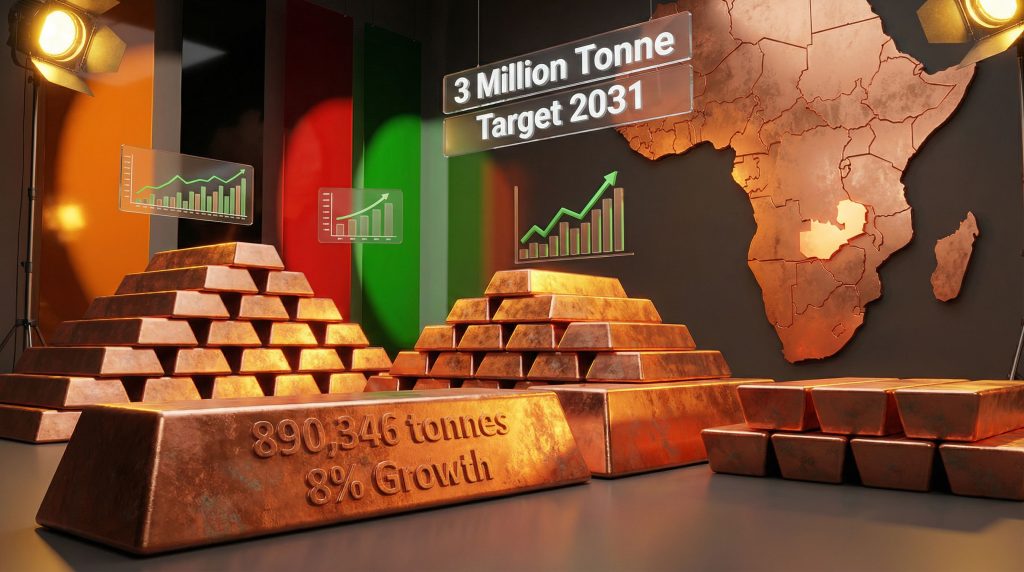
The Geology of Copper Concentration in Zambia's Mining Corridors
Southern Africa's copper belt represents one of Earth's most significant metallogenic provinces, with Zambia sitting at the heart of this geological treasure trove. The region's copper deposits formed through complex hydrothermal processes over billions of years, creating ore bodies that differ fundamentally from many global competitors in both grade consistency and extraction accessibility.
Zambia copper output growth reflects not just operational improvements but the underlying geological advantages that position the nation uniquely in global supply chains. The Copperbelt Province contains stratiform deposits averaging 2.8-3.2% copper grades, substantially higher than many modern mining operations worldwide that work with grades below 1%. This geological foundation provides Zambian operations with inherent cost advantages that become increasingly valuable as global demand intensifies.
Mining Technology and Processing Circuit Evolution
The technical sophistication driving Zambia copper output growth extends beyond traditional extraction methods. Furthermore, mining technology innovation has revolutionised flotation circuits that now incorporate advanced sensor-based sorting technologies that can identify copper-bearing minerals at the particle level, improving recovery rates while reducing energy consumption per tonne processed.
Key Processing Innovations:
• Micro-flotation cells: Enable processing of ultra-fine copper particles previously lost in tailings
• Automated reagent dosing: Reduces chemical consumption by 12-15% whilst maintaining recovery efficiency
• Real-time ore grade monitoring: Allows dynamic adjustment of processing parameters based on feed variability
• Tailings re-processing: Secondary extraction from historical waste streams adding 40,000-60,000 tonnes annually
These technological advances directly contribute to the production increases observed across major Zambian operations, with some mines reporting recovery rate improvements from 85% to 91% over the past three years.
When big ASX news breaks, our subscribers know first
Power Supply Dynamics and Mining Operational Resilience
Zambia's hydroelectric infrastructure creates both opportunities and vulnerabilities that directly impact copper production consistency. The Kariba Dam and Kafue Gorge facilities provide approximately 85% of the nation's electricity supply, making mining operations highly sensitive to hydrological conditions across the Zambezi River basin.
Energy Security Investment Patterns
Mining companies have responded to power supply challenges through significant capital allocation toward energy independence:
Corporate Power Generation Projects:
| Company | Project | Capacity (MW) | Investment ($M) | Status |
|---|---|---|---|---|
| First Quantum | Kansanshi Solar | 40 | 65 | Operational |
| Vedanta Resources | Konkola Thermal | 150 | 280 | Development |
| IRH | Mopani Backup | 75 | 120 | Planning |
| Various | Grid Stability | 200 | 350 | Ongoing |
These investments reflect a strategic shift toward hybrid energy portfolios combining grid supply with dedicated generation assets. The approach reduces operational disruption risk whilst positioning operations for sustained production growth regardless of seasonal rainfall variations.
Exploration Geology and Resource Extension Potential
Zambia copper output growth potential extends significantly beyond current producing assets, with exploration activities revealing substantial undeveloped resources throughout the Copperbelt region. Moreover, mineral exploration insights show that deep drilling programmes have identified copper mineralisation extending to depths of 1,500-2,000 metres, suggesting decades of additional mining potential.
Geological Survey Insights
Recent geological mapping conducted by international mining consultancies has revealed:
• Structural continuity: Copper-bearing formations extend across 450 kilometres of strike length
• Grade consistency: Average copper content remains above 2.5% at depths exceeding 800 metres
• Metallurgical characteristics: Deep ore bodies maintain favourable processing characteristics
• Satellite deposits: Over 40 prospective targets identified within 50 kilometres of existing infrastructure
This geological foundation suggests that Zambia copper output growth could sustain higher production levels for multiple decades, particularly as mining technology enables economic extraction from increasingly complex ore bodies.
Corporate Capital Allocation and Investment Decision Framework
The investment climate supporting Zambia's copper output growth reflects sophisticated capital allocation strategies by multinational mining corporations. Companies evaluate Zambian projects against global portfolios using net present value models that incorporate country risk, infrastructure quality, and geological certainty.
Investment Risk-Return Analysis
Zambian Copper Project Evaluation Metrics:
• Internal Rate of Return (IRR): Target thresholds of 15-20% for greenfield projects
• Payback Period: Typically 6-8 years for major expansions
• Political Risk Premium: 2-3% discount rate adjustment for Zambian operations
• Infrastructure Discount: 1-2% premium for rail and port access challenges
These financial parameters demonstrate why Zambian copper projects continue attracting investment despite global commodity price volatility. The combination of high-grade deposits, established infrastructure, and regulatory predictability creates investment returns that compete favourably with alternative global opportunities.
Regional Copper Market Integration and Trade Flow Optimisation
Zambia's strategic position within Southern African trade networks amplifies the impact of its copper output growth across regional markets. The Southern African Development Community (SADC) framework has facilitated infrastructure investments that reduce transportation costs and improve export logistics efficiency. Additionally, copper market trends indicate growing regional integration benefits for producers.
Transportation Corridor Economics
Route Performance Comparison:
| Corridor | Distance (km) | Cost ($/tonne) | Transit Time | Capacity Utilisation |
|---|---|---|---|---|
| Dar es Salaam | 1,860 | 180 | 21 days | 75% |
| Durban | 2,100 | 220 | 28 days | 85% |
| Beira | 1,650 | 165 | 19 days | 45% |
| Walvis Bay | 1,950 | 200 | 25 days | 60% |
The Beira corridor through Mozambique represents significant untapped potential for Zambian copper exports, with infrastructure improvements potentially reducing transportation costs by 15-20% whilst providing alternative routing during maintenance periods on primary corridors.
Mineral Grade Quality and Metallurgical Advantages
Zambian copper concentrates command premium pricing in international markets due to superior metallurgical characteristics that facilitate efficient smelting and refining operations. The typical Zambian concentrate contains 28-32% copper content with low levels of deleterious elements that complicate processing at downstream facilities.
Quality Specifications Impact on Pricing
Concentrate Quality Premiums:
• High copper content: $15-25 premium per tonne versus standard concentrates
• Low arsenic levels: Additional $10-15 premium for clean concentrates
• Consistent moisture content: Logistics efficiency bonuses of $5-8 per tonne
• Particle size uniformity: Processing efficiency gains valued at $3-5 per tonne
These quality advantages contribute directly to Zambian mining companies' profitability margins and support continued investment in production capacity expansion, creating a self-reinforcing cycle that sustains copper output growth.
The next major ASX story will hit our subscribers first
Environmental Compliance and Sustainable Mining Practices
Zambia's copper output growth occurs within an increasingly stringent environmental regulatory framework that shapes operational practices and capital investment priorities. Environmental Impact Assessment (EIA) requirements now mandate comprehensive water management, biodiversity protection, and community engagement protocols for all major mining projects.
Sustainability Investment Requirements
Modern copper mining operations in Zambia allocate approximately 8-12% of capital expenditure toward environmental compliance and sustainability initiatives:
Environmental Capital Allocation:
• Water treatment systems: $40-60 million per major operation
• Tailings facility upgrades: $80-120 million for modern containment systems
• Air quality monitoring: $5-8 million for automated monitoring networks
• Community development: $15-25 million annually across major operations
These sustainability investments, whilst increasing initial project costs, create operational resilience and social licence advantages that support long-term production stability.
Artisanal Mining Integration and Formalisation Challenges
Zambia's artisanal copper mining sector contributes approximately 60,000-80,000 tonnes annually to national production, representing both opportunities and challenges for the formal mining economy. Small-scale operations typically work abandoned sections of large mines or process low-grade materials unsuitable for industrial-scale extraction.
Formalisation Economic Impact
Government initiatives aimed at integrating artisanal miners into formal supply chains could potentially:
• Increase tax revenues: Estimated $45-65 million annually from formalised operations
• Improve safety standards: Reduce accident rates by 40-50% through proper equipment and training
• Enhance environmental management: Eliminate mercury usage and improve waste handling
• Create upstream linkages: Supply services and equipment to formal mining operations
The successful integration of artisanal mining would contribute meaningfully to overall Zambian copper output growth whilst addressing social and environmental concerns associated with informal mining activities.
Global Demand Drivers and Zambian Supply Response
Zambia's copper output growth occurs against a backdrop of structural demand transformation driven by electrification trends, renewable energy infrastructure, and digital economy expansion. Each electric vehicle requires approximately 185 pounds of copper, whilst solar panel installations consume 4-5 tonnes per megawatt of capacity. Furthermore, understanding copper investment strategies becomes crucial for industry participants.
Demand Sector Analysis
Copper Consumption by End-Use (Global Trends):
| Sector | 2024 Share | 2030E Share | Growth Driver |
|---|---|---|---|
| Construction | 32% | 28% | Urbanisation in developing markets |
| Electrical Infrastructure | 25% | 30% | Grid modernisation and renewables |
| Transportation | 18% | 22% | Electric vehicle adoption |
| Industrial Equipment | 15% | 12% | Automation and efficiency gains |
| Consumer Electronics | 10% | 8% | Market saturation in developed regions |
This demand evolution favours copper suppliers like Zambia that can provide consistent, high-quality supply to support infrastructure-intensive applications requiring reliable material specifications. According to recent industry reports, Zambia's workforce development will be crucial to meeting this growing demand.
Financial Market Dynamics and Commodity Price Sensitivity
Zambian copper mining economics demonstrate significant sensitivity to global price movements, with operating margins expanding or contracting based on London Metal Exchange pricing trends. Current production costs average $4,200-4,800 per tonne across major operations, providing substantial margins at recent price levels above $8,500 per tonne.
Price Risk Management Strategies
Mining companies operating in Zambia employ sophisticated hedging mechanisms to manage commodity price volatility:
Risk Management Tools:
• Forward sales contracts: 20-40% of annual production pre-sold at fixed prices
• Put option protection: Downside protection at $7,500-8,000 per tonne levels
• Currency hedging: USD/ZMW exchange rate protection for local cost components
• Concentrate treatment charges: Fixed-rate agreements providing revenue predictability
These financial instruments allow mining operations to maintain production investment programmes despite short-term price volatility, supporting sustained copper output growth.
Infrastructure Development Impact on Production Scaling
Zambia's ability to sustain copper output growth depends critically on parallel infrastructure investment across transportation, energy, and water supply systems. The government has committed over $3.2 billion toward mining-related infrastructure improvements between 2024-2027.
Infrastructure Investment Pipeline
Major Projects Supporting Mining Expansion:
• Kazungula Bridge Project: Reduces transport distances to southern African ports by 15%
• Copperbelt Energy Corporation upgrades: Additional 400 MW grid capacity by 2027
• Rail line rehabilitation: Increased capacity from 1.2 to 2.8 million tonnes annually
• Industrial water supply: Dedicated pipelines serving major mining districts
These infrastructure investments create network effects that benefit all mining operations simultaneously, potentially enabling production increases beyond what individual company investments could achieve independently.
Investment Climate Evolution and Regulatory Predictability
Zambia's copper output growth reflects improved investment climate stability following policy adjustments that provide greater certainty around tax treatment, mining rights security, and dispute resolution mechanisms. The Mines and Minerals Development Act creates clear frameworks for project development and operational compliance.
Policy Framework Stability Indicators
Recent regulatory improvements include:
Fiscal Certainty Measures:
• Mineral royalty rates: Standardised at 5.5-7.5% based on copper prices
• Corporate tax treatment: Consistent 30% rate with clear depreciation schedules
• Foreign exchange regulations: Simplified requirements for export proceeds repatriation
• Dispute resolution: Established arbitration mechanisms for investment disagreements
This regulatory predictability reduces country risk premiums that mining companies apply when evaluating Zambian projects, making investments more attractive relative to alternative global opportunities.
Production Scaling Scenarios and Resource Optimisation
Analysis of Zambian copper output growth potential suggests multiple development pathways depending on capital availability, infrastructure investment, and global demand conditions. However, global copper supply forecast models indicate conservative estimates project production reaching 1.4-1.6 million tonnes by 2030, whilst optimistic scenarios approach 2.0 million tonnes under favourable conditions.
Scenario Planning Framework
Production Growth Scenarios (2030 Targets):
| Scenario | Production Target | Required Investment | Key Assumptions |
|---|---|---|---|
| Conservative | 1.4M tonnes | $2.8B | Current policies maintained |
| Base Case | 1.7M tonnes | $4.2B | Moderate infrastructure gains |
| Optimistic | 2.0M tonnes | $6.5B | Accelerated project development |
| Stretch | 2.4M tonnes | $9.1B | Major new discoveries operational |
The base case scenario appears most probable given current investment commitments and infrastructure development timelines, representing a compound annual growth rate of 8.2% from 2025 levels. Moreover, analysis of 2025 production forecasts suggests that whilst Zambia achieved record output in 2025, it fell short of its ambitious 1 million tonne target.
This growth trajectory would establish Zambia as a top-5 global copper producer whilst providing the fiscal resources necessary for economic diversification and social development programmes across the broader Zambian economy.
This analysis is based on publicly available information and industry research. Copper mining investments carry significant risks including commodity price volatility, operational challenges, and regulatory changes. Readers should conduct independent research before making investment decisions.
Ready to Capitalise on Zambia's Copper Production Boom?
Discovery Alert's proprietary Discovery IQ model delivers real-time notifications on significant copper and mineral discoveries across the ASX, empowering subscribers to identify actionable opportunities ahead of the broader market. Understand why historic discoveries can generate substantial returns by exploring major mineral finds that have delivered exceptional outcomes, then begin your 14-day free trial today to position yourself ahead of the market.