May 20, 2026
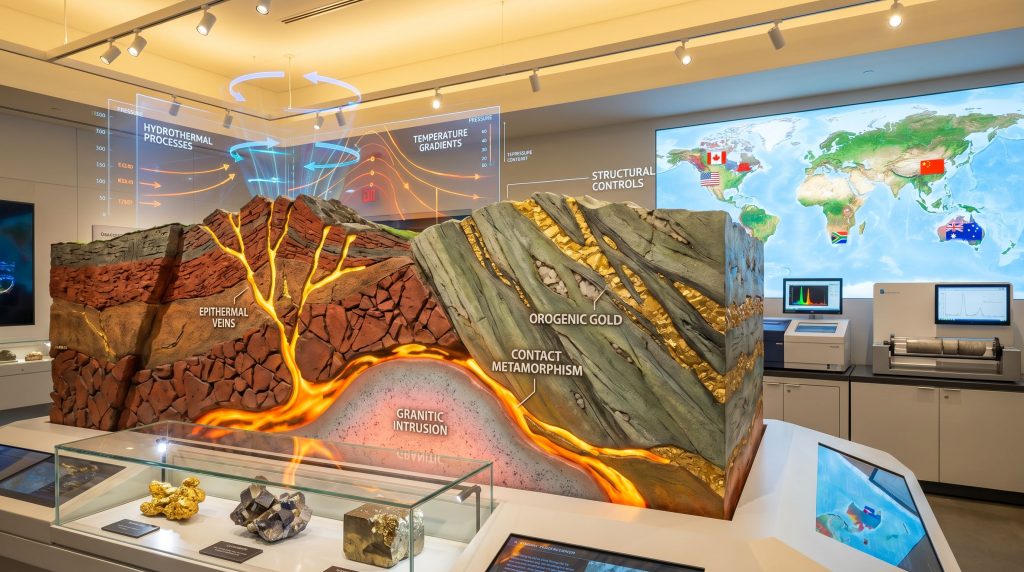
The geology of gold deposits encompasses a complex interplay of geological processes that create economically viable gold concentrations across diverse tectonic settings worldwide. Understanding these fundamental formation mechanisms enables geologists and prospectors to identify promising exploration targets and develop effective extraction strategies. The relationship between geological environments and mineral exploration importance determines both deposit characteristics and mining methodologies required for different gold systems.
What Are the Fundamental Geological Processes Behind Gold Formation?
The Three Primary Gold Genesis Mechanisms
Gold mineralisation occurs through distinct geological pathways that determine deposit characteristics and exploration strategies. Hydrothermal processes dominate most economically viable deposits, where superheated, metal-rich fluids migrate through crustal fractures and precipitate gold as temperatures and pressures decrease.
Magmatic-hydrothermal systems generate the highest-grade deposits when silicate melts interact with surrounding host rocks. These processes create complex mineral assemblages that require sophisticated gold exploration interpretation and extraction methodologies.
Secondary concentration mechanisms redistribute primary gold through weathering and erosion. Furthermore, these processes create placer accumulations in sedimentary environments where hydraulic sorting concentrates dense metallic particles.
Structural Controls and Tectonic Settings
Gold deposit formation requires specific structural permeability conditions controlled by regional stress fields. Major lithospheric boundaries and suture zones provide the deep-crustal architecture necessary for large-scale fluid migration systems.
Subsidiary fault networks and shear zones create the localised conduits where gold-bearing solutions can deposit their metallic cargo. Understanding these structural relationships enables geologists to predict mineralisation patterns across entire districts using geological logging codes.
When big ASX news breaks, our subscribers know first
How Do Epithermal Systems Create High-Grade Gold Deposits?
Low-Sulphidation Epithermal Characteristics
Low-sulphidation epithermal systems represent the most economically attractive shallow hydrothermal deposits. These form in extensional tectonic environments where crustal thinning allows rapid fluid ascent from depth.
Nevada's geological setting exemplifies this type of environment, where the state's extensional tectonics have created ideal conditions for epithermal gold formation. These systems demonstrate exceptional potential for high-grade gold concentrations.
Key Identification Markers:
- Clear, low-pH hydrothermal fluids
- Minimal wall-rock alteration
- Quartz-adularia gangue assemblages
- Bonanza-grade gold concentrations
These systems typically develop around hot spring environments where geothermal activity indicates active hydrothermal circulation. The shallow formation depth makes them particularly accessible to surface exploration and development.
High-Sulphidation System Recognition
High-sulphidation epithermal deposits create distinctive alteration signatures through aggressive acid leaching. These systems generate advanced argillic alteration zones characterised by extensive rock dissolution processes.
Diagnostic Features Include:
- Extensive silica flooding
- Feldspar destruction and clay formation
- Distinctive acid-etched rock textures
- Pyritic mineralisation assemblages
The acidic nature of these fluids creates diagnostic geological signatures. Consequently, rocks appear pitted and corroded, indicating the aggressive chemical environment that characterises high-sulphidation systems.
What Makes Orogenic Gold Deposits Globally Significant?
Metamorphic Belt Associations
Orogenic gold deposits form during mountain-building events within metamorphic terranes. These systems develop along major shear zones during syn- to late-metamorphic deformation phases. California's Sierra Nevada region demonstrates classic orogenic gold characteristics.
The vertical extent of orogenic systems can exceed 15 kilometres, creating enormous mineral endowments. These deposits typically exhibit:
- Steep-dipping quartz vein systems
- Metamorphic host rock associations
- Regional-scale structural controls
- Multi-stage mineralisation events
Fluid Source and Transport Mechanisms
Orogenic gold fluids originate from metamorphic devolatilisation reactions deep within mountain belts. These CO2-rich solutions transport gold in ionic form until structural and chemical changes trigger precipitation.
Regional metamorphism creates the pressure and temperature conditions necessary for large-scale fluid migration. In addition, this process enables significant gold concentration through multiple deformation episodes.
How Do Intrusion-Related Deposits Form Economic Concentrations?
Contact Metamorphism and Metasomatism
Intrusion-related gold deposits develop where granitic magmas interact with carbonate host rocks. The contact zone between these contrasting lithologies creates ideal conditions for metasomatic replacement processes.
Diagnostic Features Include:
- Skarn mineral assemblages
- Iron oxide alteration halos
- Native gold in limonitic matrices
- Decomposed granitic textures
Geochemical Processes at Intrusive Contacts
The chemical contrast between acidic magmas and alkaline carbonates drives intensive element exchange. This process concentrates gold within narrow contact aureoles where temperature and chemical gradients are steepest.
Secondary oxidation processes often enhance these deposits by concentrating gold within iron oxide gossans. For instance, the red limonite zones between granite and limestone contacts frequently contain crystalline gold in bog iron formations.
What Characterises Carlin-Type Sediment-Hosted Deposits?
Microscopic Gold Distribution Patterns
Carlin-type deposits contain submicroscopic gold disseminated throughout altered sedimentary host rocks. This fine-grained distribution requires specialised metallurgical processing but enables large-tonnage, low-grade mining operations.
The Carlin Trend in Nevada exemplifies this deposit type, producing significant gold tonnages despite low individual ore grades. Furthermore, these deposits demonstrate how gold deposits analysis techniques must adapt to microscopic mineralisation styles.
Geological Characteristics:
- Decalcified and silicified sedimentary rocks
- Arsenian pyrite associations
- Invisible gold concentrations
- Large-scale alteration systems
Economic Viability Considerations
These deposits become economical only through high-volume, low-cost mining methods. The microscopic gold distribution makes them unsuitable for small-scale recovery operations but ideal for major mining corporations.
Companies can process multiple grams per ton profitably through large-scale operations. However, individual prospectors typically find these deposits uneconomical due to processing complexity.
How Do Volcanic Massive Sulphide Systems Concentrate Gold?
Submarine Hydrothermal Processes
Volcanogenic massive sulphide (VMS) deposits form through submarine hydrothermal activity associated with volcanic arc environments. These systems create polymetallic ore bodies where gold occurs alongside base metals.
The seafloor hydrothermal processes concentrate metals through:
- High-temperature fluid circulation
- Seawater interaction with volcanic rocks
- Rapid cooling and precipitation
- Stratigraphic ore body formation
Refractory Ore Characteristics
VMS deposits typically contain significant sulphide concentrations that require specialised metallurgical treatment. These refractory ores resist conventional processing methods and often require roasting to liberate gold.
The complex sulphide assemblages make these deposits challenging for small-scale operations. Consequently, they require sophisticated processing infrastructure for economic extraction.
The next major ASX story will hit our subscribers first
What Are Iron Oxide-Copper-Gold (IOCG) Deposit Systems?
Multi-Metal Associations
IOCG deposits represent large-scale hydrothermal systems characterised by iron oxide alteration, copper mineralisation, and significant gold concentrations. These deposits form in intracontinental settings associated with major crustal structures.
Arizona hosts extensive IOCG mineralisation along a trend running from northwest to southeast sections. These systems demonstrate the orogenic gold deposit formation processes that create multi-metal associations.
Typical Assemblage Features:
- Magnetite-hematite alteration
- Copper sulphide mineralisation
- Gold in both sulphide and oxide associations
- Large-scale hydrothermal breccias
Regional Distribution Patterns
IOCG systems concentrate along major continental-scale structural corridors. Arizona's copper-gold trend demonstrates how these systems can extend across entire geological provinces.
The oxidised iron content creates distinctive gossan formations. In addition, these features aid in surface recognition of IOCG deposit types during exploration programmes.
How Do Porphyry Systems Contribute to Gold Production?
Large-Tonnage, Low-Grade Characteristics
Porphyry deposits typically focus on copper production but often contain economically significant gold concentrations as secondary products. These systems form around shallow intrusive complexes in convergent margin settings.
The gold occurs within:
- Stockwork vein systems
- Disseminated sulphide assemblages
- Peripheral high-grade zones
- Supergene enrichment blankets
Exploration Targeting Strategies
Porphyry exploration requires understanding of magmatic-hydrothermal processes and their spatial relationships to intrusive centres. Geochemical and geophysical techniques help define the extent of these large-scale systems.
Gold grades in porphyry systems are typically secondary to copper values. However, they can contribute significantly to overall project economics through polymetallic extraction strategies.
What Role Do Telluride Minerals Play in Gold Deposits?
High-Grade Telluride Assemblages
Telluride minerals, particularly calaverite (AuTe2) and sylvanite (AuAgTe4), create some of the highest-grade gold deposits known. These minerals form under specific temperature and sulphur fugacity conditions.
Colorado hosts significant telluride deposits, with locations like Telluride and Cripple Creek named after their dominant ore minerals. Furthermore, these deposits represent exceptional concentrations within the geology of gold deposits classification system.
Processing Considerations:
- Require roasting for gold liberation
- Extremely high gold concentrations
- Limited geographic distribution
- Specialised metallurgical requirements
Colorado Mineral Belt Examples
The Colorado mineral belt demonstrates classic telluride deposit characteristics, showcasing the extreme gold concentrations possible in telluride systems. Calaverite represents one of the most economically important telluride minerals.
Both calaverite and sylvanite require roasting processes similar to sulphide ores. Consequently, gold extraction from telluride systems demands specialised metallurgical expertise.
How Do Fissure-Filling Systems Create Quartz Vein Deposits?
Structural Controls on Vein Formation
Quartz vein systems develop when hydrothermal fluids exploit structural weaknesses in host rocks. These fissure-filling processes create the classic ribbon quartz textures that indicate multiple mineralisation episodes.
Natural voids created by faulting and fracturing provide conduits for hydrothermal fluid migration. Understanding these mineral deposit tiers helps predict gold distribution patterns.
Formation Mechanisms:
- Fault-controlled fluid pathways
- Episodic vein filling events
- Pressure-temperature fluctuations
- Chemical precipitation triggers
Multi-Stage Mineralisation Events
Vein systems often exhibit complex histories with multiple generations of quartz and sulphide deposition. Understanding these paragenetic relationships helps predict gold distribution within vein structures.
Fault valving mechanisms can repeatedly open fractures, allowing successive hydrothermal episodes. For instance, these processes deposit additional mineralisation through cyclic pressure release events.
What Defines Greenstone-Hosted Gold Systems?
Archean Craton Associations
Greenstone-hosted deposits occur within ancient volcanic-sedimentary sequences preserved in Archean cratons. These systems represent some of Earth's oldest gold concentrations and demonstrate the long history of hydrothermal gold formation.
The Canadian Archean Greenstone Belt exemplifies this deposit type. Furthermore, these systems showcase how ancient geological processes created substantial gold endowments.
Characteristic Features:
- Metamorphosed volcanic host rocks
- Shear zone structural controls
- Contact zone mineralisation
- Ancient crustal settings
Canadian Shield Examples
The Canadian Archean greenstone belts contain world-class gold deposits hosted in very old granitic rocks. Gold formation occurs at contact zones where different rock types meet.
These contact zone environments create chemical and physical conditions favourable for mineralisation. Consequently, these deposits can achieve exceptional richness within their specific geological settings.
What Factors Control Gold Precipitation from Hydrothermal Solutions?
Chemical and Physical Triggers
Gold precipitation from hydrothermal solutions occurs when specific threshold conditions are exceeded. Four primary factors control this process, determining where and when gold transitions from dissolved ionic form to solid metallic particles.
Critical Parameters:
- pH balance fluctuations
- Pressure decrease events
- Temperature reduction zones
- Boiling and phase separation
Ionic Transport Mechanisms
Gold travels in hydrothermal solutions as complex ions until changing conditions destabilise these chemical species. Understanding these transport mechanisms enables prediction of where gold deposition is most likely to occur.
The transition from ionic to metallic gold requires specific geochemical environments. However, these conditions can be identified through systematic geological investigation and geochemical analysis.
How Do Different Host Rock Types Influence Gold Deposit Characteristics?
Rock Type Classifications and Gold Associations
Understanding the three fundamental rock types proves essential for gold exploration: metamorphic, igneous, and sedimentary rocks each create different environments for gold concentration.
Nevada's predominantly igneous host rocks contrast with California's metamorphic terranes. Consequently, these regional differences demonstrate how geological settings influence deposit characteristics and exploration strategies.
Metamorphic Rock Associations:
Metamorphic terranes provide the structural and chemical environments necessary for large-scale orogenic gold systems. The metamorphic processes create the permeability and fluid sources required for major gold concentration.
Igneous Rock Relationships:
Igneous rocks serve as both sources and hosts for gold mineralisation. Granitic intrusions provide the heat and fluids necessary for contact metamorphic deposits, while volcanic rocks host epithermal systems.
Sedimentary Rock Controls:
Sedimentary rocks create chemical traps for gold-bearing fluids. In particular, carbonate units provide reactive host rocks for replacement-style mineralisation through chemical substitution processes.
What Are the Key Exploration Implications of the Geology of Gold Deposits?
Systematic Targeting Approaches
Understanding the geology of gold deposits enables systematic exploration targeting based on geological, geochemical, and geophysical criteria. Each deposit type exhibits characteristic signatures that guide exploration investment decisions.
Recognition of diagnostic features allows prospectors to focus efforts on the most promising geological environments. Furthermore, this understanding reduces exploration risk through informed targeting strategies.
Pattern Recognition Benefits:
Field recognition of geological patterns can lead to discovery of untapped gold sources in previously overlooked areas. Understanding why specific areas host particular deposit types enables prediction of similar mineralisation in comparable settings.
Risk Assessment Frameworks
Different deposit types carry varying exploration risks and development costs. Epithermal systems offer high-grade potential but limited tonnage, while porphyry systems provide large tonnages at lower grades.
Small-scale operations typically avoid refractory sulphide deposits and microscopic gold systems. However, these constraints arise due to processing limitations and economic considerations.
Scale-Appropriate Targeting:
Individual prospectors benefit most from targeting:
- Epithermal low-sulphidation systems
- Intrusion-related contact deposits
- Fissure-filling quartz vein systems
- Greenstone-hosted contact zones
These deposit types offer accessible mineralisation styles suitable for smaller-scale extraction methods.
Integration with Modern Technology
Advanced analytical techniques now enable detection of microscopic gold concentrations and complex mineral assemblages that were previously unrecognisable. This technological capability expands the range of economically viable deposit types.
Improved understanding of mineralisation processes enhances exploration success rates. Consequently, modern technology integration optimises both exploration efficiency and economic viability of gold mining ventures.
Understanding the geology of gold deposits provides the foundation for successful exploration and development programmes. Whether targeting epithermal bonanza grades or large-tonnage porphyry systems, geological knowledge determines exploration success and economic viability of gold mining ventures.
Ready to Discover the Next Major Gold Breakthrough?
Discovery Alert's proprietary Discovery IQ model provides instant notifications when significant ASX gold discoveries are announced, transforming complex geological data into actionable investment insights. Explore why major mineral discoveries can generate exceptional returns and begin your 14-day free trial today to position yourself ahead of the market.