
July 21, 2026
Energy market volatility has reached critical thresholds as military tensions in the Middle East create unprecedented challenges for traditional risk assessment frameworks. Global commodity markets now operate under assumptions of persistent uncertainty, where energy pricing reflects not just supply-demand fundamentals but also complex geopolitical psychology and crisis management strategies.
The convergence of military escalation patterns, supply chain vulnerabilities, and shifting monetary policy landscapes has created a new paradigm for energy investors. Current market dynamics suggest that energy investors must now operate under assumptions of persistent volatility rather than temporary disruption cycles, requiring sophisticated scenario planning capabilities that extend beyond conventional commodity analysis.
Understanding the Current Geopolitical Energy Crisis
The intersection of military conflict and energy security has fundamentally altered global commodity pricing mechanisms, creating sustained volatility patterns that challenge traditional market frameworks. Recent oil price movements demonstrate how quickly geopolitical events can overwhelm supply-demand fundamentals, with single-day movements exceeding 3% becoming routine rather than exceptional.
Market Price Volatility Reaches Extreme Levels
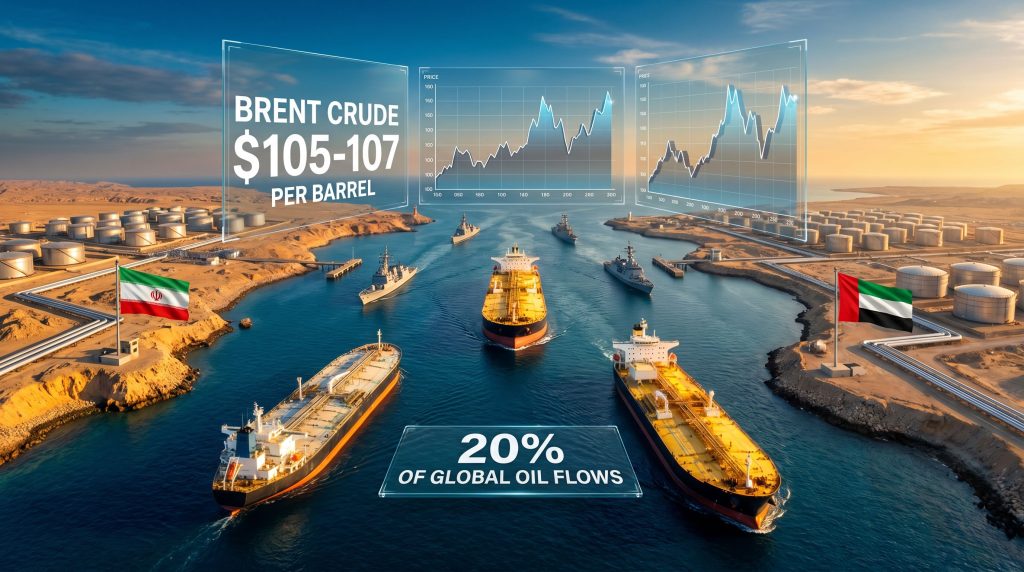
Oil markets have exhibited extraordinary sensitivity to conflict developments, with benchmark prices experiencing dramatic intraday swings. Brent crude reached $106.30 per barrel on April 24, 2026, representing a 1.17% daily gain of $1.23, while West Texas Intermediate climbed to $96.92 per barrel, up 1.12% or $1.07.
These movements followed even more dramatic price action the previous day, when both contracts settled up more than 3% before adding another $5 per barrel following reports of air defence engagements. The sustained nature of this volatility indicates markets are pricing in structural rather than temporary risk premiums.
Unlike historical energy crises that featured sharp spikes followed by rapid normalisation, current pricing patterns suggest market participants expect prolonged uncertainty with multiple potential escalation pathways. Furthermore, this transformation affects long-term capital allocation decisions across the energy sector.
Crisis Duration Psychology Reshapes Investment Frameworks
Energy market participants have shifted from event-driven trading to scenario-based positioning, reflecting recognition that military tensions in the Middle East may persist for extended periods. This psychological transformation affects everything from futures curve structures to long-term capital allocation decisions across the energy sector.
The current crisis differs from previous Middle Eastern conflicts by occurring against a backdrop of already-strained global energy supply chains, elevated inflation pressures, and complex geopolitical alliances. These factors combine to create a more persistent and structurally challenging risk environment that limits traditional diplomatic intervention mechanisms.
Regional Conflict Spillover Effects Amplify Market Stress
Military tensions demonstrate cascading effects across multiple geographic regions and commodity markets simultaneously. Insurance premiums for energy transportation have increased substantially, with some shipping routes experiencing 200-400% premium escalations during periods of heightened tension.
These cost increases ultimately translate to higher delivered energy prices for consuming nations. Energy infrastructure security assessments have become critical components of operational planning, with companies implementing enhanced protective measures that add 15-30% to baseline project costs.
This security premium represents a new structural cost component that persists even during temporary ceasefire periods. However, the impacts extend beyond immediate cost considerations to fundamental supply chain security concerns.
When big ASX news breaks, our subscribers know first
What Are the Primary Energy Chokepoints Under Threat?
Global energy flows depend on a surprisingly small number of critical transportation corridors, creating concentrated vulnerability points where regional conflicts can generate disproportionate global impacts. The strategic importance of these chokepoints has intensified as global energy demand has grown while alternative routing options remain limited.
Strait of Hormuz Dominates Global Energy Transit
The Strait of Hormuz represents the world's single most critical energy transportation corridor, facilitating approximately 20% of global oil and gas flows. This narrow waterway, measuring just 21 miles wide at its narrowest point, creates an unavoidable vulnerability for global energy markets.
Any disruption to transit through this corridor immediately affects worldwide energy pricing and availability. Recent military demonstrations have highlighted the strategic control exercised by regional powers over this critical passage, as noted in Middle East crisis reports.
Iranian military forces released footage showing commandos boarding a cargo vessel, symbolically reinforcing operational control over the waterway. Such demonstrations serve dual purposes: asserting sovereignty while simultaneously reminding global markets of the potential for supply disruption.
Alternative Maritime Routes Face Concurrent Pressure
The Suez Canal corridor, handling approximately 12-15% of global maritime trade volumes, faces its own security challenges that compound Strait of Hormuz vulnerabilities. Recent years have witnessed increased shipping disruptions in the Red Sea region, creating additional bottlenecks for energy transportation networks.
When multiple chokepoints face simultaneous pressure, alternative routing options become severely constrained. Ships must travel significantly longer distances around Africa to avoid both Middle Eastern and Red Sea routes, adding weeks to delivery timelines.
Consequently, transportation costs increase substantially while delivery reliability decreases. These extended routing requirements create inventory management challenges for consuming nations and energy companies worldwide.
LNG Infrastructure Represents Concentrated Vulnerability Points
Liquefied natural gas infrastructure in Gulf Cooperation Council nations creates additional concentration risk for global energy markets. Qatar's Ras Laffan LNG complex alone represents approximately 10% of global LNG supply capacity, making any operational disruption immediately felt across Asian and European markets.
European nations have become particularly vulnerable following reduced Russian energy imports, with many countries now dependent on Gulf LNG supplies for 30-50% of their natural gas requirements. This dependency creates direct exposure to military tensions in the Middle East for European energy security.
Pipeline Networks Create Additional Exposure Vectors
Overland and subsea pipeline infrastructure represents another category of critical energy infrastructure vulnerable to military tensions in the Middle East. These fixed assets cannot be easily rerouted or protected through alternative pathways, creating permanent vulnerability to regional conflicts.
Pipeline networks often cross multiple national boundaries, creating complex security challenges where disruption in any single country can affect energy flows to distant consuming markets. This interconnectedness amplifies the global impact of regional military tensions.
How Are Oil Price Dynamics Responding to Escalation Patterns?
Energy markets have developed heightened sensitivity to military developments, with price discovery mechanisms now incorporating multiple layers of risk assessment beyond traditional supply-demand analysis. Current pricing patterns reflect market participants' attempts to quantify probabilities of various escalation scenarios while managing exposure to extreme tail risks.
Immediate Price Responses Exceed Historical Norms
Single military incidents now trigger price movements that previously required major supply disruptions. Reports of air defence systems engaging targets over Tehran generated immediate $5 per barrel price increases, demonstrating how quickly markets respond to escalation indicators.
This heightened sensitivity suggests market participants maintain elevated positioning in energy futures, creating amplified price responses to news events. Options markets reflect similar patterns, with implied volatility measures reaching levels typically associated with major supply crises.
Risk Premium Components Create Complex Pricing Structure
Current oil prices incorporate multiple risk premium components that operate independently of physical supply-demand balances:
- Fundamental supply risk premium (~$15-20/barrel): Direct threat to production and transportation capacity
- Speculative positioning premium (~$8-12/barrel): Hedge fund and institutional investor positioning in response to volatility
- Uncertainty premium (~$5-8/barrel): Lack of clear resolution timeline for diplomatic negotiations
- Monetary policy premium (~$2-5/barrel): Central bank uncertainty regarding appropriate inflation response
Forward Curve Structures Signal Long-Term Uncertainty
Futures curve structures have shifted toward backwardation, indicating markets expect current high prices to persist rather than decline over time. This pattern contrasts with typical temporary crisis pricing, where forward prices trade below spot levels in anticipation of normalisation.
The persistence of backwardated curve structures suggests market participants expect military tensions in the Middle East to create sustained rather than temporary energy market disruption. Furthermore, these structural changes reflect fundamental shifts in risk assessment methodologies.
Analyst Expectations Incorporate Escalation Scenarios
Professional energy market analysts have increased probability assignments to conflict escalation scenarios. Chinese commodities research firm analysis indicates that current ceasefire arrangements appear increasingly unstable, with renewed fighting potentially driving oil prices to new yearly highs.
These professional assessments carry significant weight in institutional investment decision-making, creating self-reinforcing dynamics where escalation expectations contribute to sustained price elevation. In addition, diplomatic negotiations show limited progress indicators.
What Strategic Scenarios Could Reshape Energy Markets?
Energy market participants must now evaluate multiple potential future pathways, each with distinct probability distributions and dramatically different price implications. Scenario planning has become essential for both short-term trading strategies and long-term capital allocation decisions.
Diplomatic Resolution Scenario Offers Limited Price Relief
A successful diplomatic resolution extending over 3-6 months could potentially drive oil prices down to the $85-95 per barrel range, representing an 11-20% decline from current levels. However, this scenario requires sustained progress on multiple negotiation tracks while avoiding military incidents.
Even successful diplomatic resolution may not eliminate risk premiums entirely, as market participants have learned that Middle Eastern ceasefires can collapse rapidly. Energy markets may maintain elevated baseline pricing to reflect ongoing vulnerability to future conflict resumption.
Prolonged Regional Conflict Creates Sustained Price Elevation
A 12-18 month extended conflict scenario could establish oil prices in the $110-130 per barrel range, representing 3.8% to 22.6% increases above current levels. This scenario assumes intermittent supply disruptions without complete chokepoint closures, creating persistent energy market stress.
Extended conflict duration would likely trigger accelerated energy independence initiatives across major consuming nations, fundamentally altering global energy trade patterns. These structural changes could persist for multi-year timeframes beyond conflict resolution.
Broader Military Escalation Threatens Systemic Crisis
Military escalation extending beyond current regional boundaries could drive oil prices beyond $150 per barrel, representing increases of more than 41% above current levels. This scenario would likely trigger emergency strategic petroleum reserve releases and coordinated international economic response measures.
Systemic energy price shocks at these levels historically create global economic recession risks as consumer spending contracts and industrial production becomes economically unviable. However, such extreme scenarios remain relatively low probability events.
Market Probability Distribution Reflects Elevated Uncertainty
Current market pricing suggests probability weightings of approximately 25-30% for diplomatic resolution, 50-60% for prolonged conflict, and 10-15% for broader escalation. These distributions reflect the challenging diplomatic environment and limited effectiveness of traditional conflict resolution mechanisms.
Presidential statements regarding negotiation timelines have introduced additional uncertainty by explicitly rejecting artificial deadlines for diplomatic progress. Consequently, potential conflict duration extends indefinitely without clear resolution frameworks.
Which Energy Sectors Face Maximum Exposure?
Different components of the global energy system face varying degrees of exposure to military tensions in the Middle East, creating opportunities and risks across multiple industry segments. Understanding these differential impacts is crucial for investment positioning and risk management strategies.
Upstream Production Operations Confront Operational Risks
Regional oil and gas producers face direct operational exposure through facility security concerns and workforce safety issues. Middle Eastern upstream production represents approximately 30-35% of global supply capacity, creating concentrated risk for worldwide energy availability.
International oil companies with regional operations must implement enhanced security protocols that typically increase project costs by 15-30% above baseline estimates. These security premiums represent permanent rather than temporary cost increases, as threat assessments rarely return to pre-crisis levels.
The US oil production decline adds additional complexity to global supply dynamics during periods of Middle Eastern instability. Consequently, market participants must evaluate multiple supply risk factors simultaneously.
Refining Sector Experiences Complex Impact Patterns
Global refining operations face mixed impacts from Middle Eastern military tensions. While crude oil cost increases compress margins for many refiners, supply chain disruptions can create regional pricing inefficiencies that benefit strategically positioned facilities.
European refineries process approximately 40% of their crude feedstock from Middle Eastern and North African sources, creating direct exposure to supply disruptions. Asian refineries face even higher exposure levels, with 50-60% dependency on Gulf crude sources.
Transportation and Logistics Face Immediate Pressures
Maritime energy transportation experiences immediate impact through insurance premium increases and route modification requirements. Shipping companies must balance cost increases against delivery timeline commitments, often leading to pricing negotiations with energy suppliers and consumers.
Alternative routing options around Africa add approximately 2-3 weeks to delivery timeframes while increasing fuel costs substantially. These extended delivery times create inventory management challenges for consuming nations and energy companies.
Renewable Energy Sector Receives Accelerated Investment
Military tensions paradoxically benefit renewable energy development by highlighting energy security vulnerabilities associated with fossil fuel import dependencies. Government policy support for renewable projects intensifies during energy crises as nations prioritise supply independence.
Solar and wind project development timelines face compression as strategic priorities shift toward rapid deployment rather than cost optimisation. This acceleration can create supply chain bottlenecks for renewable energy equipment while improving long-term industry growth prospects.
The lithium industry innovations become increasingly strategic during energy security crises as battery storage technology gains critical importance.
How Are Major Energy Companies Adapting Their Strategies?
Global energy corporations have implemented comprehensive strategic adjustments to address elevated geopolitical risks, fundamentally altering operational frameworks and investment priorities. These adaptations represent permanent rather than temporary changes to industry business models.
Enhanced Security Protocols Become Standard Operations
Energy companies have elevated security assessments to board-level strategic planning, implementing comprehensive threat evaluation processes for all regional operations. These assessments now include detailed evacuation procedures, facility hardening measures, and enhanced personnel protection protocols.
Security-related capital expenditures have become permanent components of project budgets, with companies allocating 10-15% of total project costs to protective measures. This represents a fundamental shift from traditional cost optimisation approaches toward risk mitigation priorities.
Supply Chain Diversification Accelerates Investment Reallocation
Major energy companies are systematically reducing exposure to conflict-prone regions through strategic asset reallocation and partnership restructuring. New investment capital flows increasingly toward politically stable jurisdictions, even when project economics appear less attractive.
North American shale operations, Norwegian offshore projects, and renewable energy developments in developed markets receive prioritised capital allocation. This geographic diversification strategy accepts reduced short-term returns in exchange for enhanced long-term stability.
Risk Management Tools Expand Beyond Traditional Frameworks
Energy companies have implemented sophisticated hedging strategies that extend beyond commodity price risk into political risk insurance and currency hedging for vulnerable operations. These comprehensive risk management approaches require specialised expertise and create additional operational complexity.
Political risk insurance markets have expanded substantially to meet increased demand from energy companies operating in unstable regions. Premium costs for comprehensive coverage have increased 50-100% in high-risk areas, representing significant additional operational expenses.
Strategic Partnership Patterns Shift Toward Stability
International energy companies are restructuring partnership arrangements to minimise exposure to regional conflicts while maintaining access to global energy resources. These partnerships often involve complex risk-sharing arrangements and enhanced exit clause provisions.
Joint venture structures increasingly incorporate political risk allocation mechanisms that protect international partners from conflict-related losses while ensuring continued operational capability during crisis periods. For instance, partnerships now include detailed travel and security protocols for personnel safety.
The next major ASX story will hit our subscribers first
What Are the Broader Economic Implications?
Military tensions in the Middle East create cascading economic effects that extend far beyond energy markets, influencing inflation dynamics, industrial competitiveness, and global economic growth patterns. These broader implications often prove more significant for long-term economic development than immediate energy price impacts.
Inflationary Pressures Challenge Central Bank Policies
Sustained energy price elevation threatens central bank inflation targets across developed and emerging economies. Energy costs represent 8-12% of typical consumer spending baskets, meaning significant price increases directly impact headline inflation measures.
Central banks face complex policy challenges when energy price inflation stems from geopolitical rather than monetary factors. Traditional interest rate responses may prove ineffective while simultaneously damaging economic growth prospects.
The inflation and tariffs impact creates additional complexity for monetary policy responses to energy-driven inflation pressures. Furthermore, these combined pressures challenge traditional economic policy frameworks.
Industrial Competitiveness Patterns Face Geographic Shifts
Energy-intensive industries experience competitive disadvantages when regional energy costs diverge significantly due to geopolitical factors. Aluminium, steel, chemical, and cement production becomes economically challenging when energy costs exceed 20-30% of total production expenses.
Manufacturing migration toward regions with stable energy supplies accelerates during sustained energy crises, creating permanent changes to global industrial location patterns. These shifts can take 5-10 years to fully materialise but create lasting competitive advantages for energy-secure regions.
Consumer Spending Patterns Adjust to Higher Energy Costs
Household budget reallocations toward energy expenses reduce discretionary spending across multiple economic sectors. When energy costs increase by $20-30 per month for typical households, spending on retail goods, services, and entertainment contracts correspondingly.
These consumer spending adjustments create secondary economic impacts that often exceed direct energy sector effects. Retail, hospitality, and consumer discretionary industries experience reduced demand even when not directly affected by energy cost increases.
Currency Market Implications Create Additional Volatility
Energy-importing nations experience currency pressure as higher energy costs worsen trade balances and require increased foreign exchange expenditures. Countries with limited foreign currency reserves face particular vulnerability during sustained energy price elevation periods.
Currency volatility creates additional uncertainty for international trade and investment decisions, amplifying the economic impact of energy market disruptions beyond direct cost effects. Consequently, economic planning becomes increasingly complex for energy-dependent nations.
How Should Investors Position for Energy Market Volatility?
Investment strategies during periods of elevated geopolitical energy risk require sophisticated approaches that balance opportunity capture with downside protection. Traditional energy sector investment frameworks prove inadequate when military tensions create sustained market disruption.
Portfolio Diversification Strategies Must Incorporate Geopolitical Risk
Energy sector exposure should include both traditional oil and gas companies and renewable energy developers to capture benefits from accelerated energy transition policies. 15-25% energy sector allocation may be appropriate during crisis periods, compared to typical 5-10% weightings.
Geographic diversification becomes critical, with emphasis on companies operating primarily in politically stable regions. North American energy producers, European renewable developers, and integrated companies with global diversification offer superior risk-adjusted exposure.
The natural gas forecast becomes particularly relevant for portfolio positioning during Middle Eastern energy crises. In addition, diversification across energy types provides enhanced stability.
Commodity Hedging Instruments Provide Direct Price Exposure
Direct commodity exposure through futures contracts or exchange-traded funds allows investors to participate in energy price movements without company-specific operational risks. These instruments provide pure price exposure during volatile periods.
Options strategies can provide asymmetric risk-reward profiles that capture extreme price movements while limiting downside exposure. Purchasing call options on energy futures creates leverage to upside price movements while capping losses at premium costs.
Currency Considerations Affect International Energy Investments
Energy investments denominated in stable currencies provide additional protection against currency devaluation risks in energy-importing nations. U.S. dollar-denominated energy investments offer natural hedging for dollar-based investors.
Currency-hedged international energy ETFs eliminate foreign exchange risk while providing geographic diversification benefits for energy market exposure. However, these instruments may not fully capture regional pricing differentials.
Risk Assessment Frameworks Require Scenario Analysis
Investment decision-making must incorporate multiple scenario pathways with different probability weightings and return distributions. Traditional discounted cash flow models prove inadequate when business fundamentals depend on geopolitical developments.
Stress testing investment portfolios against various conflict escalation scenarios helps identify vulnerabilities and optimisation opportunities. Monte Carlo simulation approaches can quantify expected returns under different probability distributions for military tension outcomes.
What Long-Term Energy Security Trends Are Emerging?
Military tensions in the Middle East accelerate structural changes in global energy systems that will persist long after current conflicts resolve. These trends represent fundamental shifts in energy security priorities and investment patterns.
Accelerated Energy Transition Receives Enhanced Policy Support
Nations experiencing energy security vulnerabilities from Middle Eastern conflicts accelerate renewable energy deployment timelines and increase financial support for domestic energy production. Emergency policy measures often become permanent framework changes.
Battery storage and grid modernisation investments receive enhanced government backing as critical infrastructure for energy independence. These sectors benefit from both immediate crisis response funding and long-term strategic investment programmes.
Strategic Energy Alliance Formations Reshape Global Trade
Consumer nations develop coordinated strategic petroleum reserve management systems and joint release mechanisms to reduce vulnerability to supply disruptions. These coordination frameworks create new patterns of international energy cooperation.
Energy security partnerships extend beyond emergency response into joint investment programmes for alternative energy development and supply chain diversification initiatives. Furthermore, these alliances create new trading relationships that prioritise security over cost optimisation.
Technology Innovation Priorities Shift Toward Defence Applications
Defence-related energy technologies receive increased research and development funding as military and energy security concerns converge. Mobile power systems, grid resilience solutions, and emergency response capabilities attract enhanced investment.
Cybersecurity for energy infrastructure becomes a critical technology focus as physical and digital threats to energy systems combine to create comprehensive vulnerability assessments. However, these investments require sustained commitment beyond immediate crisis periods.
Regional Energy Independence Strategies Replace Globalisation Approaches
Nations prioritise regional energy self-sufficiency over cost optimisation through global supply chains. This shift represents a fundamental change from globalisation principles toward security-focused energy planning.
Regional energy trade agreements may replace global commodity markets for certain energy products, creating more stable but potentially higher-cost energy supply arrangements. Consequently, energy markets may become increasingly fragmented along geopolitical lines.
Navigating Energy Market Uncertainty
Military tensions in the Middle East have fundamentally transformed global energy market dynamics, creating both immediate volatility and long-term structural shifts that will reshape the industry for years to come. The current crisis demonstrates how quickly geopolitical events can overwhelm traditional supply-demand analysis.
Market participants are forced to adopt more sophisticated risk assessment frameworks that incorporate multiple scenario pathways with distinct probability distributions. The intersection of energy security and national security concerns has created new investment criteria where geographic stability often outweighs pure economic returns.
Successful navigation of this environment requires comprehensive understanding of these evolving dynamics, from immediate price volatility to long-term strategic repositioning. Energy market participants must balance short-term volatility management with long-term strategic positioning for an energy landscape that increasingly prioritises security over cost optimisation.
The accelerated energy transition, formation of strategic alliances, and emphasis on regional energy independence represent permanent rather than temporary changes to global energy systems. These structural shifts create both challenges and opportunities for investors who can effectively assess geopolitical risks.
This analysis is based on market conditions and geopolitical developments as of April 2026. Energy markets remain subject to rapid changes based on military developments, diplomatic negotiations, and policy responses. Investors should conduct thorough due diligence and consider consulting professional advisors before making investment decisions.
Looking to Navigate Energy Market Volatility?
Discovery Alert's proprietary Discovery IQ model delivers real-time alerts on significant ASX mineral discoveries, instantly empowering subscribers to identify actionable opportunities ahead of the broader market during these uncertain times. Begin your 14-day free trial today and secure your market-leading advantage whilst positioning yourself for opportunities in Australia's dynamic resource sector.