June 4, 2026
Understanding the Geopolitical Energy Nexus
Global energy markets continue to experience heightened sensitivity to geopolitical developments across critical supply corridors, with commodity traders increasingly focused on diplomatic signals that could reshape regional stability. The US-Iran oil talks in Oman represent a critical juncture for energy security, particularly given the interconnected nature of petroleum flows through strategic chokepoints where even preliminary discussions between major powers can trigger substantial price movements.
Market participants have developed sophisticated frameworks for evaluating how diplomatic engagement translates into supply probability calculations, particularly when negotiations involve nations controlling significant production capacity or transit infrastructure. These assessment mechanisms reveal the complex relationship between political developments and energy commodity valuation, especially as oil price trade war dynamics continue to influence global markets.
When big ASX news breaks, our subscribers know first
The Strategic Importance of Middle Eastern Oil Diplomacy
Recent market movements demonstrate how quickly diplomatic announcements can alter energy commodity valuations. When the United States and Iran agreed to hold discussions in Oman, Brent crude futures declined $1.31 per barrel, representing a 1.89 percent decrease to $68.15 per barrel. Simultaneously, US West Texas Intermediate crude fell $1.24 per barrel, a 1.90 percent decline to $63.90.
These price adjustments illustrate what energy analysts describe as risk premium erosion. According to Mukesh Sahdev, CEO of energy consultancy XAnalysts, the oil market erased part of its geopolitical risk premium following news of the diplomatic engagement. However, this market reaction occurred against a backdrop of significant uncertainty regarding negotiation scope and potential outcomes.
The speed of these price movements reflects sophisticated algorithmic trading systems that immediately process diplomatic developments and adjust positions based on supply disruption probability calculations. Energy markets demonstrated particular volatility during the 48-hour period surrounding the announcement, with prices initially surging approximately 3 percent on reports suggesting talks might collapse before declining when diplomatic engagement was confirmed.
Furthermore, the uranium market volatility during this period highlighted how interconnected commodity markets respond to geopolitical shifts affecting multiple energy sectors simultaneously.
Market Psychology Behind Crude Price Volatility
The psychological mechanisms driving energy market responses to diplomatic developments reveal complex layers of risk assessment. Traders evaluate not only immediate supply implications but also longer-term geopolitical stability indicators that could affect regional energy infrastructure.
Market participants demonstrated their sensitivity to mixed signals when confronted with contradictory information about potential military action despite ongoing diplomatic efforts. Concerns persisted regarding stated threats to strike Iran, the fourth-largest OPEC producer, highlighting how political rhetoric can maintain risk premiums even during active negotiations.
Multiple factors simultaneously influenced commodity sentiment during the diplomatic announcement period, including:
• US dollar strength affecting commodity pricing mechanisms
• Precious metals volatility creating broader risk sentiment concerns
• Winter storm impacts on domestic refinery operations
• Energy Information Administration inventory data releases
This multi-variable environment demonstrates how diplomatic developments compete with macroeconomic and operational factors in determining energy prices. Consequently, the OPEC tariff impact on pricing mechanisms becomes increasingly complex during periods of heightened diplomatic activity.
What Makes the Strait of Hormuz Critical to Global Oil Supply?
Chokepoint Economics in Energy Transportation
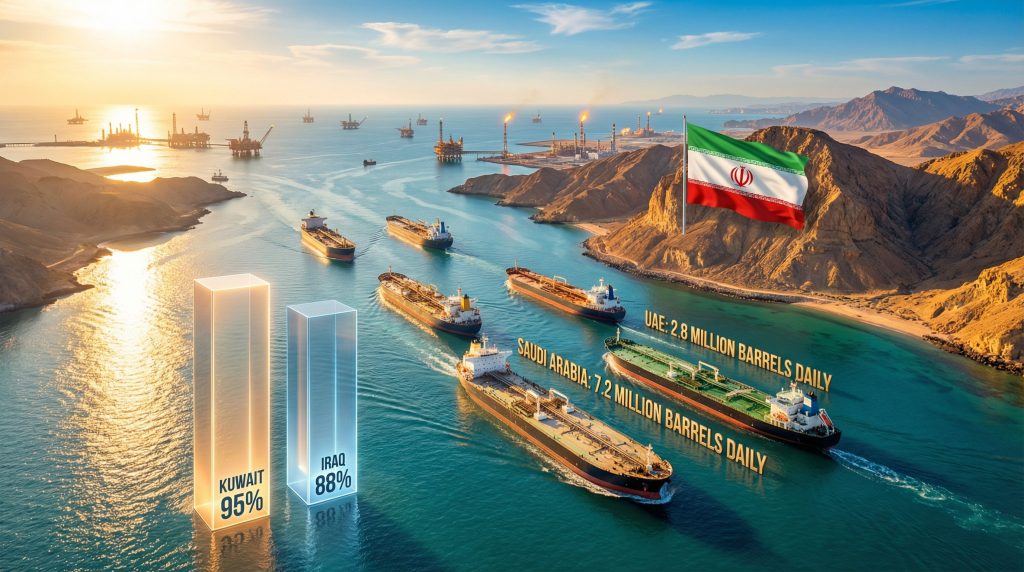
The Strait of Hormuz represents one of the world's most critical energy transit points, with approximately one-fifth of global oil consumption passing through this narrow waterway between Oman and Iran. This 20 percent figure translates to roughly 17-18 million barrels per day during peak demand periods, making the strait indispensable to global energy security.
The geographic positioning of this chokepoint creates systemic vulnerability for multiple major producers. Saudi Arabia, the United Arab Emirates, Kuwait, and Iraq export the majority of their crude oil production via the Strait of Hormuz, along with Iranian exports. This concentration means that any disruption affecting the waterway would simultaneously impact several of the world's largest oil producers.
Moreover, as US-Iran oil talks in Oman continue to develop, the strategic importance of this chokepoint becomes even more pronounced for global energy security considerations.
Transit dependencies for major Gulf producers reveal the extent of regional vulnerability:
• Saudi Arabia: Primary Gulf route dependency as largest global exporter
• UAE: Critical transit point serving as major regional hub
• Kuwait: Single primary route with high dependency ratio
• Iraq: Limited alternatives despite growing export capacity
• Iran: Geographic necessity as significant OPEC producer
Regional Producer Dependencies and Export Vulnerabilities
The economic implications of potential transit disruptions extend beyond immediate supply concerns to include insurance costs, shipping route diversions, and alternative infrastructure utilisation. Energy companies operating in the region must factor chokepoint risks into long-term investment planning and operational strategies.
Alternative shipping routes exist but carry significant cost penalties and capacity limitations. The overland pipeline systems connecting Gulf producers to Mediterranean ports offer some redundancy, but cannot fully compensate for Strait of Hormuz capacity during extended closures.
Regional infrastructure development projects have increasingly focused on building transit route diversity, including expanded pipeline networks and alternative port facilities. These investments reflect industry recognition that chokepoint concentration represents a fundamental vulnerability requiring systematic mitigation efforts.
In addition, the Saudi Arabia exploration strategy demonstrates how regional producers are adapting to reduce dependency on traditional chokepoints through diversification initiatives.
How Do Nuclear Negotiations Influence Energy Market Sentiment?
The Uranium Enrichment-Oil Price Connection
Nuclear programme discussions create complex market dynamics that extend beyond immediate diplomatic outcomes to encompass broader regional stability assessments. When Iran expressed openness to discussing uranium enrichment with Western countries, energy markets interpreted this signal within the context of potential sanctions relief and regional de-escalation.
The connection between nuclear negotiations and petroleum markets operates through multiple channels. Successful diplomatic engagement on nuclear issues could lead to sanctions modifications affecting Iranian oil export capacity. However, disagreements over negotiation scope create ongoing uncertainty that maintains elevated risk premiums in energy pricing.
Market participants closely monitor nuclear negotiation developments because they serve as indicators of broader diplomatic progress or failure. The technical aspects of uranium enrichment discussions often correlate with investor confidence in regional stability and long-term energy supply security.
Ballistic Missile Programmes and Energy Infrastructure Security
The inclusion of ballistic missile capabilities in diplomatic discussions reflects concerns about regional energy infrastructure vulnerability. Advanced missile systems pose potential threats to oil production facilities, shipping lanes, and strategic energy storage installations throughout the Gulf region.
Energy infrastructure security assessments incorporate missile defence capabilities, facility hardening requirements, and emergency response protocols when evaluating regional investment opportunities. These security considerations directly affect capital allocation decisions and operational cost structures for energy companies.
Insurance markets respond immediately to developments in missile programme discussions, with premium adjustments reflecting changing threat assessments for energy facilities and shipping operations. These cost modifications flow through to commodity pricing mechanisms and long-term contract negotiations.
What Are the Broader Economic Implications of US-Iran Energy Diplomacy?
Dollar Strength and Commodity Market Dynamics
Currency dynamics play a crucial role in energy commodity pricing during diplomatic periods. Strength in the US dollar affects commodity markets through multiple mechanisms, including purchasing power adjustments for non-dollar economies and investor sentiment regarding dollar-denominated assets.
During the diplomatic announcement period, precious metals volatility contributed to broader commodity market uncertainty. These interconnected commodity relationships demonstrate how diplomatic developments in one sector can trigger portfolio adjustments across multiple asset classes.
The correlation between currency strength and energy pricing becomes particularly pronounced during geopolitical uncertainty periods. Dollar appreciation can offset some oil price increases for US consumers while creating additional cost pressures for importing nations using other currencies.
OPEC Production Strategy Adjustments
Major oil producers must continuously evaluate production strategies based on diplomatic developments and their potential impact on market stability. Saudi Arabia's role as the traditional swing producer becomes particularly important during periods of geopolitical uncertainty affecting other OPEC members.
Production planning decisions incorporate diplomatic risk assessments, market demand projections, and strategic reserve management considerations. These complex calculations determine how quickly producers can respond to supply disruptions and maintain market stability during crisis periods.
Long-term supply planning requires evaluation of diplomatic scenarios and their potential effects on regional production capacity. Energy companies invest significant resources in scenario modelling to prepare for various geopolitical outcomes and their market implications.
For instance, the US-China trade dynamics continue to influence global energy demand patterns, creating additional complexity for production planning during diplomatic uncertainty.
The next major ASX story will hit our subscribers first
How Do Energy Inventory Levels Affect Diplomatic Market Reactions?
US Strategic Petroleum Reserve Dynamics
Energy inventory levels significantly influence how markets respond to diplomatic developments. The Energy Information Administration reported inventory declines following winter storm impacts on refinery operations, creating additional market sensitivity to supply disruption risks.
Winter storm effects on refinery operations demonstrate how domestic operational factors interact with geopolitical concerns to influence market psychology. Reduced inventory levels during seasonal demand peaks increase market sensitivity to potential supply disruptions from diplomatic failures.
Strategic reserve management policies affect market confidence during diplomatic uncertainty periods. The availability of emergency reserves provides buffer capacity against short-term supply disruptions but cannot substitute for sustained production interruptions.
Global Energy Security Buffer Analysis
Critical Assessment: Regional variations in emergency inventory coverage create uneven vulnerability to supply disruptions, with some markets maintaining significantly more buffer capacity than others during extended crisis periods.
Emergency inventory distribution patterns reveal strategic vulnerabilities that diplomatic developments can exploit. Markets with limited reserve capacity demonstrate higher price volatility during geopolitical uncertainty periods compared to regions with substantial emergency supplies.
Commercial inventory management strategies increasingly incorporate geopolitical risk assessments when determining optimal storage levels and facility locations. These private sector decisions complement government strategic reserve policies in providing market stability during diplomatic crises.
As oil prices continue to fluctuate ahead of the US-Iran oil talks in Oman, inventory management becomes increasingly critical for market stability.
What Investment Strategies Emerge During Energy Diplomatic Cycles?
Risk-Adjusted Portfolio Positioning
Energy market volatility during diplomatic periods creates specific investment opportunities and risks that require specialised management strategies. The rapid price movements following diplomatic announcements demonstrate how quickly market conditions can shift based on diplomatic signals.
Professional investors employ various approaches to navigate diplomatic uncertainty:
• Volatility trading strategies that capitalise on price swings around diplomatic announcements
• Geographic diversification to reduce exposure to specific regional risks
• Temporal hedging using options and futures to manage short-term uncertainty
• Fundamental analysis integration combining diplomatic assessment with technical market indicators
Risk management frameworks increasingly incorporate diplomatic milestone tracking as standard practice for energy-exposed portfolios. Investment committees monitor negotiation progress, failure indicators, and alternative scenario developments to adjust position sizing appropriately.
Alternative Energy Investment Acceleration
Geopolitical volatility in traditional energy markets drives increased interest in alternative energy investments that offer reduced exposure to diplomatic risks. Renewable energy projects, energy storage systems, and efficiency technologies benefit from investor desire to diversify away from geopolitically sensitive assets.
Strategic metal markets experience increased attention during energy diplomatic periods as investors evaluate battery storage, solar panel production, and wind turbine manufacturing supply chains. These materials provide indirect exposure to energy market growth while reducing dependence on traditional petroleum-based systems.
Long-term energy transition financing accelerates during periods of petroleum market volatility as investors seek assets with lower geopolitical risk profiles. Climate technology development receives increased capital allocation when traditional energy markets demonstrate heightened uncertainty.
How Do Regional Energy Partnerships Evolve During US-Iran Talks?
Gulf Cooperation Council Energy Coordination
Regional energy partnerships adapt dynamically to changing diplomatic circumstances affecting member nations. Gulf producers coordinate emergency response capabilities and supply sharing protocols during periods of heightened geopolitical tension.
Emergency supply sharing agreements among Gulf Cooperation Council members provide collective security against individual nation supply disruptions. These arrangements include predetermined activation thresholds, capacity allocation mechanisms, and cost-sharing formulas for emergency assistance.
Infrastructure development priorities shift during diplomatic uncertainty periods to emphasise supply route diversification and emergency response capabilities. Joint investment projects focus on building redundancy and resilience into regional energy transportation networks.
Asian Energy Import Diversification Strategies
Major energy importing nations in Asia develop sophisticated supply chain management strategies to reduce vulnerability to Middle Eastern supply disruptions. These approaches include:
- Long-term contract diversification across multiple supplier nations
- Strategic reserve building programmes to provide emergency supply buffers
- Alternative energy source development to reduce petroleum dependency
- Supply route redundancy investments including pipeline and shipping alternatives
China, India, and Japan maintain active diplomatic relationships with multiple energy suppliers to ensure continued access during regional conflicts or diplomatic breakdowns. These relationships require careful balance to avoid taking sides in regional disputes while securing energy security.
Contract renegotiation patterns during geopolitical volatility demonstrate how importers adjust purchasing strategies based on diplomatic risk assessments. Shorter-term agreements provide flexibility while longer-term contracts offer price stability and supply security guarantees.
What Are the Long-Term Energy Market Structural Changes?
Diplomatic Precedent Setting for Future Energy Relations
Historical analysis of previous diplomatic cycles provides insight into how energy markets adapt to changing geopolitical relationships. The precedent established by current negotiations affects future market expectations and investment planning horizons.
Institutional memory in commodity trading incorporates lessons from past diplomatic successes and failures when evaluating current market conditions. Trading algorithms increasingly integrate diplomatic milestone tracking and historical precedent analysis in position management systems.
Regulatory framework evolution for energy trade during sanctions periods creates institutional knowledge that persists beyond specific diplomatic cycles. These regulatory adaptations affect how markets prepare for and respond to future diplomatic developments.
Technology Transfer Implications for Regional Energy Development
Successful diplomatic engagement opens possibilities for energy technology transfer and infrastructure modernisation that could reshape regional production capabilities. Advanced extraction technologies, efficiency improvements, and environmental compliance systems represent potential areas for cooperation.
Regional energy integration projects become feasible when diplomatic relationships improve, creating opportunities for shared infrastructure development and coordinated production planning. These structural changes could alter competitive dynamics in global energy markets.
Long-term infrastructure investment decisions incorporate diplomatic scenario planning to evaluate project viability under different political relationship configurations. Energy companies must balance current diplomatic optimism with historical precedent regarding relationship stability.
Navigating Energy Markets Through Diplomatic Uncertainty
Key Monitoring Indicators for Energy Investors
Successful navigation of energy markets during diplomatic periods requires systematic monitoring of specific indicators that historically correlate with significant market movements:
Diplomatic Milestone Tracking:
• Negotiation venue announcements and participant confirmations
• Agenda scope agreements and disagreement disclosures
• Timeline establishment and modification patterns
• Third-party mediator involvement and withdrawal
Technical Market Integration:
• Options market implied volatility changes around diplomatic announcements
• Futures market positioning shifts by trader category
• Correlation pattern changes between related commodity markets
• Currency market responses affecting commodity pricing mechanisms
Risk management frameworks must integrate diplomatic assessment with traditional technical and fundamental analysis to provide comprehensive market evaluation during uncertainty periods.
Strategic Outlook for Global Energy Security
The evolution of diplomatic relationships in energy-producing regions creates long-term structural implications for global energy security architecture. Market participants must evaluate multiple scenario outcomes and their probability distributions when making investment decisions.
Scenario Planning Considerations:
• Diplomatic success outcomes: Potential sanctions relief, increased production capacity, regional stability enhancement
• Negotiation failure scenarios: Escalated tensions, supply disruption risks, alternative supplier premium development
• Partial resolution pathways: Limited agreement scope, ongoing uncertainty maintenance, periodic negotiation cycles
Energy transition planning increasingly incorporates geopolitical risk reduction as a strategic objective, driving investment toward supply chains with reduced diplomatic vulnerability. This structural shift affects capital allocation patterns across traditional and alternative energy sectors.
Integration of diplomatic risk assessment into energy security planning represents a fundamental evolution in how markets evaluate supply reliability and investment attractiveness across different energy technologies and geographic regions. The US-Iran oil talks in Oman therefore represent more than immediate diplomatic engagement—they establish precedents for how energy markets will navigate future geopolitical developments.
Disclaimer: This analysis incorporates market data and expert commentary available as of February 2026. Energy market conditions and diplomatic relationships evolve rapidly, requiring continuous monitoring of developments for current investment and policy decisions. Readers should consult current market data and professional advisory services before making investment decisions based on geopolitical analysis.
Seeking Opportunities in Geopolitically-Sensitive Energy Markets?
Discovery Alert's proprietary Discovery IQ model delivers real-time alerts on significant mineral discoveries that often outperform traditional energy investments during market volatility, providing investors with actionable alternatives when geopolitical uncertainty affects petroleum markets. Begin your 14-day free trial today to diversify beyond energy diplomacy risks and position yourself ahead of the mineral discovery cycle.