August 2, 2026
Understanding the Geopolitical Oil Premium Framework
Middle Eastern diplomatic tensions create complex feedback mechanisms across global petroleum markets that extend far beyond traditional supply-demand equilibrium models. Energy traders incorporate multiple risk scenarios through sophisticated probability weightings, creating measurable premiums that reflect geopolitical uncertainty rather than immediate production disruptions.
The current Iran-US conflict impact on oil prices demonstrates how diplomatic negotiations can generate significant market volatility even when physical oil flows remain uninterrupted. Furthermore, Brent crude futures reached $68.05 per barrel during February 2026 discussions, representing a 0.74% increase during a single week of elevated diplomatic uncertainty, while West Texas Intermediate crude climbed to $63.55 per barrel with a 0.41% gain over the same period.
Market participants operate under conditions where geopolitical risk assessment changes within hours based on negotiation developments or policy statements. Consequently, this creates what analysts describe as status quo nervousness, where petroleum prices experience significant intraday movements driven by information asymmetry rather than fundamental supply changes.
When big ASX news breaks, our subscribers know first
What Drives Oil Price Volatility During Iran-US Tensions?
Market Psychology and Risk Assessment
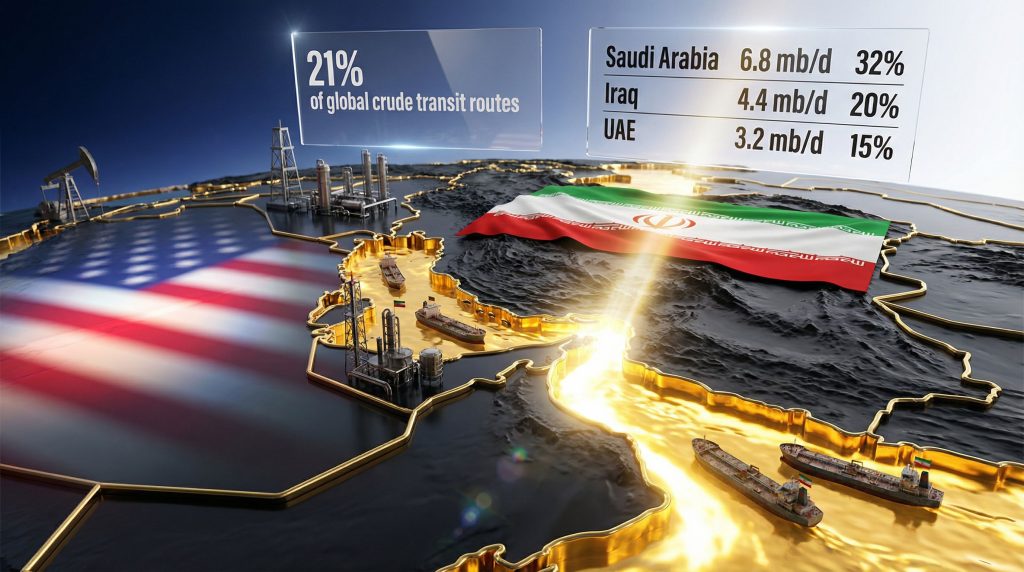
Geographic concentration creates systemic vulnerabilities that affect global pricing mechanisms regardless of individual nation production capacity. For instance, approximately 21% of total global oil consumption transits through the Strait of Hormuz, creating a singular chokepoint that amplifies price sensitivity to regional political developments.
Trading patterns during February 2026 negotiations revealed how information-driven volatility operates in practice. Both Brent and WTI crude experienced overnight declines followed by gains exceeding $1 per barrel during U.S. trading sessions, before moderating toward settlement. This pattern indicates that traders react to diplomatic developments rather than maintaining sustained directional conviction based on supply fundamentals.
The agenda misalignment between negotiating parties created additional uncertainty layers. In addition, Iran's focus on nuclear program discussions conflicted with U.S. priorities regarding ballistic missiles and regional proxy networks, keeping investors anxious about potential conflict escalation pathways.
Strategic Petroleum Reserve Implications
National stockpile policies become critical price stabilisation mechanisms during potential supply disruptions. Strategic Petroleum Reserve release protocols represent established intervention tools that create effective price ceilings during crisis scenarios, though current inventory levels and release coordination frameworks among consuming nations require ongoing assessment.
Saudi Arabia's pricing signals provide additional market context, with official selling prices for Arab Light crude to Asia reaching approximately five-year lows by March 2026. However, this represented the fourth consecutive month of price reductions, indicating producer willingness to defend market share even amid geopolitical uncertainty. Such developments are closely related to the anticipated oil price rally 2025 expectations.
How Do Strait of Hormuz Dynamics Impact Global Energy Security?
Critical Infrastructure Vulnerability Analysis
The narrow waterway separating Oman and Iran serves as the primary export route for multiple Gulf producers including Saudi Arabia, UAE, Kuwait, Iraq, and Iran. This geographic bottleneck creates concentration risk that extends beyond any individual nation's production capacity or political stability.
Gulf State Export Dependencies via Strait of Hormuz
| Exporting Nation | Transit Dependency | Strategic Significance |
|---|---|---|
| Saudi Arabia | Primary crude export route | Largest global exporter |
| UAE | Essential for crude flows | Major trading hub |
| Kuwait | Critical export pathway | Significant OPEC member |
| Iraq | Key revenue source | Reconstruction dependent |
| Iran | Fellow OPEC member route | Sanctions impact variable |
Regional export infrastructure demonstrates how single-point-of-failure risks create systemic vulnerabilities affecting global energy security. Furthermore, any sustained interference with tanker traffic through this chokepoint would impact prices worldwide regardless of the specific nations involved in political disputes.
Alternative Route Economics
Pipeline capacity through Turkey, Red Sea shipping alternatives, and overland transport networks provide higher-cost routing options that establish effective price floors during potential maritime disruptions. These alternative pathways require significantly longer transit times and involve additional handling costs that compound at consumer level.
Historical precedents from previous Gulf conflicts demonstrate how alternative supply sources can partially offset disruptions. However, activation timelines and surge capacity limitations create temporary price spikes before market adjustment mechanisms fully engage.
What Are the Macroeconomic Transmission Mechanisms?
Inflation Dynamics Across Consumer Economies
Energy price shocks propagate through multiple economic channels affecting transportation costs, manufacturing inputs, and consumer spending patterns. Central banking authorities must balance inflation control measures against economic growth objectives when petroleum costs surge unexpectedly, creating complex policy trade-offs.
The transmission mechanisms operate through several pathways:
• Transportation sector impacts – Airlines, shipping companies, and logistics networks face immediate input cost pressures
• Manufacturing cost structures – Energy-intensive industries experience margin compression
• Consumer price indices – Gasoline and heating fuel prices directly affect household budgets
• Wage-price spiral potential – Labour markets may demand compensation for higher living costs
Consumer economies demonstrate varying sensitivity levels to oil price fluctuations based on energy intensity, domestic production capacity, and strategic reserve availability. Consequently, import-dependent nations face more severe macroeconomic adjustments compared to net energy exporters.
Emerging Market Currency Pressures
Oil-importing developing economies experience dual pressures from higher energy costs and potential capital flight during periods of regional instability. These feedback loops create additional commodity demand destruction as currencies weaken and purchasing power erodes.
Currency depreciation amplifies the domestic price impact of dollar-denominated oil imports, creating inflationary pressures that compound the direct energy cost increases. In addition, central banks in affected economies must choose between defending exchange rates or maintaining accommodative monetary policies to support economic growth. These dynamics align with broader concerns about the US‑China trade war impact on global markets.
How Do Options Markets Price Geopolitical Risk?
Volatility Skew Analysis
Current call option premiums reflect asymmetric upside risk expectations, with Brent crude demonstrating elevated implied volatility particularly in out-of-the-money strike prices. This mathematical representation of trader sentiment provides quantifiable measures of conflict probability assessment across different price scenarios.
The volatility surface structure reveals market expectations regarding:
• Short-term disruption probability – Higher premiums for near-dated options
• Magnitude of potential price spikes – Skew toward higher strike calls
• Duration assumptions – Term structure implications for sustained disruptions
• Downside protection demand – Put option activity levels
Options market activity serves as a real-time barometer of professional trader risk assessment, incorporating both statistical modelling and geopolitical analysis into derivative pricing structures.
Term Structure Implications
Forward curve positioning reveals whether markets expect temporary disruptions or sustained higher price environments. Current backwardation patterns suggest short-term supply concerns outweigh longer-term fundamental oversupply forecasts, indicating that immediate geopolitical risks dominate structural market balance considerations.
Backwardation creates economic incentives for strategic reserve drawdowns and inventory liquidation. Therefore, this provides natural market stabilisation mechanisms when immediate supply concerns exceed long-term scarcity expectations.
What Economic Scenarios Could Unfold?
Baseline Diplomatic Resolution Pathway
Successful diplomatic engagement could rapidly deflate geopolitical risk premiums, potentially driving crude prices toward fundamental equilibrium ranges. This scenario assumes OPEC+ maintains current production coordination and global demand patterns continue without significant disruption.
Resolution pathway characteristics include:
• Rapid premium normalisation – Risk-based pricing components dissipate quickly
• Return to fundamental drivers – Supply-demand balance becomes primary price determinant
• Strategic reserve restoration – Consuming nations rebuild emergency stockpiles
• Investment flow normalisation – Energy sector capital allocation stabilises
Limited Escalation Framework
Targeted military actions or incremental sanctions escalation might sustain moderate risk premiums without triggering broader regional conflict scenarios. This pathway maintains elevated pricing while avoiding severe economic disruption or strategic reserve mobilisation.
Limited escalation scenarios typically involve:
• Surgical strike capabilities – Minimal infrastructure damage
• International diplomatic intervention – Multilateral de-escalation efforts
• Market adaptation mechanisms – Alternative routing development
• Producer compensation strategies – Output increases from non-conflict regions
Such scenarios could significantly affect broader oil price movements trade war dynamics across global markets.
Regional Conflict Expansion Model
Full-scale military engagement scenarios could drive significant price escalation, particularly if Strait of Hormuz transit operations face sustained interference. Experts suggest that oil prices could hit $91 a barrel by late 2026 if major Iranian supply disruptions occur, representing historical precedents from Gulf War periods that demonstrate how rapidly prices can spike during infrastructure targeting or maritime blockade implementation.
Expansion model implications include:
• Strategic reserve mobilisation – Coordinated releases from major consuming nations
• Demand destruction activation – High prices reduce consumption across sectors
• Alternative supply acceleration – Non-Gulf producers increase output rapidly
• Economic recession probability – Sustained high energy costs reduce global growth
The next major ASX story will hit our subscribers first
How Do Supply Chain Vulnerabilities Amplify Price Impacts?
Refining Capacity Constraints
Regional conflicts affect not only crude oil production but also downstream processing capabilities that convert raw petroleum into consumer products. Gulf refineries handle significant volumes for both domestic consumption and international export markets, creating additional chokepoints beyond crude production alone.
Kazakhstan's Tengiz oilfield situation during early 2026 demonstrated how infrastructure vulnerabilities can compound geopolitical risks. Planned oil exports through Russia routes faced potential 35% reductions due to power facility fires, illustrating how technical incidents amplify political uncertainty impacts.
Shipping Insurance and Maritime Security
Lloyd's of London and other maritime insurance providers adjust premium structures during heightened regional risk periods, creating additional cost layers that compound throughout the petroleum supply chain. These insurance adjustments often persist longer than immediate political tensions, maintaining elevated costs even after diplomatic resolution.
Maritime security considerations include:
• Vessel routing modifications – Longer transit times increase operational costs
• Crew safety premiums – Personnel compensation adjustments for high-risk areas
• Cargo insurance escalation – Coverage costs rise with perceived threat levels
• Port security enhancements – Terminal protection investments
Such developments are closely monitored for their tariffs' market impact across international trade flows.
What Role Do Alternative Energy Transitions Play?
Renewable Energy Acceleration
Geopolitical oil price volatility strengthens economic arguments for domestic renewable energy capacity development, potentially accelerating energy transition timelines in import-dependent economies. Higher petroleum costs improve the relative competitiveness of solar, wind, and other renewable technologies.
Investment decision frameworks incorporate geopolitical risk assessment alongside traditional cost-benefit analysis. Furthermore, this creates additional incentives for energy diversification strategies that reduce exposure to Middle Eastern supply disruptions.
Strategic Mineral Dependencies
Energy transition pathways create new geopolitical vulnerabilities around critical mineral supply chains required for renewable technologies and battery storage systems. The critical minerals energy transition presents both challenges and opportunities for global energy security frameworks.
Critical Mineral Concentration Risks
| Mineral | Primary Producers | Technology Applications | Supply Risk Level |
|---|---|---|---|
| Lithium | Australia, Chile, China | Battery storage systems | Moderate |
| Cobalt | Democratic Republic of Congo | Electric vehicle batteries | High |
| Rare Earth Elements | China (processing) | Wind turbines, solar panels | Very High |
| Copper | Chile, Peru, China | Electrical infrastructure | Moderate |
What Historical Precedents Guide Current Analysis?
Iran-Iraq War Price Dynamics (1980-1988)
Extended regional conflict during the 1980s demonstrated global energy markets' ability to adapt through alternative supply source development, strategic reserve utilisation, and demand destruction at elevated price levels. The eight-year conflict period provided extensive data on market adjustment mechanisms during sustained Middle Eastern instability.
Key lessons from the Iran-Iraq War include:
• Alternative supply activation – Non-Gulf producers increased output significantly
• Tanker War impacts – Insurance costs and routing changes added persistent premiums
• Strategic reserve effectiveness – Coordinated releases helped stabilise extreme price spikes
• Economic adaptation – Industrial processes adjusted to higher energy cost structures
Gulf War Economic Impacts (1990-1991)
Rapid military resolution scenarios from the Gulf War period demonstrate how quickly geopolitical risk premiums can dissipate once supply security concerns diminish. The conflict provided framework precedents for current situation assessment regarding intervention timelines and market recovery patterns.
Gulf War precedents established patterns for:
• Coalition response mechanisms – Multinational coordination protocols
• Infrastructure targeting limitations – Avoiding long-term production damage
• Post-conflict reconstruction – Rapid capacity restoration capabilities
• Market memory effects – Risk premium persistence beyond immediate resolution
Research from Columbia University's Energy Policy Institute emphasises that any military conflict involving Iran could significantly affect regional oil production capabilities and global market stability.
Navigating Energy Market Complexity
The Iran-US conflict impact on oil prices represents a critical examination of global energy market resilience amid broader geopolitical realignment trends. Understanding interconnected economic mechanisms enables more informed decision-making across investment, policy, and operational contexts.
Market participants must balance short-term volatility management strategies with longer-term positioning as energy security considerations increasingly influence both international relationships and domestic economic policy frameworks. The current situation provides valuable real-time data on how diplomatic uncertainty translates into measurable economic impacts across global petroleum markets.
Future energy market stability depends on developing more resilient supply chain architectures that can withstand geopolitical disruptions while maintaining economic efficiency. Therefore, this requires coordinated international cooperation on strategic reserves, alternative energy development, and crisis management protocols that protect global economic growth from regional political instability.
Looking to Capitalise on Global Energy Market Volatility?
Discovery Alert's proprietary Discovery IQ model delivers instant notifications on significant ASX mineral discoveries, including critical energy transition commodities and mining opportunities that often respond to global economic shifts like oil price volatility. Begin your 14-day free trial today and explore how major mineral discoveries have historically generated exceptional returns during periods of geopolitical uncertainty.