July 29, 2026
Understanding the Geopolitical Oil Price Framework
Regional conflicts create energy market volatility through two primary channels: immediate risk premiums driven by trader psychology and actual physical supply disruptions when infrastructure becomes compromised. The Iran War impact on oil prices demonstrates how mathematical relationships between conflict duration and price escalation depend heavily on global demand elasticity and the capacity of unaffected producers to compensate for lost output.
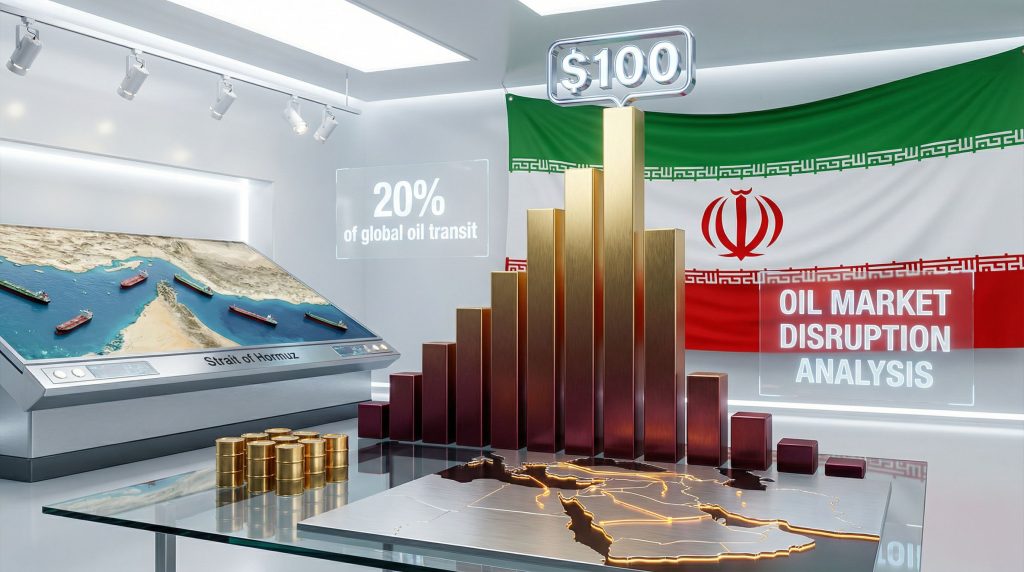
The Strait of Hormuz represents perhaps the most critical vulnerability in global energy infrastructure, with approximately 20-21% of internationally traded petroleum flowing through this narrow maritime passage. This chokepoint spans just 33 nautical miles at its narrowest point, creating immediate routing complications when regional tensions escalate.
Historical precedents demonstrate how quickly geopolitical events transform market dynamics. The 1973 Arab Oil Embargo saw prices quadruple from $3 to over $12 per barrel within months. Furthermore, during the 1980-1988 Iran-Iraq War, estimates suggest 2-5 million barrels per day were offline at various points, contributing to sustained price volatility throughout the decade.
The Supply Disruption Equation
When uncertainty about future supply increases, risk premiums expand before physical constraints materialise. This expectations-formation mechanism among market participants operates independently of actual infrastructure damage, creating price pressures through psychological factors alone.
Storage capacity limitations compound these effects. Middle Eastern oil-producing nations typically operate storage facilities near maximum utilisation during normal conditions. Consequently, when export routes become compromised, producers face rapid storage saturation, potentially forcing production shutdowns or flaring operations within weeks.
Critical Infrastructure Vulnerability Assessment
Alternative shipping routes exist but carry significant limitations. The Cape of Good Hope route adds approximately 6,000 nautical miles and 15-20 days to transit times compared to Strait of Hormuz passages. Additionally, pipeline capacity through Saudi Arabia provides some relief but cannot substitute for the full volume of seaborne crude typically flowing through the Gulf.
Tanker insurance markets amplify these vulnerabilities. When marine insurance premiums spike beyond economical levels, shipping routes can become unprofitable even if physically navigable, creating effective supply disruptions without direct infrastructure damage.
When big ASX news breaks, our subscribers know first
What Makes This Current Conflict Different for Energy Markets
The Iran War impact on oil prices differs from previous regional conflicts due to several evolving factors. Leadership targeting has shifted the conflict dynamic from limited coercive signalling to what appears to be existential defence positioning, fundamentally altering state behaviour regarding strategic energy assets.
Regional alliance structures within the Gulf Cooperation Council create interconnected vulnerabilities. For instance, coordinated energy policy, military cooperation, and intelligence sharing between Saudi Arabia, UAE, and Kuwait mean that threats to one nation affect the security calculations of all members.
Escalation Threshold Analysis
Transitions from deterrence strategies to broader regional engagement cause market participants to revise probability distributions for supply disruption upward. Academic research on conflict escalation establishes that when states move from strategic patience to immediate survival mode, rational economic calculations become secondary to security imperatives.
Current market psychology reflects incomplete pricing of these risks. While oil prices have risen approximately 8% following recent military actions, this may underestimate the potential for sustained supply disruption if the conflict expands beyond targeted strikes to infrastructure warfare. Furthermore, OPEC market influence plays a crucial role in determining how these price increases might be sustained or mitigated.
Market Psychology vs. Physical Supply Reality
Insurance market withdrawal creates artificial scarcity independent of physical supply constraints. Lloyd's of London and specialised marine insurance pools price Middle Eastern shipping routes based on cumulative risk assessment, not just immediate navigation safety.
Tanker traffic patterns show vessels avoiding contested waters even when passage remains technically feasible. However, this behavioural response multiplies shipping costs through longer routes and higher insurance premiums, translating geopolitical risk directly into commodity prices. Goldman Sachs analysis suggests these psychological factors often outweigh immediate physical constraints in determining short-term price movements.
The Four-Week Disruption Tipping Point
Storage capacity constraints create a critical timeline for price escalation during sustained conflicts. Middle Eastern producers operate with limited excess storage capacity, meaning that export disruptions quickly translate to difficult operational decisions.
When production cannot be exported due to shipping constraints, storage facilities fill rapidly. Once maximum capacity is reached, producers face forced shutdowns or economically wasteful flaring operations, creating actual supply reduction rather than merely deferred exports.
| Duration | Brent Price Range | Key Factors |
|---|---|---|
| 1-2 weeks | $75-$85 | Insurance premiums, routing delays |
| 3-4 weeks | $85-$95 | Storage approaching capacity limits |
| 4+ weeks | $100-$120+ | Forced production cuts, demand destruction |
Storage Capacity Constraints
Regional storage facilities operate near maximum utilisation during normal market conditions to optimise cash flow. Iran, Iraq, Kuwait, Saudi Arabia, and UAE collectively maintain significant onshore and offshore storage, but this capacity becomes critical bottlenecks during export disruptions.
Economic losses from forced shutdowns create powerful incentives for export resumption. However, when shipping routes remain compromised or insurance unavailable, producers face constrained options regardless of financial motivation. These dynamics significantly influence oil price trends during extended conflicts.
Price Trajectory Modelling
Demand destruction mechanisms provide eventual price ceilings, but these thresholds have risen substantially since previous oil crises. The 2008 spike to $147 per barrel demonstrated that markets can sustain extreme prices longer than historical precedents suggested, particularly when supply disruptions appear potentially permanent rather than temporary.
Consumer behaviour changes, business shifts to alternative energy sources, and reduced economic activity eventually dampen overall energy demand. Nevertheless, these adjustments require weeks or months to materialise meaningfully. Understanding crude oil market dynamics remains essential for predicting these adjustment periods.
Which Energy Sectors Benefit Most from Oil Price Spikes
Australian energy companies experience direct margin expansion when global oil prices rise, as production costs remain relatively fixed while revenue increases immediately. Santos (ASX: STO), Woodside Energy (ASX: WDS), and Beach Energy (ASX: BPT) represent primary beneficiaries of sustained higher oil pricing.
The Iran War impact on oil prices creates particularly favourable conditions for companies with significant oil exposure rather than purely gas-focused operations. Margin expansion occurs because realised prices increase while production costs, taxes, and other operational expenses remain relatively stable in the short term.
Australian Energy Stock Performance Analysis
Resource sector rotation during geopolitical crises follows predictable patterns, with institutional investors moving capital from equities with regional risk exposure toward energy stocks perceived to benefit from crisis pricing. This creates self-reinforcing price pressure beyond fundamental valuation improvements.
Currency effects amplify returns for Australian investors when energy crises coincide with risk-off periods that weaken the Australian dollar against the US dollar. Since oil revenues are typically denominated in USD, AUD weakness enhances the local currency value of international commodity sales.
Key Australian energy producers and their primary exposures include:
- Santos: Significant oil production in Cooper Basin and international assets
- Woodside Energy: Major LNG operations with oil price correlation through energy substitution
- Beach Energy: Domestic oil and gas production with direct price sensitivity
Global Energy Infrastructure Winners
Pipeline companies, shipping operators, and refineries experience varied impacts depending on their specific asset locations and customer base. Companies operating alternative shipping routes benefit from increased traffic as standard routes become less attractive.
Strategic petroleum reserve utilisation creates opportunities for companies with storage and logistics capabilities, as governments seek to release emergency stocks to moderate price spikes while maintaining supply security.
How Do Central Banks Respond to Energy-Driven Inflation
Energy price shocks create particularly challenging conditions for monetary policy makers, especially in economies with high oil import dependency. China imports approximately 74% of its oil consumption, while India's import dependency exceeds 87%, making both economies vulnerable to sustained energy price increases.
The Iran War impact on oil prices compounds existing inflationary pressures from other sources, creating a complex policy environment where traditional monetary tools may prove insufficient or counterproductive.
Monetary Policy Constraints Under Supply Shocks
Supply-side inflation shocks differ fundamentally from demand-driven price increases because they represent external cost increases rather than domestic overheating. Central banks cannot directly address supply constraints through interest rate policy, creating tension between inflation control mandates and economic growth objectives.
Federal Reserve dual mandate complications arise when energy-driven inflation persists while other economic indicators suggest accommodation rather than tightening. In addition, European Central Bank faces similar challenges given Europe's substantial energy import dependency and limited domestic production alternatives.
Inflation Transmission Mechanisms
Transportation cost cascading effects multiply the initial energy price impact throughout the broader economy. When fuel costs rise, shipping, logistics, and distribution expenses increase across all sectors, creating broad-based price pressures beyond direct energy consumption.
"Energy price shocks create immediate headline inflation pressure while simultaneously dampening economic activity through reduced consumer spending power, presenting central bankers with conflicting policy signals."
Consumer spending reallocation patterns show households reducing discretionary spending to accommodate higher energy costs, potentially offsetting some inflationary pressure through reduced demand for other goods and services. However, this adjustment mechanism operates slowly compared to the immediate impact of higher fuel prices.
Wage-price spiral risks emerge when sustained energy price increases trigger broader inflation expectations, potentially requiring monetary policy responses that could exacerbate economic slowdown effects.
What Are the Long-Term Strategic Implications
Energy security paradigm shifts accelerate during major supply disruptions, as governments reassess strategic petroleum reserve policies, domestic production incentives, and alternative energy transition priorities. The Iran War impact on oil prices may catalyse policy changes that persist long after immediate supply constraints resolve.
Strategic petroleum reserve policy recalibration reflects updated threat assessments and supply security priorities. Countries with large reserves may release stocks to moderate immediate price spikes while simultaneously planning reserve expansion to handle future disruptions.
Energy Security Paradigm Shifts
Domestic production incentive structures become politically attractive when import dependency creates vulnerability to external shocks. Countries with domestic oil and gas resources may accelerate development timelines or reduce regulatory barriers to enhance supply security.
Alternative energy transition acceleration occurs paradoxically during oil crises, as high fossil fuel prices improve the relative economics of renewable energy investments while highlighting the strategic risks of continued oil dependency. Moreover, policymakers recognise that tariff policy implications can influence energy transition strategies and domestic production incentives.
Geopolitical Realignment Scenarios
Middle Eastern alliance restructuring may emerge from current conflicts, potentially altering long-term energy supply relationships and regional power balances. Traditional partnership patterns could shift based on conflict outcomes and post-conflict security arrangements.
China-Russia energy partnership deepening becomes more strategically important as Western sanctions and Middle Eastern instability create incentives for alternative supply relationships. These partnerships may include infrastructure investments, long-term contracts, and joint development projects.
European energy diversification urgency reflects lessons learned from Russian supply disruptions and current Middle Eastern risks. Consequently, policy makers may accelerate plans for LNG import capacity, renewable energy deployment, and strategic storage expansion. SBS analysis highlights how these geopolitical tensions specifically affect Australian fuel markets and global supply chains.
The next major ASX story will hit our subscribers first
Investment Strategy Framework for Energy Crisis Navigation
Portfolio positioning during supply shocks requires balancing opportunity capture with risk management, as energy price volatility creates both profit potential and significant downside exposure. The Iran War impact on oil prices demands strategic rather than reactive positioning approaches.
Energy sector allocation optimisation involves distinguishing between companies with direct oil price exposure versus those benefiting from broader energy market volatility. Direct producers capture margin expansion, while service companies and infrastructure operators may experience more complex and delayed impacts.
Portfolio Positioning During Supply Shocks
Inflation hedge asset selection becomes critical as energy-driven price increases potentially trigger broader inflationary cycles. Traditional hedges include energy stocks, precious metals, and inflation-protected securities, but each carries distinct risk characteristics during geopolitical crises.
Currency exposure management strategies account for how oil price shocks interact with foreign exchange markets. Oil-importing countries typically see currency weakness, while oil-exporting nations may experience relative strength, creating both risks and opportunities for international investors. Understanding trade war impact on oil helps investors navigate these currency dynamics effectively.
Recommended positioning approaches include:
- Core energy exposure: 5-15% allocation to established oil and gas producers
- Inflation protection: Treasury Inflation-Protected Securities or commodities
- Currency hedging: Consider USD exposure given oil pricing dynamics
- Defensive positioning: Maintain cash reserves for volatility management
Risk Management Protocols
Volatility timing considerations recognise that energy price spikes tend to be sharp but often relatively brief, requiring careful attention to profit-taking opportunities. Historical analysis suggests that geopolitical oil spikes frequently reverse within 3-6 months unless underlying supply disruption persists.
Profit-taking strategies for cyclical energy plays should account for the temporary nature of most geopolitical premiums. Systematic approaches to reducing exposure as prices rise help capture gains while maintaining some upside participation.
Preparing for Extended Energy Volatility
Key monitoring indicators help investors track whether current supply disruptions are likely to persist or resolve quickly. Strait of Hormuz traffic flow metrics provide real-time insight into actual versus feared supply constraints.
Regional storage facility utilisation rates signal when producers approach forced production cuts, marking a critical escalation point for price pressure. Furthermore, insurance market sentiment indicators reflect professional risk assessment of ongoing navigation safety.
Strategic Investment Positioning
Energy sector opportunity assessment requires distinguishing between companies positioned for short-term price spikes versus those benefiting from longer-term energy security investment trends. The Iran War impact on oil prices may catalyse both immediate and structural market changes.
Inflation protection portfolio construction should account for the possibility that current energy price increases trigger broader inflationary cycles, requiring diversified approaches beyond direct energy exposure.
Long-term energy transition implications suggest that current oil price volatility may accelerate renewable energy investment and policy support. Consequently, this creates opportunities in alternative energy sectors even as traditional oil and gas companies benefit from near-term price increases.
Disclaimer: This article contains forward-looking statements and market analysis that involve risks and uncertainties. Oil prices and energy markets are highly volatile and subject to numerous factors beyond geopolitical events. Past performance does not guarantee future results. Investors should conduct their own research and consider their risk tolerance before making investment decisions. The information provided is for educational purposes only and does not constitute financial advice.
Considering Your Energy Investment Strategy Amidst Global Uncertainty?
Discovery Alert's proprietary Discovery IQ model delivers real-time alerts on significant ASX mineral discoveries, helping subscribers identify actionable opportunities in energy and resource sectors during volatile market conditions. Stay ahead of market movements with instant notifications that turn complex mineral data into clear investment insights—begin your 14-day free trial today and secure your competitive advantage.