August 2, 2026
Understanding Geopolitical Risk in Modern Oil Markets
Geopolitical volatility in oil trading has fundamentally transformed how systematic capital allocation responds to crisis environments. Multiple convergent factors create unprecedented challenges for traditional quantitative approaches in oil markets, forcing a comprehensive reassessment of risk frameworks and strategy design. Furthermore, geopolitical risks impact commodity markets more than traditional supply fundamentals.
When big ASX news breaks, our subscribers know first
What Makes 2026 a Critical Inflection Point for Oil Market Dynamics?
Systematic Strategy Performance Under Stress
Commodity trading advisers faced their most challenging period since systematic tracking began in 2000, with algorithmic approaches experiencing consecutive annual losses throughout the 2024-2026 period. These quantitative funds, which rely on trend identification and momentum signals, encountered structural obstacles when market movements contradicted fundamental analysis.
The algorithmic trading environment demonstrates extreme position instability, with 80% of trading weeks in 2025 requiring significant portfolio adjustments. This constant rebalancing indicates the breakdown of traditional signal persistence, forcing systematic strategies to operate in increasingly shortened time horizons.
CTA front-month WTI volume participation expanded dramatically from approximately 15-25% in 2024 to projected levels reaching 35% by 2026, according to analytics data. This amplification of algorithmic presence creates self-reinforcing volatility cycles where systematic position changes trigger additional systematic responses.
Multiple Risk Vector Convergence
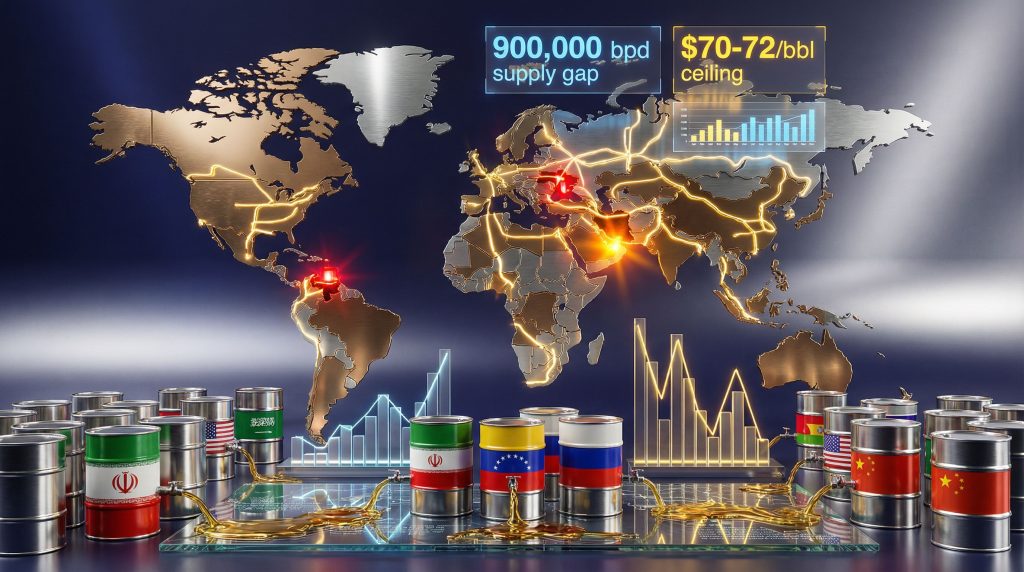
Current market conditions reflect the intersection of several destabilising forces. Iranian tensions with Washington create supply disruption possibilities affecting approximately 21% of global oil transit through the Strait of Hormuz. Simultaneously, production restoration challenges at Kazakhstan's Tengiz field and winter weather impacts on North American extraction compound supply uncertainty.
The algorithmic response mechanism proves particularly sensitive to headline-driven price movements. WTI crude experienced a nearly 7% surge in late January 2026 before reversing sharply when geopolitical tensions appeared to moderate, demonstrating the rapid position adjustment capabilities of systematic strategies.
Chinese economic deceleration introduces additional demand-side uncertainty, while ongoing conflicts across multiple regions prevent the establishment of clear directional trends necessary for traditional momentum-based approaches. Moreover, analysts examining oil price volatility patterns emphasise how traditional forecasting models struggle in such environments.
Why Traditional Quantitative Approaches Struggle in Current Conditions?
Signal Quality Degradation
The fundamental assumption underlying systematic oil trading involves identifying and following sustained price trends. Current market architecture violates this premise through frequent two-day trend reversals that exhaust capital allocation before profitable position sizing can occur.
Geopolitical volatility in oil trading generates what industry participants describe as fake breakouts against underlying supply-demand fundamentals. These false signals trigger algorithmic position establishment that must be rapidly unwound when reality reasserts itself, creating transaction costs without corresponding profits.
Tariff policy uncertainty from the Trump administration added another layer of noise to price discovery mechanisms throughout 2025. However, understanding oil price rally insights helps traders navigate these complex dynamics.
Structural Market Evolution
| Performance Metric | 2024 Baseline | 2025 Reality | 2026 Projection |
|---|---|---|---|
| Weekly Position Changes | 45-50% | 80% | 75-80% |
| Signal Persistence (Days) | 7-14 | 2-3 | 3-5 |
| Geopolitical Risk Premium | $1-2/barrel | $2-4/barrel | $3-5/barrel |
The expansion of algorithmic participation creates feedback loops where systematic position changes trigger additional systematic responses. When multiple CTA funds interpret similar signals simultaneously, their collective position adjustments amplify price movements beyond levels justified by fundamental factors.
Frank Monkam of Buffalo Bayou Commodities identified a critical distinction between benchmark behaviours: WTI crude exhibits higher correlation with broader macro assets like equities and metals compared to Brent, creating noisier technical signals that don't reflect actual oil market dynamics. This correlation creates false systematic signals based on non-energy market movements.
Adaptation Challenges
Traditional trend-following models require clear directional persistence to generate returns through momentum capture. The current environment provides brief directional signals that reverse before position sizing reaches profitable levels, creating a systematic disadvantage for algorithmic approaches.
Relief periods occurred only during Q4 2025 when broad consensus emerged regarding global oversupply conditions. This consensus provided CTAs with clear, persistent signals allowing rare positive quarterly performance, demonstrating model functionality when directional clarity exists.
The requirement for constant position adjustment conflicts with optimal capital allocation principles. Roughly 80% of weeks requiring position changes means systematic strategies operate in continuous rebalancing mode, preventing the accumulation of meaningful trend-following positions.
How Supply Fundamentals Create Price Ceiling Effects During Crisis Events?
Oversupply Dynamics vs. Geopolitical Premiums
Current global oil market structure exhibits substantial oversupply conditions that act as natural price ceiling mechanisms even during acute geopolitical tensions. The Energy Information Administration projects Brent crude averaging $56 per barrel in 2026, reflecting expectations that supply abundance will overwhelm crisis-driven price premiums.
This structural oversupply creates an asymmetric risk environment where geopolitical events trigger temporary price spikes that cannot sustain themselves against fundamental supply-demand physics. Physical market participants understand this dynamic, whilst algorithmic systems may overreact to headline risk without properly weighting supply ceiling effects.
Rising production from both OPEC and non-OPEC sources throughout late 2025 contributed to widely-embraced oversupply narratives that provided systematic strategies with rare directional clarity. In addition, examining OPEC production impact reveals how production decisions affect global markets.
Real-Time Price Discovery Mechanisms
Current pricing as of February 3, 2026, shows WTI at $63.82 (+0.97%) and Brent at $67.90 (+0.85%), indicating proximity to levels where oversupply considerations begin constraining upward price movement despite ongoing geopolitical tensions.
Oil-on-water inventory levels remain elevated relative to historical norms, providing physical evidence of supply abundance that constrains speculative price inflation. These inventory positions represent immediately available supply that can rapidly enter markets if geopolitical disruptions materialise.
"The interaction between structural oversupply and temporary geopolitical risk creates complex price discovery challenges where fundamental analysis must account for both physical supply abundance and probability-weighted disruption scenarios."
Strategic Reserve and Emergency Response Capabilities
Government strategic petroleum reserve systems provide additional supply buffers that can rapidly respond to actual supply disruptions. These reserve release capabilities add another layer of price ceiling protection during genuine supply emergencies.
Alternative routing capabilities for major supply chokepoints, whilst costly, provide backup supply chain options that prevent total supply elimination during regional conflicts. Insurance and shipping cost increases during crises add temporary premiums but don't fundamentally alter supply availability.
Which Regional Conflicts Generate Maximum Trading Volatility Impact?
Strait of Hormuz Transit Risk Assessment
The Strait of Hormuz represents the world's most critical oil transit chokepoint, handling approximately 21% of global crude oil movements or roughly 21-22 million barrels daily. Naval tensions in this region trigger immediate algorithmic responses due to the concentration of global supply transit through this narrow waterway.
Current US-Iran tensions create real-time testing conditions for systematic trading approaches. The threat of military action generates probability-weighted supply disruption scenarios that algorithmic models must rapidly incorporate into position decisions.
Insurance premiums for tanker traffic through contested waters increase substantially during tension periods, adding cost pressures that translate into temporary price premiums. These insurance cost escalations provide early warning indicators of escalating regional risk.
Black Sea Export Terminal Vulnerabilities
Kazakhstan's gradual restoration of output at the Tengiz field following recent disruptions demonstrates the fragility of regional export infrastructure. Production restoration timelines remain uncertain, creating ongoing supply uncertainty that systematic strategies must continuously reassess.
Winter weather complications in the Black Sea region amplify geopolitical risk through operational disruptions that compound political instabilities. These weather-related factors create additional volatility layers beyond pure geopolitical considerations.
Export route diversification options from Central Asian producers remain limited, concentrating regional supply risk through specific terminal facilities that become high-impact vulnerability points during regional conflicts. Furthermore, US oil production decline contributes to global supply concerns.
Real-Time Volatility Response Patterns
Algorithmic trading systems demonstrate real-time response capabilities within minutes of geopolitical event announcements, creating immediate price movements that may precede fundamental analysis of actual supply impact. This speed differential between algorithmic response and fundamental assessment creates short-term price distortions.
Naval reallocations and military positioning announcements trigger systematic position adjustments before actual supply impacts materialise, demonstrating the sensitivity of algorithmic models to headline risk versus physical market conditions.
The reversibility of geopolitically-driven price movements becomes apparent when tensions ease without actual supply disruption. Markets opened February 3, 2026, with sharp WTI reversals when US-Iran tensions appeared to moderate, showing algorithmic unwinding of crisis-driven positions.
What Alternative Trading Strategies Emerge from Market Instability?
Refined Product Market Opportunities
Refined product spreads provided profitable alternatives during crude market instability throughout 2025. Gasoil calendar spreads delivered strong performance, contributing to a 56% increase in CTA activity in refined product markets for 2026.
Rebecca Babin of CIBC Private Wealth Group explains that refined products represent a much smaller and more concentrated trading environment compared to crude markets. This concentration creates opportunities for more forceful price action but also increases unwinding volatility and choppiness.
Algorithmic exposure across all refined product spreads is projected to increase by approximately 25% in 2026, indicating systematic strategy migration toward markets with clearer supply-demand signals and reduced macro correlation noise.
Benchmark Spread Trading Evolution
| Trading Strategy | 2025 Performance | Strategic Advantage | Risk Considerations |
|---|---|---|---|
| Brent vs WTI Spreads | Outperformed crude | Lower macro correlation | Basis risk volatility |
| Refined Product Spreads | +56% CTA activity | Concentrated markets | Choppy unwinds |
| Calendar Spreads | Strong gains | Clear supply-demand | Seasonal disruptions |
Brent crude's advantage over WTI reflects fundamental differences in how these benchmarks interact with broader financial markets. WTI's tendency to correlate with equities and metals creates noise for systematic traders, whilst Brent more cleanly tracks oil-specific fundamentals.
This correlation differential provides systematic strategies with opportunities to trade inter-benchmark spreads that capture oil-specific movements whilst avoiding broader macro market noise that complicates directional crude trading. In addition, analysing oil price trade war impact helps understand these dynamics.
Portfolio Diversification Initiatives
Systematic commodity strategies are expanding beyond traditional energy exposure to reduce concentration risk in volatile oil markets. Systematic metals programmes represent emerging portfolio diversification efforts designed to access markets with different fundamental drivers and correlation patterns.
The expansion into metals markets reflects broader systematic strategy evolution toward multi-commodity approaches that can maintain portfolio performance when specific sectors experience structural trading difficulties.
Brent Belote of Cayler Capital emphasised the importance of using quiet market periods for infrastructure development, risk model calibration, and strategy refinement that enables survival during extended difficult environments.
"These are the years where the plumbing gets fixed, risk models get tuned, and the strategy survives long enough to matter when the environment shifts."
The next major ASX story will hit our subscribers first
How Should Market Participants Position for Sustained Uncertainty?
Short-Term Tactical Considerations
Monitoring US-Iran diplomatic developments requires real-time assessment capabilities that can distinguish between rhetorical escalation and genuine military preparation. Systematic strategies must incorporate probability-weighted scenario analysis that accounts for diplomatic resolution possibilities alongside supply disruption risks.
OPEC+ production restoration schedules provide fundamental anchors for supply assessment independent of geopolitical volatility. These scheduled production increases represent known supply additions that create baseline oversupply conditions regardless of regional conflict outcomes.
Winter weather impacts on North American production create temporary supply adjustments that systematic strategies must differentiate from permanent geopolitical supply losses. Weather-related production disruptions typically reverse within weeks, whilst geopolitical disruptions may persist for months or years.
Long-Term Strategic Framework Development
Risk model recalibration for geopolitical volatility requires incorporating higher baseline volatility assumptions and shorter signal persistence expectations. Traditional models designed for trending markets must adapt to expect rapid reversal patterns as normal conditions rather than aberrations.
Portfolio diversification beyond traditional crude contracts becomes essential for systematic strategies seeking consistent performance during extended periods of oil market instability. This diversification may include refined products, inter-commodity spreads, or entirely different asset classes.
Dynamic position sizing based on volatility regimes allows systematic strategies to adjust capital allocation intensity based on current market structure rather than assuming consistent trending environments. However, understanding oil price stagnation dynamics remains crucial.
Infrastructure and Technology Adaptation
The expansion of algorithmic trading presence requires upgraded infrastructure capable of rapid position adjustment and real-time risk management during volatile conditions. Systems must handle 80% weekly position change frequencies without compromising execution quality or risk control.
Fundamental analysis integration with geopolitical monitoring becomes necessary for systematic strategies that previously relied solely on technical signals. This integration requires developing capabilities to rapidly assess supply impact from regional conflicts.
Shorter trend durations requiring faster adaptation means systematic strategies must optimise for speed and agility rather than position size accumulation over extended periods.
What Do Current Market Forecasts Reveal About Industry Expectations?
Professional Forecast Analysis
The Energy Information Administration's expectation for Brent crude averaging $56 per barrel in 2026 reflects professional consensus that structural oversupply will overwhelm temporary geopolitical premiums. This forecast assumes successful navigation of current tensions without sustained supply disruption.
| Forecasting Institution | 2026 Price Target | Key Assumption |
|---|---|---|
| EIA | $56/barrel (Brent) | Oversupply dominance |
| Market Consensus | $60-65/barrel | Temporary premiums |
| Systematic Models | High volatility range | Continued instability |
Professional forecasts incorporate assumptions about diplomatic resolution of current tensions and successful restoration of disrupted production from various regional sources. These assumptions may prove optimistic if geopolitical volatility in oil trading escalates beyond current levels.
Scenario Planning Framework
Base case scenarios assume gradual tension de-escalation with oversupply fundamentals reasserting dominance over price discovery. This scenario supports lower price forecasts and reduced systematic trading opportunities from geopolitical volatility.
Bull case scenarios involve sustained Middle East disruptions that override oversupply conditions through actual supply removal rather than temporary risk premiums. Such scenarios would support higher prices but create continued systematic trading challenges through persistent volatility.
Bear case scenarios combine demand destruction from economic slowdown with resolution of geopolitical tensions, creating aggressive oversupply conditions that force prices below current forecast ranges.
Market Structure Evolution Implications
Increased algorithmic participation changing price discovery means traditional supply-demand analysis must account for systematic position adjustment effects that can amplify or dampen fundamental price movements.
Shorter trend durations requiring faster adaptation suggests that market structure evolution continues toward higher frequency trading and reduced position holding periods across all participant categories.
Greater emphasis on spread trading over directional bets reflects market participant adaptation to environments where clear directional signals become unreliable whilst relative value opportunities persist.
Essential Risk Management Principles for Volatile Energy Markets
Dynamic Exposure Management
Diversification beyond traditional crude contracts becomes essential for maintaining portfolio stability during extended periods of oil market instability. This diversification should include refined products, inter-benchmark spreads, and potentially non-energy commodities with different fundamental drivers.
Dynamic position sizing based on volatility regimes allows systematic strategies to reduce exposure during high-volatility periods whilst maintaining participation during stable trending environments. This approach requires real-time volatility assessment and rapid position adjustment capabilities.
Fundamental analysis integration with geopolitical monitoring provides additional information sources for position decision-making beyond pure technical signals. This integration helps distinguish between temporary headline-driven moves and genuine supply-demand shifts.
Advanced Strategy Implementation
Risk model recalibration for geopolitical volatility requires updating baseline assumptions about signal persistence, volatility clustering, and correlation patterns. Traditional models designed for trending markets need modification for rapid reversal environments.
Infrastructure optimisation for high-frequency adjustment ensures systematic strategies can execute rapid position changes without compromising fill quality or increasing transaction costs during volatile periods.
Performance measurement adaptation must account for different risk-return expectations in volatile environments where traditional trend-following approaches face structural challenges.
Market Structure Understanding
The evolution toward algorithmic dominance in oil markets creates new dynamics where systematic position changes trigger additional systematic responses. Understanding these feedback loops becomes essential for all market participants.
Geopolitical volatility in oil trading represents a structural shift rather than temporary market disruption, requiring permanent adaptation of trading approaches and risk management frameworks.
Spread trading emphasis over directional positions reflects market structure evolution where relative value opportunities may persist even when clear directional trends become unreliable.
Disclaimer: This analysis is for informational purposes only and should not be considered as investment advice. Oil markets involve substantial risk, and past performance does not guarantee future results. Readers should conduct their own research and consult with qualified professionals before making investment decisions.
Ready to Navigate Complex Energy Market Opportunities?
Discovery Alert's proprietary Discovery IQ model delivers real-time alerts on significant ASX mineral discoveries, instantly empowering subscribers to identify actionable opportunities ahead of the broader market while traditional oil markets face unprecedented volatility. Begin your 14-day free trial today and secure your market-leading advantage across diversified commodity exposures.