June 6, 2026
Geopolitical Risk Premium Dynamics in Contemporary Energy Markets
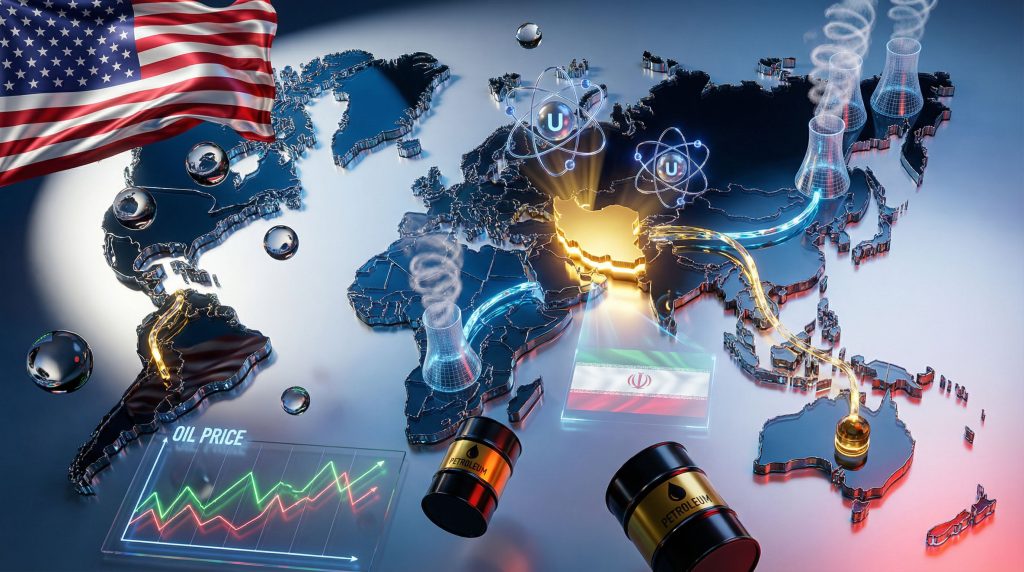
The intersection of nuclear diplomacy and global energy markets reveals fundamental questions about how geopolitical uncertainty translates into economic value. US-Iran nuclear talks have consistently demonstrated sophisticated mechanisms for pricing political risk, yet the relationship between diplomatic negotiations and crude oil valuations remains one of the most complex aspects of contemporary commodity markets. Understanding these dynamics requires examining how market participants distinguish between different types of geopolitical threats and their corresponding impact on supply security.
Risk assessment in energy markets operates through probability-weighted scenario modeling, where traders assign likelihood percentages to various diplomatic outcomes. This sophisticated approach goes beyond simple binary thinking about conflict versus peace, instead creating nuanced frameworks that account for degrees of diplomatic progress, sanctions intensity, and military escalation potential.
When big ASX news breaks, our subscribers know first
Historical Patterns in Nuclear Diplomacy Market Responses
The energy sector's response to nuclear negotiations demonstrates clear behavioral patterns that distinguish diplomatic uncertainty from military threat scenarios. Historical analysis of the 2015 Joint Comprehensive Plan of Action (JCPOA) period provides crucial insights into these market mechanisms.
Following the JCPOA agreement announcement on July 14, 2015, Brent crude experienced a significant decline from $60.24 per barrel to $43.76 per barrel over six months. This downward pressure reflected market expectations of increased Iranian oil supply, as production capacity expanded from 2.7 million barrels per day in January 2016 to 3.8 million barrels per day by December 2016 after sanctions relief implementation.
Supply Chain Vulnerability Assessment Frameworks
Energy market participants employ sophisticated vulnerability assessment tools that map critical infrastructure exposure to Middle Eastern geopolitical tensions. These frameworks analyze:
• Transportation route dependencies through key chokepoints including the Strait of Hormuz
• Production facility concentration in politically sensitive regions
• Refining capacity distribution and processing bottlenecks
• Storage infrastructure strategic positioning and capacity limitations
The 2019 Strait of Hormuz tensions demonstrated these vulnerability assessment mechanisms in action. When geopolitical tensions escalated following the JCPOA withdrawal, Brent crude spiked 12% in a single day on June 13, 2019, reaching $71.94 per barrel, illustrating how quickly market pricing adjusts to supply route threats.
Market Psychology During Extended Diplomatic Uncertainty
Trader behaviour during prolonged nuclear negotiations reveals distinct psychological patterns that differ significantly from responses to conventional military threats. Extended diplomatic uncertainty creates what energy economists term "volatility persistence," where market participants maintain elevated risk premiums even during periods of apparent negotiating progress.
Furthermore, the oil price rally observed during periods of heightened tension demonstrates how diplomatic setbacks can trigger rapid price movements.
Asymmetric Risk Perception Mechanisms
Market participants distinguish between permanent supply shocks and temporary uncertainty through asymmetric risk assessment. Military actions threatening production infrastructure typically trigger sharp, sustained price increases because they represent potential long-term supply disruption. Diplomatic negotiations, however, create different market dynamics characterised by:
- Flow disruption expectations versus stock-level production changes
- Probability distribution modelling across multiple negotiation outcomes
- Recovery timeline estimations based on historical diplomatic precedents
This asymmetric assessment explains why diplomatic progress can reduce prices despite ongoing geopolitical tension. During the 2012-2015 Iranian sanctions period, oil markets absorbed the initial supply reduction without continued price escalation, as traders distinguished between implemented sanctions and escalation risk.
Regional Production Response and Market Rebalancing
OPEC+ coordination mechanisms during crisis periods demonstrate sophisticated market rebalancing strategies that extend beyond simple production adjustment. Saudi Arabia's strategic petroleum reserve management serves as geopolitical insurance, with contingency production increases designed to offset potential supply disruptions.
Non-OPEC Producer Opportunism Strategies
Alternative suppliers capitalise on Middle Eastern uncertainty through accelerated production programmes and market share expansion. US shale oil production exemplifies this opportunistic response, increasing from 2.0 million barrels per day in 2011 to 5.3 million barrels per day by 2015 during the Iranian sanctions period.
This 165% production growth directly corresponded to Iran's loss of approximately 1.5 million barrels per day of export capacity. The strategic implications extend beyond immediate supply replacement, as sustained geopolitical uncertainty drives long-term infrastructure investment away from politically sensitive regions toward more stable production zones.
In addition, these regional shifts create lasting changes in oil price movements that reflect new supply chain configurations.
Enrichment Economics and Negotiating Leverage Calculations
Nuclear enrichment capability translates to economic leverage through multiple channels that extend beyond direct military implications. The technical achievement of uranium enrichment represents demonstrated industrial capability that affects regional power dynamics and economic relationships.
Technology Transfer Valuations in Regional Context
Enrichment technology operates under strict international export controls through the Nuclear Suppliers Group, creating artificial scarcity that increases acquisition costs by 200-400% under sanctions conditions. This technology premium generates negotiating leverage through:
• Threat value from demonstrated technical advancement capability
• Sanctions vulnerability where technology import restrictions create leverage opportunities
• Regional influence demonstration through advanced industrial capacity
However, uranium market volatility remains a significant factor, with global production of approximately 130,000 tonnes U₃O₈ equivalent annually and spot prices ranging from $24 per pound to $85 per pound between 2020-2025, depending partly on geopolitical supply security concerns.
Infrastructure Investment Patterns Under Geopolitical Uncertainty
Extended nuclear standoffs create measurable changes in global energy infrastructure investment patterns. Capital allocation decisions increasingly favour diversification strategies that reduce dependence on geopolitically sensitive regions.
Diversification Acceleration Trends
Global renewable energy investment reached $303.5 billion in 2016, up from $229 billion in 2010, with this acceleration partially reflecting Middle Eastern energy security concerns. The investment pattern shift demonstrates rational risk management responses by market participants seeking to hedge against supply disruption scenarios.
Liquefied natural gas trade expansion provides another example, with LNG commerce increasing 35% during the 2012-2020 Iranian sanctions period as countries pursued non-Middle Eastern energy alternatives. Consequently, these shifts have broader global market impacts extending beyond energy sectors.
Strategic Petroleum Reserve Policy Evolution
National energy security responses to persistent Middle Eastern volatility include strategic petroleum reserve accumulation. China's approach exemplifies this strategy, increasing stockpiling from approximately 100 million barrels in 2010 to over 500 million barrels by 2020 as a hedge against Middle Eastern supply disruption.
The next major ASX story will hit our subscribers first
Currency and Commodity Market Interconnections
Petrodollar circulation patterns during extended nuclear negotiations reveal complex relationships between energy markets and international monetary systems. When Iranian oil production faces sanctions restrictions, this represents reduced USD payment flows from oil-importing countries, though the global petrodollar system maintains functionality through substitute suppliers.
Alternative Payment System Development
Sanctions circumvention mechanisms typically impose 5-15% efficiency losses in transaction costs as countries implement alternative payment systems including barter arrangements and local currency settlements. These efficiency losses represent deadweight economic costs from political disagreement that extend beyond the immediate parties to negotiations.
For instance, recent developments in US-Iran nuclear talks have shown significant progress in mediated discussions, though specific details remain limited according to diplomatic sources.
Long-term Market Structure Evolution
Prolonged geopolitical standoffs create permanent changes in energy market structure that persist beyond the resolution of immediate diplomatic crises. Market concentration effects emerge as excluded producers lose market share while remaining suppliers gain enhanced pricing power.
Price Discovery Mechanism Adaptation
Oil price volatility, measured by daily returns standard deviation, increased from 1.8% in 2010 to 2.4% during the 2012-2015 period, reflecting structural changes in market uncertainty levels. This increased volatility drives demand for sophisticated volatility hedging strategies and risk management tools.
Financial Innovation in Response to Persistent Risk
Extended geopolitical uncertainty accelerates financial market innovation as traders develop new instruments for managing political risk. These innovations include:
• Enhanced derivatives products for geopolitical risk hedging
• Supply chain insurance mechanisms covering political disruption scenarios
• Alternative energy investment vehicles capitalising on security premium opportunities
Economic Impact Assessment of Diplomatic Timeline Uncertainty
Investment decision-making under geopolitical ambiguity creates measurable economic inefficiencies as project financing becomes more complex during extended negotiation periods. Energy infrastructure projects face delayed investment decisions when diplomatic outcomes remain uncertain, leading to suboptimal capital allocation across the energy sector.
Portfolio Diversification Under Political Risk
Institutional investors respond to persistent Middle Eastern volatility through enhanced diversification strategies that increasingly favour renewable energy investments and geographically distributed energy assets. This portfolio rebalancing reflects rational risk management but may impose transition costs on energy system efficiency.
Recent nuclear talks between the US and Iran have concluded with claims of progress, though few specific details have been released to the public.
What Does the Future Hold for Nuclear Diplomacy and Energy Markets?
The US-Iran nuclear talks serve as a critical case study for understanding how diplomatic uncertainty translates into measurable economic effects across global energy markets. Market participants have developed sophisticated frameworks for pricing political risk, yet the persistence of geopolitical uncertainty continues to impose efficiency costs on global energy systems.
These costs manifest through increased volatility, infrastructure investment delays, and suboptimal resource allocation patterns. However, the development of new risk management tools and alternative energy sources provides some mitigation against future diplomatic uncertainties.
Ultimately, the relationship between nuclear negotiations and energy markets will continue evolving as technological advances in renewable energy reduce dependence on traditional geopolitical chokepoints whilst simultaneously creating new forms of strategic vulnerability.
Disclaimer: This analysis involves forecasts and speculation about geopolitical and market developments. Energy market investments carry significant risks, and past performance does not guarantee future results. Readers should conduct independent research and consider consulting financial professionals before making investment decisions related to energy sector assets or commodities.
Looking to Invest in Energy Markets During Geopolitical Uncertainty?
Discovery Alert's proprietary Discovery IQ model delivers real-time alerts on significant mineral discoveries across ASX markets, including critical energy commodities and strategic metals essential for global energy transition. Stay ahead of market-moving announcements and capitalise on emerging opportunities by exploring Discovery Alert's discoveries page to understand how major mineral discoveries can generate substantial returns, then begin your 14-day free trial today.