July 19, 2026
Understanding How Geopolitical Tensions Shape Global Energy Markets
The intricate relationship between international diplomacy and energy commodity pricing represents one of the most complex mechanisms in modern global finance. When political tensions escalate between major powers and energy-producing regions, financial markets immediately begin incorporating potential supply disruption scenarios into pricing models, creating what economists identify as geopolitical risk premiums. These premiums reflect market participants' collective assessment of supply vulnerability and can dramatically influence global energy costs within hours of diplomatic developments.
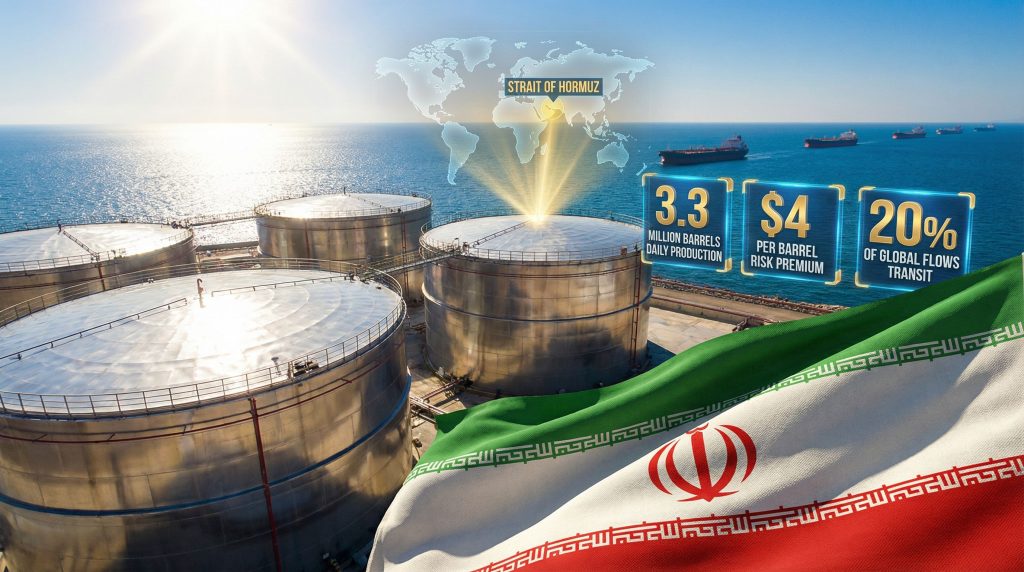
Current market dynamics demonstrate this principle clearly, with US-Iran tensions and oil prices displaying heightened correlation patterns that extend far beyond simple supply-demand calculations. Energy analysts estimate that approximately $4 per barrel of current crude oil pricing represents pure geopolitical risk premium, highlighting how quickly markets respond to potential supply threats from major producing regions. Furthermore, these oil price rally dynamics interact with broader economic factors to create complex market conditions.
When big ASX news breaks, our subscribers know first
Iran's Strategic Position in Global Energy Infrastructure
Iran maintains a critical position within global energy supply chains that extends beyond its substantial production capacity. The nation controls approximately 20% of global oil transit flows through its influence over the Strait of Hormuz, creating strategic chokepoint dynamics that amplify market sensitivity to regional tensions.
Production Capacity and Export Mechanisms
Iran's energy infrastructure supports significant output levels despite international sanctions. Current production capacity reaches 3.3 million barrels per day, positioning the nation as the 5th largest producer within OPEC+ frameworks. Historical export volumes, prior to enhanced sanctions implementation, ranged between 2.5-3.0 million barrels daily, representing approximately 3% of total global supply.
The nation's proven reserves exceed 158 billion barrels, ranking 4th globally and providing substantial long-term production potential. This reserve base creates ongoing market concerns about potential supply disruptions affecting not just immediate flows but future global energy security.
Shadow Fleet Operations and Sanctions Circumvention
Despite comprehensive international sanctions, Iran has developed sophisticated export networks utilising approximately 1,500 tankers, with 40% directly linked to Iranian operations. These vessels facilitate complex ship-to-ship transfer operations and employ opaque routing systems that enable continued energy exports.
Industry estimates suggest these circumvention mechanisms maintain approximately $60 billion in annual energy exports across crude oil, natural gas, and liquefied petroleum gas categories. The scale of these operations demonstrates how sustained economic pressure drives innovation in sanctions evasion, requiring continuous adaptation from enforcement authorities.
Market Mechanisms for Pricing Geopolitical Risk
Energy commodity markets employ sophisticated risk assessment frameworks that immediately incorporate geopolitical developments into futures pricing structures. Current US-Iran tensions and oil prices correlations demonstrate these mechanisms in real-time, with markets showing immediate responsiveness to diplomatic developments. In addition, broader concerns about US tariffs and inflation compound these market dynamics.
Options Market Indicators and Volatility Signals
Financial derivatives markets provide early warning systems about perceived supply risks through options pricing patterns. Recent trading data indicates significant positioning for upside price protection, with market participants establishing positions for potential crude oil spikes beyond $80 per barrel if tensions escalate further.
Professional traders monitor specific volatility indicators including:
- Options market skew reflecting asymmetric risk expectations
- Implied volatility premiums in energy futures contracts
- Cross-commodity correlation patterns during stress periods
- Currency hedge positioning in oil-importing nations
- Strategic reserve release speculation in options chains
Economic Scenarios and Price Trajectory Analysis
Energy market analysts have developed comprehensive scenario modelling frameworks to project potential price movements based on various escalation pathways and policy responses. These models incorporate multiple variables including production adjustments, strategic reserve releases, and demand elasticity factors. Consequently, understanding the trade war impact on markets becomes essential for comprehensive analysis.
Current Market Projections
Baseline projections suggest Brent crude maintaining $66-70 trading ranges with modest geopolitical premiums reflecting current tension levels. However, supply disruption scenarios indicate potential price surges to $91 per barrel if Iranian exports cease completely.
Extreme scenarios involving Strait of Hormuz closure affecting 20 million barrels daily could trigger significantly higher price levels, though such outcomes would likely prompt immediate strategic reserve releases and emergency production adjustments from other OPEC+ members.
Regional Production Response Capabilities
Middle Eastern producers maintain varying levels of spare capacity that could partially offset Iranian supply losses. Saudi Arabia and UAE possess the most significant readily available capacity, though full replacement would require coordinated OPEC+ response protocols and involve substantial time delays for infrastructure adjustments.
Currency Dynamics and Demand Elasticity
The US dollar's strength significantly influences global oil demand patterns, as international buyers using alternative currencies face increased purchasing costs during dollar appreciation periods. Recent Federal Reserve policy developments, including potential leadership changes, have strengthened the dollar from recent four-year lows.
Dollar Strength Impact on Global Demand
Currency fluctuations create additional headwinds for oil demand in emerging markets that represent significant consumption growth potential. When the dollar appreciates, oil becomes more expensive for buyers paying in local currencies, potentially reducing demand elasticity and creating natural price pressure independent of supply factors.
Strategic Petroleum Reserves and Crisis Management
National strategic reserves serve as critical buffer mechanisms during supply disruptions, though their effectiveness depends heavily on coordination between consuming nations and optimal release timing relative to market conditions. Additionally, implementing effective volatility hedging strategies becomes crucial during periods of heightened uncertainty.
Global Reserve Capacity Framework
| Country/Region | Strategic Reserve Size | Daily Release Capability |
|---|---|---|
| United States | 350+ million barrels | 4.4 million barrels/day |
| China | 500+ million barrels | 2-3 million barrels/day |
| IEA Members | 1.5+ billion barrels | Coordinated protocols |
Strategic reserve effectiveness depends on several factors including release coordination timing, market communication strategies, and concurrent production adjustments from other suppliers. Historical precedent suggests that well-coordinated releases can significantly dampen price spikes during initial supply disruption periods.
The next major ASX story will hit our subscribers first
Production Adjustments and Market Rebalancing
Current market dynamics include several offsetting factors that complicate price forecasting accuracy. Rising US crude output following recent shutdowns and Kazakhstan's approaching production resumption at the Tengiz oilfield provide natural market stabilisers.
Supply-Side Rebalancing Mechanisms
US shale production demonstrates remarkable resilience and rapid response capabilities to price signals. Industry data indicates increasing output levels that help offset potential disruptions from other regions. Additionally, Central Asian production recovery provides geographic diversification that reduces market dependence on Middle Eastern supplies.
Russian refinery maintenance patterns also influence global supply dynamics, with peak maintenance periods expected during current months and September, based on industry source estimates. These cyclical patterns create predictable supply adjustments that markets incorporate into pricing models. For instance, such patterns significantly affect oil price movements across different regions.
Investment Implications and Capital Allocation
Energy sector investors must evaluate both immediate price volatility opportunities and longer-term structural changes in global supply chain geography resulting from sustained geopolitical tensions.
Risk-Adjusted Investment Strategies
Investment flows into alternative supply sources typically accelerate during periods of geopolitical uncertainty, potentially reshaping global production geography and infrastructure development priorities. This capital reallocation creates both risks and opportunities across different market segments.
Professional investors monitor several key indicators:
- Infrastructure investment patterns in stable producing regions
- Technology development in unconventional resource extraction
- Transportation route diversification projects
- Alternative energy transition acceleration rates
- Geopolitical risk insurance pricing trends
Sanctions Evolution and Enforcement Dynamics
The effectiveness of economic sanctions depends on multilateral coordination capabilities and adaptive enforcement mechanisms. Targeted nations continuously develop circumvention strategies, requiring constant policy evolution from enforcing authorities.
Technological Innovation in Sanctions Evasion
Iran's development of alternative payment systems and shipping networks demonstrates how sustained economic pressure drives innovation in sanctions circumvention. These adaptations include sophisticated financial routing mechanisms, vessel tracking evasion technologies, and alternative trade settlement systems.
The ongoing evolution of evasion technologies creates dynamic enforcement challenges that influence long-term effectiveness of sanctions regimes. Market participants must continuously assess the evolving balance between sanctions pressure and circumvention capabilities.
Key Market Indicators for Professional Monitoring
Energy market professionals focus on specific leading indicators that provide early signals about escalating tensions and potential supply disruptions before they fully materialise in spot pricing.
Critical Monitoring Framework:
Professional traders track options market volatility premiums, tanker routing pattern changes, strategic reserve policy announcements, currency correlation shifts with oil prices, and OPEC+ production adjustment signals to anticipate market movements before they occur in spot markets.
Advanced Analytics and Predictive Modeling
Sophisticated market participants employ machine learning algorithms that process multiple data streams including satellite imagery of production facilities, shipping traffic patterns, diplomatic communication analysis, and social media sentiment tracking to generate predictive insights about potential supply disruptions. Energy policy analysts emphasise the importance of these comprehensive monitoring systems for accurate risk assessment.
Navigating Uncertainty in Global Energy Markets
The intersection of geopolitical tensions and energy commodity markets creates multifaceted risk-reward calculations for investors, policymakers, and consuming nations. Understanding these dynamics requires continuous monitoring of interconnected variables and scenario planning for various escalation pathways.
Current US-Iran tensions and oil prices dynamics exemplify how rapidly geopolitical developments can reshape global energy economics. These relationships demonstrate the critical importance of diversified supply chain management, strategic reserve optimisation, and adaptive risk management frameworks in maintaining market stability.
Market participants must balance immediate volatility opportunities against longer-term structural shifts in global energy infrastructure. The evolution of sanctions evasion technologies, alternative supply route development, and strategic reserve management continues reshaping fundamental market dynamics.
However, US-Iran tensions and oil prices will likely remain closely correlated as long as geopolitical uncertainties persist in the region. For instance, professional traders recognise that diplomatic developments can trigger immediate price reactions regardless of underlying supply-demand fundamentals.
Disclaimer: This analysis contains forward-looking statements and market projections that involve inherent risks and uncertainties. Energy market conditions can change rapidly based on geopolitical developments, and past performance does not guarantee future results. Investors should conduct independent research and consider professional advice before making investment decisions.
Ready to Capitalise on Geopolitical Energy Market Volatility?
Discovery Alert's proprietary Discovery IQ model delivers real-time alerts on significant ASX mineral discoveries, instantly empowering subscribers to identify actionable opportunities in energy and commodity sectors ahead of broader market movements. Begin your 14-day free trial today and secure your market-leading advantage during these volatile geopolitical conditions.