June 11, 2026

Geopolitical tensions impact on oil prices has become a defining characteristic of modern energy markets, as structural forces reshape traditional crude oil pricing mechanisms. The convergence of supply chain vulnerabilities, geopolitical realignments, and strategic competition between major powers has fundamentally altered how oil prices respond to international tensions. This transformation extends beyond conventional market dynamics, creating new frameworks where energy security trends intersects with national strategy, economic warfare, and technological dependencies.
Understanding the Risk Premium in Modern Energy Markets
Geopolitical tensions influence oil prices through sophisticated risk assessment mechanisms that extend far beyond simple supply and demand calculations. Energy economists recognise that markets now integrate probability-weighted scenarios into crude valuations, creating price premiums that respond to potential rather than actual disruptions.
The psychological dimension of oil pricing has become increasingly significant. Financial markets react to perceived threats to energy infrastructure before any physical impact occurs. This forward-looking mechanism means that military exercises, diplomatic statements, or regional tensions can generate substantial price movements independent of actual supply constraints.
Recent market behaviour demonstrates this dynamic clearly. Oil prices increased 7% within two days during February 2026, reaching over $71 per barrel as tensions escalated in the Middle East. This price movement occurred despite no actual supply disruptions, highlighting how geopolitical uncertainty creates immediate market premiums.
The Global Uncertainty Index reached historical highs during this period, surpassing uncertainty levels recorded during COVID-19, the 2008 financial crisis, and the 2000 dotcom bubble. This measurement indicates that current geopolitical tensions impact on oil prices generate market anxiety exceeding previous major economic disruptions.
Key factors driving risk premiums include:
- Probability assessments of supply chain interruptions
- Insurance cost escalations for energy transport
- Strategic reserve activation considerations
- Alternative supply route availability and costs
- Military deployment announcements and timing
Furthermore, transport insurance, freight rates, and forward curves immediately reflect growing uncertainty, creating cascading cost increases throughout energy supply chains. These multiplier effects amplify the impact of geopolitical tensions beyond the initial price shock.
When big ASX news breaks, our subscribers know first
Critical Maritime Chokepoints and Price Sensitivity
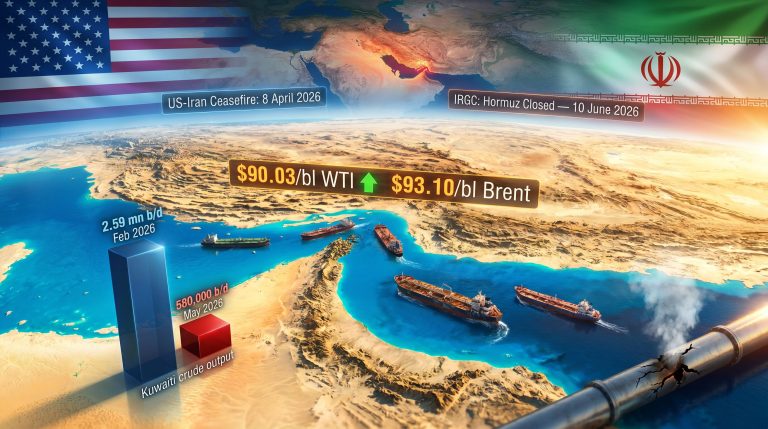
The Strait of Hormuz represents the world's most strategically significant energy corridor, handling approximately 20% of global petroleum transport. This narrow waterway's vulnerability creates outsized market reactions when regional tensions escalate, as recent events have demonstrated.
When Iranian Revolutionary Guards conducted armed drone exercises and temporarily restricted shipping through portions of the Strait of Hormuz, oil prices responded immediately. The passage remains critical for exports from Saudi Arabia, United Arab Emirates, Kuwait, Iraq, and Qatar, making any disruption threat systemically important to global energy flows.
| Maritime Chokepoint | Strategic Significance | Regional Dependencies |
|---|---|---|
| Strait of Hormuz | 20%+ of global oil transit | Gulf Cooperation Council exports |
| Strait of Malacca | Asia-Pacific energy gateway | China, Japan, South Korea imports |
| Suez Canal | Europe-Asia connector | Mediterranean and European markets |
| Bab el-Mandeb | Red Sea access point | African and European trade routes |
Even brief incidents demonstrate the psychological vulnerability of global energy infrastructure. Military exercises alone proved sufficient to drive immediate price increases, underscoring how financial and energy markets react to possibilities rather than actualities.
The concentration of oil production in geopolitically sensitive regions amplifies chokepoint vulnerabilities. When tensions affect the Middle East, markets must simultaneously price potential losses from multiple high-volume producers, creating compound risk scenarios that traditional supply-demand models cannot adequately capture.
In addition, regional production analysis reveals significant exposure concentrations:
- Gulf Cooperation Council nations: Combined output exceeding 23 million barrels daily
- Iranian capacity: Over 3 million barrels daily under sanctions pressure
- Iraqi infrastructure: 4.4 million barrels daily with ongoing vulnerability concerns
- Libyan production: Approximately 1.2 million barrels daily amid political instability
Economic Mechanisms Behind Geopolitical Price Spikes
Energy markets employ sophisticated probability modelling to price geopolitical risk, creating price bands that reflect uncertainty ranges rather than single-point forecasts. These frameworks evaluate multiple scenarios simultaneously, generating market premiums that can persist long after immediate tensions subside.
Scenario probability frameworks typically include:
- Base case scenarios (60% probability): Diplomatic resolution maintains current supply levels
- Escalation scenarios (30% probability): Limited infrastructure targeting or temporary disruptions
- Severe disruption cases (10% probability): Major chokepoint closures or sustained conflict
However, insurance and transportation costs create cascading multiplier effects throughout energy supply chains. War risk insurance premiums can increase ten-fold during crisis periods, whilst alternative routing requirements extend transit times and increase vessel demand, creating additional cost pressures.
The cost escalation framework demonstrates how geopolitical tensions propagate through energy markets:
- Insurance premiums: Range from 0.1% to over 1.0% of cargo value during crises
- Alternative routing: Extends transit times by 15-25% on average
- Security escort requirements: Add $50,000-$200,000 per voyage
- Port congestion delays: Average 3-7 additional days during tension periods
Historical price volatility demonstrates the magnitude of geopolitical tensions impact on oil prices in energy markets. Oil reached $150 per barrel during summer 2008, followed by a 77% decline within seven months as financial crisis concerns overtook supply fears. Furthermore, the March 2020 period saw oil prices temporarily fall into negative territory, while post-COVID recovery drove prices to $130 per barrel before geopolitical factors again became dominant.
Conflict Classifications and Market Impact Patterns
Different types of geopolitical conflicts generate distinct market response patterns, requiring investors and policymakers to understand the specific dynamics of each category.
Interstate military tensions create the highest price volatility due to their potential for rapid escalation and direct infrastructure targeting. These conflicts often involve major oil-producing nations or critical transit routes, generating immediate market premiums that can persist for extended periods.
Internal political instability produces more sustained but moderate price pressures. Civil unrest, regime changes, and governance failures create production uncertainty without the acute spike risks associated with international military conflicts. Iran's current situation exemplifies this dynamic, where massive domestic protests demanding an end to the Islamic Republic create internal pressure that may prompt external power demonstrations.
Moreover, sanctions and economic warfare produce complex market dynamics where sanctioned oil often continues flowing through alternative channels at discounted prices, creating bifurcated pricing structures that complicate traditional market analysis.
The Trump Administration's recognition that energy imports in US dollars represent a strategic vulnerability for China's economy demonstrates how energy markets have become weaponised in great power competition. This framework positions oil not merely as a commodity but as a tool of economic statecraft.
Recent events illustrate these dynamics clearly. Reports suggest that a 12-day conflict in June 2025 resulted in Iranian cyber and rocket attacks damaging approximately 6% of Israeli infrastructure, demonstrating the potential for regional conflicts to create broader economic impacts beyond immediate energy supply concerns.
Regional conflict spillover effects follow predictable patterns:
- Primary impact zones: Direct production or transit disruption
- Secondary effects: Regional supply chain modifications and alternative routing
- Tertiary consequences: Global strategic reserve deployment decisions
- Quaternary impacts: Long-term investment flow redirections
Consequently, the United States has expanded its military presence to the highest levels since the 2003 Iraq invasion, conducting 24-hour airlift operations moving tanker aircraft, air defence systems, and fighter jets to the region. This military escalation signals commitment levels that markets interpret as indicators of conflict probability and potential duration.
Strategic Petroleum Reserves and Crisis Management
Strategic petroleum reserves function as both market stabilisation mechanisms and geopolitical instruments, with release decisions capable of either amplifying or dampening price volatility depending on timing, volume, and international coordination.
Global strategic reserve capacity includes:
- United States SPR: Approximately 714 million barrels stored capacity
- China: Estimated 500+ million barrels across strategic and commercial storage
- European Union: 90-day import equivalent requirement distributed across member states
- Japan: 324 million barrels combining public and private sector holdings
Note: These figures require verification against current official data, as reserve levels fluctuate based on market conditions and policy decisions.
Reserve release announcements often generate immediate price impacts that exceed the actual supply addition volume. Markets interpret these decisions as signals about government assessments of conflict severity and intervention willingness, creating psychological effects that can be more significant than the physical oil release itself.
In addition, the market psychology surrounding reserve deployments demonstrates how energy policy has become integrated with broader geopolitical strategy. Reserve release coordination between allied nations signals unified response capabilities, whilst unilateral actions may indicate independent strategic positioning.
Shadow Markets and Sanctions Enforcement
Sanctions enforcement has created sophisticated parallel oil trading systems that operate alongside traditional markets, generating price distortions and alternative supply channels that complicate conventional market analysis.
Shadow fleet operations involve over 600 vessels engaged in sanctions-evasion activities, utilising complex ownership structures, ship-to-ship transfers, and modified routing patterns to move sanctioned crude to markets whilst avoiding traditional enforcement mechanisms.
These parallel markets typically operate with $10-15 per barrel discounts below benchmark pricing, creating artificial scarcity in traditional trading hubs whilst surplus supply accumulates in alternative channels. This bifurcation complicates price discovery mechanisms and amplifies volatility in conventional markets.
Shadow market characteristics include:
- Extended voyage times with AIS system shutdowns
- Non-Western insurance coverage providers
- Complex beneficial ownership structures
- Alternative port infrastructure utilisation
- Modified quality specifications and delivery terms
Consequently, the development of parallel trading systems demonstrates how geopolitical tensions impact on oil prices create structural market changes that persist beyond immediate crisis periods, fundamentally altering global energy trade patterns.
The next major ASX story will hit our subscribers first
Long-Term Strategic Implications
Will persistent volatility accelerate energy transition?
Persistent geopolitical oil price volatility accelerates structural changes in global energy systems, as nations prioritise supply diversification, infrastructure hardening, and strategic partnership realignments to reduce vulnerability to external shocks.
Strategic response patterns include:
- Supply diversification initiatives: Reducing dependencies on single-source suppliers
- Infrastructure protection programmes: Hardening critical energy assets against potential threats
- Alternative energy acceleration: Using price volatility to justify renewable transition investments
- Alliance strengthening efforts: Developing energy security partnerships with reliable suppliers
China and Russia's technological support for Iranian air defence systems exemplifies how geopolitical tensions create new dependency relationships. Russian long-range air defence systems combined with Chinese radar technology and BeiDou satellite navigation systems have created more integrated defence capabilities than sanctions frameworks anticipated.
Furthermore, investment flow redirections reflect long-term capital allocation adjustments based on regional stability assessments. Energy companies modify exploration, production, and infrastructure investments using political risk insurance requirements, extended payback periods for unstable regions, and comprehensive exit strategy planning.
Investment Positioning Strategies
How should investors navigate geopolitical oil market volatility?
Geopolitical oil market volatility requires sophisticated portfolio positioning that accounts for multiple scenario outcomes whilst managing downside risks during periods of elevated uncertainty.
Energy sector allocation models should consider:
- Integrated oil majors: Provide diversified geographic exposure with operational flexibility
- Regional producers: Offer concentrated risk-reward profiles tied to specific geopolitical outcomes
- Service companies: Deliver indirect exposure with operational leverage to activity levels
- Alternative energy companies: Benefit from long-term transition acceleration during price spike periods
Risk management techniques include:
- Options strategies: Protective puts on energy positions during high-tension periods
- Futures positioning: Directional exposure management based on probability-weighted scenarios
- Currency hedging: Managing oil-dollar correlation risks during crisis periods
- Sector rotation: Tactical allocation adjustments responding to geopolitical developments
The Gold-to-Oil ratio currently stands at approximately 83 barrels per ounce, indicating significant historical overvaluation of gold relative to oil. Whilst this suggests potential oil outperformance opportunities, investors must consider that rising energy costs could negatively impact mining company margins, creating sector-specific headwinds.
Scenario-based position sizing frameworks should employ probability-weighted allocations:
- Base energy allocation: 5-10% portfolio exposure under normal conditions
- Tactical overlay: Additional 2-5% during elevated geopolitical tension periods
- Volatility hedging positions: 1-3% in protective strategies
- Transition energy exposure: 3-7% allocation to alternative energy beneficiaries
What are the technical price targets for oil?
Oil price technical analysis suggests $90 per barrel as the initial target following the breakout from a four-year falling wedge pattern, with potential extension toward $120 per barrel based on the wedge depth measurement and overarching downtrend channel dynamics. This analysis supports the broader oil price rally analysis regarding potential upside scenarios.
However, investors should also consider scenarios involving oil price stagnation dynamics or even oil price crash insights, particularly as US oil production decline could influence supply-demand balances.
Investment considerations for energy market positioning:
- Monitor geopolitical development timelines and escalation probabilities
- Assess regional production vulnerability concentrations
- Evaluate alternative supply route economics and lead times
- Consider currency exposure implications during crisis periods
- Plan position sizing adjustments based on volatility regime changes
For instance, the complex relationship between global oil demand patterns and geopolitical developments requires careful analysis of multiple variables affecting price formation.
The integration of geopolitical analysis with traditional energy market research has become essential for successful investment outcomes. As global power structures continue evolving, oil markets will likely maintain sensitivity to political developments, making comprehensive risk assessment frameworks critical for both institutional and individual investors navigating this complex landscape.
Disclaimer: This analysis contains forward-looking statements and scenario-based projections that involve inherent risks and uncertainties. Energy market investments carry significant volatility risks, and past performance does not guarantee future results. Investors should conduct thorough due diligence and consider professional financial advice before making investment decisions.
Ready to Capitalise on Energy Market Volatility?
Discovery Alert's proprietary Discovery IQ model delivers real-time alerts on significant ASX mineral discoveries, helping investors navigate volatile markets and identify actionable opportunities ahead of the broader market. Begin your 14-day free trial today to gain a market-leading advantage during these uncertain times.