July 21, 2026
Revolutionary Integration: How Geothermal Lithium Operations Reshape Industrial Mining Models
The global lithium extraction industry stands at a pivotal technological crossroads where traditional energy-intensive mining operations confront mounting pressure for electrification & decarbonisation. While conventional hard-rock lithium mining and solar evaporation methods dominate current production, emerging integrated resource extraction models promise to fundamentally alter the economic and environmental calculus of critical mineral production. This transformation extends beyond mere process optimisation, encompassing strategic shifts in how industrial facilities manage power generation, consumption, and distribution across complex multi-site operations.
When big ASX news breaks, our subscribers know first
What Makes Vulcan Energy's Lionheart Project a Game-Changer for Industrial Electrification?
The convergence of renewable energy generation with critical mineral extraction represents a paradigm shift in industrial mining operations. Germany's Upper Rhine Valley has emerged as the testing ground for this integrated approach, where geothermal brine serves dual functions as both thermal energy source and lithium-bearing extraction medium. Furthermore, this represents a significant step towards ABB to electrify Lionheart lithium project goals.
The Dual-Resource Revolution: Geothermal Energy Meets Lithium Extraction
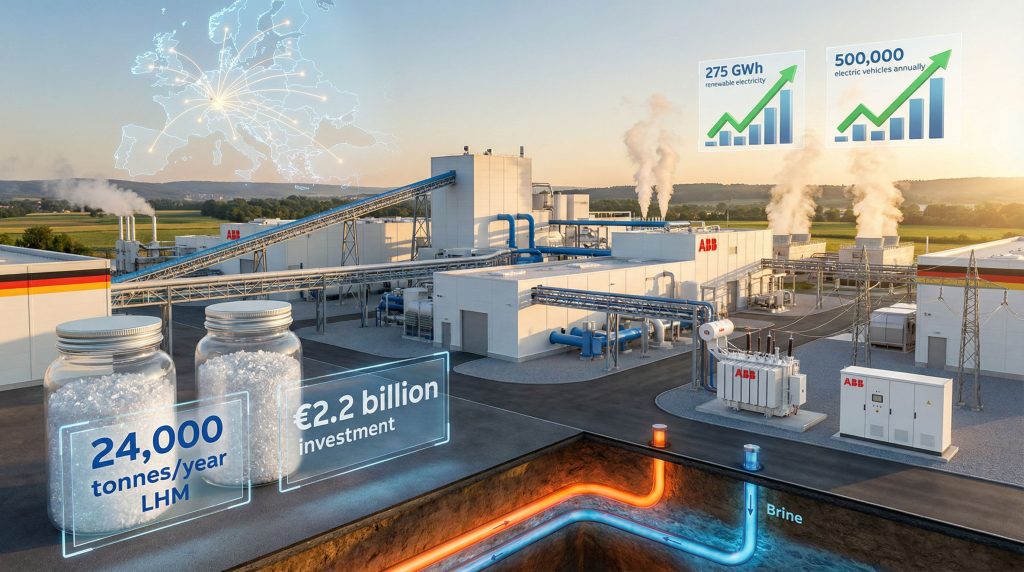
Vulcan Energy's Lionheart project demonstrates an unprecedented integration model where geothermal brine extraction simultaneously addresses European energy security and battery material independence objectives. The €2.2 billion ($2.56 billion) facility represents the largest integrated geothermal-lithium operation under development in Europe, targeting 24,000 metric tonnes of lithium hydroxide monohydrate production annually alongside 275 gigawatt-hours of renewable electricity generation.
This dual-resource approach fundamentally differs from traditional lithium extraction methodologies. Conventional hard-rock operations in Australia consume substantial external electricity for crushing, grinding, and chemical processing. South American brine operations rely on solar evaporation across extensive pond systems, requiring 18-24 months of processing time and significant water consumption.
The Lionheart model eliminates both external energy dependency and extended processing timelines through direct geothermal heat application to lithium extraction processes. In addition, this approach provides insights that complement other lithium brine insights from global markets.
The Upper Rhine Valley's geological characteristics provide optimal conditions for this integration. Lithium-rich brine occurs naturally at depths of 3,000-4,000 meters, maintaining temperatures between 160-200°C suitable for both electricity generation and direct process heating. This eliminates the energy conversion losses typical of conventional mining operations where purchased electricity must power heating systems.
Financial Scale and Strategic Investment Framework
Project Investment Breakdown:
- Total project investment: €2.2 billion across all development phases
- ABB electrification contract: €46 million spanning three implementation phases
- Production capacity target: 24,000 metric tonnes lithium hydroxide monohydrate annually
- Renewable energy output: 275 GWh electricity plus 560 GWh thermal energy annually
- Commercial production timeline: 2028 operational target
- Groundbreaking milestone: December 5, 2024
The scale of lithium production positions Lionheart as a significant contributor to European battery material supply. With 500,000 electric vehicles worth of lithium hydroxide production capacity annually, the facility addresses approximately 12-15% of current European EV manufacturing lithium requirements. This calculation assumes average battery pack sizes of 60-70 kWh requiring 0.15-0.18 kg of lithium hydroxide per kWh of battery capacity.
The Lionheart project's annual production represents sufficient lithium hydroxide to support the battery requirements of major European automotive manufacturing facilities across Germany, France, and northern Italy within a 500-kilometre radius.
How Does ABB's Electrification Strategy Address Complex Industrial Power Management?
Industrial mining electrification traditionally focuses on power consumption optimisation and grid connection reliability. The Lionheart project inverts this paradigm by requiring electrical systems designed for surplus power generation, bidirectional grid interaction, and coordination across geographically distributed facilities spanning multiple German states. Consequently, this approach aligns with broader lithium industry innovations emerging globally.
Advanced Electrical Infrastructure Design Requirements
ABB's €46 million contract encompasses complete electrical system design, engineering, manufacturing, and installation across the Lionheart project's multi-site infrastructure. The contract structure addresses three distinct operational phases: initial well site development, central processing facility construction, and grid integration commissioning.
Lionheart Project Electrical Infrastructure Scope
| Component | Capacity/Function | ABB Responsibility |
|---|---|---|
| Lithium Extraction Plant (Landau) | Primary processing facility | Complete electrical design & installation |
| Central Lithium Plant (Frankfurt) | 24,000 tonnes/year LHM output | Electrical systems integration |
| Well Sites Network | Multiple geothermal extraction points | Power distribution infrastructure |
| Geothermal Power Integration | 275 GWh annual renewable electricity | Grid connection & export systems |
The technical complexity centres on managing variable geothermal energy output against consistent lithium processing requirements. Geothermal wells experience natural fluctuations in brine flow, temperature, and pressure, creating variable electricity generation profiles. Lithium extraction processes require steady power input for pumping systems, chemical reactors, and separation equipment.
ABB's electrical systems must balance these opposing characteristics while maintaining surplus energy export to regional grids. Moreover, this project demonstrates how ABB's electrical infrastructure solutions are being implemented across industrial mining operations.
Björn Jonsson, Manager of Mining and Materials within ABB's Process Industries division, characterised the collaboration as establishing foundational benchmarks: "The Lionheart Project is a blueprint for how clean energy and advanced electrification go hand in hand. We are building the foundations for a stronger European battery supply chain, helping to meet growing demand for electric vehicles at a crucial point in the transition to clean mobility."
Technical Innovation in Mining Electrification
Traditional mining operations function as significant electrical load centres, consuming power from regional grids to operate crushing equipment, conveyor systems, processing facilities, and support infrastructure. The Lionheart model reverses this relationship by generating 275 GWh annually for export to German electrical grids while simultaneously powering all internal lithium extraction operations.
This transformation requires sophisticated power management systems capable of:
- Real-time load balancing between geothermal generation capacity and processing facility demands
- Grid synchronisation protocols for seamless renewable energy export during peak generation periods
- Emergency backup systems ensuring continuous lithium processing during geothermal maintenance or reduced output periods
- Multi-site coordination across extraction wells, central processing plants, and grid interconnection points spanning 50+ kilometres
The integration of renewable energy generation within mining operations creates opportunities for improved project economics through dual revenue streams. While lithium hydroxide sales provide primary revenue, surplus electricity sales to German grid operators generate additional income streams that improve overall project returns and reduce lithium production costs.
What Are the Strategic Implications for European Battery Material Independence?
European lithium dependency currently exceeds 95% of consumption sourced from non-EU countries, primarily Australia (hard-rock mining), Chile and Argentina (brine extraction), and processed materials from China. This geographic concentration creates supply chain vulnerabilities during geopolitical tensions, transportation disruptions, or production facility outages at major global suppliers. However, developments in energy transition & security are addressing these concerns.
Supply Chain Localisation Benefits
The Lionheart project's German location provides strategic advantages for European automotive manufacturers through proximity to major production centres. BMW Group's Munich facilities, Volkswagen Group's Wolfsburg operations, Mercedes-Benz facilities in Stuttgart, and Stellantis plants in France all lie within 500 kilometres of the Upper Rhine Valley.
This positioning reduces transportation costs, delivery timeframes, and supply chain risk exposure compared to sourcing from South American or Australian operations. Furthermore, this aligns with trends in EV mining transformation across the sector.
Current Global Lithium Production Distribution (2024):
- Australia: 49,000 MT lithium carbonate equivalent (38% of global production)
- Chile: 29,000 MT lithium carbonate equivalent (22% of global production)
- China: 23,000 MT lithium carbonate equivalent (18% of global production)
- Argentina: 15,000 MT lithium carbonate equivalent (12% of global production)
- Other regions: 14,000 MT lithium carbonate equivalent (10% of global production)
- Europe (current): Minimal production; primarily development-stage projects
Market Impact Analysis
Battery-grade lithium hydroxide monohydrate commands premium pricing compared to lithium carbonate due to superior performance characteristics in high-energy-density battery chemistries preferred by European automotive manufacturers. Tesla, BMW, Mercedes-Benz, and other premium EV manufacturers specifically require lithium hydroxide for nickel-rich battery formulations that maximise vehicle range and charging performance.
The Lionheart facility's 24,000 metric tonnes annual production capacity addresses approximately 40-50% of current European lithium hydroxide monohydrate consumption. This calculation reflects the distinction between total lithium demand (including carbonate grades for lower-performance applications) and battery-grade hydroxide demand for premium EV applications.
Local lithium hydroxide production offers European battery manufacturers several competitive advantages:
- Reduced transportation costs: Elimination of intercontinental shipping expenses (typically 5-8% of total material cost)
- Supply chain risk reduction: Decreased exposure to maritime shipping disruptions, port congestion, or international trade disputes
- Quality assurance: Direct oversight of production processes ensuring consistent battery-grade purity standards
- Currency stability: Elimination of exchange rate fluctuations affecting international lithium purchases
- Sustainability alignment: Zero-carbon production methods supporting European automotive manufacturers' decarbonisation commitments
Cris Moreno, Chief Executive Officer of Vulcan Energy, emphasised the scalability implications: "ABB's expertise and systems give us the certainty to scale efficiently. Together, we are establishing a robust model for industrial lithium production to meet market momentum while enabling battery supply chain decarbonisation at scale."
How Do Integrated Geothermal-Lithium Operations Compare to Traditional Mining Models?
Conventional lithium extraction methodologies exhibit distinct operational characteristics, cost structures, and environmental impacts that create competitive differentiation opportunities for integrated geothermal operations. Understanding these differences illuminates why European policymakers and automotive manufacturers increasingly prioritise local lithium production development.
Operational Efficiency Advantages
Traditional Hard-Rock Lithium Mining (Australia):
Hard-rock spodumene mining requires extensive surface excavation, crushing, and chemical conversion processes. Operations consume 12-15 kWh of electricity per kilogram of lithium carbonate equivalent produced. Processing facilities operate intermittently based on ore availability and market conditions, creating variable output schedules that complicate long-term supply agreements.
Solar Evaporation Brine Operations (South America):
Chilean and Argentine brine operations pump lithium-rich groundwater into extensive evaporation pond systems covering thousands of hectares. Solar evaporation requires 18-24 months from initial brine extraction to final lithium carbonate production. Water consumption averages 500-800 cubic meters per tonne of lithium carbonate, creating environmental conflicts in arid regions where local communities compete for limited freshwater resources.
Geothermal Lithium Extraction (Lionheart Model):
The integrated approach eliminates both hard-rock mining's energy intensity and brine evaporation's extended processing timelines. Geothermal brine pumping requires minimal external energy input while direct heat application accelerates lithium extraction processes to days rather than months. The closed-loop system recycles brine back to underground reservoirs, avoiding surface water consumption or evaporation pond requirements.
Environmental Performance Metrics
Lionheart Environmental Advantages:
- Zero-carbon electricity generation: 275 GWh annually from renewable geothermal sources
- Minimal surface footprint: Underground extraction eliminates open-pit mining requirements
- Water conservation: Closed-loop brine recycling prevents freshwater consumption
- Continuous operations: 24/7 production capability through consistent geothermal energy availability
- Land use efficiency: Agricultural activities continue above underground geothermal operations
Comparative Environmental Impact Assessment:
| Production Method | Carbon Footprint | Water Usage | Land Disturbance | Processing Timeline |
|---|---|---|---|---|
| Hard-rock mining | High (external power) | Moderate | Extensive surface excavation | 6-12 months |
| Solar evaporation | Low-moderate | Very high | Large evaporation ponds | 18-24 months |
| Geothermal extraction | Zero (renewable power) | Minimal (recycled brine) | Minimal surface impact | Days to weeks |
Economic Model Transformation
The dual-revenue model fundamentally alters lithium production economics by generating income from both lithium hydroxide sales and renewable electricity exports. Traditional mining operations represent cost centres requiring external power purchases, while the Lionheart model creates revenue diversification that improves project resilience during lithium price volatility periods.
Revenue Stream Analysis:
- Primary revenue: Lithium hydroxide monohydrate sales (24,000 tonnes annually)
- Secondary revenue: Renewable electricity sales (275 GWh annually)
- Tertiary revenue: Industrial heat sales (560 GWh annually) to nearby facilities
- Cost reduction: Eliminated external power purchases for processing operations
This economic model provides competitive advantages during lithium market downturns. When lithium prices decline, continued electricity and heat sales maintain project cash flow, enabling sustained operations that position the facility for recovery during subsequent price increases.
Traditional lithium operations lack this revenue diversification and must reduce production or cease operations during extended low-price periods.
What Challenges Must ABB Overcome in Complex Industrial Electrification Projects?
Multi-site industrial electrification projects involving renewable energy integration present technical, regulatory, and operational challenges distinct from conventional mining electrification. The Lionheart project's geographic distribution across multiple German states, integration with existing electrical grids, and coordination between variable energy generation and consistent processing demands create complex engineering requirements.
Technical Integration Complexities
Geothermal Output Variability Management:
Geothermal wells experience natural fluctuations in brine temperature, flow rates, and pressure that directly impact electricity generation capacity. ABB's electrical systems must accommodate these variations while maintaining stable power supply to lithium processing equipment requiring consistent voltage and frequency characteristics.
This challenge intensifies when multiple geothermal wells operate simultaneously with independent output profiles requiring coordination through centralised control systems. According to global mining review analysis, such complexity requires sophisticated electrical engineering solutions.
Multi-Site Power Distribution:
The Lionheart project spans extraction wells near Landau, central processing facilities in Frankfurt, and grid interconnection points across the Upper Rhine Valley. ABB must design electrical distribution networks capable of:
- Load sharing between multiple generation sources and consumption points
- Voltage regulation across transmission distances exceeding 50 kilometres
- Fault isolation preventing single-point failures from affecting entire operations
- Remote monitoring enabling centralised control of distributed electrical infrastructure
Grid Integration Requirements:
German electrical grid operators require renewable energy sources to meet specific technical standards for frequency regulation, voltage support, and grid stability contributions. ABB's systems must ensure geothermal electricity exports comply with these requirements while prioritising internal lithium processing demands during grid disturbances or maintenance periods.
Regulatory and Grid Connection Requirements
German Electrical Standards Compliance:
Industrial mining operations in Germany must conform to VDE (Association for Electrical, Electronic & Information Technologies) standards for high-voltage equipment installation, worker safety protocols, and environmental protection systems. The integration of renewable energy generation adds additional compliance requirements under the German Renewable Energy Act (EEG) governing grid connection procedures and electricity export protocols.
Industrial Safety Regulations:
Lithium processing facilities involve chemical handling, high-temperature operations, and pressurised systems requiring specialised electrical safety measures. ABB must ensure electrical installations meet DGUV (German Social Accident Insurance) guidelines for industrial facility safety while accommodating the unique hazards associated with geothermal brine handling and lithium chemical processing.
Environmental Monitoring Integration:
German environmental regulations require continuous monitoring of industrial operations' environmental impacts. ABB's electrical systems must integrate with monitoring equipment tracking air quality, water usage, soil conditions, and wildlife protection measures around geothermal extraction sites and processing facilities.
The next major ASX story will hit our subscribers first
How Will This Partnership Influence Future Mining Electrification Standards?
The successful implementation of integrated geothermal-lithium operations could establish new benchmarks for sustainable critical mineral extraction across global mining industries. European policymakers increasingly prioritise projects demonstrating environmental sustainability, supply chain security, and technological innovation alignment with Green Deal objectives.
Industry Precedent Setting
Energy-Positive Mining Operations:
Traditional mining consumes significant external electricity while the Lionheart model generates surplus renewable energy for regional grids. This paradigm shift demonstrates mining's potential transformation from energy consumer to energy contributor, particularly relevant as European industries face increasing pressure to reduce carbon footprints and support renewable energy transition objectives.
Replicable Technology Integration:
The ABB to electrify Lionheart lithium project partnership develops scalable electrification solutions applicable to other geothermal lithium deposits across Europe and globally. Similar geological formations exist in France's Alsace region, Netherlands geothermal zones, and Iceland's extensive geothermal resources, creating potential expansion opportunities for integrated extraction methodologies.
Critical Mineral Security Framework:
European Union critical mineral security strategies increasingly emphasise domestic production capability development to reduce dependency on third-country suppliers. The Lionheart project's success could accelerate funding and regulatory support for similar integrated resource extraction projects across member states.
Technology Transfer Opportunities
Global Geothermal Lithium Potential:
Significant geothermal lithium resources occur in western United States (Salton Sea region), northern Chile (alongside existing brine operations), and New Zealand geothermal fields. The technical solutions developed for Lionheart operations could transfer to these regions, creating global market opportunities for European technology suppliers and engineering expertise.
Cross-Industry Applications:
Integrated renewable energy and mineral extraction methodologies extend beyond lithium to other critical minerals occurring in geothermal environments. Rare earth elements, boron, potassium, and other battery materials present in geothermal brines could benefit from similar integrated extraction approaches, expanding the potential market for specialised electrification solutions.
Investment and Development Pipeline
The €46 million ABB contract represents initial validation of integrated geothermal-lithium project viability, potentially attracting additional capital investment for similar European projects. Financial institutions increasingly prioritise projects demonstrating strong environmental, social, and governance (ESG) characteristics alongside competitive financial returns.
Project Financing Precedent:
Successful completion of Lionheart construction and operational phases could establish financing templates for similar projects, reducing development risks and capital costs for subsequent geothermal lithium operations. European development banks and green investment funds actively seek investment opportunities supporting critical mineral security and renewable energy objectives simultaneously.
Public-Private Partnership Models:
The combination of private investment (Vulcan Energy, ABB) with potential public support (European Union critical mineral programmes) creates partnership models applicable to strategic resource development across member states. This approach balances commercial viability requirements with public policy objectives for supply chain security and environmental sustainability.
What Does This Mean for Global Lithium Market Dynamics?
European lithium production capability development occurs within rapidly evolving global market conditions characterised by increasing demand from electric vehicle adoption, supply chain concentration among a limited number of producing countries, and growing emphasis on sustainable production methodologies among automotive manufacturers and battery suppliers.
Competitive Positioning Analysis
Production Cost Competitiveness:
Integrated geothermal-lithium operations benefit from several cost advantages compared to conventional extraction methodologies. Eliminated external energy purchases, reduced transportation costs through European production, and premium pricing for zero-carbon lithium hydroxide create competitive positioning opportunities despite higher initial capital investment requirements.
Quality Advantages:
Battery-grade lithium hydroxide monohydrate from the Lionheart facility meets strict purity requirements for high-performance EV batteries without the impurity challenges sometimes associated with hard-rock spodumene conversion or solar evaporation processes. This quality consistency provides supply chain reliability advantages for European automotive manufacturers implementing advanced battery technologies.
Strategic Location Benefits:
Proximity to major European automotive manufacturing centres reduces logistics costs and delivery timeframes compared to intercontinental lithium shipments. BMW, Mercedes-Benz, Volkswagen Group, and Stellantis facilities all benefit from reduced supply chain complexity and improved inventory management through local lithium hydroxide availability.
Market Timing and Demand Alignment
EV Adoption Acceleration:
European electric vehicle sales continue accelerating with regulatory support through internal combustion engine phase-out timelines and consumer incentive programmes. The 2028 Lionheart commercial production timeline aligns with projected peak European EV demand growth periods, providing optimal market entry timing for local lithium hydroxide supply.
Capacity Scaling Potential:
The Upper Rhine Valley's extensive geothermal resources enable potential expansion beyond initial 24,000 metric tonne production capacity. Additional wells and processing facilities could increase European lithium hydroxide production significantly, further reducing import dependency and supporting expanded EV manufacturing capabilities.
Long-Term Supply Agreement Opportunities:
European automotive manufacturers increasingly seek long-term lithium supply agreements to secure battery material availability and support sustainable sourcing objectives. The Lionheart facility's zero-carbon production methodology aligns with automotive industry sustainability commitments, creating opportunities for premium pricing through sustainable supply agreements.
Global Lithium Production Context:
| Region | Production Method | Typical Annual Capacity | Environmental Impact | Transportation to Europe |
|---|---|---|---|---|
| South America | Solar evaporation brine | 20,000-40,000 tonnes | High water usage | 6-8 weeks shipping |
| Australia | Hard rock spodumene | 15,000-30,000 tonnes | Significant land disturbance | 4-6 weeks shipping |
| Europe (Lionheart) | Geothermal extraction | 24,000 tonnes | Minimal environmental impact | Local delivery |
Conclusion: Redefining Industrial Mining Through Integrated Electrification
The ABB to electrify Lionheart lithium project partnership represents a fundamental transformation in mining industry approaches to electrification, sustainability, and supply chain localisation. Moving beyond traditional power consumption optimisation toward energy-positive operations that simultaneously address climate objectives and resource security requirements, this €46 million contract establishes new benchmarks for critical mineral production in Europe.
The success of integrated geothermal-lithium extraction at Lionheart could catalyse similar projects across Europe's geothermal regions, creating a new category of sustainable mining operations that contribute to rather than detract from renewable energy transition objectives. For European automotive manufacturers, battery suppliers, and policymakers prioritising supply chain security alongside environmental sustainability, the ABB to electrify Lionheart lithium project demonstrates viable pathways toward strategic autonomy in critical mineral supply chains.
As commercial production begins in 2028, the project's operational performance will provide crucial data for scaling similar integrated extraction methodologies across additional European geothermal resources, potentially transforming regional approaches to critical mineral security while supporting broader decarbonisation objectives across industrial sectors.
Ready to Capitalise on the Next Major Lithium Discovery?
While Europe develops integrated geothermal operations, Australian markets continue delivering breakthrough mineral discoveries that create substantial investor opportunities. Discovery Alert's discoveries page showcases how major finds historically generate exceptional returns, whilst our proprietary Discovery IQ model provides instant alerts when significant ASX mineral discoveries are announced, ensuring you position yourself ahead of market movements.