May 16, 2026
Specialized industrial processes often emerge from unexpected technological convergence points where established methodologies from mature sectors find new applications in emerging industries. The intersection of traditional petroleum extraction techniques with renewable energy production represents one such convergence, creating novel approaches to critical materials recovery that challenge conventional resource extraction paradigms.
When geothermal energy systems intersect with lithium recovery operations, they generate unique testing requirements that demand specialized equipment, protocols, and analytical frameworks. This dual-purpose approach transforms what were once separate industrial processes into integrated systems that require comprehensive validation across multiple performance dimensions.
Understanding the Technical Foundation of Geothermal Lithium Well Testing
Geothermal well testing for lithium extraction represents a sophisticated integration of established oilfield service technologies with emerging critical materials recovery processes. This specialized testing approach evaluates the dual potential of subsurface formations to generate renewable energy while simultaneously extracting lithium-bearing brines for battery-grade lithium refining.
The technical foundation relies on surface well testing systems that can operate under extreme geothermal conditions while providing precise measurements of both energy production potential and lithium concentration levels. These systems must simultaneously assess thermal performance characteristics and brine chemistry parameters that determine the economic viability of combined operations.
Traditional petroleum industry expertise has proven highly transferable to geothermal lithium applications, as demonstrated by recent European projects where established well testing methodologies are being adapted for dual-purpose resource assessment. Furthermore, the GeoFlow surface testing technology represents one such adaptation, providing comprehensive reservoir characterization capabilities specifically designed for geothermal environments.
Key components of these testing systems include:
• Temperature monitoring arrays for continuous thermal profiling across multiple depth intervals
• Pressure measurement systems capable of operating in high-temperature geothermal conditions
• Brine sampling equipment designed for representative fluid collection under production conditions
• Flow control mechanisms for sustained production testing and reinjection optimization
The integration of these components enables operators to collect critical subsurface data that supports both geothermal energy optimization and lithium-bearing brine potential assessment, creating a comprehensive evaluation framework for commercial-scale development planning.
When big ASX news breaks, our subscribers know first
Reservoir Characterization and Performance Evaluation Protocols
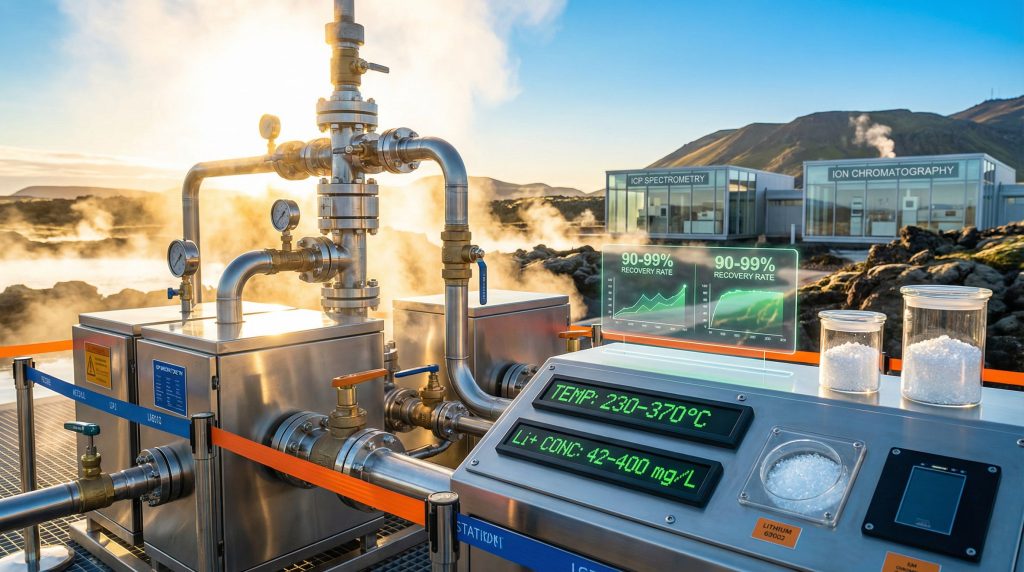
The reservoir characterization process for geothermal lithium operations requires detailed analysis of thermal gradients, fluid dynamics, and chemical composition variations throughout the production zone. Temperature profiling typically reveals significant variations across geothermal reservoirs, with optimal production zones often maintaining temperatures between 230°C and 370°C depending on depth and geological conditions.
Flow rate measurements form a critical component of performance evaluation, as sustained production capacity directly impacts both energy generation potential and lithium recovery economics. Testing protocols typically evaluate:
• Baseline production rates under various wellhead pressure conditions
• Pressure drawdown characteristics during extended production periods
• Reservoir pressure maintenance through optimized reinjection strategies
• Long-term sustainability indicators for continuous dual-purpose operations
Brine composition analysis represents perhaps the most complex aspect of geothermal well testing for lithium extraction, requiring precise quantification of lithium concentrations alongside comprehensive assessment of interfering elements. Lithium concentrations in geothermal brines typically range from 42 mg/L to 400 mg/L, though exceptional formations may exhibit significantly higher grades.
Chemical interference assessment focuses particularly on sodium-to-lithium ratios, which directly impact extraction efficiency across different recovery technologies. Moreover, lithium brine market insights suggest that optimal ratios vary significantly depending on the chosen extraction method, with some technologies requiring ratios below 10:1 for economic operation while others can accommodate higher interference levels.
The assessment of lithium-bearing brine potential requires comprehensive analysis of not just lithium concentrations, but also the complete suite of dissolved species that may enhance or impede extraction processes.
Performance evaluation protocols extend beyond individual well characteristics to encompass reservoir-scale sustainability assessments. These evaluations model long-term production scenarios to ensure that continuous fluid extraction and reinjection maintain reservoir pressure and avoid subsidence risks.
Critical Chemical and Thermal Parameters for Commercial Viability
The economic viability of geothermal lithium projects depends heavily on achieving optimal values across multiple interdependent parameters. pH levels in geothermal brines typically range from 2 to 7.5, with different extraction technologies showing distinct pH preferences for maximum efficiency.
| Parameter Category | Optimal Range | Impact on Recovery | Testing Frequency |
|---|---|---|---|
| Lithium Concentration | 200-400 mg/L | Direct correlation | Daily |
| Sodium Interference | <10:1 ratio | Inverse relationship | Daily |
| Temperature Stability | ±5°C variation | Process optimization | Continuous |
| pH Levels | 4-6 range | Method selection | Hourly |
| Total Dissolved Solids | <300,000 mg/L | Equipment longevity | Daily |
Total Dissolved Solids (TDS) concentrations significantly impact processing equipment selection and maintenance requirements. High TDS levels, typically exceeding 250,000 mg/L in many geothermal systems, necessitate specialized materials and regular equipment maintenance schedules to prevent premature failure.
Thermal performance indicators require continuous monitoring throughout testing phases. Brine temperature stability during production operations directly affects both geothermal power generation efficiency and lithium extraction process optimization. In addition, temperature variations exceeding ±10°C during sustained production can significantly impact overall system economics.
Cooling rate profiles from reservoir temperature to surface conditions typically result in 80°C to 110°C temperatures at processing facilities, which influences heat recovery potential and overall energy balance calculations. These thermal characteristics determine whether supplemental heating is required for optimal extraction processes.
Flow dynamics assessment encompasses multiple operational scenarios:
• Peak production capacity under optimal reservoir conditions
• Sustained flow rates during continuous operation (typically >6 L/min equivalent for pilot systems)
• Pressure maintenance requirements for long-term reservoir health
• Reinjection compatibility to ensure complete fluid cycle management
Advanced Extraction Technologies and Testing Methodologies
Modern geothermal well testing for lithium extraction programs evaluate multiple extraction technologies simultaneously to optimize recovery rates and product purity. Adsorption-based systems using lithium-ion sieves have demonstrated 90-99% recovery rates with achieved purities exceeding 99% Li₂CO₃ equivalent under controlled conditions.
Aluminum layered hydroxide technologies offer similar performance characteristics while operating effectively across broader temperature ranges. These systems typically achieve >90% recovery rates while maintaining >99% purity standards through 500+ cycle testing protocols that validate long-term operational stability.
Selective ion exchange systems provide alternative approaches for formations with challenging chemistry profiles. While recovery rates typically range from 85-95%, these systems offer greater flexibility in handling variable brine compositions and can achieve 95-98% purity levels with appropriate process optimization.
Electrochemical extraction methods represent emerging technologies with significant potential for geothermal applications. Lithium iron phosphate (LFP) electrode systems have achieved 90-96% recovery rates in testing environments, while electrodialysis configurations with multi-stack arrangements offer scalable approaches for larger operations.
Current and voltage optimization protocols for electrochemical systems require extensive testing across different brine compositions:
• Voltage gradient optimization for maximum extraction efficiency
• Current density management to prevent electrode degradation
• Membrane fouling prevention through optimized operating cycles
• Energy consumption minimization for overall economic optimization
Direct precipitation methods provide rapid processing alternatives with lithium hydroxide precipitation using aluminum chloride addition achieving recovery rates exceeding 98% under controlled conditions. Temperature-controlled crystallization at 75-85°C enables precise product specification control while maintaining high recovery efficiency.
Specialized Equipment and Instrumentation Requirements
Geothermal lithium well testing requires specialized equipment capable of operating reliably under extreme conditions while providing precise analytical results. Modular well testing units designed for temporary installation enable comprehensive evaluation without permanent infrastructure investment, supporting energy transition strategies through flexible deployment approaches.
Surface testing infrastructure includes:
• Separator systems for effective gas-liquid-solid phase management
• Heat exchangers optimized for high-temperature geothermal fluids
• Pressure control systems capable of handling reservoir pressures up to 50 MPa
• Flow measurement devices with accuracy maintained across temperature ranges
Analytical instrumentation represents a critical component of testing operations. Inductively Coupled Plasma (ICP) spectrometers provide precise elemental analysis capabilities essential for lithium quantification and interference assessment. These instruments typically achieve detection limits below 0.1 mg/L for lithium while simultaneously analyzing complete elemental profiles.
Ion chromatography systems offer alternative analytical approaches particularly suited for real-time monitoring applications. These systems provide ±2% accuracy for lithium measurements while enabling continuous brine composition tracking throughout testing periods.
Real-time monitoring capabilities include:
• pH and conductivity meters with high-temperature sensor configurations
• Automated sampling systems for representative brine collection
• Data logging capabilities for comprehensive operational documentation
• Remote monitoring interfaces for continuous operational oversight
Pilot-scale processing equipment enables validation of extraction processes under realistic operational conditions. Membrane filtration units designed for pre-treatment processes typically handle >95% suspended solids removal while maintaining flow rates suitable for continuous operation.
Adsorption columns for selective lithium capture testing require specialized materials capable of withstanding geothermal brine chemistry. These systems typically achieve breakthrough curves that validate commercial-scale performance projections while demonstrating regeneration cycle stability.
Project Timeline and Testing Phase Development
Geothermal lithium well testing programs typically follow structured phases designed to progressively validate commercial viability. Initial assessment phases lasting 2-4 weeks focus on baseline reservoir characterization and preliminary brine sampling for laboratory analysis.
During this phase, operators install equipment and complete calibration procedures while establishing safety protocols specific to geothermal environments. Temperature logging and initial flow testing provide fundamental data for subsequent detailed analysis phases.
Extended testing periods spanning 3-6 months enable comprehensive evaluation of operational parameters under varying conditions. These phases assess:
• Seasonal variation impacts on reservoir performance and brine chemistry
• Sustained production capacity under continuous operation scenarios
• Equipment performance reliability across extended operational periods
• Environmental impact assessment data collection for regulatory compliance
Pilot-scale validation phases extending 6-12 months represent the final testing stage before commercial development decisions. These comprehensive programs integrate full extraction process testing with detailed economic modeling to validate investment decisions.
The European Union's Critical Raw Materials Act has influenced testing timelines by establishing strategic importance designations that may expedite certain regulatory processes while maintaining comprehensive environmental assessment requirements. Projects receiving this designation demonstrate strategic value to European critical materials supply security objectives.
However, recent developments in the Upper Rhine Valley demonstrate practical timeline implementation, where initial testing phases are providing critical subsurface data to optimize both geothermal output assessment and lithium-bearing brine potential for commercial-scale development planning.
The next major ASX story will hit our subscribers first
Economic Modeling and Commercial Viability Assessment
Economic analysis of geothermal lithium projects requires sophisticated modeling that accounts for dual revenue streams from energy production and lithium extraction. Annual Lithium Carbonate Equivalent (LCE) production estimates form the foundation of financial projections, with typical geothermal operations targeting 1,000-5,000 tonnes LCE annually depending on reservoir characteristics and processing scale.
Resource grade calculations determine fundamental project economics through Net Present Value (NPV) analysis across various lithium price scenarios. Current market conditions suggest lithium carbonate prices ranging from $15,000-35,000 per tonne, though price volatility requires scenario modeling across broader ranges to ensure robust financial planning.
Capital expenditure requirements for integrated geothermal lithium facilities typically exceed $200 million for commercial-scale operations, including:
• Geothermal power generation infrastructure ($80-120 million)
• Lithium extraction processing facilities ($60-100 million)
• Well development and completion costs ($30-50 million)
• Supporting infrastructure and contingencies ($30-50 million)
Internal Rate of Return (IRR) modeling for geothermal lithium projects typically targets 15-25% returns to justify development investment, though strategic considerations related to supply security may accept lower returns for critical materials projects.
Operational cost projections encompass both energy production and materials extraction components. Levelized Cost of Energy (LCOE) for geothermal power typically ranges from $50-80/MWh, while lithium production costs from geothermal brines may achieve $3,000-6,000 per tonne LCE once fully optimized.
Production timeline advantages over traditional evaporation pond methods represent significant economic benefits. Geothermal well testing for lithium extraction projects can achieve full production within 18-30 months compared to 3-5 years for conventional brine operations, reducing time-to-market risks and improving project NPV calculations.
Strategic value considerations extend beyond traditional financial metrics to encompass supply chain diversification and critical materials security objectives that may justify development even under challenging market conditions.
Market positioning assessment requires analysis of regional lithium demand growth, particularly in European battery manufacturing sectors. European lithium consumption is projected to increase >500% by 2030, creating substantial market opportunities for domestic production capabilities.
Technical Challenges and Risk Mitigation Strategies
Geothermal lithium testing operations encounter multiple technical challenges that require specialized mitigation approaches. High-temperature equipment limitations in extreme geothermal environments necessitate materials selection and design modifications that can withstand >300°C operating conditions while maintaining measurement accuracy.
Membrane fouling from silica precipitation and mineral scaling represents a persistent operational challenge. Silica concentrations typically exceeding 200-500 mg/L in geothermal brines require pretreatment strategies and regular membrane replacement schedules that impact overall operational costs.
Corrosion management strategies address the aggressive chemistry of geothermal brines:
• Specialized alloy selection for equipment exposed to high-temperature, high-salinity conditions
• Corrosion inhibitor programs tailored to specific brine chemistry profiles
• Regular inspection protocols to identify potential failure points before critical failures
• Cathodic protection systems for subsurface equipment and casing materials
Scale formation prevention requires comprehensive water chemistry management including pH adjustment, temperature control, and inhibitor injection systems that prevent mineral precipitation while maintaining extraction efficiency.
Environmental considerations encompass reservoir sustainability through proper reinjection protocols designed to maintain formation pressure and prevent induced seismicity. Water balance maintenance ensures that fluid extraction rates remain within sustainable limits that prevent subsidence or other geological instabilities.
Regulatory compliance requirements vary significantly across jurisdictions but typically include:
• Environmental impact assessments covering both geothermal and materials extraction activities
• Water rights and extraction permits that may require modifications for dual-use operations
• Critical materials designation compliance under frameworks such as the EU Critical Raw Materials Act
• Occupational safety protocols specific to high-temperature industrial operations
Risk mitigation strategies integrate technical solutions with comprehensive monitoring systems that provide early warning of potential operational issues. Real-time monitoring of key parameters enables proactive intervention before minor issues escalate to major operational disruptions.
Global Development Trends and Regional Opportunities
European geothermal lithium development leads global activity with multiple projects advancing through testing and development phases. Germany's Upper Rhine Valley hosts several integrated development projects that leverage existing geothermal power infrastructure for lithium extraction applications.
The region benefits from established geothermal expertise and supportive regulatory frameworks that recognize the strategic importance of domestic critical materials production. Integration with existing facilities provides cost advantages and reduced development timelines compared to greenfield projects.
North American developments focus primarily on California's Salton Sea geothermal field, where high-temperature, high-salinity brines offer exceptional lithium concentrations. Lithium grades in this region typically exceed 200 mg/L with some formations approaching 400 mg/L, creating highly attractive economic conditions.
Nevada's Clayton Valley represents another significant development opportunity where existing geothermal operations can be expanded to include lithium recovery capabilities. The region's established infrastructure and mining-friendly regulatory environment support rapid project development.
Canadian initiatives particularly in British Columbia and Alberta are exploring geothermal lithium potential in conjunction with existing energy development projects. These projects benefit from carbon credit opportunities that improve overall project economics through dual environmental benefits.
Global expansion opportunities include:
• Chile's Andes Mountains where geothermal potential intersects with established lithium mining regions
• New Zealand's geothermal resources particularly in the North Island's Taupo Volcanic Zone
• Iceland's extensive geothermal development potential for integrated critical materials production
• Eastern European geothermal resources in countries seeking energy independence and critical materials security
Technology transfer opportunities enable established geothermal regions to leverage expertise for lithium extraction development while emerging markets can access proven technologies for integrated development approaches.
Future Technology Evolution and Industry Integration
Advanced selective extraction materials represent the next generation of geothermal lithium recovery technologies. Nanostructured adsorbents with tailored selectivity characteristics are achieving >95% recovery efficiency while demonstrating >1000 cycle stability in laboratory testing environments.
Automated monitoring systems integrate AI in mining operations and machine learning algorithms to optimize extraction processes in real-time. These systems can adjust operating parameters continuously to maintain optimal recovery rates while minimizing energy consumption and equipment wear.
Process optimization through digital twin technology enables virtual testing of operational scenarios before implementation, reducing operational risks and improving overall system efficiency. Predictive maintenance systems use sensor data and machine learning to anticipate equipment needs before failures occur.
Market development projections indicate commercial scale operations beginning 2027-2030 as pilot projects demonstrate technical and economic viability. Furthermore, mining industry innovation through cost reduction trajectories and technological improvements are projected to achieve 30-50% operational cost reductions over the next decade.
Supply chain diversification benefits extend beyond individual projects to create regional critical materials security through domestic production capabilities. This strategic value often justifies development support even under challenging market conditions.
Industry integration evolution includes:
• Standardized testing protocols for consistent evaluation across different geothermal regions
• Service provider specialization in integrated energy-materials project development
• Investment framework development that recognizes dual-purpose project benefits
• Technology sharing agreements between established geothermal operators and critical materials developers
Integration with renewable energy systems beyond geothermal, including solar thermal and waste heat recovery applications, expands the potential application range for lithium extraction technologies developed in geothermal environments.
Consequently, the convergence of energy transition requirements with critical materials security objectives creates unprecedented opportunities for integrated development approaches that maximize both economic returns and strategic value creation across multiple industrial sectors.
Investment in geothermal lithium projects involves significant technical and financial risks. Prospective investors should conduct thorough due diligence and consult qualified professionals before making investment decisions. Production estimates and economic projections are subject to numerous variables and actual results may differ materially from forecasts.
Looking for the Next Breakthrough in Critical Minerals Technology?
Discovery Alert's proprietary Discovery IQ model delivers real-time alerts on significant ASX mineral discoveries, instantly empowering subscribers to identify actionable opportunities ahead of the broader market. Understand why major mineral discoveries can lead to substantial market returns by exploring historic examples of exceptional outcomes, then begin your 14-day free trial today to position yourself ahead of the market in this rapidly evolving sector.