June 6, 2026
Revolutionary Geothermal Technology Reshapes European Lithium Extraction
The convergence of critical mineral scarcity and renewable energy demands has created unprecedented opportunities within Europe's geothermal resources. Traditional lithium extraction methods, predominantly hard-rock mining operations, face mounting environmental scrutiny and supply chain vulnerabilities. Against this backdrop, innovative dual-resource extraction technologies are emerging as transformative solutions for European energy security and automotive manufacturing independence. The Vulcan Energy lithium production licence represents a pivotal milestone in establishing domestic critical minerals capacity.
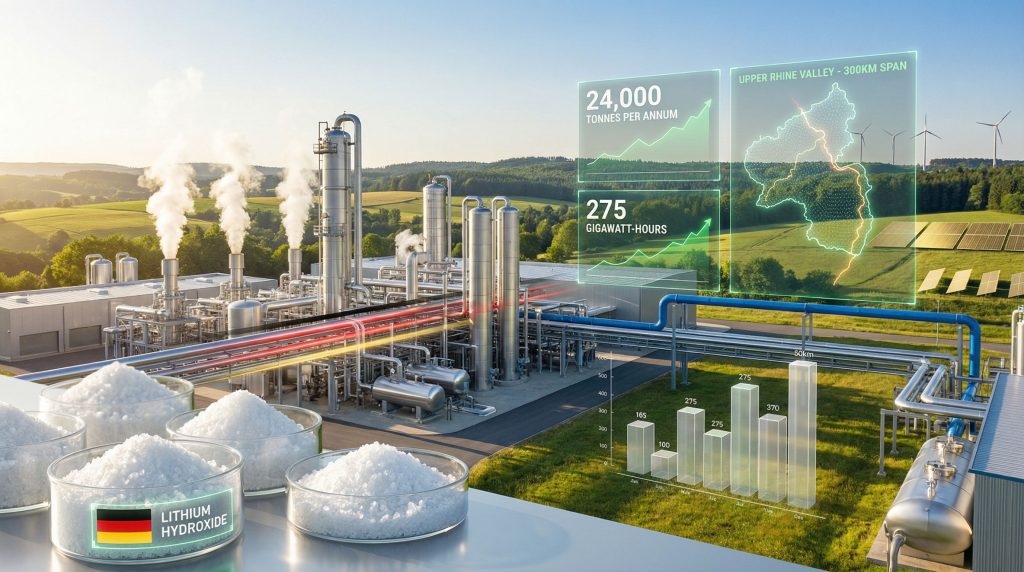
The Upper Rhine Valley Brine Field represents one of Europe's most significant untapped geothermal lithium reserves, spanning approximately 300 kilometres across Germany and France. This geological formation contains substantial concentrations of lithium-rich brines that can be extracted through geothermal wells without depleting the underlying heat resource. Furthermore, the technology enables simultaneous production of battery-grade lithium compounds and renewable energy generation through integrated processing systems.
When big ASX news breaks, our subscribers know first
Breakthrough Regulatory Framework for Dual-Resource Development
Vulcan Energy's acquisition of the LiThermEx production licence marks a pivotal regulatory milestone for European critical minerals strategy. This inaugural lithium extraction approval within Germany's Rhineland-Palatinate state establishes crucial precedents for integrated resource development across the region. The regulatory framework demonstrates Germany's commitment to achieving domestic critical minerals independence.
The licence framework enables dual-resource extraction from geothermal brines at the Insheim facility, where existing infrastructure already produces renewable heat and power. This regulatory approach recognises the strategic value of maximising resource utilisation from individual geothermal sites while maintaining environmental compliance standards.
Key Regulatory Features:
- Initial six-year licence term with extension provisions to match 30-year operational timeline
- Integration with existing geothermal energy production permits
- Environmental compliance frameworks specific to lithium extraction from geothermal brines
- Regional development requirements balancing industrial expansion with community interests
The regulatory structure demonstrates Germany's commitment to domestic critical minerals production while establishing environmental safeguards for sustainable resource development. In addition, this framework serves as a template for similar projects across European geothermal fields, particularly those exploring lithium brine opportunities in various geological formations.
Advanced VULSORB® Technology and Production Architecture
The proprietary VULSORB® selective adsorption technology represents a breakthrough in geothermal lithium extraction efficiency. This closed-loop system maintains geothermal resource integrity while achieving selective lithium recovery rates exceeding 99 percent from brine solutions.
Technical Process Framework
| Extraction Stage | Technology Application | Efficiency Metrics |
|---|---|---|
| Brine Circulation | Geothermal well systems | Continuous operation capacity |
| Lithium Separation | VULSORB® selective adsorption | 99%+ lithium recovery rate |
| Processing Operations | Industrial Park Höchst facility | 24,000 tonnes annual capacity |
| Energy Co-production | Integrated geothermal systems | 275 GWh renewable electricity |
| Heat Distribution | Local thermal networks | 560 GWh renewable heat capacity |
The technology's closed-loop design ensures that geothermal brines are reinjected into the reservoir after lithium extraction, maintaining the geothermal resource for continued energy production. This approach addresses environmental concerns associated with traditional lithium extraction methods while maximising resource efficiency. Moreover, these mining industry innovations demonstrate how advanced technology can transform traditional resource extraction approaches.
Production Capacity and Market Impact
The Lionheart project's 24,000 tonnes per annum of lithium hydroxide monohydrate production capacity equals approximately 500,000 electric vehicle battery equivalents annually. This scale positions the facility as a cornerstone supplier for European automotive manufacturers seeking domestic critical minerals sourcing.
The integrated production model delivers multiple revenue streams:
- Battery-grade lithium hydroxide for automotive supply chains
- Renewable electricity generation for grid distribution
- Industrial heat supply for regional manufacturing operations
- Potential technology licensing for similar geothermal lithium deposits
Strategic Positioning Within European Critical Minerals Landscape
Competitive Production Analysis
European lithium production capacity remains limited compared to global supply requirements. The following analysis demonstrates the strategic significance of geothermal lithium extraction for regional supply security:
| European Region | Extraction Method | Projected Capacity (tpa) | Development Status |
|---|---|---|---|
| Portugal (Savannah) | Hard-rock mining | 9,000-12,000 | Construction phase |
| Czech Republic | Hard-rock mining | 3,000-5,000 | Feasibility studies |
| Germany (Vulcan) | Geothermal brine | 24,000 | Licensed production |
| France (Potential) | Geothermal brine | Under exploration | Early development |
The geothermal extraction approach offers distinct advantages over traditional hard-rock mining:
Environmental Benefits:
- Minimal surface disruption compared to open-pit operations
- Lower carbon footprint through renewable energy integration
- Reduced water consumption and waste generation
- Preservation of geothermal resources for continued energy production
Economic Advantages:
- Dual revenue streams from lithium and energy production
- Lower operational costs through integrated processing
- Reduced transportation requirements for energy supply
- Enhanced project economics through multiple product streams
Supply Chain Independence Strategy
European automotive manufacturers face increasing pressure to secure domestic critical minerals supplies amid geopolitical tensions affecting traditional supply chains. The Vulcan Energy lithium production licence directly addresses these vulnerabilities by providing domestic sourcing security that reduces dependence on imports.
Furthermore, the project offers quality assurance through controlled processing environments and supply chain transparency for ESG compliance requirements. However, understanding lithium market dynamics remains crucial for long-term strategic planning as global supply-demand patterns continue to evolve.
Comprehensive Financing Architecture and Risk Management
Vulcan Energy secured a €2.2 billion financing package in December 2025, providing complete project funding through commercial production. This financial structure demonstrates sophisticated risk management and investor confidence in the integrated lithium-energy business model.
Funding Structure Components
The financing package incorporates multiple funding sources designed to minimise capital costs while ensuring project completion:
- Debt financing from European development banks supporting critical minerals initiatives
- Strategic partnerships with automotive OEMs requiring supply security
- ESG-focused investment targeting low-carbon critical minerals exposure
- Technology licensing agreements providing additional revenue streams
Investment Risk Mitigation
The project's risk profile benefits from several derisking factors that enhance overall investment attractiveness:
Technical Risk Management:
- Proven VULSORB® technology through pilot-scale operations
- Existing geothermal infrastructure reducing construction complexity
- Integrated processing systems minimising operational dependencies
Market Risk Diversification:
- Multiple revenue streams reducing commodity price exposure
- Long-term offtake agreements providing price certainty
- European market demand growth supporting pricing stability
Regulatory Risk Reduction:
- Established licensing framework providing operational certainty
- Environmental compliance systems meeting EU standards
- Regional government support for critical minerals development
Regional Economic Development and Technology Transfer
Local Value Creation Framework
The Lionheart project demonstrates an integrated approach to regional economic development through industrial clustering and skills development. This aligns with broader trends in renewable energy integration across mining operations.
Direct Economic Impact:
- Construction employment: 500+ workers during peak construction
- Operational employment: 150+ permanent technical positions
- Annual renewable energy supply: 275 GWh for regional distribution
- Industrial heat capacity: 560 GWh supporting local manufacturing
Indirect Economic Multipliers:
- Technology cluster development around geothermal lithium extraction
- Research partnerships with German technical universities
- Supporting services growth for specialised equipment and maintenance
- Skills development programmes for geothermal and lithium processing technologies
Technology Transfer and Intellectual Property
Successful implementation of VULSORB® technology at commercial scale creates significant intellectual property licensing opportunities. The comprehensive licensing framework establishes important precedents for technology transfer across multiple global markets.
International Expansion Opportunities:
- Western United States (Salton Sea geothermal field)
- South American lithium triangle regions
- Additional European geothermal fields in Italy and Iceland
- Emerging geothermal developments in Southeast Asia
The technology platform provides a scalable solution for dual-resource extraction that could transform global lithium supply chains while advancing renewable energy deployment.
The next major ASX story will hit our subscribers first
Future Scaling Scenarios and Production Expansion
Conservative Growth Trajectory (2028-2035)
This scenario assumes measured expansion based on proven technology performance and market demand growth:
- Phase One completion: 24,000 tpa lithium hydroxide by 2028
- Incremental capacity additions: 10,000-15,000 tpa through additional wells
- Total production capacity: 35,000-40,000 tpa by 2035
- Energy production scaling: Proportional renewable energy capacity increases
Aggressive Expansion Model (2028-2040)
Accelerated development across Vulcan's full 2,234 km² licence area spanning Germany and France:
- Multi-site development utilising proven technology platforms
- Optimisation improvements enhancing extraction efficiency and reducing costs
- Cross-border integration connecting German and French operations
- Production capacity potential: 75,000-100,000 tpa by 2040
Regional Hub Development (2030-2050)
Long-term positioning as Europe's primary geothermal lithium production centre involves comprehensive strategic planning:
- Technology licensing to additional European geothermal operators
- Integrated supply chain development serving Western European markets
- Research and development advancement for next-generation extraction technologies
- Strategic infrastructure supporting broader European critical minerals security
Consequently, these expansion scenarios reflect the transformative potential of the Vulcan Energy lithium production licence in reshaping European critical minerals landscape.
Operational Challenges and Risk Assessment
Technical and Operational Risk Factors
Commercial-scale implementation of integrated geothermal-lithium extraction faces several technical challenges that require careful management:
Technology Scaling Risks:
- VULSORB® performance consistency across larger production volumes
- Integration complexity between lithium extraction and energy generation systems
- Long-term geothermal reservoir sustainability over 30-year operational timeline
- Equipment reliability under continuous high-temperature operating conditions
Market and Economic Risks:
- Lithium hydroxide price volatility affecting project economics
- European automotive demand fluctuations influencing production requirements
- Competition from established global suppliers with lower-cost operations
- Renewable energy pricing pressures impacting co-production revenues
Regulatory and Environmental Considerations
Expansion beyond the initial Insheim site requires additional regulatory approvals and environmental assessments:
Regulatory Requirements:
- Additional production licences for Phase Two expansion areas
- Cross-border permitting for French Alsace region operations
- Grid integration approvals for expanded renewable energy distribution
- Environmental impact assessments for scaled operations
Environmental Monitoring:
- Long-term geothermal reservoir performance tracking
- Regional groundwater quality monitoring systems
- Emissions tracking for carbon footprint verification
- Biodiversity impact assessments for expanded operations
However, these challenges are balanced by the project's proven regulatory framework and comprehensive environmental management systems.
Strategic Implications for European Critical Minerals Policy
The successful implementation of integrated geothermal-lithium extraction establishes important precedents for European Union critical minerals strategy. This regulatory and technological breakthrough influences policy development across multiple areas, particularly in the context of critical minerals energy transition initiatives.
Policy Framework Evolution
Integrated Resource Development Standards:
- Dual-resource extraction licensing procedures
- Environmental compliance frameworks for geothermal lithium production
- Technology transfer and intellectual property protection mechanisms
- Regional economic development requirements for critical minerals projects
Supply Chain Security Initiatives:
- Domestic production incentives reducing import dependencies
- Strategic reserves planning for economic security
- International partnership frameworks for technology sharing
- Investment protection mechanisms for long-term capital deployment
The project demonstrates that European critical minerals independence is achievable through innovative technology deployment and supportive regulatory frameworks. For instance, success at Lionheart will likely accelerate similar project development across European geothermal regions.
Investment Outlook and Market Implications
With commercial production targeted for 2028, the Vulcan Energy lithium production licence represents a critical inflection point for European lithium supply security and renewable energy integration. The comprehensive financing structure, proven technology platform, and regulatory approval combination significantly derisk the investment proposition.
Key Investment Drivers:
- First-mover advantage in European geothermal lithium extraction
- Integrated business model providing multiple revenue streams and risk diversification
- Strategic positioning serving growing European automotive and energy storage markets
- Technology leadership creating intellectual property licensing opportunities
- Environmental advantages meeting increasingly stringent ESG investment criteria
The broader implications extend beyond individual project success to encompass regulatory precedent-setting, technology platform development, and regional economic transformation. These factors position the Lionheart project as a cornerstone of Europe's critical minerals independence strategy and a catalyst for broader geothermal lithium industry development.
The success of this integrated approach to lithium and renewable energy production will influence critical minerals investment strategies, policy development, and technology deployment decisions across Europe and globally for the next decade. Moreover, the proven viability of the Vulcan Energy lithium production licence establishes a replicable model for sustainable critical minerals extraction that balances economic development with environmental stewardship.
Looking to Capitalise on Critical Minerals Breakthroughs?
Discovery Alert's proprietary Discovery IQ model delivers instant notifications on significant ASX mineral discoveries, including lithium and critical minerals developments that could reshape supply chains like Europe's geothermal extraction breakthrough. Begin your 14-day free trial with Discovery Alert today and position yourself ahead of the market with real-time insights into actionable investment opportunities.