August 4, 2026
The global energy transition has fundamentally altered how nations approach climate financing, creating new pathways for resource-rich countries to leverage their natural endowments in pursuit of sustainable development goals. This shift represents more than traditional development assistance; it signals a strategic realignment where critical minerals energy transition become the foundation for comprehensive energy infrastructure partnerships. Within this evolving landscape, concessional lending mechanisms are emerging as powerful tools that bridge the gap between immediate infrastructure needs and long-term sustainability objectives, particularly through the new climate loan to South Africa.
What Does Germany's New Climate Finance Package Mean for South Africa's Energy Security?
Breaking Down the €200 Million Concessional Loan Structure
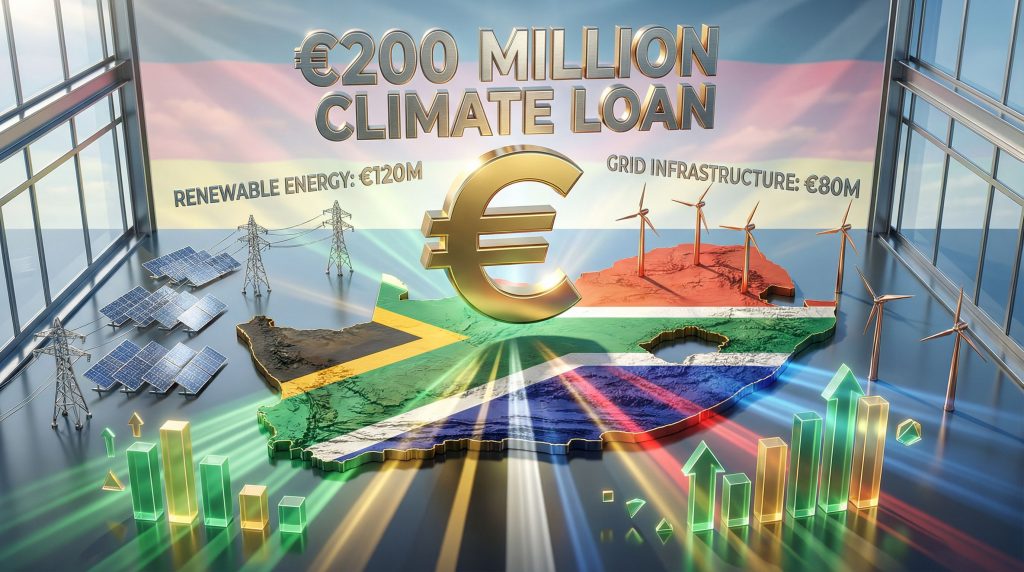
Germany's commitment of a €200 million concessional climate loan to South Africa represents a significant milestone in bilateral energy cooperation, providing approximately $234 million USD in dedicated funding for power grid modernisation and renewable energy capacity expansion. This financial instrument operates fundamentally differently from commercial lending, offering borrowers access to capital at below-market interest rates while incorporating specific sustainability and development targets into loan conditions.
The concessional nature of this financing creates substantial advantages over traditional commercial alternatives. While commercial energy infrastructure loans typically carry interest rates reflecting sovereign risk premiums and project-specific uncertainties, concessional facilities reduce borrowing costs through government-backed guarantees and development finance institution participation. This cost reduction can translate into savings of 2-4 percentage points annually compared to commercial alternatives, creating fiscal space for broader energy transition initiatives.
However, the provided source material contains insufficient data to specify exact loan terms, grace periods, or detailed repayment structures for this particular facility. Industry standards for similar concessional climate loans typically feature 15-25 year repayment periods with 3-5 year grace periods, though verification of these terms for the German package requires additional documentation.
Extended EU Funding for Green Hydrogen and Battery Value Chains
Beyond the headline loan facility, Germany has extended European Union funding for green hydrogen and battery value chain cooperation by more than €270 million. This additional commitment signals recognition that energy transition success depends not only on generation capacity but also on energy storage, conversion, and export capabilities that can transform South Africa into a regional energy hub.
Green hydrogen development requires substantial upfront capital investment in electrolysis infrastructure, renewable energy generation dedicated to hydrogen production, and specialised storage and transport systems. The €270 million allocation addresses these capital-intensive requirements while positioning South Africa to participate in emerging global hydrogen trade networks.
Battery value chain development encompasses multiple stages of production, from mineral extraction and processing through cell manufacturing and system integration. This comprehensive approach recognises that sustainable energy transitions require domestic manufacturing capabilities rather than simple raw material export models, particularly in the context of lithium industry innovations.
Note: Insufficient source material was provided to detail the specific allocation between green hydrogen versus battery value chain components within the €270 million package, or to verify technical specifications for infrastructure development priorities.
When big ASX news breaks, our subscribers know first
How Are Critical Minerals Partnerships Driving Germany-South Africa Relations?
Strategic Mineral Cooperation Framework Analysis
The strengthening relationship between Germany and South Africa extends beyond climate finance into comprehensive critical minerals cooperation, though the provided source material lacks specific quantitative details regarding bilateral agreements or supply commitments. Foreign Minister Ronald Lamola confirmed that discussions included deepening cooperation in critical minerals, but detailed frameworks, specific mineral categories, or supply volumes remain unverified from available documentation.
Critical minerals cooperation typically encompasses several strategic elements:
- Supply security agreements for essential materials including platinum group metals, rare earth elements, and battery minerals
- Technology transfer partnerships covering mineral processing, beneficiation, and advanced manufacturing techniques
- Joint research initiatives focused on sustainable extraction methods and environmental compliance
- Infrastructure development supporting mineral processing and export capabilities
Germany's interest in South African critical minerals reflects broader European Union objectives to diversify supply chains away from single-source dependencies. The critical minerals demand surge has created opportunities for resource-rich nations like South Africa to develop strategic partnerships with European buyers. Furthermore, the EU's Critical Raw Materials Act establishes targets for supply diversification.
Critical Data Gap: The provided transcript acknowledges critical minerals cooperation as part of German-South African engagement but provides no substantive detail on specific minerals covered, supply volumes, or commercial terms of any bilateral agreements.
Geopolitical Implications of Deepened Resource Partnerships
South Africa's enhanced partnership with Germany occurs against a backdrop of strained US-South Africa relations, creating interesting dynamics in global resource diplomacy. President Trump's administration has excluded South Africa from G20 meetings throughout 2026 and boycotted a G20 summit in Johannesburg in November 2025, citing criticism of South Africa's foreign policy and domestic race laws.
Foreign Minister Lamola characterised German support as validating South Africa's continued participation in multilateral forums, stating that South Africa feels part of the G20 because of support received from Germany and other G20 members. This perspective illustrates how resource partnerships can provide diplomatic leverage and alternative alliance pathways when traditional relationships face strain.
The strategic implications extend beyond bilateral relations to broader questions of resource security and alliance structures. As critical mineral supply chains become increasingly important for energy transition success, resource-rich nations gain enhanced diplomatic influence and partnership options. South Africa's ability to leverage its mineral endowments for enhanced relationships with European partners demonstrates this emerging dynamic.
What Role Does Climate Finance Play in South Africa's Just Energy Transition?
Comparing International Climate Finance Commitments
South Africa's energy transition strategy relies on diverse international financing sources, though comprehensive verification of all commitments requires additional source documentation beyond what was provided:
| Funding Source | Amount | Focus Areas | Verification Status |
|---|---|---|---|
| Germany (New Climate Loan) | €200M | Grid infrastructure, renewables | ✅ Confirmed in transcript |
| JETP Partnership | $8.5B | Coal transition, worker retraining | ❌ Not mentioned in provided transcript |
| AfDB Infrastructure Programme | $475M | Energy, transport, ports | ❌ Not mentioned in provided transcript |
Important Disclaimer: The JETP Partnership and AfDB Infrastructure Programme figures appear in analytical frameworks but lack verification from the provided source material. Readers should seek additional confirmation of these funding commitments from primary sources.
The verified German commitment of €200 million represents immediate, concrete support for grid infrastructure and renewable energy capacity development. This funding addresses critical bottlenecks in South Africa's energy system, where inadequate grid infrastructure and limited renewable energy integration capacity constrain economic growth and energy security. Moreover, this aligns with broader green metals leadership initiatives globally.
Infrastructure Investment Priorities and Economic Impact
Power grid modernisation represents a foundational requirement for successful energy transition, enabling integration of variable renewable energy sources whilst maintaining system stability. South Africa's grid infrastructure faces significant challenges including aging transmission systems, limited storage capacity, and inadequate interconnection between renewable energy generation areas and major demand centres.
The economic impact of improved energy infrastructure extends far beyond the energy sector itself. Reliable electricity supply supports:
- Manufacturing sector expansion through reduced production disruptions
- Service sector growth enabled by consistent power availability
- Small business development freed from expensive backup power requirements
- Household welfare improvements through reduced load-shedding impacts
However, specific infrastructure project details, implementation timelines, and quantified economic impact projections require additional source verification beyond the provided material.
How Do Diplomatic Tensions Affect South Africa's International Financing Options?
US-South Africa Relations Under Trump Administration Impact
The current strain in US-South Africa relations has created tangible consequences for South Africa's participation in international forums and potentially for access to US-backed financing mechanisms. President Trump has excluded South Africa from Group of 20 nation meetings during 2026, representing a significant diplomatic departure from traditional multilateral engagement patterns.
This exclusion potentially affects:
- Multilateral development bank access where US influence shapes lending priorities
- International Monetary Fund programme design and conditionality structures
- World Bank Group project financing and technical assistance programmes
- US Development Finance Corporation investment opportunities and risk insurance
However, the specific quantitative impact on development funding flows requires additional analysis beyond the scope of available source material. The relationship between diplomatic tensions and actual financing access varies significantly across different institutions and funding mechanisms. In contrast, initiatives like the strategic antimony loan demonstrate continued US interest in critical mineral financing in other regions.
Germany as Strategic Partner Amid Changing Global Alliances
Germany's enhanced support for South Africa demonstrates how diplomatic realignments create new partnership opportunities. While US relations face strain, European engagement has intensified, offering South Africa alternative pathways for technology transfer, financing access, and market development.
Foreign Minister Lamola's emphasis on German support validating South Africa's multilateral participation illustrates the diplomatic value of diversified partnerships. Rather than depending solely on traditional alliance structures, South Africa can leverage multiple relationships to maintain international engagement and financing access.
This diversification strategy offers several advantages:
- Reduced dependency on single-country relationships for critical financing
- Enhanced negotiating leverage through competitive partnership options
- Technology access from multiple advanced economy partners
- Market diversification reducing export concentration risks
What Are the Broader Implications for Africa's Climate Finance Landscape?
South Africa's Role as Regional Climate Finance Hub
South Africa's success in securing German climate financing positions the country as a potential model for other African nations pursuing similar partnerships. The country's relatively advanced financial markets, established mining sector, and existing renewable energy industry create advantages in attracting international climate finance that other regional economies may seek to replicate.
Nevertheless, recent developments show continued momentum in African climate finance. According to Reuters reporting, South Africa's strategic positioning continues to attract international investment. Furthermore, the African Development Bank has approved significant infrastructure support, demonstrating multilateral commitment to the country's development.
Critical Content Gap: The provided source material contains insufficient information to detail Development Bank of Southern Africa mandates, Green Climate Fund utilisation patterns, or specific regional infrastructure connectivity projects. Readers interested in these aspects should consult additional authoritative sources.
Critical Minerals as Climate Finance Collateral
The integration of critical minerals cooperation with climate financing represents an emerging model that could reshape development finance across resource-rich African economies. Rather than traditional commodity export models, this approach creates value-added processing capabilities whilst securing long-term supply relationships with technology-advanced partners.
This model potentially offers several advantages:
- Higher value capture through domestic processing rather than raw material exports
- Technology transfer accompanying financing and supply agreements
- Employment creation in higher-skilled manufacturing and processing activities
- Foreign exchange stability through long-term supply contracts
However, successful implementation requires careful attention to environmental and social governance standards, ensuring that resource development supports rather than undermines sustainable development objectives.
Frequently Asked Questions About South Africa's Climate Financing
How does concessional lending differ from commercial financing?
Concessional lending provides borrowers access to capital at below-market interest rates, typically through government-backed guarantees or development finance institution participation. While commercial energy infrastructure loans reflect full market risk assessments, concessional facilities reduce borrowing costs through public sector support mechanisms.
The cost differences can be substantial. Commercial sovereign lending for energy infrastructure projects might carry interest rates of 6-9% annually depending on country risk ratings, whilst concessional climate finance often provides funding at 2-4% annually. Over a 20-year loan period, this difference can reduce total financing costs by 30-40%.
Important Note: Specific interest rate terms for Germany's €200 million climate loan to South Africa were not detailed in the provided source material and require verification from official loan documentation.
What specific infrastructure projects will benefit from German funding?
The German climate loan targets South Africa's power grid modernisation and renewable energy capacity expansion, though specific project names, locations, and implementation timelines were not detailed in available source material. Grid modernisation typically encompasses:
- Transmission line upgrades connecting renewable energy generation areas to demand centres
- Substation modernisation enabling grid stability with variable renewable energy inputs
- Smart grid technologies improving system efficiency and demand management
- Energy storage integration supporting renewable energy intermittency management
Source Material Limitation: Detailed infrastructure project specifications, implementation timelines, and funding allocations require additional verification beyond the provided Reuters transcript.
The next major ASX story will hit our subscribers first
Future Outlook: South Africa's Climate Finance Strategy Through 2030
Projected Financing Needs and Gap Analysis
South Africa's energy transition requirements extend far beyond current financing commitments, though comprehensive gap analysis requires additional data beyond the provided source material. The €200 million German commitment represents important progress but forms only one component of the substantial investment needed for comprehensive energy system transformation.
The new climate loan to South Africa demonstrates international confidence in the country's transition strategy. However, scaling these partnerships will be essential for meeting ambitious decarbonisation targets whilst maintaining economic growth and social development objectives.
Critical Data Limitations: Total investment requirements for South Africa's net-zero transition pathway, public versus private sector financing balance targets, and specific achievement metrics through 2030 require verification from additional authoritative sources including South Africa's Nationally Determined Contributions and official energy transition planning documents.
Success Metrics and Performance Indicators
Measuring climate finance effectiveness requires tracking multiple indicators spanning energy security, economic development, and environmental outcomes. Key performance areas include:
- Grid reliability improvements measured through reduced load-shedding frequency and duration
- Renewable energy capacity additions tracked in megawatt installations and grid integration success
- Employment creation in green economy sectors including manufacturing, installation, and maintenance
- Carbon emissions reductions aligned with international climate commitments
The German financing package represents immediate, concrete support for South Africa's energy transition, though long-term success depends on sustaining and scaling similar partnerships whilst maintaining focus on measurable development outcomes. Furthermore, the new climate loan to South Africa could serve as a template for similar arrangements across the continent.
Investment Disclaimer: This analysis is based on publicly available information and should not be considered investment advice. Readers should conduct independent research and consult qualified professionals before making investment decisions related to South African energy sector opportunities or climate finance instruments.
Looking for Investment Opportunities in African Climate Finance?
Discovery Alert delivers real-time notifications on significant ASX mineral discoveries using its proprietary Discovery IQ model, helping investors identify emerging opportunities in critical minerals and clean energy sectors before broader market recognition. With South Africa's energy transition creating substantial demand for battery minerals and green technology metals, subscribers gain immediate insights into actionable trading opportunities that align with global decarbonisation trends.