July 31, 2026
When Mineral Wealth Meets Industrial Ambition: The VALCO Financing Debate
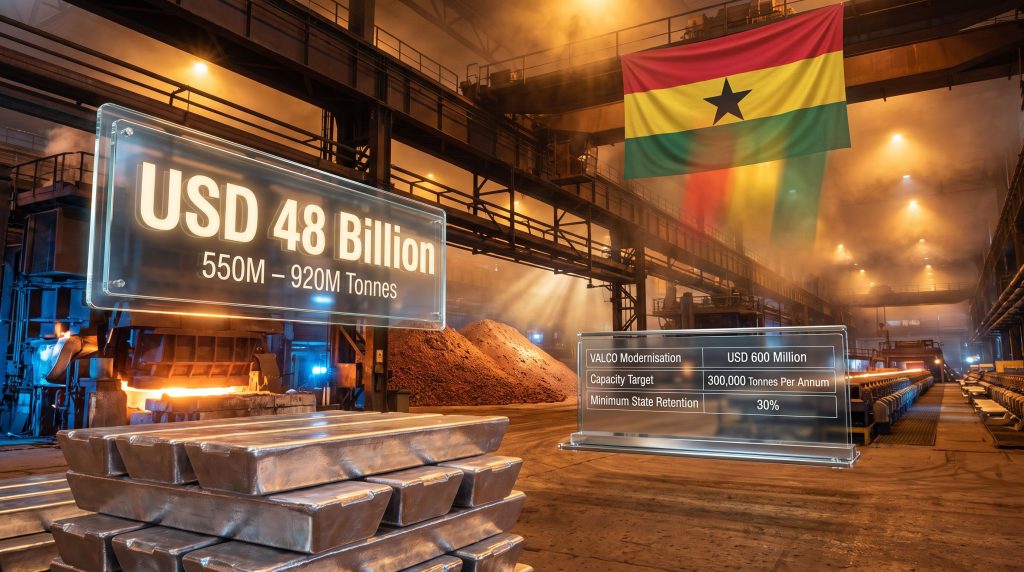
Africa's resource-rich nations have long wrestled with a paradox that development economists call the "resource curse" in reverse: not the mismanagement of wealth that already flows, but the failure to mobilise wealth that sits untapped underground. Ghana's current debate over how to finance the modernisation of its state-owned aluminium smelter, the Volta Aluminium Company (VALCO), is a textbook example of this tension. At the centre of the argument sits a deceptively simple question: if Ghana bauxite reserves financing VALCO discussions are anchored to a cited gross value of USD 48 billion, why does a USD 600 million capital requirement feel so unreachable?
The answer lies not in the size of the mineral endowment, but in the structural gap between what is underground and what is bankable above it.
When big ASX news breaks, our subscribers know first
Understanding VALCO's Role in Ghana's Industrial Identity
The Volta Aluminium Company has occupied a central position in Ghana's industrial narrative for decades. Originally established with American backing in the 1960s as part of the broader Volta River Project, VALCO was designed to absorb cheap hydroelectric power from the Akosombo Dam and convert it into smelted aluminium. At its peak, the facility represented one of the few examples of downstream mineral processing on the African continent.
Today, VALCO operates well below its historical capacity. Aging infrastructure, chronic energy cost pressures, and the absence of a domestic alumina supply chain have steadily eroded its competitive position. The smelter currently operates with an annual production capacity of approximately 200,000 tonnes, a figure that GIADEC (Ghana Integrated Aluminium Development Corporation) is seeking to expand to 300,000 tonnes through a USD 600 million modernisation programme that includes the addition of a new 100,000-tonne production line.
The broader ambition extends beyond VALCO itself. Ghana's policymakers have consistently articulated a vision for an integrated aluminium value chain, moving from raw bauxite extraction through alumina refining and ultimately to smelted metal. This three-stage progression represents the difference between exporting a low-value commodity and capturing the full industrial premium embedded in its transformation. Furthermore, understanding global bauxite production trends is essential context for evaluating where Ghana's ambitions sit within the wider industry.
Ghana Bauxite Reserves: Scale, Location, and What the Numbers Actually Mean
Ghana's bauxite endowment is substantial by any measure. Geological assessments place total reserves in a range of approximately 550 million tonnes to over 920 million tonnes, depending on the survey methodology and classification criteria applied. The most significant concentration sits within the Nyinahin bauxite belt in the Ashanti Region, a deposit that has drawn sustained investor interest given its scale and relative accessibility.
Within the West African bauxite corridor, Ghana occupies a meaningful but secondary position relative to Guinea, which holds the world's largest known bauxite reserves. However, Ghana's geographic and logistical advantages, combined with established port infrastructure, give its deposits competitive characteristics that pure reserve size comparisons can obscure. In addition, the leading bauxite mines globally demonstrate how infrastructure and logistics can often outweigh sheer reserve volume in determining commercial viability.
The cited USD 48 billion gross valuation for Ghana's bauxite reserves requires careful interpretation. This figure is derived from price-per-tonne assumptions applied to the upper range of the reserve estimate, and it represents a theoretical gross value of the mineral endowment at prevailing market prices, not a realisable or immediately financeable asset value.
In-ground resource valuations and bankable collateral values are fundamentally different concepts. Commercial lenders apply substantial haircuts to mineral assets when assessing loan security, reflecting commodity price risk, extraction timelines, infrastructure requirements, and regulatory uncertainty. A USD 48 billion gross reserve value does not translate to equivalent borrowing capacity.
The table below illustrates the key financial parameters at the heart of the VALCO financing debate:
| Metric | Estimated Figure |
|---|---|
| Bauxite Reserve Range | 550M to 920M+ tonnes |
| Cited Gross Reserve Value | USD 48 billion |
| VALCO Modernisation Capital Requirement | USD 600 million |
| Ratio of Reserve Value to Capital Need | Approximately 80:1 |
| GIADEC Nyinahin Financing Facility | USD 60 million |
| Current VALCO Production Capacity | 200,000 tonnes per annum |
| Target Production Capacity | 300,000 tonnes per annum |
The Equity Dilution Debate: What 70% Actually Represents
GIADEC's strategic equity capitalisation programme has attracted proposals from multiple investor groups, all structured around acquiring up to a 70% equity interest in VALCO. This figure is not arbitrary. The GIADEC Act establishes a legislative floor requiring that GIADEC, in combination with a Ghanaian individual or entity, retain a minimum 30% combined interest in any project within the integrated aluminium value chain. Investor proposals have been structured to the maximum permissible limit under this framework.
GIADEC CEO Reindorf Twumasi Ankrah has clarified publicly that while a strategic committee has completed its evaluation of submitted proposals, formal negotiations have not yet commenced and no ownership structure has been finalised. The next phase will involve direct negotiations with a preferred investor on the specific terms of capital investment and equity distribution.
The debate over whether 70% equity dilution is proportionate has been sharpened by commentary from Ghanaian public intellectuals. Kwesi Pratt Jr., Managing Editor of the Insight newspaper, argued on Metro TV in July 2026 that Ghana's bauxite wealth is more than sufficient to underpin alternative financing structures. His core argument was that an enterprise of VALCO's scale and strategic value could approach commercial lenders directly, securing the required capital as debt rather than surrendering ownership, with repayment structured against future production revenues.
The argument carries intuitive appeal. USD 600 million represents less than 1.25% of the cited USD 48 billion reserve valuation. Framed this way, the equity dilution appears disproportionate to the capital being mobilised. However, critics of this position point to the structural complexity of converting in-ground mineral value into bankable financing, particularly in an environment where Ghana's bauxite production at Nyinahin remains at an early commercial stage.
The Case For and Against Strategic Equity Investment
Arguments supporting majority equity investment:
- Immediate capital mobilisation without adding to sovereign debt obligations
- Transfer of technical expertise from established major aluminium producers
- Shared operational and commercial risk between the state and private investors
- Proven precedent from other African resource industrialisation models
Arguments against majority equity dilution:
- Permanent loss of controlling interest in a nationally significant industrial asset
- Long-term revenue sharing favours the majority investor across VALCO's operational lifetime
- Structural dependency on foreign management decisions for a strategically sensitive facility
- The proportionality question: USD 600 million against a USD 48 billion endowment suggests alternatives may exist
Three Alternative Financing Structures Worth Serious Consideration
The financing debate is not simply binary. Between full equity sale and pure sovereign borrowing, several structured financing models merit examination.
1. Resource-Backed Commercial Debt Financing
Ghana has established precedent for using future mineral production as collateral for infrastructure financing. The Sinohydro arrangement, under which bauxite receipts were pledged as repayment collateral in exchange for infrastructure investment, demonstrated that resource-backed financing is a viable instrument within Ghana's regulatory and commercial environment. A similar structure applied to VALCO's modernisation would involve securing commercial loans against future bauxite production revenue streams, preserving state ownership while accessing the required capital.
The principal risk in this model is commodity price exposure. Bauxite and aluminium prices are cyclically volatile, as Ghana's industrial planners experienced acutely during the 2015 to 2016 aluminium price collapse. A sustained price downturn during the debt repayment period could impair serviceability and create fiscal pressure on the state.
2. Offtake-Backed Project Finance
Project finance structures allow capital to be raised against contractually committed future revenue streams rather than existing assets. If GIADEC can secure long-term offtake agreements with credible purchasers of Ghanaian aluminium output, those contracts can underpin a project finance facility large enough to fund VALCO's modernisation. This approach is widely used in liquefied natural gas and large-scale mining projects globally, and GIADEC has reportedly explored this mechanism as part of its financing strategy. For instance, an aluminium joint venture model can demonstrate how offtake commitments underpin large-scale capital mobilisation across the sector.
3. Credit-Resource Swap Arrangements
A credit-resource swap involves exchanging future mineral extraction rights for upfront capital commitments, without necessarily transferring equity ownership in the smelter itself. The structural risk in this model is pricing lock-in: committing future mineral value at today's commodity price assumptions may prove disadvantageous if bauxite or aluminium prices appreciate materially over the agreement period.
The step-by-step logic of the bauxite-backed financing argument, as it has been articulated in public debate, follows this sequence:
- Establish commercial bauxite production at Nyinahin using the existing USD 60 million financing facility
- Use verified production cash flows to demonstrate bankable revenue to commercial lenders
- Structure a commercial loan facility collateralised against future mineral receipts
- Deploy loan proceeds to retrofit and expand VALCO's smelting capacity
- Repay debt obligations from VALCO's expanded aluminium production revenues
- Retain full or majority state ownership throughout the entire process
What Ghana's Bauxite Quality Means for Financing Viability
An often-overlooked dimension of the Ghana bauxite reserves financing VALCO discussion is mineral quality. Not all bauxite is created equal. Bauxite is classified primarily by its available alumina content and the ratio of reactive silica it contains, both of which directly affect refining economics and therefore the commercial value of the ore.
Ghanaian bauxite from the Nyinahin belt is generally characterised as a gibbsitic bauxite, meaning its alumina is predominantly in the gibbsite mineral form. This is significant because gibbsitic bauxite requires lower processing temperatures during the Bayer refining process compared to boehmitic or diasporic varieties, which translates into lower energy costs per tonne of alumina produced. This quality characteristic improves the commercial attractiveness of Ghanaian ore to potential refinery investors and lenders assessing collateral viability.
The reactive silica content of Nyinahin ore is a critical variable that geological surveys continue to refine. High reactive silica causes caustic soda consumption to increase during refining, raising operating costs and reducing the net realisable value of the concentrate. Understanding the variability of this parameter across the deposit is essential for any lender conducting due diligence on resource-backed financing proposals. Consequently, bauxite project development experience from comparable deposits offers useful benchmarks for assessing Nyinahin's financing potential.
The next major ASX story will hit our subscribers first
Regional Comparisons: How Ghana's Position Stacks Up
| Country | Resource Base | Financing Model Used | Outcome |
|---|---|---|---|
| Ghana | Bauxite 550M to 920M+ tonnes | Equity sale and resource-backed (proposed) | Under negotiation |
| Guinea | Bauxite (world's largest reserves) | Joint ventures and offtake agreements | Partial success, processing rights retention contested |
| Mozambique | Coal and natural gas | Strategic equity and project finance | Mixed, governance challenges emerged |
| Cameroon | Bauxite | State-led with multilateral engagement | Slow progress, recent A2MP complications |
Guinea's experience is particularly instructive. Despite holding the world's largest bauxite reserves, Guinea has historically exported predominantly raw ore rather than refined alumina or smelted metal. The lesson for Ghana is that reserve size alone does not guarantee downstream value capture. Retaining processing rights alongside mining rights, and structuring investment agreements to mandate domestic value addition, matters more than headline reserve volumes. The African Development Bank's bauxite sector analysis reinforces this point, highlighting the persistent gap between resource endowment and industrial transformation across the continent.
The Real Constraints: Why Capital Alone Does Not Solve VALCO's Problems
VALCO's modernisation challenge extends beyond securing USD 600 million. Three structural constraints sit alongside the capital requirement:
Energy cost economics: Aluminium smelting is among the most energy-intensive industrial processes in existence, typically consuming between 13,000 and 15,000 kilowatt-hours per tonne of aluminium produced. Ghana's electricity pricing structure, particularly the cost of power from the Akosombo system as hydropower capacity faces climate-related stress, directly affects VALCO's competitive position against smelters in energy-advantaged locations such as the Middle East and Iceland.
Technical and operational management: Rehabilitating and expanding a smelter requires specialised engineering expertise that may not be domestically available at scale. Any financing structure, whether debt or equity, must account for the cost of sourcing and retaining this expertise.
Feedstock supply chain security: A modernised VALCO smelter consuming 300,000 tonnes per annum of aluminium output requires a reliable and cost-competitive alumina feedstock supply. Ghana does not currently operate an alumina refinery, meaning feedstock must either be imported or the entire value chain investment must proceed in parallel, substantially increasing the total capital requirement beyond USD 600 million.
What Happens Next: The Decision Architecture
GIADEC's negotiation phase with a preferred investor will be shaped by several non-negotiable parameters and several areas of genuine flexibility. The 30% minimum retention floor established by the GIADEC Act is legislative and cannot be waived through negotiation. Everything above that floor, from 31% to 100% state retention, is theoretically negotiable.
Policy observers have suggested that any equity arrangement should incorporate performance-linked buyback provisions, allowing the state to increase its ownership stake incrementally as VALCO's commercial performance improves. This mechanism has been used in other African resource sector privatisations to balance immediate capital needs against long-term ownership objectives.
Additionally, mandating domestic bauxite supply obligations as a condition of any strategic investment would ensure that a private majority shareholder cannot source cheaper imported alumina at the expense of Ghana's domestic mineral development programme. Research into Ghana's integrated aluminium industry evaluation further underscores how supply chain conditionality has been a recurring point of contention in previous investment negotiations.
The structural choice Ghana faces with VALCO is not fundamentally ideological. It is a capital markets question: can Ghana's bauxite endowment be structured into a financing instrument that meets commercial lender requirements at a cost and timeline that matches VALCO's modernisation urgency? The answer determines not just ownership percentages, but the long-term trajectory of Ghana's industrial development.
Frequently Asked Questions: Ghana Bauxite Reserves and VALCO Financing
What are Ghana's total bauxite reserves?
Geological estimates range from approximately 550 million tonnes to over 920 million tonnes, depending on the survey methodology applied. The Nyinahin deposit in the Ashanti Region represents the most significant concentration and the primary focus of GIADEC's commercial development programme.
How much capital does VALCO's modernisation require?
The proposed rehabilitation and expansion programme carries an estimated capital requirement of USD 600 million, intended to restore operational efficiency and expand annual production capacity from 200,000 tonnes to 300,000 tonnes through the addition of a dedicated 100,000-tonne production line.
Why are investor proposals structured around a 70% stake in VALCO?
The GIADEC Act establishes a minimum 30% combined retention requirement for GIADEC and Ghanaian entities in integrated aluminium projects. Investor proposals have been structured to the maximum permissible equity limit under this legislative framework. Final ownership terms remain subject to formal negotiation, which has not yet commenced.
Can Ghana's bauxite reserves substitute for equity dilution?
In principle, future bauxite production revenues can be structured as collateral for commercial debt financing. The practical viability of Ghana bauxite reserves financing VALCO through this route depends on establishing bankable production cash flows at Nyinahin, securing appropriate commodity price risk mitigation, and finding lenders with sufficient appetite for mineral-backed lending in West Africa's current financing environment.
What is the significance of Ghana's Sinohydro bauxite arrangement?
The Sinohydro infrastructure financing arrangement, under which future bauxite receipts were pledged as repayment collateral for infrastructure investment, established a documented precedent for resource-backed financing within Ghana's aluminium sector. This precedent is central to arguments that VALCO's modernisation can be financed through mineral-backed debt rather than equity dilution.
What is gibbsitic bauxite and why does it matter for Ghana?
Gibbsitic bauxite contains its alumina primarily in the gibbsite mineral form, which requires lower processing temperatures during alumina refining compared to harder mineral forms. This quality characteristic reduces refinery operating costs and improves the commercial attractiveness of Ghanaian ore, a factor relevant to both investor assessment and lender due diligence on resource-backed financing proposals.
Disclaimer: This article contains forward-looking statements, reserve valuations, and financial projections sourced from public commentary and industry data. Gross reserve valuations do not represent realisable asset values or guaranteed financing capacity. Readers should conduct independent research before making investment or policy-related decisions. Commodity prices, financing conditions, and regulatory frameworks are subject to change.
Want to Stay Ahead of the Next Major Mineral Discovery?
Discovery Alert's proprietary Discovery IQ model scans ASX announcements in real time, instantly transforming complex mineral data into actionable investment insights across bauxite, aluminium, and more than 30 other commodities — so subscribers can act before the broader market catches on. Explore historic discoveries and the returns they generated, then start your 14-day free trial to secure a genuine market-leading edge.