
May 11, 2026
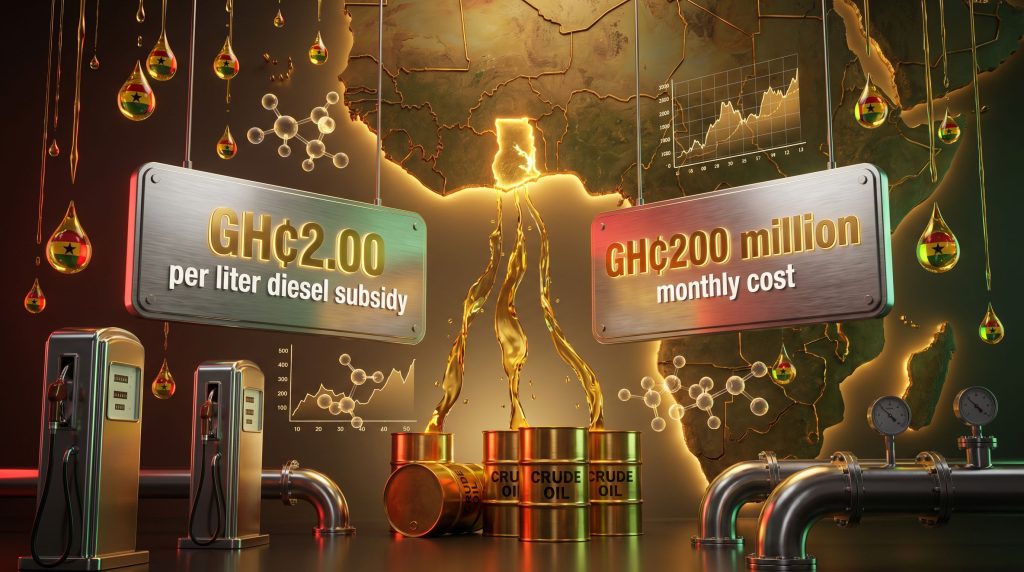
Ghana faces mounting pressure from external commodity shocks as global energy markets experience unprecedented volatility. The government's decision to implement a fuel price subsidy during an oil rally represents a calculated intervention designed to protect consumers from international price fluctuations. This Ghana fuel price subsidy during oil rally demonstrates how emerging economies balance immediate consumer relief against fiscal sustainability concerns.
West African countries have developed diverse approaches to managing petroleum product price volatility, ranging from direct consumer subsidies to stabilisation fund mechanisms. Each strategy reflects distinct fiscal capacity constraints, institutional frameworks, and political economy considerations that shape how governments respond to external energy price shocks.
Understanding Ghana's Energy Price Intervention Framework
Ghana's fuel subsidy mechanism, implemented on April 16, 2026, represents a calculated fiscal intervention designed to shield consumers from global oil market volatility. The government established specific subsidy levels of GH¢2.00 per litre for diesel and GH¢0.36 per litre for petrol, creating a temporary buffer against international price pressures that had driven significant increases in domestic fuel costs.
This intervention emerged following substantial price adjustments by the National Petroleum Authority on April 1, 2026, which had established petrol prices at 13.30 cedis per litre (representing an increase of 1.73 cedis) and diesel prices at 17.10 cedis per litre (an increase of 2.75 cedis). The rapid implementation of subsidies within 15 days of these price increases demonstrates the government's sensitivity to consumer cost pressures.
The subsidy operates through direct government absorption of specified per-litre costs at retail points rather than upstream tax exemptions or regulated markup adjustments. This mechanism provides immediate consumer relief whilst maintaining price visibility throughout the petroleum supply chain, allowing market participants to observe underlying cost structures even whilst final consumer prices remain controlled.
Technical Implementation Structure
The one-month duration with renewable capability creates a structured review framework that enables authorities to assess evolving market conditions before extending or modifying the intervention. This temporal design avoids indefinite policy commitments whilst providing sufficient duration to evaluate whether price increases represent temporary external shocks or structural market shifts.
The National Petroleum Authority's role in coordinating this intervention reflects Ghana's established regulatory framework for petroleum pricing. The authority maintains oversight of bulk distribution companies and retail margin structures, ensuring continued market participation during subsidy periods through margin protection mechanisms.
Oil marketing companies including Star Oil and GOIL operate within this framework by coordinating pricing adjustments with regulatory authorities. This coordination prevents supply disruptions that could emerge if retailers faced margin compression sufficient to discourage market participation.
When big ASX news breaks, our subscribers know first
How Do Fuel Subsidies Impact National Economic Indicators?
The fiscal implications of Ghana's fuel price subsidy create measurable budgetary pressures with projected monthly costs reaching GH¢200 million in direct government expenditure. This figure represents approximately 0.3 percent of Ghana's annual GDP being redirected towards consumer price stabilisation, indicating a significant but manageable fiscal commitment relative to overall economic output.
Furthermore, this intervention coincides with global trends where oil production decline patterns contribute to price volatility across international markets.
Inflation Transmission Pathways
By capping fuel price increases, authorities target multiple inflation transmission mechanisms simultaneously:
• Direct household transportation costs that affect disposable income across all income levels
• Commercial transportation expenses that influence goods distribution and retail pricing
• Manufacturing input costs where fuel represents operational energy requirements
• Agricultural processing costs affecting food production and distribution chains
The differential subsidy structure between diesel and petrol reflects the government's assessment of economic impact priorities. The higher diesel subsidy (GH¢2.00 versus GH¢0.36 for petrol) recognises diesel's predominant role in commercial transportation, freight movement, and agricultural machinery operation.
Economic Multiplier Effects
Fuel cost stabilisation generates cascading effects throughout interconnected economic sectors. Transport operators benefit from predictable operating costs that enable stable service pricing and route planning. Manufacturing enterprises avoid sudden input cost shocks that could force production adjustments or price increases across finished goods categories.
The subsidy particularly supports price-sensitive businesses and households operating with limited ability to absorb input cost increases through operational efficiency improvements or price pass-through mechanisms. This targeting maintains purchasing power for vulnerable economic participants whilst broader price discovery mechanisms continue operating in unsubsidised sectors.
What Triggers Government Intervention in Fuel Markets?
International crude oil price movements create automatic transmission effects on domestic petroleum product costs through Ghana's established pricing mechanisms linked to global benchmarks. When geopolitical tensions drive Brent crude price increases, importing nations experience immediate cost pressures that filter through supply chains to retail fuel prices within defined review periods.
However, the complex interplay of factors including oil price trade war dynamics creates additional uncertainty for policymakers managing domestic energy costs.
Price Shock Assessment Framework
Ghana's intervention threshold appears calibrated to prevent transport cost inflation from undermining broader economic recovery efforts. The decision to implement subsidies followed rising global crude prices attributed to geopolitical developments, suggesting authorities interpreted these increases as temporary external shocks rather than permanent structural shifts in energy markets.
The rapid 15-day response cycle from initial price increases to subsidy implementation demonstrates government sensitivity to consumer cost pressures and concern about secondary inflation effects across dependent economic sectors.
External Vulnerability Factors
Countries with high fuel import dependency become particularly susceptible to external price volatility because domestic pricing mechanisms cannot insulate consumers from international market movements. Ghana's oil import dependence creates direct exposure to global commodity cycles and geopolitical events affecting major producing regions.
This vulnerability intensifies during periods when:
• Global crude inventories decline due to production disruptions
• Geopolitical tensions affect major shipping routes or production facilities
• Currency depreciation amplifies import cost increases in local terms
• Domestic economic conditions reduce household and business capacity to absorb cost increases
Comparing Regional Approaches to Energy Price Volatility
West African nations have developed distinct mechanisms for managing petroleum product price volatility, reflecting varying fiscal capacity constraints and policy priorities across the region. In addition, broader tariffs impact markets considerations influence how governments structure their energy policies within global trade frameworks.
| Country | Mechanism Type | Duration Framework | Annual Fiscal Impact |
|---|---|---|---|
| Ghana | Direct price absorption | One-month renewable | GH¢200M monthly |
| Nigeria | Import-stage subsidies | Ongoing commitment | $10B+ estimated |
| South Africa | Fuel levy adjustments | Variable duration | R50B+ estimated |
| Kenya | Petroleum development levy | Stabilisation fund | Variable allocation |
Mechanism Effectiveness Comparison
Direct price absorption (Ghana's approach) provides immediate consumer relief through government fiscal expenditure whilst maintaining supply chain margin structures. This method offers precise control over consumer price levels but creates direct budgetary pressure requiring funding through existing resources or borrowing.
Import-stage subsidies (Nigeria's model) absorb costs at earlier supply chain points, potentially reducing administrative complexity but creating larger fiscal exposures due to broader coverage across petroleum product categories and volumes.
Fuel levy adjustments enable governments to modulate taxation levels on petroleum products rather than absorbing producer costs directly. This approach provides fiscal flexibility but may generate less immediate consumer relief compared to direct subsidies.
Stabilisation fund mechanisms allow automatic or discretionary transfers that smooth price volatility over extended periods. These systems require advance funding but can operate with reduced direct government intervention during price shock periods.
Regional Policy Coordination Challenges
Different national approaches create cross-border arbitrage opportunities where fuel price differentials encourage petroleum product flows across regional borders. This dynamic can undermine individual country policies whilst creating supply disruptions in neighbouring markets.
Coordinated subsidy policies among Economic Community of West African States members could enhance collective bargaining power with international suppliers whilst reducing individual fiscal burdens through shared cost structures.
How Do Oil Marketing Companies Adapt to Subsidy Policies?
Oil marketing companies operating in Ghana's market must coordinate operations with government subsidy frameworks whilst maintaining viable business models. The National Petroleum Authority's margin protection structure ensures continued private sector participation during intervention periods by guaranteeing minimum profitability levels.
Supply Chain Coordination Requirements
During subsidy periods, petroleum distributors and retailers require clear communication regarding:
• Subsidy duration and renewal conditions affecting inventory planning
• Margin protection levels ensuring continued profitability
• Administrative procedures for subsidy reimbursement or cost recovery
• Product coverage scope determining which petroleum categories receive subsidies
Companies like Star Oil and GOIL coordinate pricing adjustments with regulatory authorities to ensure consistent market coverage across distribution networks. This coordination prevents supply bottlenecks that could emerge if uncertain subsidy conditions discouraged retailer participation.
Business Model Adaptations
Inventory management strategies must account for potential policy reversals where subsidies conclude and market pricing resumes. Companies balance inventory levels against expectations about intervention duration whilst maintaining adequate supplies across distribution networks.
Financial planning processes incorporate subsidy-related cash flow timing, particularly regarding government reimbursement schedules and administrative requirements that could affect working capital needs.
The floor price framework provides predictability for business operations by establishing minimum margin guarantees that enable continued market participation regardless of consumer price levels set through subsidy policies.
What Are the Long-term Economic Trade-offs?
Temporary subsidies create budget allocation challenges requiring governments to balance immediate consumer relief against long-term fiscal discipline. The GH¢200 million monthly cost represents substantial expenditure that must be funded through existing revenues, spending reallocations, or borrowing arrangements.
Consequently, understanding oil price stagnation trends becomes crucial for policymakers planning sustainable intervention strategies.
Fiscal Sustainability Considerations
Extended intervention periods could necessitate:
• Reduced spending in alternative sectors to accommodate subsidy costs
• Increased borrowing with associated debt service implications
• Tax revenue enhancements through adjustments in other economic areas
• Development project delays due to resource allocation constraints
The one-month renewable structure provides policy flexibility whilst limiting open-ended fiscal commitments that could compromise broader economic management objectives.
Market Distortion Risks
Prolonged price controls can create artificial demand patterns that discourage energy efficiency investments and consumption adjustments. When subsidies maintain below-market prices, consumers and businesses may delay efficiency improvements that would otherwise reduce vulnerability to future price increases.
Price discovery mechanisms become impaired when sustained interventions prevent market participants from observing true cost structures. This impairment can affect investment decisions in energy infrastructure, alternative fuel development, and efficiency technologies.
Economic Development Implications
Fuel price stability supports manufacturing competitiveness by providing predictable input costs that enable longer-term planning and investment decisions. Transportation sector operators benefit from reduced uncertainty that facilitates service expansion and equipment investment.
However, excessive reliance on subsidies may reduce pressure for energy sector diversification and efficiency improvements that could enhance long-term economic resilience against commodity price volatility.
The next major ASX story will hit our subscribers first
Regional Energy Security Implications
Ghana's subsidy approach influences West African petroleum market dynamics by affecting cross-border trade flows and regional price arbitrage opportunities. When subsidies create significant price differentials with neighbouring countries, petroleum products may flow towards higher-price markets, potentially creating supply pressures.
Moreover, the broader context of energy security challenges across the region highlights the importance of coordinated policy responses to external shocks.
Strategic Reserve Interactions
Fuel price interventions interact with national strategic petroleum reserve policies affecting inventory management and emergency preparedness planning. Subsidised domestic consumption could affect reserve accumulation strategies if government resources become focused on immediate price support rather than strategic stockpiling.
Regional coordination opportunities exist for collective strategic reserve management where multiple countries could share storage costs and emergency supply arrangements whilst maintaining individual subsidy policies.
Supply Chain Resilience
The intervention demonstrates Ghana's capacity for rapid policy implementation in response to external shocks, indicating institutional capability for energy security management. This responsiveness enhances confidence among businesses and households regarding government commitment to economic stability maintenance.
Infrastructure development implications emerge when sustained subsidies affect investment incentives in domestic refining capacity, pipeline networks, and alternative energy systems that could reduce import dependence over time.
Investment Climate Effects of Energy Price Policies
Stable fuel costs support business operating environment predictability that can attract investment in industries sensitive to energy input costs. Manufacturing operations benefit from reduced uncertainty regarding production cost structures, enabling longer-term planning and capacity expansion decisions.
Sectoral Investment Impacts
Transportation infrastructure development becomes more attractive when fuel price volatility risks are reduced through government intervention capability. Logistics companies and freight operators gain confidence in route expansion and equipment investment when cost predictability improves.
Agricultural processing industries particularly benefit from diesel price stability since mechanical operations, irrigation systems, and product transportation represent significant cost components. Price certainty supports agricultural investment and food security objectives.
Currency and Monetary Policy Interactions
Fuel import subsidies create additional foreign exchange demand as government expenditure on petroleum imports increases. This demand can influence exchange rate stability and monetary policy decisions during volatile periods, potentially affecting overall macroeconomic management.
International investor confidence may respond positively to demonstrated government capacity for economic shock management, viewing intervention capability as evidence of policy competence and commitment to stability maintenance.
Future Policy Framework Evolution
Ghana's one-month review mechanism demonstrates adaptive policy design that enables authorities to adjust interventions based on evolving market conditions rather than rigid long-term commitments. This flexibility allows responsive policy management whilst maintaining fiscal discipline.
Adaptive Intervention Models
Future policy frameworks may incorporate:
• Automatic trigger mechanisms based on international price movements exceeding specified thresholds
• Graduated subsidy levels that adjust intervention magnitude according to shock severity
• Sector-specific targeting that prioritises essential services and vulnerable populations
• Duration parameters that limit intervention periods whilst allowing extensions under defined conditions
Regional Integration Opportunities
Coordinated subsidy policies among West African Economic and Monetary Union members could enhance collective bargaining power with international oil suppliers whilst reducing individual country fiscal burdens through shared cost structures.
Joint strategic reserve management could provide regional energy security whilst enabling more efficient individual country responses to price shocks through coordinated supply management and cost sharing.
Policy harmonisation initiatives may reduce cross-border arbitrage pressures whilst enabling more effective regional responses to external commodity shocks affecting multiple countries simultaneously.
Economic Recovery Context and Timing
The fuel subsidy implementation occurs within Ghana's broader economic stabilisation efforts following recent challenges including debt restructuring negotiations and currency pressures. This intervention demonstrates government priority for maintaining social stability whilst managing external sector pressures.
Recovery Strategy Integration
Fuel price management supports broader economic recovery objectives by:
• Maintaining consumer purchasing power during adjustment periods
• Supporting business competitiveness through stable input costs
• Preserving employment levels in transport-dependent sectors
• Encouraging continued economic activity rather than demand contraction
The timing reflects government assessment that short-term fiscal costs of intervention are justified by avoided broader economic disruption that could emerge from allowing full price shock transmission.
International Context Considerations
Ghana's approach aligns with similar emerging market responses to global commodity volatility, demonstrating common challenges facing oil-importing developing nations during periods of international market stress.
International financial institution perspectives on subsidy policies typically emphasise fiscal sustainability concerns whilst recognising legitimate needs for temporary shock absorption during external crisis periods.
Monitoring Global Oil Market Developments
Authorities committed to tracking international crude price trends and geopolitical developments influencing petroleum product costs during the intervention period. This monitoring framework enables data-driven decisions about extending, modifying, or discontinuing subsidy interventions based on evolving market fundamentals.
For instance, the Government of Ghana announced temporary fuel price cuts as part of its broader strategy to mitigate economic pressures during volatile oil market conditions.
Assessment Framework Components
The monitoring system likely incorporates:
• Daily international crude price movements across key benchmarks including Brent and West Texas Intermediate
• Geopolitical risk assessment regarding events affecting major production regions or shipping routes
• Global inventory levels indicating supply-demand balance conditions
• Currency movement impacts on import costs in local terms
Decision-Making Criteria
Policy continuation or modification decisions may depend on:
• Price stability duration indicating whether shocks represent temporary or structural changes
• Fiscal impact assessment regarding government capacity to continue interventions
• Economic recovery progress affecting vulnerability to external cost pressures
• Regional market conditions influencing cross-border trade and supply availability
Balancing Economic Stability and Fiscal Discipline
Ghana's temporary fuel subsidy represents a targeted response to external commodity shocks demonstrating how emerging economies can provide consumer protection whilst maintaining fiscal flexibility. The intervention balances immediate relief requirements against medium-term sustainability constraints through structured duration limits and regular review mechanisms.
The success of this approach depends significantly on global oil market developments and the government's ability to transition back to market-based pricing when external conditions stabilise. The one-month renewable structure provides policy space for gradual adjustment whilst maintaining response capability for continued market volatility.
Policy effectiveness measurement will ultimately depend on inflation outcomes, economic activity maintenance, and fiscal impact management relative to alternative intervention approaches. Furthermore, studies on Ghana's fossil fuel subsidy policies provide valuable analytical frameworks for evaluating such interventions.
Regional coordination opportunities may enhance individual country capacity for managing energy price volatility whilst reducing fiscal burdens through collective approaches to strategic reserve management and supplier negotiations. Ghana's intervention demonstrates both the necessity and feasibility of rapid policy response to external economic pressures facing import-dependent developing economies.
Ready to Capitalise on Resource Sector Opportunities?
Discovery Alert's proprietary Discovery IQ model delivers instant alerts on significant ASX mineral discoveries, transforming complex exploration announcements into actionable investment insights for both short-term traders and long-term investors. Explore historic examples of major discoveries that have generated substantial returns, then begin your 14-day free trial to position yourself ahead of the market.