August 21, 2026
The global copper market operates within a complex ecosystem where geopolitical tensions, supply chain vulnerabilities, and technological transitions converge to create unprecedented strategic pressures. As nations worldwide grapple with securing critical mineral supplies, the intersection of industrial policy and national security has never been more pronounced. This convergence becomes particularly evident when examining how governments navigate the delicate balance between maintaining essential processing capacity and addressing environmental concerns within aging industrial infrastructure. Understanding copper-uranium investment trends becomes essential as Glencore seeks Canada funding for copper smelter operations that represent critical national infrastructure.
What Makes Copper Processing Infrastructure a Critical National Asset?
North America's Processing Capacity Vulnerabilities
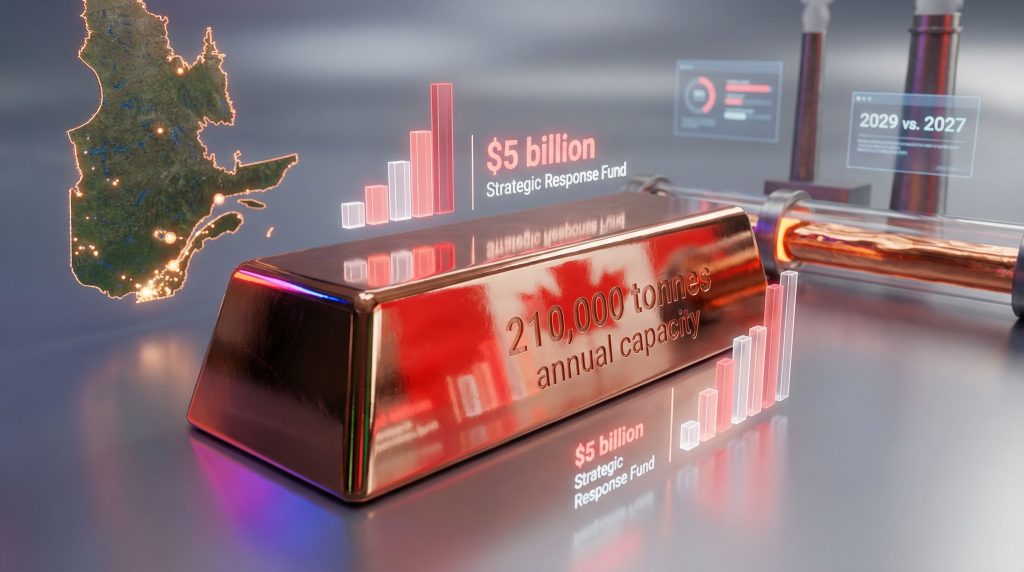
Continental copper processing capabilities face significant structural limitations that expose strategic vulnerabilities across multiple supply chain segments. The Horne smelter in Rouyn-Noranda, Quebec, represents a critical node in this infrastructure, producing 210,000 tonnes annually of copper and precious metals while serving as one of the few North American facilities capable of processing both mined concentrates and electronic waste materials.
Located approximately 625 kilometres north of Montreal, this facility operates within a continental processing landscape where integrated smelting and refining capacity remains extremely limited. The technical capability to process diverse input streams, from traditional copper concentrates to complex electronic waste, distinguishes facilities like Horne from conventional operations that focus solely on primary ore processing.
The strategic importance becomes more apparent when considering the specialized recycling capabilities required for electronic waste processing. Unlike primary copper smelting, electronic waste contains diverse metal compositions requiring sophisticated separation technologies and emission control systems. This processing complexity creates natural barriers to entry that limit the number of facilities capable of handling such materials across North America.
Furthermore, detailed copper supply forecast analysis reveals how processing bottlenecks can significantly impact continental availability. The interdependency between smelting and refining operations creates cascading risks throughout the continental supply chain.
Supply Chain Dependencies and Processing Bottlenecks
Union representatives have identified that the CCR refinery would cease operations if the Horne smelter closes, since the Rouyn-Noranda facility serves as its primary supplier. This relationship illustrates how single points of failure within processing infrastructure can trigger broader disruptions.
Copper processing involves multiple stages requiring different technical capabilities:
- Concentrate Processing: Converting mined ore into intermediate copper products
- Electronic Waste Recovery: Extracting metals from complex waste streams
- Refining Operations: Producing market-grade copper suitable for manufacturing
- Precious Metal Recovery: Capturing byproduct metals from processing streams
The integration of these processes within a single geographic region creates operational efficiencies but also concentrates systemic risks. Transportation costs between separate facilities, quality control challenges, and inventory management complexities make integrated operations economically advantageous while simultaneously creating strategic vulnerabilities.
International Processing Concentration Dynamics
Global copper refining capacity demonstrates significant geographic concentration that influences international trade patterns and supply security considerations. Processing capabilities in various regions exhibit different cost structures, environmental standards, and technological approaches that affect competitive positioning and strategic planning.
The technical barriers to establishing new integrated copper processing facilities include substantial capital requirements, lengthy permitting processes, environmental compliance costs, and skilled workforce development needs. These factors contribute to the preservation of existing facilities even when operating economics become challenging, as replacement costs often exceed modernization investments.
Understanding these dynamics helps explain why governments view existing processing infrastructure as strategic assets worth preserving through targeted support mechanisms, particularly when facilities possess unique capabilities or serve critical supply chain functions. Additionally, examining copper partnership insights provides context for how international collaborations shape processing capacity decisions.
When big ASX news breaks, our subscribers know first
How Does Strategic Government Funding Address Industrial Sovereignty Concerns?
Program Architecture and Qualification Frameworks
Canada's Strategic Response Fund represents a $5 billion allocation designed to strengthen domestic manufacturing capabilities and supply chain resilience across multiple industrial sectors. Established in September 2025 under Prime Minister Mark Carney's administration, this funding mechanism specifically targets steel, aluminium, automotive, forest products, artificial intelligence, and advanced technology sectors while maintaining flexibility for critical infrastructure projects.
The programme's qualification criteria emphasise projects that demonstrate transformative potential for strengthening supply chains and protecting employment in strategically important sectors. Glencore seeks Canada funding for copper smelter modernisation totaling approximately $1 billion in planned investments over five years, includes $300 million specifically designated for emissions reduction technology.
Programme evaluation considers several key factors:
- Scale and Strategic Impact: Projects must demonstrate significant economic contribution and supply chain importance
- Employment Protection: Emphasis on maintaining skilled jobs in critical industrial sectors
- Technological Advancement: Priority for modernisation that enhances competitiveness and environmental performance
- Supply Chain Resilience: Projects that reduce dependencies on foreign processing capabilities
Federal-Provincial Coordination Mechanisms
The constitutional division of powers between federal and provincial governments creates complex jurisdictional considerations for mining and processing infrastructure investments. Resource extraction and processing typically fall under provincial jurisdiction, while international trade, economic development, and national security considerations involve federal oversight.
Quebec's recent regulatory flexibility regarding environmental compliance timelines demonstrates provincial recognition of the facility's strategic importance. Proposed amendments would postpone arsenic emissions limits of 15 nanograms per cubic meter until 2029, representing a two-year delay from the original 2027 target, while maintaining these standards through at least 2033.
This coordination reflects broader patterns in Canadian resource policy where provincial governments focus on local economic benefits and employment while federal authorities emphasise national strategic considerations and international competitiveness. The intersection of these interests creates opportunities for collaborative funding approaches that address multiple policy objectives simultaneously.
International Comparative Context
Similar strategic funding programmes in allied nations provide benchmarks for evaluating Canada's approach to critical infrastructure preservation. Australia's Modern Manufacturing Strategy, the United States' CHIPS and Science Act, and European Union strategic autonomy initiatives all demonstrate government willingness to support domestic processing capabilities in critical sectors.
These programmes share common characteristics including emphasis on supply chain security, technological modernisation, environmental compliance, and workforce development. The scale of Canada's Strategic Response Fund aligns with international patterns where governments deploy billions of dollars to maintain strategic industrial capabilities.
Consequently, copper investment strategies must account for how government support mechanisms influence long-term viability and competitive positioning within global markets.
What Economic Factors Drive Modernisation Investment Decisions?
Capital Requirements and Financial Viability Analysis
Modernising century-old smelting operations involves complex capital allocation decisions where environmental compliance costs intersect with operational efficiency improvements and capacity optimisation potential. Glencore seeks Canada funding for copper smelter operations representing $1 billion planned investment over five years encompasses both emissions reduction technology and broader facility upgrades necessary to maintain competitiveness.
The $300 million allocated specifically for emissions reduction represents nearly one-third of total planned capital expenditure, highlighting how environmental compliance drives significant portions of modernisation costs. This proportion reflects the technical complexity required to achieve stringent emission standards while maintaining operational efficiency.
Key cost categories for smelter modernisation include:
- Emissions Control Systems: Advanced filtration and chemical treatment equipment
- Process Equipment Upgrades: Modernising furnaces, handling systems, and control technologies
- Infrastructure Improvements: Electrical systems, structural reinforcements, and safety enhancements
- Technology Integration: Automation systems and digital monitoring capabilities
Return on Investment Considerations
The economic viability of modernisation investments depends on multiple variables including copper price trends, operational cost reductions, environmental compliance requirements, and facility lifespan extensions. Government co-investment can significantly alter these calculations by reducing private sector capital requirements and associated financing costs.
Smelter modernisation typically generates returns through several mechanisms:
- Operational Efficiency Gains: Reduced energy consumption and improved recovery rates
- Regulatory Compliance: Avoiding shutdown risks and potential penalties
- Capacity Optimisation: Enhanced throughput and product quality improvements
- Workforce Productivity: Modern equipment reducing labour requirements and safety risks
The timeline for realising these benefits varies significantly, with environmental compliance providing immediate regulatory certainty while efficiency gains accumulate over years or decades. This temporal mismatch between investment costs and benefit realisation often necessitates external financial support to bridge economic gaps.
Risk Assessment and Scenario Planning
Investment decisions must account for multiple risk scenarios including commodity price volatility, regulatory changes, technological obsolescence, and competitive pressures from alternative processing facilities. The threat of facility closure represents a significant risk factor that governments must weigh against the costs of financial support.
According to recent reporting by Canadian Mining Journal, Glencore's warning that it could shut the facility without adequate government support illustrates how companies can leverage strategic importance to negotiate favourable funding terms. This dynamic creates moral hazard considerations where government support enables continued operations that might not otherwise be economically viable.
Market conditions for copper processing involve numerous variables:
- Copper Price Volatility: Affecting processing margins and investment returns
- Energy Cost Fluctuations: Impacting operational economics significantly
- Environmental Regulation Evolution: Creating ongoing compliance cost uncertainties
- Competition from New Facilities: Potentially superior cost structures and environmental performance
Why Does Quebec's Integrated Processing Chain Hold Strategic Value?
Technical Capabilities and Operational Integration
The Horne smelter and CCR refinery form Canada's only complete copper smelting and refining chain, creating unique technical capabilities within the continental processing landscape. This integration enables processing copper concentrate from mining operations while simultaneously handling recycled materials including electronic waste streams.
Electronic waste processing requires sophisticated separation technologies capable of handling complex material compositions containing multiple metals, plastics, and potentially hazardous substances. The technical expertise and equipment necessary for this processing creates competitive advantages that are difficult to replicate at other facilities.
Integrated operations provide several advantages:
- Quality Control: Direct oversight of product specifications throughout processing stages
- Inventory Management: Reduced working capital requirements and transportation costs
- Process Optimisation: Coordinated operations maximising metal recovery and minimising waste
- Technical Expertise: Concentrated knowledge base supporting complex processing requirements
Geographic and Logistical Considerations
The facility's location in Rouyn-Noranda provides strategic advantages including proximity to mining operations, established transportation infrastructure, and access to skilled workforce concentrations. The distance of approximately 625 kilometres from Montreal positions the facility to serve both domestic and export markets efficiently.
Transportation logistics play crucial roles in processing economics, as moving copper concentrates and finished products involves significant costs that influence competitive positioning. Integrated facilities reduce internal transportation requirements while benefiting from established supply chain relationships with mining operations and downstream customers.
Regional infrastructure supporting the facility includes:
- Railway Access: Efficient movement of bulk materials and finished products
- Power Supply: Reliable electricity for energy-intensive processing operations
- Water Resources: Essential for cooling and processing requirements
- Skilled Labour Pool: Experienced workforce familiar with copper processing technologies
In addition, the broader context of gold and copper exploration activities in the region creates synergistic opportunities for processing various mineral concentrates through integrated facilities.
Supply Chain Interdependencies
The relationship between Horne and CCR demonstrates how processing chain integration creates mutual dependencies that amplify the strategic importance of preserving both facilities. CCR's reliance on Horne as its primary copper supplier means that smelter closure would trigger refinery shutdown, eliminating Canada's integrated processing capacity entirely.
This interdependency extends beyond the immediate facilities to encompass broader supply chain relationships with mining operations, equipment suppliers, logistics providers, and downstream manufacturers. The network effects of integrated operations create economic value that exceeds the sum of individual facility contributions.
Understanding these relationships helps explain why preservation of integrated processing chains receives government support even when individual facilities might struggle with standalone economic viability. The systemic importance of maintaining complete processing capabilities justifies strategic interventions that consider broader economic impacts.
How Do Environmental Standards Influence Industrial Competitiveness?
Regulatory Timeline Management and Economic Impact
Environmental compliance requirements create significant cost pressures for ageing industrial facilities while simultaneously offering opportunities for modernisation and competitive repositioning. The Horne smelter's current arsenic emissions level of 45 nanograms per cubic meter represents 15 times the provincial standard, highlighting the magnitude of compliance challenges facing older facilities.
The proposed regulatory timeline adjustment postponing stricter emissions limits until 2029 provides crucial flexibility for coordinating compliance investments with broader modernisation programmes. This two-year delay enables more comprehensive planning that can optimise both environmental performance and operational efficiency simultaneously.
Regulatory timeline considerations include:
- Technology Development: Ensuring adequate time for testing and implementing emission control systems
- Capital Planning: Coordinating environmental investments with other modernisation priorities
- Operational Continuity: Avoiding production disruptions during compliance implementations
- Economic Optimisation: Maximising return on investment through integrated upgrade approaches
Health Impact Assessment and Community Relations
Industrial operations in residential communities require careful balance between economic benefits and public health protection. The Quebec Superior Court's authorisation of a class-action lawsuit against Glencore and the provincial government demonstrates how environmental compliance issues can create legal and reputational risks.
Community health considerations involve multiple stakeholders including residents, workers, healthcare providers, and regulatory authorities. Effective management requires transparent communication about health risks, mitigation measures, and improvement timelines while maintaining operational viability.
Key factors in community relations include:
- Risk Communication: Clear explanation of health risks and protective measures
- Monitoring Systems: Comprehensive emissions tracking and public reporting
- Compensation Mechanisms: Addressing documented health impacts fairly
- Future Planning: Demonstrating commitment to long-term environmental improvement
Technology Implementation and Performance Optimisation
Advanced emission control technologies offer potential solutions for achieving stringent environmental standards while maintaining operational efficiency. The $300 million allocated for emissions reduction at Horne represents substantial investment in state-of-the-art control systems designed to meet future regulatory requirements.
Modern emission control approaches typically involve multiple integrated technologies including advanced filtration systems, chemical treatment processes, and real-time monitoring capabilities. The selection and implementation of these technologies requires careful consideration of site-specific conditions, operational requirements, and long-term performance expectations.
Implementation considerations include:
- Technology Selection: Choosing systems optimised for specific emission types and facility conditions
- Integration Planning: Coordinating new systems with existing operations to minimise disruption
- Performance Monitoring: Establishing systems to track effectiveness and optimise performance
- Maintenance Requirements: Planning ongoing support and eventual technology upgrades
What Investment Models Can Ensure Long-Term Industrial Viability?
Public-Private Partnership Structures
Strategic government investment in critical infrastructure requires carefully designed partnership structures that balance public interests with private sector efficiency and innovation. The Strategic Response Fund's approach to supporting Glencore seeks Canada funding for copper smelter operations represents a significant test case for how governments can effectively participate in industrial modernisation while protecting taxpayer interests.
Effective partnership models typically include performance-based funding mechanisms that link government support to specific outcomes including environmental compliance, employment maintenance, production targets, and technological advancement. These structures create accountability frameworks that ensure public investment generates intended benefits.
Partnership structure considerations include:
- Risk Allocation: Distributing financial and operational risks between public and private partners
- Performance Metrics: Establishing clear, measurable outcomes tied to funding disbursement
- Governance Frameworks: Creating oversight mechanisms protecting public interest
- Exit Strategies: Planning for eventual government investment recovery or facility transition
Technology Development and Innovation Incentives
Government investment in industrial modernisation creates opportunities to accelerate technology development and innovation that can benefit broader industrial sectors. The emissions control technologies implemented at Horne could potentially be adapted for other smelting operations, creating knowledge spillovers that justify public investment beyond facility-specific benefits.
Innovation incentives can take various forms including research and development tax credits, technology transfer partnerships with universities and research institutions, and requirements for sharing technological advances with other domestic operations. These mechanisms help ensure that public investment generates broader economic returns.
Technology development priorities include:
- Emission Control Advancement: Developing more effective and cost-efficient pollution control systems
- Process Optimisation: Improving energy efficiency and metal recovery rates
- Automation Integration: Implementing advanced control systems and robotics
- Waste Minimisation: Reducing environmental impacts throughout processing operations
Financial Structure and Return Mechanisms
Government co-investment requires careful financial structuring to balance support objectives with fiscal responsibility and market efficiency. Various models exist for structuring public sector participation including direct grants, low-interest loans, equity participation, and performance-based incentives.
The choice of financial structure affects both immediate cash flow impacts and long-term return prospects. Debt-based support maintains private sector ownership while providing favourable financing terms, while equity participation enables government to share in potential upside returns but also increases public sector risk exposure.
Financial structure options include:
- Conditional Grants: Funding tied to specific performance milestones and outcomes
- Loan Guarantees: Reducing private sector borrowing costs while limiting direct government expenditure
- Revenue Sharing: Government participation in facility cash flows over specified periods
- Tax Credit Mechanisms: Reducing effective investment costs through accelerated depreciation or other incentives
The next major ASX story will hit our subscribers first
How Does This Decision Shape Canada's Resource Diplomacy Strategy?
Trade Policy Implications and Strategic Positioning
Government support for critical mineral processing capabilities influences Canada's international trade relationships and negotiating position in bilateral and multilateral agreements. The preservation of domestic copper processing capacity strengthens Canada's ability to participate in secure supply chain initiatives with allied nations while reducing dependence on potentially unreliable foreign suppliers.
The United States-Mexico-Canada Agreement (USMCA) includes provisions regarding critical mineral supply chains that could benefit from enhanced Canadian processing capabilities. Maintaining integrated smelting and refining operations positions Canada as a reliable supplier for North American manufacturing while supporting broader continental supply chain security objectives.
Strategic trade considerations include:
- Supply Chain Security: Reducing North American dependence on foreign processing capabilities
- Allied Nation Partnerships: Supporting secure supply arrangements with democratic allies
- Trade Agreement Optimisation: Leveraging domestic processing for preferential trade access
- Resource Diplomacy: Using processing capabilities to influence international mineral market relationships
Investment Climate and International Competitiveness
Government willingness to support strategic infrastructure sends important signals to international investors regarding Canada's commitment to maintaining competitive advantages in resource processing sectors. The Strategic Response Fund's approach to supporting critical infrastructure could influence foreign direct investment decisions across multiple mining and processing projects.
International competitiveness in mineral processing depends not only on resource endowments and technical capabilities but also on government policies supporting infrastructure development, environmental compliance, and workforce development. Successful government intervention can demonstrate Canada's capacity for strategic industrial planning while maintaining market-oriented policies.
Investment climate factors include:
- Policy Predictability: Consistent government approach to supporting strategic industries
- Regulatory Efficiency: Streamlined processes for critical infrastructure projects
- International Coordination: Alignment with allied nation approaches to critical mineral security
- Long-term Planning: Demonstrating sustained commitment to competitive processing capabilities
Resource Nationalism and Global Market Dynamics
The trend toward resource nationalism globally creates both challenges and opportunities for countries with significant mineral processing capabilities. Government support for domestic processing infrastructure can be viewed as defensive response to international supply chain disruptions or proactive strategy for capturing additional value from natural resource endowments.
As noted by Financial Post coverage, Canada's approach must balance domestic economic interests with international trade obligations and diplomatic relationships. Effective resource diplomacy requires coordinating industrial policy with trade policy to maximise benefits while minimising international friction.
Global market considerations include:
- Supply Chain Resilience: Building capabilities to withstand international disruptions
- Value-Added Processing: Capturing additional economic benefits from resource extraction
- Market Access: Maintaining relationships with key importing nations
- Technology Leadership: Developing competitive advantages through innovation and efficiency
What Lessons Emerge for Strategic Industrial Policy?
Government Intervention Criteria and Market Dynamics
Glencore seeks Canada funding for copper smelter decision establishes important precedents for how governments evaluate strategic infrastructure preservation requests and balance market forces with national security considerations. The criteria used to assess such requests provide frameworks for future decisions involving critical industrial capabilities.
Effective government intervention requires clear criteria distinguishing between strategic necessities and commercial preferences. The Strategic Response Fund's emphasis on transformative projects strengthening supply chains provides guidance, but implementation requires careful evaluation of specific circumstances and long-term implications.
Intervention evaluation criteria include:
- Strategic Importance: Facility's role in critical supply chains and national security
- Market Failure: Evidence that private investment alone cannot maintain necessary capabilities
- Alternative Options: Availability and cost of substitute facilities or approaches
- Public Benefit: Expected returns to society exceeding government investment costs
Long-Term Planning and Industrial Resilience
Strategic infrastructure preservation requires long-term planning perspectives that account for evolving technology, changing market conditions, and shifting geopolitical dynamics. The decision to support Horne and CCR must consider not only immediate operational requirements but also future strategic needs and competitive positioning.
Climate change adaptation and energy transition considerations add additional complexity to long-term infrastructure planning. Processing facilities must evolve to meet changing environmental standards while potentially serving different markets as the economy transitions toward renewable energy and circular economy principles.
Long-term planning considerations include:
- Technology Evolution: Anticipating changes in processing methods and efficiency requirements
- Market Transformation: Adapting to shifting demand patterns and customer requirements
- Environmental Standards: Planning for increasingly stringent regulatory requirements
- Workforce Development: Maintaining skilled labour capabilities for evolving industrial needs
International Comparative Analysis and Best Practices
Examining how other nations approach critical infrastructure preservation provides valuable insights for optimising Canadian policy approaches. Australia's resource processing policies, European Union strategic autonomy initiatives, and United States critical mineral strategies offer comparative frameworks for evaluation.
Best practices from international experience suggest successful programmes typically combine public investment with private sector accountability, emphasise technological advancement and environmental improvement, and maintain clear performance metrics linked to strategic objectives.
International best practices include:
- Performance-Based Funding: Linking government support to measurable outcomes and strategic objectives
- Technology Transfer: Ensuring public investment generates broader industrial benefits
- Environmental Leadership: Using government support to accelerate environmental performance improvements
- Economic Integration: Coordinating industrial policy with broader economic development strategies
This analysis is based on publicly available information and should not be considered investment advice. Government funding decisions involve complex political and economic considerations that may change based on evolving circumstances. Readers should consult qualified professionals before making investment decisions related to mining, processing, or related industrial sectors.
Looking to Capitalise on Critical Infrastructure Investments?
Discovery Alert's proprietary Discovery IQ model delivers real-time alerts on significant ASX mineral discoveries, empowering subscribers to identify actionable opportunities ahead of the broader market. Begin your 14-day free trial today and position yourself to benefit from the strategic shifts driving copper and critical mineral markets.