
July 26, 2026
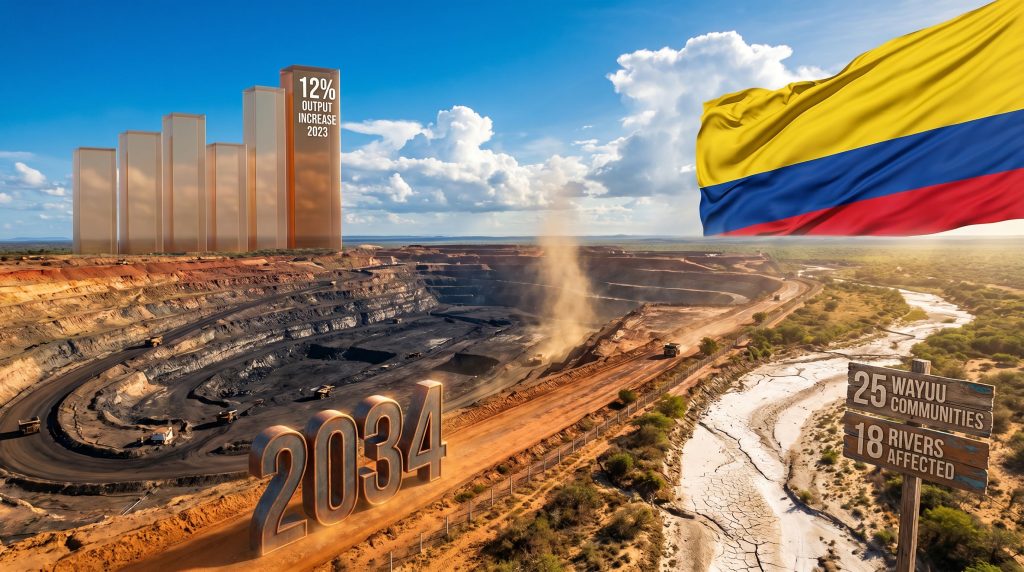
The Managed Coal Phase-Out Challenge: What Cerrejón Reveals About Extractive Industry Transitions
Few challenges in modern resource policy are as structurally complex as the managed wind-down of large-scale coal operations in developing economies. The conventional assumption is that mine closures are primarily technical exercises involving environmental clean-up and regulatory compliance. In reality, they are multi-dimensional governance problems that pit corporate legal rights against sovereign policy ambitions, community justice demands, and international accountability norms. Nowhere is this tension more visible than at the Cerrejón coal mine in northern Colombia, where the Glencore Cerrejón coal mine closure debate has evolved into one of the most closely watched test cases for extractive industry transition globally.
When big ASX news breaks, our subscribers know first
Scale, Ownership, and the Legal Framework Governing Cerrejón
Situated in the La Guajira province of northern Colombia, Cerrejón is among the largest open-pit coal mining operations on Earth. The site's scale is not merely physical; its economic footprint, water consumption, and influence over regional livelihoods have made it structurally central to La Guajira's economy for decades.
Glencore holds full operational responsibility for the mine, having consolidated ownership after the successive departures of co-owners BHP and Anglo American. The existing mining concession runs until 2034, meaning the closure timeline is not an imminent event but rather a decade-long policy, legal, and community engagement challenge that is already generating significant friction.
The 2034 endpoint is significant for several reasons:
- It establishes a fixed planning horizon that should, in theory, allow all parties to negotiate binding commitments well in advance of operations ceasing.
- It creates a window during which unresolved legal disputes, environmental liabilities, and social restitution demands will either be addressed or accumulate into post-closure liabilities.
- It means the current dialogue requests from Colombia's Ministry of Mines and Energy are not last-minute interventions but early-stage positioning in a multi-year negotiation.
Colombia's Government Steps In: What the May 2026 Dialogue Request Actually Means
In May 2026, Colombia's Ministry of Mines and Energy formally requested that Glencore convene discussions involving La Guajira provincial authorities and community representatives to address the mine's closure process. The request was published in an official ministerial statement and widely reported by Reuters.
It is critical to understand that this dialogue request carries significant political weight but does not constitute a closure order or an acceleration of the 2034 license expiry.
What the intervention does signal is a fundamental shift in Colombia's governance expectations around large extractive projects. Under President Gustavo Petro, the government has adopted an assertive stance on fossil fuel regulation, and Cerrejón has become a focal point for demonstrating whether that agenda can translate into concrete, managed outcomes. Furthermore, government intervention in mining at this scale reflects a broader global trend of states asserting greater control over extractive wind-down processes.
The government's position appears to reflect a practical recognition that if Glencore plans the closure process unilaterally, without structured engagement with regional authorities and affected communities, the result will be predictable: contested liabilities, unmet social commitments, and ongoing legal conflict well beyond 2034.
The Human Dimension: Why Community Groups Are Demanding More Than Environmental Remediation
The communities most directly affected by Cerrejón's operations include Wayuu Indigenous peoples, Afro-Colombian populations, and campesino farming communities. Their concerns go far beyond what appears in standard environmental impact assessments and involve documented allegations spanning decades.
Civil society organisations including Oxfam, CAFOD, ABColombia, and the International Work Group for Indigenous Affairs (IWGIA) have documented and published on a range of impacts associated with the mine's operations, including displacement of communities, water access disputes, and long-term health effects. In 2020, UN Special Rapporteur on Environmental Rights David Boyd publicly called for the mine's closure, citing the scale and irreversibility of environmental harms identified in the region.
The structural problem that emerges from these documented impacts is this: a closure plan focused on environmental remediation of soil and water systems does not, by itself, address the social restitution demands of communities that allege displacement, livelihood destruction, and health consequences. This gap is at the heart of why community groups and NGOs are not simply asking for better environmental engineering in Glencore's closure plan, but for a fundamentally different framework.
Key objections raised by civil society groups include:
- The absence of binding financial provisions dedicated to long-term health and livelihood impacts for affected communities.
- No formal commitment to withdraw investor-state dispute settlement (ISDS) arbitration claims against Colombia as a precondition for good-faith engagement.
- The lack of an independent verification mechanism to ensure that closure commitments are actually fulfilled.
- No formal community-led planning process with decision-making authority over closure conditions.
Understanding ISDS: The Legal Overhang That Complicates Closure Negotiations
One of the least-discussed but most structurally significant dimensions of the Cerrejón situation is the use of investor-state dispute settlement (ISDS) arbitration. ISDS is a mechanism embedded in bilateral investment treaties and trade agreements that allows foreign investors to sue host governments in international arbitration tribunals when government decisions are deemed to have harmed the investor's financial interests.
In Cerrejón's case, Glencore has pursued ISDS arbitration against Colombia in connection with regulatory decisions that blocked planned expansion activities, including a 2017 Colombian Constitutional Court ruling that prevented the diversion of the Bruno Stream. From the company's perspective, such claims may represent standard risk management under international investment law. From the community's perspective, the simultaneous pursuit of legal damages against Colombia while publishing a closure plan creates a contradiction that undermines the credibility of any stated commitment to a collaborative wind-down.
Reports indicate that some arbitration proceedings were paused or resolved during negotiations with the Petro administration in 2023, though the full status of all ISDS proceedings remains a subject of active scrutiny from civil society organisations. The significance of this issue extends well beyond Colombia: the use of ISDS mechanisms by fossil fuel companies to resist or seek compensation for regulatory changes linked to climate and energy transition policy is increasingly contested at the international level.
The OECD Complaint Mechanism and the Divestment Accountability Gap
A related accountability challenge emerged following Anglo American's 2022 divestment from Cerrejón. When a major mining operator exits a project through an asset sale rather than through an operationally managed wind-down, the question of who bears responsibility for legacy impacts becomes legally and practically murky. Indeed, asset sales in mining of this nature consistently raise unresolved questions about inherited environmental and social liabilities.
In 2024, the Global Legal Action Network (GLAN) filed a complaint through the OECD's National Contact Point mechanism, targeting the accountability gaps created by Anglo American's exit. The UK National Contact Point declined jurisdiction over the matter, which itself became a significant data point in global debates about whether existing voluntary frameworks are adequate for holding departing investors accountable for long-term extractive industry impacts.
This case has become a reference for policymakers and legal scholars examining the structural inadequacy of divestment-as-transition as a model for responsible mine exit.
The next major ASX story will hit our subscribers first
What a Genuine Just Transition Framework Would Require
The concept of a "just transition" is frequently invoked in energy policy discussions but rarely defined with the specificity needed to assess whether any given plan meets the standard. For a large-scale coal operation like Cerrejón, a credible just transition framework would need to address the following dimensions:
- Economic diversification planning for La Guajira as a region, with specific investment commitments in sectors capable of replacing coal-related employment and revenue.
- Worker retraining and income continuity programmes covering both direct mine employees and the substantially larger population of indirect economic dependents.
- Community-led restoration planning with binding timelines, independent oversight, and genuine decision-making authority resting with affected communities rather than corporate or governmental bodies acting on their behalf.
- Pre-funded environmental remediation secured contractually before the 2034 licence expiry, not dependent on voluntary commitments made after operations cease.
- ISDS withdrawal as a formal precondition for good-faith transition negotiations, preventing the simultaneous pursuit of legal damages and community engagement credibility.
Consequently, mine reclamation obligations must be considered alongside these social and legal dimensions, rather than treated as a separate technical exercise conducted in isolation from broader community restitution demands.
How Does Natural Capital Factor Into Closure Planning?
The importance of accounting for natural capital in mining closures is increasingly recognised by international bodies and institutional investors. However, in practice, the frameworks for measuring and compensating for the degradation of natural capital — including water systems, biodiversity, and soil integrity — remain underdeveloped relative to financial liability accounting.
Scenario Analysis: Three Possible Outcomes Before 2034
The trajectory of the Glencore Cerrejón coal mine closure process is not predetermined. Three broad scenarios are analytically plausible:
| Scenario | Core Dynamic | Key Dependency |
|---|---|---|
| Negotiated Managed Closure | Multi-stakeholder agreement produces binding social and environmental commitments with independent oversight | Requires ISDS withdrawal, political continuity in Colombia, and Glencore's willingness to accept binding obligations |
| Default Licence Expiry | Operations continue to 2034 with no binding community agreement; closure occurs by legal default with unresolved liabilities | The most probable outcome under current trajectory if dialogue produces only non-binding commitments |
| Accelerated Political Closure | Escalating protest, international NGO campaigns, or legislative action forces earlier wind-down | Requires sustained international investor pressure and coordinated legal action across multiple jurisdictions |
The most likely near-term watch points include:
- Whether Glencore formally agrees to the Colombian government's May 2026 dialogue request and on what terms.
- Progress or renewed escalation in any remaining ISDS arbitration proceedings.
- New campaigns by European civil society organisations targeting coal buyers sourcing from Cerrejón.
- Any formal licence renewal or extension discussions that emerge as the 2034 expiry approaches.
Why Cerrejón Matters as a Global Precedent for Coal Transition Policy
The debates surrounding the Glencore Cerrejón coal mine closure are not merely a Colombian governance story. They are a live experiment in whether the international extractive industry can produce voluntary, community-agreed closure frameworks, or whether legislative mandates, binding international standards, and adversarial legal processes will remain the only mechanisms capable of delivering accountability.
The tension visible at Cerrejón, between corporate ISDS rights and community restitution obligations, is a systemic pattern replicated in varying forms across coal-dependent regions in Indonesia, South Africa, and Eastern Europe. The legal and governance tools available to affected communities are inconsistent, often inadequate, and heavily dependent on which jurisdiction hosts the investment and which international treaties apply.
Furthermore, broader mining sustainability transformation efforts across the industry will be judged, in part, by whether high-profile cases like Cerrejón produce genuinely community-agreed outcomes or simply demonstrate the limits of voluntary corporate commitments.
If the Cerrejón process fails to produce a genuinely community-agreed closure framework before 2034, it will add significant weight to arguments that voluntary corporate commitments on mine closure are structurally insufficient and that binding international standards for extractive industry wind-downs are overdue.
For investors monitoring Glencore's ESG positioning, the Cerrejón situation represents a material governance risk. Unresolved community liabilities, active arbitration proceedings, and reputational exposure from ongoing civil society campaigns each carry implications for the company's licence to operate elsewhere and its access to capital markets increasingly sensitive to social and environmental performance metrics.
Disclaimer: This article is intended for informational purposes only and does not constitute financial or investment advice. Scenario projections and forward-looking analysis involve inherent uncertainty and should not be interpreted as predictions of specific outcomes.
Want To Stay Ahead of Significant ASX Mineral Discoveries as They Happen?
While the complexities of large-scale coal transitions unfold over decades, Discovery Alert's proprietary Discovery IQ model delivers real-time alerts on significant ASX mineral discoveries the moment they are announced, transforming complex mineral data into clear, actionable insights for investors at every level — explore historic discoveries and their returns to understand the opportunity, then begin your 14-day free trial at Discovery Alert to position yourself ahead of the broader market.