
August 6, 2026
South Africa's Ferrochrome Sector Reaches a Critical Inflection Point
Energy-intensive industrial sectors rarely receive a second chance once the machinery of large-scale retrenchment begins to turn. In the South African ferrochrome industry, the combination of structurally elevated electricity costs and chronically thin smelting margins has pushed some of the country's most significant processing operations to the edge of viability. Understanding how the system actually functions, and what it takes to pull it back from the brink, reveals something important about the fragile architecture holding South Africa's ferrochrome dominance together.
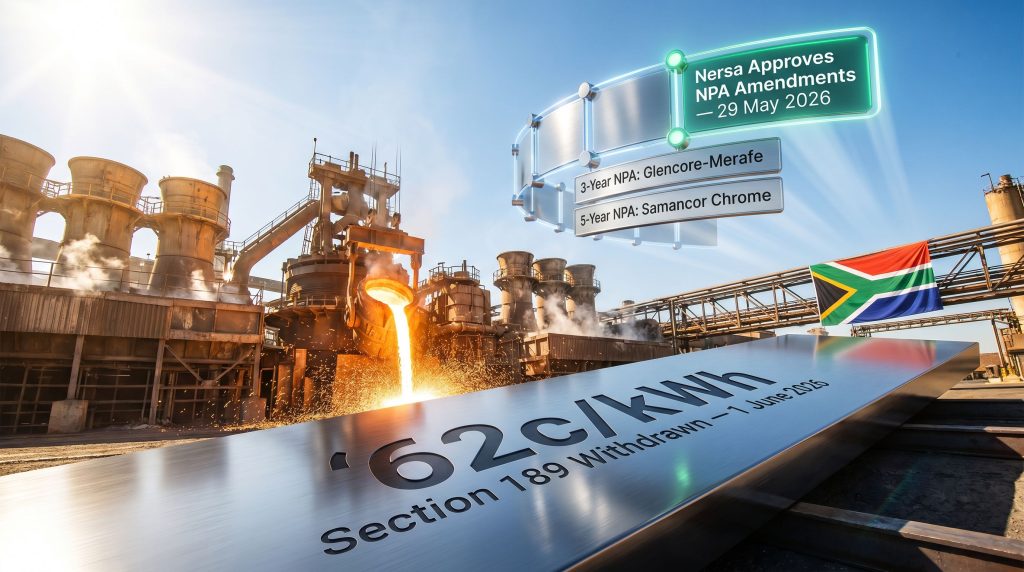
The Glencore-Merafe withdraws Section 189 process decision in June 2026 is not simply an administrative footnote. It represents the outcome of months of multi-stakeholder brinkmanship, regulatory intervention, and hard-won compromise, and it offers a revealing window into the structural vulnerabilities that continue to threaten one of South Africa's most strategically significant export industries.
When big ASX news breaks, our subscribers know first
What a Section 189 Process Actually Represents
Under the South African Labour Relations Act, Section 189 establishes the formal legal framework employers must follow before implementing large-scale retrenchments. It mandates a structured consultation period with affected employees and their recognised union representatives, during which alternatives to job losses must be genuinely explored. In the context of large smelter operations, where workforces can number in the thousands and community dependencies run deep, the initiation of a Section 189 process is rarely a formality.
For the Glencore-Merafe Chrome Venture, the Section 189 process was triggered by a straightforward commercial reality: the cost of electricity made continued smelter operations financially unsustainable at prevailing tariff rates. The process was not launched as a negotiating tactic in isolation, but rather as a legal obligation once the venture determined that retrenchments might become unavoidable.
Critically, the venture did not allow the process to run to its conclusion. Instead, it extended the termination deadline on multiple occasions, preserving optionality while regulatory and commercial negotiations continued in the background.
A Chronology of Escalating Pressure
The sequence of events that ultimately led to the Section 189 withdrawal unfolded over several months and involved multiple actors across government, industry, and the regulatory system.
| Milestone | Date | Significance |
|---|---|---|
| Section 189 process initiated | Early 2026 | Formal retrenchment consultation triggered |
| First extension of termination date | To 7 April 2026 | Tariff negotiations still unresolved |
| Second extension of termination date | To 11 May 2026 | Awaiting Eskom and Nersa decisions |
| Eskom applies to Nersa for 62c/kWh tariff | April 2026 | Formal regulatory process initiated |
| Nersa public hearings conducted | 25 May 2026 | Stakeholder consultation completed |
| Nersa approves NPA amendments | 29 May 2026 | Regulatory approval confirmed |
| Section 189 process formally withdrawn | 1 June 2026 | Retrenchment threat lifted |
Each extension of the Section 189 deadline reflected a deliberate strategy of maintaining legal readiness while allowing space for a negotiated resolution. Had either the Eskom application or the Nersa approval process stalled, the venture would have faced a binary choice between proceeding with retrenchments or absorbing unsustainable operational losses.
The Electricity Cost Equation: Why Smelters Are So Exposed
How Ferrochrome Smelting Economics Work
Ferrochrome production is among the most electricity-intensive industrial processes in the world. Submerged arc furnaces, which are the dominant technology used in South African smelters, consume enormous volumes of electrical energy to reduce chrome ore into ferrochrome alloy. Electricity can account for between 30% and 40% of total production costs at a typical South African ferrochrome smelter, making tariff levels a decisive variable in determining operational viability.
South Africa's historical cost advantage in ferrochrome production rested on two pillars: an abundant domestic supply of chrome ore, which the country holds in disproportionate global abundance, and relatively affordable electricity from Eskom. As Eskom's tariffs escalated sharply through the mid-2020s, the second pillar began to erode significantly. Furthermore, South Africa's ferroalloys sector faces competing producers in Kazakhstan, India, and China, which, while lacking South Africa's ore advantage, operate with different electricity cost structures that have closed the gap considerably.
The structural risk for South Africa is not simply that individual smelters become unviable. It is that production capacity, once placed on care and maintenance or permanently closed, is exceptionally difficult and costly to restore. Smelter restarts involve capital expenditure, workforce reconstitution, and extended commissioning periods that can span many months.
The Role of Negotiated Pricing Agreements
A Negotiated Pricing Agreement, or NPA, is a customised electricity supply contract between Eskom and a large industrial customer, subject to approval and oversight by Nersa. NPAs allow tariff rates and supply conditions to be calibrated to the specific operational and commercial circumstances of the customer, rather than applying a uniform industrial tariff.
For energy-intensive smelter operations, NPAs have historically been essential to commercial viability. They represent a recognition by the regulatory system that a standard tariff applied uniformly across all industrial users would effectively render certain categories of high-volume electricity consumers uneconomic. However, NPAs must be periodically renegotiated, and each renewal cycle carries the risk that changed tariff assumptions could break the commercial model.
What the 62c/kWh Tariff Decision Means in Practice
Eskom's April 2026 application to Nersa sought approval for a 62c/kWh tariff specifically designed to support ferrochrome smelter operations. Following public consultations and formal hearings on 25 May 2026, Nersa approved amendments to Eskom's NPAs with the relevant smelter operators on 29 May 2026.
The approved terms differed between producers:
| Producer | NPA Amendment Duration | Reporting Requirement |
|---|---|---|
| Glencore-Merafe Chrome Venture | 3 years | Six-monthly progress reports to Nersa |
| Samancor Chrome | 5 years | Six-monthly progress reports to Nersa |
The disparity in NPA duration between the two producers has not been publicly explained in detail. One plausible interpretation is that Nersa applied different assessment criteria based on each operation's specific financial position, employment base, or operational outlook. Another possibility is that the terms of engagement with Eskom differed sufficiently between the two producers to justify different regulatory treatment.
Importantly, Nersa's approval of the NPA amendments does not automatically translate into a finalised commercial arrangement. The Glencore-Merafe venture has confirmed that detailed discussions with Eskom remain ongoing to establish the precise terms and conditions that will give effect to the approved tariff. These terms will ultimately determine whether the 62c/kWh structure is genuinely workable over the approved three-year period.
Critical caveat for investors and analysts: The NPA approval is a necessary but not sufficient condition for operational recovery. The venture has made clear that the commercial terms remain under active negotiation, and the outcome of those discussions will be decisive.
The Transalloys Precedent: A Parallel Intervention
How the Manganese Ferroalloys Sector Faced a Parallel Crisis
While the ferrochrome NPA outcome attracted the most attention, Nersa simultaneously addressed a related crisis affecting Transalloys' Manganese Ferroalloys smelter operations in Mpumalanga. The instrument used in this case was different but the underlying objective was identical: preventing permanent industrial closure and protecting employment.
The specific mechanism at issue was the take-or-pay (TOP) requirement embedded in Transalloys' NPA with Eskom. Under a standard TOP structure, a large electricity customer commits to consuming a minimum volume of electricity, typically expressed as a percentage of contracted capacity, regardless of whether operational conditions justify that level of consumption. The 70% TOP threshold in Transalloys' NPA created financial strain during periods of reduced output.
Nersa approved a six-month relaxation of the 70% TOP requirement, effective from 1 July 2026. Eskom is required to submit progress reports three months after the effective date and at further three-month intervals until the relaxation period concludes.
Comparing the Two Regulatory Instruments
The two Nersa decisions of May 2026 employed fundamentally different regulatory tools to address structurally similar industrial preservation challenges:
- Ferrochrome (NPA tariff amendment): A multi-year reduction in the per-unit electricity cost, designed to structurally improve smelter economics over a sustained period.
- Manganese ferroalloys (TOP waiver): A temporary relaxation of minimum consumption obligations, designed to relieve short-term financial pressure without permanently restructuring the tariff.
These parallel interventions suggest that Nersa is increasingly being called upon to exercise active industrial preservation judgment, not merely passive tariff adjudication. The regulator's framing of the Transalloys decision, explicitly citing the need to prevent permanent closure and associated employment losses, is consistent with a broader policy posture that treats large-scale industrial job losses as a material factor in regulatory decision-making.
The next major ASX story will hit our subscribers first
What Comes Next: The Phased Restart Challenge
The withdrawal of the Glencore-Merafe withdraws Section 189 process marks a meaningful moment, but it does not signal an immediate return to full operational capacity. The venture has described its path forward in terms of a phased restart, a formulation that reflects both the complexity of recommissioning large smelter infrastructure and the unresolved commercial negotiations still in progress.
A phased smelter restart typically involves:
- NPA finalisation: Confirming the detailed commercial terms with Eskom before committing to operational expenditure.
- Infrastructure recommissioning: Bringing furnaces and associated processing equipment back to operational readiness after periods of reduced or suspended activity.
- Workforce reinstatement: Recalling and redeploying employees whose roles may have been affected during the Section 189 consultation period.
- Ramp-up to target production: Incrementally increasing output to verify operational stability before committing to full capacity.
Each of these steps introduces its own timeline and risk. A disagreement over NPA terms, for example, could delay or alter the scope of the restart. Eskom supply reliability, which has been a persistent concern for energy-intensive industrial users throughout the load-shedding era, remains an operational variable that no regulatory approval can fully neutralise.
South Africa's Ferrochrome Dominance: The Stakes in Context
South Africa holds the world's largest known chrome ore reserves and has historically been the dominant global ferrochrome producer, accounting for a significant share of world output. Ferrochrome is an essential input in the production of stainless steel, which gives South African smelter output direct exposure to the global stainless steel market demand cycles.
The downstream consequences of smelter closures extend well beyond direct employment. Chrome ore miners depend on smelter demand to absorb their output. Export earnings from ferrochrome contribute meaningfully to South Africa's trade account. Furthermore, the broader industrial ecosystem around smelter operations — from logistics and engineering services to local procurement — creates economic linkages that are difficult to quantify but are real and significant.
The long-term policy question raised by this episode is whether concessionary tariff structures can serve as a durable competitive tool or whether they represent a form of deferred reckoning. Eskom's own financial constraints create genuine tension: the utility cannot indefinitely subsidise industrial electricity consumers without implications for its own balance sheet and for the cross-subsidisation of other tariff categories.
International precedent offers some guidance. Countries including Norway, Iceland, and Canada have long maintained concessionary industrial electricity pricing for energy-intensive processing industries, typically in contexts where surplus hydroelectric capacity makes the cost of such concessions relatively low. South Africa's situation is structurally different, with Eskom facing capacity constraints and significant debt obligations. Whether the NPA model can be sustained over multiple renewal cycles remains an open and consequential question. In comparison, both China's steel market and Indian steel prices continue to shape global demand patterns that South African ferrochrome producers must navigate carefully, as does the broader global crude steel outlook which remains a key benchmark for downstream pricing.
Frequently Asked Questions
What is the Section 189 process in South Africa?
Section 189 of the Labour Relations Act governs the consultation process that employers must follow before implementing large-scale retrenchments. It requires a formal engagement period with affected employees and their representatives, during which alternatives to job losses must be explored.
Why did Glencore-Merafe initiate the Section 189 process?
The process was initiated because prevailing electricity tariff rates made continued ferrochrome smelter operations commercially unviable, raising the prospect that significant retrenchments might become unavoidable.
What caused the Section 189 process to be withdrawn?
Nersa's approval of amendments to Eskom's NPA with the venture, providing access to a 62c/kWh discounted tariff, changed the commercial outlook sufficiently to enable the withdrawal. Merafe's official confirmation of the withdrawal highlighted the critical role that Nersa's tariff relief played in averting widespread job losses.
Are the Wonderkop and Boshoek smelters now fully operational?
Not immediately. The venture has indicated a phased restart approach, and the detailed commercial terms of the NPA with Eskom remain subject to ongoing negotiation.
What is a Negotiated Pricing Agreement?
An NPA is a customised electricity supply agreement between Eskom and a large industrial customer, approved by Nersa, that sets tariff rates and conditions tailored to the specific circumstances of the customer.
How long will the discounted tariff apply?
Nersa approved the NPA amendment for the Glencore-Merafe withdraws Section 189 process outcome for a period of three years, subject to six-monthly progress reporting obligations.
Key Takeaways for Industry Observers and Investors
The Glencore-Merafe Section 189 withdrawal and the Nersa NPA approvals of May 2026 carry several important implications:
- Electricity pricing is existential for South African ferrochrome. The events of early 2026 have demonstrated unambiguously that the sector cannot absorb standard industrial tariff rates and remain globally competitive.
- Regulatory engagement timelines matter. The venture's strategy of extending Section 189 deadlines rather than terminating the process prematurely created the space needed for a negotiated resolution. Rushed conclusions in either direction would likely have produced worse outcomes.
- NPA finalisation remains the critical variable. The regulatory approval is a framework, not a guarantee. The commercial terms still being negotiated with Eskom will determine whether the three-year NPA translates into genuine operational recovery.
- Nersa is functioning as an active industrial policy actor. Both the ferrochrome and manganese ferroalloys decisions reflect a regulatory body that is weighing employment and industrial preservation alongside its conventional tariff oversight mandate.
- Restoration risk is real. Production capacity lost to care and maintenance or permanent closure is not easily recovered. The cost and complexity of smelter restarts means that preventing closures is substantially preferable to attempting reconstitution after the fact.
This article is intended for informational purposes only and does not constitute financial or investment advice. Readers should conduct their own independent research and consult qualified professional advisers before making investment decisions. Forward-looking statements and assessments of commercial viability are subject to material risks and uncertainties.
Want to Track the Next Major Mineral Discovery Before the Market Does?
Discovery Alert's proprietary Discovery IQ model scans ASX announcements in real time, delivering instant alerts on significant mineral discoveries — from chrome and ferroalloys to over 30 other commodities — so subscribers can identify actionable opportunities ahead of the broader market. Explore historic discoveries and their returns on Discovery Alert's dedicated discoveries page, or begin a 14-day free trial today to gain a market-leading edge.