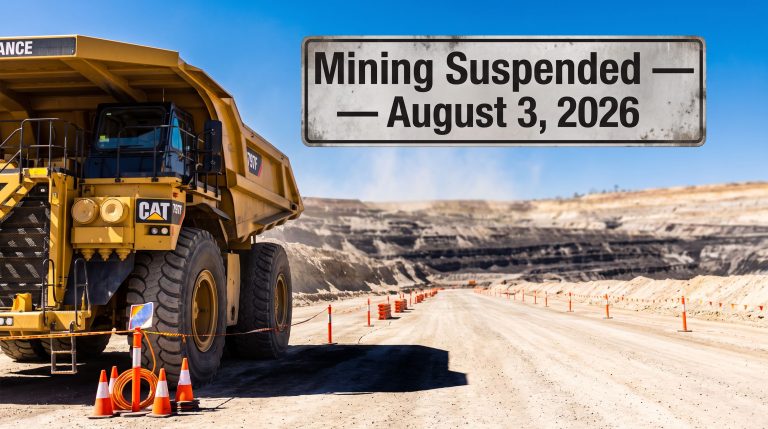
August 4, 2026
The Hidden Complexity Behind Returning a Coal Mine to Farmland
Most people assume that once a mine stops producing, the hard work is over. In reality, the cessation of coal extraction marks the beginning of an entirely different kind of industrial undertaking, one that is arguably more technically demanding, more ecologically sensitive, and more financially consequential than the mining operation itself. Across Queensland's Bowen Basin, the challenge of returning thousands of hectares of former coalfield to productive land is reshaping how the Australian mining industry thinks about its obligations beyond the pit.
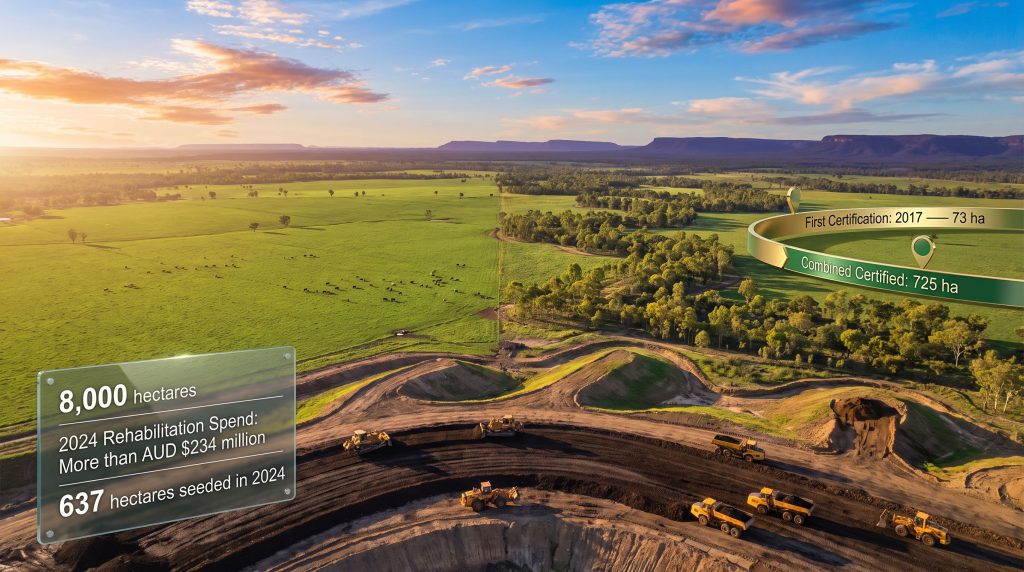
The Glencore Newlands rehabilitation project stands as one of the most instructive examples of what genuine large-scale post-mining land recovery looks like in practice. With roughly 8,000 hectares requiring restoration, expenditure exceeding $234 million in a single year, and a certification history that rewrote industry standards, Newlands offers a detailed blueprint for how the sector navigates the long road from extraction to ecological recovery.
When big ASX news breaks, our subscribers know first
Forty Years of Production, Then Something Harder Begins
The Newlands coal mine operated for approximately four decades in Queensland's Bowen Basin before formally ceasing coal production in 2023. For much of that time, it was a productive asset within Glencore's Australian coal portfolio. Its closure, however, did not represent an ending so much as a transition into a completely different phase of operational responsibility.
What makes large-scale mine closure genuinely complex is the sheer number of concurrent processes that must be managed simultaneously. The site does not simply go quiet. Instead, it becomes an active land management operation involving:
- Systematic decommissioning of processing infrastructure and surface facilities
- Reshaping of overburden dumps, the massive piles of rock and subsoil displaced during mining, into stable, erosion-resistant landforms
- Progressive salvage and redistribution of stored topsoil to reshaped surfaces
- Large-scale seeding programs using native and pastoral species suited to the region's ecology
- Long-term ecological monitoring extending well beyond the initial establishment phase
The critical insight that many outside the industry miss is that mine closure is not a single event with a defined end date. For a site the scale of Newlands, the active monitoring and maintenance obligation typically extends 15 to 20 years beyond the initial revegetation phase before any area can be considered ecologically stable and fully handed back.
Furthermore, understanding mine reclamation importance is essential to appreciating why programs of this complexity demand such sustained investment and institutional commitment.
What 8,000 Hectares of Rehabilitation Actually Looks Like
The scale of the Glencore Newlands rehabilitation project is difficult to appreciate in the abstract. At approximately 8,000 hectares, the total footprint of land requiring restoration is comparable in area to a mid-sized regional town combined with its surrounding agricultural buffer, or roughly 11,200 standard AFL football fields.
This scale means rehabilitation cannot occur as a single coordinated effort. Works are staged progressively across different parts of the site as landforms are reshaped and conditions allow. In 2024 alone, Glencore seeded 637 hectares of previously mined land as part of the active program, a figure that illustrates both the pace of the work and the sheer volume of ground that remains to be progressively treated over coming years.
The planned post-mining land use outcome for the site reflects the ecological and economic character of the Bowen Basin region:
| Planned Land Use | Proportion of Total Area |
|---|---|
| Grazing pasture | ~70% |
| Native woodland and vegetation | ~30% |
This split is not arbitrary. The Bowen Basin has a long pastoral heritage that predates coal extraction by generations, and returning land to cattle grazing is considered both ecologically appropriate and economically viable. The native woodland corridors serve a dual function, providing biodiversity value and acting as erosion buffers within the broader rehabilitated landscape.
How Does Natural Capital Factor In?
Considering natural capital in mining contexts, the native woodland allocation at Newlands is particularly significant. These restored corridors deliver measurable ecological services, including catchment protection, carbon sequestration, and habitat connectivity, that carry genuine long-term economic value beyond the pastoral return.
The $234 Million Question: Where Does Rehabilitation Funding Go?
The financial scale of the Glencore Newlands rehabilitation project is significant even by major mining standards. Glencore reported spending more than $234 million on rehabilitation activities at the site in 2024. Understanding where that capital is directed helps explain why mine closure carries such substantial ongoing cost.
| Rehabilitation Activity | Core Purpose |
|---|---|
| Overburden landform reshaping | Achieving stable, long-term geomorphic profiles resistant to erosion |
| Topsoil salvage and redistribution | Restoring soil biology and native seed bank to reshaped surfaces |
| Large-scale seeding (637 ha in 2024) | Establishing vegetation cover for ecological recovery |
| Infrastructure decommissioning | Safe removal or repurposing of processing plant and surface assets |
| Monitoring and maintenance programs | Ensuring long-term ecological stability across certified and active areas |
A factor that often goes unacknowledged in public discussion of mine closure costs is the compounding nature of these obligations. Each year of seeding creates a new cohort of vegetation that requires monitoring and weed management for years afterward. As the program expands across new areas, the total maintenance burden grows even as earlier areas mature toward certification readiness.
Consequently, this creates a cost profile that does not simply decline as the program progresses; it can remain elevated for extended periods before beginning to rationalise. Effective mining waste management strategies, however, can help rationalise some of these costs by reducing the volume of material requiring intensive ongoing treatment.
A Certification Milestone That Changed Industry Expectations
Perhaps the most significant aspect of the Glencore Newlands rehabilitation project in a sector-wide context is its certification history. In 2017, Newlands became the first coal mine in Queensland to achieve formal government certification of rehabilitated mine spoil in the Bowen Basin while still actively producing coal. The initial certified area covered 73 hectares.
This milestone matters for reasons that extend well beyond the site itself. Rehabilitation certification under Queensland's Environmental Protection Act framework is not simply an administrative acknowledgement. It represents a formal government determination that a specific parcel of rehabilitated land has met prescribed standards for long-term stability, vegetation cover, and ecological function.
Certification also has a direct financial consequence: it reduces the rehabilitation bond that the operator is required to hold with the Queensland Government, releasing capital that would otherwise remain tied up as security against future remediation liability.
The certified area at Newlands has grown substantially since that initial 2017 milestone:
| Certification Stage | Additional Hectares Certified |
|---|---|
| Initial certification (2017) | 73 ha |
| Subsequent update | 138 ha |
| Further update | 402.1 ha |
| Combined Newlands + Rolleston total | 725 ha |
Achieving certification during active operations rather than waiting until post-closure is a fundamentally different approach to mine management. It demands that rehabilitation planning be embedded into operational decision-making from the earliest stages of a mine's life, not treated as an afterthought triggered by declining reserves.
Progressive vs. End-of-Mine Rehabilitation: Why the Distinction Matters
The Newlands project sits firmly within what the industry classifies as progressive rehabilitation, a model that has increasingly become the regulatory standard in Queensland and is influencing policy in other Australian jurisdictions. Understanding how this differs from end-of-mine approaches is essential for appreciating why Newlands carries significance beyond its own boundaries.
What Are the Advantages of Progressive Rehabilitation?
Progressive rehabilitation involves restoring mined land concurrently with ongoing extraction operations. As each area is mined out and backfilled, landform reshaping and revegetation begin without waiting for the rest of the operation to wind down. The advantages are substantial:
- Reduces total rehabilitation liability at the point of formal closure
- Allows ecological recovery to begin years or decades earlier
- Lowers the peak financial bond requirement held by the regulator
- Creates operational learnings that can be applied to subsequent areas within the same site
- Demonstrates good faith to regulators, reducing the risk of enforcement action during the closure transition
End-of-mine rehabilitation, by contrast, defers the bulk of restoration work until production has ceased entirely. The drawbacks are well documented within the industry:
- Concentrates enormous financial and operational demands into a compressed post-closure period
- Increases the risk of progressive environmental degradation during the gap between mining and restoration
- Creates a larger peak bond obligation, tying up more capital for longer
- Leaves less operational capacity and institutional knowledge available to manage the works effectively
Regulatory bodies in Queensland have cited progressive rehabilitation programs at sites like Newlands as demonstrable evidence that the concurrent approach is viable at commercial scale. In addition, the broader mining sustainability transformation occurring across Australia is accelerating the adoption of these progressive models as standard practice for new mine approvals.
The next major ASX story will hit our subscribers first
The Eight Phases of Coal Mine Rehabilitation Explained
For those unfamiliar with the technical sequence involved in returning a major coalfield to productive land, the following framework captures the key stages that a site like Newlands must navigate:
- Operational closure planning – Developing a detailed closure plan during active operations, ensuring rehabilitation is sequenced with extraction from the outset
- Infrastructure decommissioning – Safe removal or repurposing of coal processing facilities, conveyors, haul roads, and surface structures
- Landform reconstruction – Reshaping overburden dumps to achieve stable, long-term geomorphic profiles that will resist erosion without ongoing intervention
- Topsoil salvage and redistribution – Applying carefully stored topsoil to reshaped landforms to restore soil biology, organic matter, and the native seed bank
- Seeding and revegetation – Establishing native and pastoral species appropriate to the target post-mining land use, calibrated to the regional ecology
- Establishment monitoring – Assessing vegetation survival rates, erosion performance, and weed invasion across seeded areas over a 3 to 5 year post-seeding window
- Government certification assessment – Formal regulatory review of rehabilitated parcels against agreed environmental standards under Queensland's Environmental Protection Act
- Long-term maintenance – Ongoing weed, pest, and erosion management extending 15 to 20 years post-establishment before full ecological stability can be confirmed
The Glenden Community Dimension
The Glencore Newlands rehabilitation project does not exist in a socioeconomic vacuum. The town of Glenden in northern Queensland was established specifically to house the workforce servicing the Newlands operation. As the mine progresses through closure, Glenden faces its own transition, one that involves workforce reductions, changing local economic activity, and a community identity historically tied to coal production.
Rehabilitation works do create ongoing local employment, particularly in land management, environmental monitoring, weed control, and ecological assessment roles. However, the headcount required to rehabilitate land is inherently lower than that needed to operate an active coal mine. The broader regional picture includes:
- Successful rehabilitation to grazing pasture returning productive agricultural land to the local pastoral economy
- Native woodland restoration contributing to catchment health and biodiversity outcomes across the Bowen Basin
- Sustained local employment in environmental management roles over the 15 to 20 year monitoring horizon
ESG Obligations and Balance Sheet Implications
From an investor and corporate governance perspective, the financial dimensions of the Glencore Newlands rehabilitation project extend beyond operational spending. Queensland's Department of Environment and Science maintains ongoing oversight of rehabilitation bond adequacy, requiring operators to demonstrate that their financial assurance holdings remain sufficient to cover the estimated cost of completing rehabilitation should the company be unable to do so.
Progressive certification reduces these contingent liabilities incrementally as each parcel of land meets the required standard and the associated bond is partially released. For a major operator managing multiple closure-stage assets across a portfolio, the cumulative bond reduction achievable through systematic certification programs represents a material balance sheet benefit, freeing capital that would otherwise remain as restricted assurance.
Furthermore, the case for decarbonising mining operations sits alongside rehabilitation investment as part of the same ESG imperative, with institutional investors and sustainability frameworks increasingly scrutinising both the environmental footprint and post-mining recovery performance of closure-stage assets globally. Glencore's publicly available coal mine rehabilitation reporting provides detailed insight into the standards and metrics applied across its Australian operations.
Key Metrics at a Glance
| Metric | Value |
|---|---|
| Mine operational life | ~40 years |
| Production ceased | 2023 |
| Total rehabilitation area | ~8,000 hectares |
| 2024 rehabilitation expenditure | >$234 million |
| Hectares seeded in 2024 | 637 ha |
| Target land use – majority | Grazing pasture (~70%) |
| Target land use – balance | Native woodland (~30%) |
| First certification year | 2017 (73 ha) |
| Combined certified area (Newlands + Rolleston) | 725 ha |
| Post-establishment monitoring period | 15 to 20 years |
Disclaimer: Financial figures, certification milestones, and programme statistics referenced in this article are drawn from publicly available reporting. Forward-looking elements relating to land use outcomes, certification timelines, and monitoring periods involve inherent uncertainty and should not be treated as guaranteed outcomes. Readers with financial or investment interests should consult independent professional advice.
Want to Identify the Next Major Mineral Discovery Before the Broader Market Does?
Discovery Alert's proprietary Discovery IQ model delivers real-time alerts on significant ASX mineral discoveries, transforming complex mineral data into actionable investment insights for both short-term traders and long-term investors — explore the historic returns major discoveries have generated and begin your 14-day free trial at Discovery Alert to position yourself ahead of the market.