
August 4, 2026
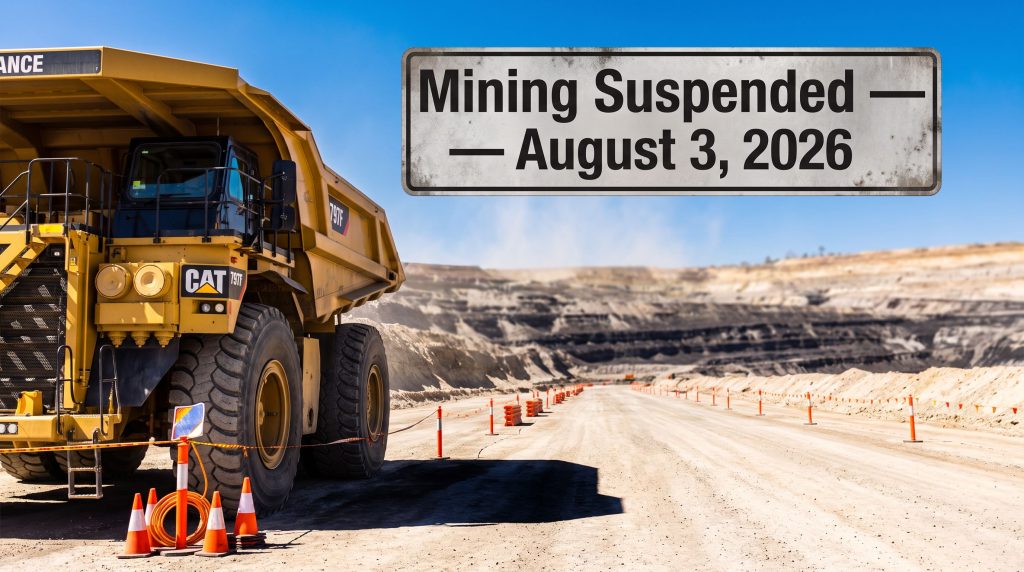
When Proximity Becomes Peril: The Enduring Danger of Mobile Equipment in Open Cut Mining
Surface mining operations have achieved remarkable productivity gains over the past three decades, yet one hazard category has resisted the industry's best efforts at elimination. Vehicle-to-person interactions on open cut mine sites remain among the most lethal risks in the entire extractive sector, claiming lives across jurisdictions where safety investment runs into the hundreds of millions of dollars annually.
The fundamental problem is geometric: large haul trucks operating in environments shared, even briefly, with ground-level workers create collision scenarios where the physics are unforgiving and the margin for error is essentially zero.
It is against this persistent backdrop that the United Wambo mine incident of August 3, 2026 must be understood, not merely as an isolated tragedy but as the latest expression of a structural challenge that the Australian coal industry has not yet solved. The mining industry evolution over recent decades has brought significant advances, yet fatalities of this nature continue to occur.
When big ASX news breaks, our subscribers know first
What Happened at the United Wambo Mine on August 3, 2026
Shortly after 1:00 pm on August 3, 2026, emergency services received reports of a serious incident at the United Wambo Open Cut Coal Mine in New South Wales' Hunter Valley. Attending officers located a male worker, believed to be in his 50s, who had been struck by a truck on the mine site. The worker was pronounced deceased at the scene. Formal identification of the individual had not been confirmed at the time of initial reporting.
Mining operations at the site were suspended immediately following the incident, consistent with standard NSW regulatory requirements that compel operators to preserve the incident scene and halt affected activities pending investigative clearance. NSW Police commenced a formal investigation, with a Mining and Energy Union safety officer also attending the site. A coroner's report will be prepared as part of the broader inquiry into the circumstances surrounding the fatality.
Key Facts at a Glance
| Detail | Information |
|---|---|
| Date of Incident | August 3, 2026 |
| Time Emergency Services Called | Just after 1:00 pm |
| Location | United Wambo Open Cut Coal Mine, Hunter Valley, NSW |
| Distance from Singleton | Approximately 23 km west |
| Incident Type | Worker struck by mobile equipment (truck) |
| Worker's Approximate Age | 50s |
| Outcome | Fatal, worker died at the scene |
| Formal Identification | Not confirmed at time of initial reporting |
| Mine Ownership | Joint venture between Glencore and Peabody Energy |
| Operational Status Post-Incident | Mining suspended pending investigation |
| Investigating Bodies | NSW Police; Mining and Energy Union safety officer on site; coroner's report to be prepared |
United Wambo: The Mine, Its Operators, and Its Operating Context
The United Wambo Open Cut Coal Mine sits approximately 23 kilometres west of Singleton in the Upper Hunter region of New South Wales, one of Australia's most productive and historically significant thermal and metallurgical coal corridors. The operation is structured as a joint venture between two of the world's largest coal producers, Glencore and Peabody Energy, combining substantial resource bases and operational infrastructure under a shared management structure.
Open cut operations of this scale are characterised by continuous heavy equipment movement across extensive haul road networks. These mines typically run around the clock across multiple shifts, with fleets of large-capacity trucks, excavators, dozers, and ancillary equipment operating in close and overlapping spatial proximity. The sheer scale of machinery involved, combined with the operational tempo required to meet production targets, creates a working environment where vehicle-related hazards are perpetually present.
The Hunter Valley coal belt carries particular operational complexity because of its long-established mining history, meaning many operations involve layered infrastructure, legacy access arrangements, and densely trafficked internal road systems. Consequently, these sites elevate proximity risk compared to greenfield sites designed with modern segregation principles from the outset. Furthermore, mining safety and transformation initiatives have yet to fully address these deeply embedded structural challenges.
Industry and Regulatory Responses to the Fatality
The response from industry leadership was immediate and unambiguous in tone. Glencore's coal chief executive Peter Sharpe confirmed that the company had suspended operations and was directing its immediate focus toward supporting the worker's family and the broader workforce at the site.
The NSW Minerals Council, representing the state's mining sector, characterised the event as a sobering reminder that occupational hazard elimination must remain the industry's foremost obligation. NSW Minerals Council CEO Stephen Galilee noted that the thoughts of tens of thousands of NSW miners would be directed toward the worker's family and the broader Hunter Valley mining community during what he described as a difficult time for the entire sector.
At the national level, the Minerals Council of Australia reinforced that any loss of life within the sector serves as a critical signal to intensify industry-wide efforts toward achieving zero fatalities. MCA CEO Tania Constable emphasised that the entire Australian mining community would continue working to eliminate fatalities across the sector, framing the incident not as an aberration but as a continued call to collective action.
These responses, while genuine in their condolences, also reflect an industry increasingly aware that words must be matched by measurable safety outcomes. The language of zero harm has been present in Australian mining for over two decades. The question being asked with greater urgency in 2026 is why fatality rates have not yet reached zero.
According to reporting by the ABC, the United Wambo mine incident prompted swift responses from both the union movement and industry bodies, with calls for an immediate and thorough investigation into the circumstances of the fatality.
The NSW Coroner and Regulatory Investigation Process Explained
In New South Wales, a fatality occurring in a workplace, particularly a mine site, triggers a mandatory multi-agency response. The NSW Police take jurisdiction over the scene to assess whether any criminal conduct was involved, while the Resources Regulator, operating under the NSW Department of Primary Industries and Regional Development, exercises its authority under the Work Health and Safety (Mines and Petroleum Sites) Act 2013 to investigate the safety system failures that may have contributed to the incident.
A coroner's investigation is mandatory when a person dies in circumstances that are unexpected, unnatural, or not the result of a verified medical condition. Mining fatalities virtually always satisfy this threshold. The coroner's role extends beyond establishing cause of death to making findings about the circumstances of the incident and, critically, issuing recommendations directed at preventing recurrence.
These recommendations, while not legally binding in a direct enforcement sense, carry substantial practical weight and frequently translate into regulatory amendments or industry-wide safety directives.
Under current NSW mining safety legislation, operators are required to suspend affected operations and preserve the incident scene until regulatory authorities grant clearance. The scope and duration of any suspension depends on the nature of the investigation and the findings of initial site assessments. In complex fatality investigations involving multiple contributing factors, this process can extend for weeks before full operational resumption is authorised.
Mobile Equipment Fatalities: Why This Hazard Category Persists
The term mobile equipment fatality covers a broad spectrum of incident types, but in open cut coal mining it most commonly refers to collisions between large haul trucks and personnel on foot or in light vehicles. The dynamics of these incidents are driven by a combination of engineering, human factors, and operational pressures that interact in ways that technology alone has not yet fully neutralised.
Large mining haul trucks, including common models from manufacturers such as Caterpillar and Komatsu, can exceed 200 tonnes in gross vehicle mass when loaded. Their cab height places operators several metres above ground level, creating substantial blind spot zones particularly at the front and rear of the vehicle. A person standing within several metres of the front corner of a loaded haul truck may be completely invisible to the operator under certain positional conditions.
The technological response to this problem has been progressive but uneven in its adoption across the sector. In addition, advances in autonomous haulage technology have shown promise in reducing vehicle-to-person contact risks, however deployment remains concentrated at a limited number of large-scale operations.
| Technology Type | Function | Adoption Status in Australian Open Cut Mining |
|---|---|---|
| Proximity Detection Systems (PDS) | Alerts operators when personnel enter exclusion zones | Increasingly mandated; uptake varies by state and site |
| Collision Avoidance Systems (CAS) | Automated intervention to prevent vehicle-person contact | Emerging standard; regulatory push accelerating post-2020 |
| Autonomous Haulage Systems (AHS) | Removes human operators from high-risk haul zones | Deployed at select large-scale operations, predominantly in WA iron ore |
| Hi-Visibility Zoning Controls | Physical and procedural segregation of foot traffic from haul roads | Baseline requirement across all open cut sites |
| Fatigue Monitoring Technology | Real-time detection of operator impairment | Growing adoption, particularly for long-haul shift operations |
What the table above does not capture is the gap between technology installation and effective technology use. Research into mobile equipment incidents across Australian surface mines has repeatedly identified that proximity detection systems, where installed, are sometimes overridden, alarmed so frequently that operators develop alert fatigue, or positioned in ways that reduce their functional coverage. This is a human factors problem layered on top of an engineering solution, and it resists resolution through hardware investment alone.
The next major ASX story will hit our subscribers first
Key Risk Factors That Elevate Fatality Probability in Open Cut Environments
Understanding why vehicle-to-person fatalities continue to occur requires looking beyond the immediate mechanics of individual incidents. Furthermore, data-driven mining operations offer a pathway to identifying and addressing these risks more systematically. Multiple converging risk factors create the conditions in which these events become probable rather than merely possible:
-
High-traffic haul roads with insufficient physical separation between pedestrian access routes and active equipment corridors
-
Operator blind spots inherent to large-scale mining trucks, particularly in the zones immediately forward and adjacent to the cab
-
Shift fatigue accumulating across extended operational rosters, impairing both operator reaction time and ground-level worker situational awareness
-
Communication breakdowns between equipment operators and ground crews, especially during shift handovers and during periods of high operational activity
-
Inadequate exclusion zone enforcement in high-activity periods when production pressure can subtly override procedural compliance
-
Normalisation of risk at sites where near-miss events have not escalated to injuries, creating a false sense of procedural adequacy
ESG Accountability and the Post-Incident Obligations of Major Operators
For globally listed mining companies such as Glencore and Peabody Energy, a fatal incident carries consequences that extend well beyond the immediate operational disruption. Both companies are subject to ESG reporting frameworks that require material safety incidents to be disclosed to investors, often within timeframes that precede the completion of regulatory investigations.
The growing sophistication of ESG analysis within institutional investment communities means that fatal incidents are now assessed not just for their human cost but for what they signal about the systemic quality of an operator's safety management system. Repeat incidents within a defined period, or incidents that follow prior regulatory warnings, can trigger formal engagement from major shareholders and, in some cases, influence capital allocation decisions.
This dynamic creates a novel form of accountability that sits alongside regulatory enforcement, one driven by investor expectations rather than legal obligations. For operators seeking to maintain strong ESG ratings, the pressure to demonstrate credible corrective action following a fatality has intensified considerably over the past five years.
Frequently Asked Questions: United Wambo Mine Incident
What is the United Wambo mine and where is it located?
The United Wambo Open Cut Coal Mine is a surface coal mining operation located in the Hunter Valley region of New South Wales, approximately 23 kilometres west of Singleton.
Who owns and operates the United Wambo Joint Venture?
The mine is jointly owned and operated by Glencore and Peabody Energy, two of the world's largest coal producers.
What type of incident occurred at United Wambo on August 3, 2026?
A male worker was fatally struck by a truck on the mine site. The incident is classified as a mobile equipment fatality.
Has the worker involved in the United Wambo incident been formally identified?
At the time of initial reporting, formal identification had not been confirmed. NSW Police were managing that process as part of their investigation.
Are mining operations at United Wambo currently suspended?
Yes. Mining operations were suspended following the incident, consistent with NSW regulatory requirements, pending the outcome of investigative processes.
What regulatory bodies are investigating the United Wambo mine fatality?
NSW Police are conducting an investigation, a Mining and Energy Union safety officer attended the site, and a coroner's report is to be prepared under NSW legislation.
What is a coroner's investigation and when is it required after a mining fatality in NSW?
A coroner's investigation is a formal inquiry conducted when a person dies in unexpected or unnatural circumstances. It is mandatory for mining fatalities in NSW and includes findings on the circumstances of the death along with recommendations for preventing similar incidents.
What the United Wambo Fatality Tells Us About Mine Safety in 2026
The August 3 fatality at the United Wambo mine is not a story about a single point of failure on a single day. It reflects an ongoing tension within Australian open cut coal mining between the genuine progress that has been made on safety culture and technology, and the stubborn residual risk that attaches to operating some of the world's heaviest machinery in proximity to people.
The sector has invested substantially in safety systems, regulatory frameworks have matured considerably since the high-fatality decades of the 1980s and 1990s, and the cultural rhetoric around zero harm is now deeply embedded across major operators. However, the United Wambo mine incident is a reminder that embedding rhetoric and eliminating hazard are not the same achievement.
Three areas demand focused attention in the aftermath of this incident:
-
Technology implementation quality, not just technology procurement. Installing proximity detection is necessary but insufficient if alarm thresholds, maintenance protocols, and operator training do not keep pace.
-
Procedural integrity under production pressure. Exclusion zone compliance and pedestrian segregation protocols must be enforced with the same rigour at peak production periods as during lower-tempo operations.
-
Coroner's recommendations as a genuine feedback mechanism. The findings arising from this investigation should be treated by the broader industry as actionable intelligence, not jurisdictionally confined obligations.
Advances in mining automation trends represent a promising avenue for reducing fatality risk, however technology alone cannot substitute for the cultural and procedural disciplines that must underpin safe operations at every level.
The death of a worker at United Wambo is not an isolated data point. It reflects a systemic challenge that the Australian mining industry continues to confront despite decades of safety investment. Technology adoption, regulatory enforcement, and cultural accountability must advance in parallel to meaningfully reduce fatality rates across the sector.
Readers seeking broader context on mine safety regulation and workplace fatality investigations in Australia can explore related reporting and educational content available through Safe to Work at safetowork.com.au. The publication provides ongoing coverage of Australian mining safety events, regulatory developments, and industry responses relevant to this topic.
This article contains factual reporting based on information available at the time of publication. Details relating to the investigation, formal identification of the worker, and the regulatory process remain subject to change as the inquiry progresses. Nothing in this article constitutes legal or regulatory advice.
Want to Stay Ahead of Significant ASX Mineral Discoveries as They Happen?
While the Australian mining sector grapples with persistent safety and operational challenges, opportunities within the broader resources industry continue to emerge daily — and timing is everything. Discovery Alert's proprietary Discovery IQ model scans ASX announcements in real time, delivering instant alerts on significant mineral discoveries and helping investors of all experience levels identify actionable opportunities before the broader market reacts — explore the historic returns major discoveries have generated and begin a 14-day free trial today.