May 21, 2026
Glencore Restructures Trading Division as Coal Chief Departs
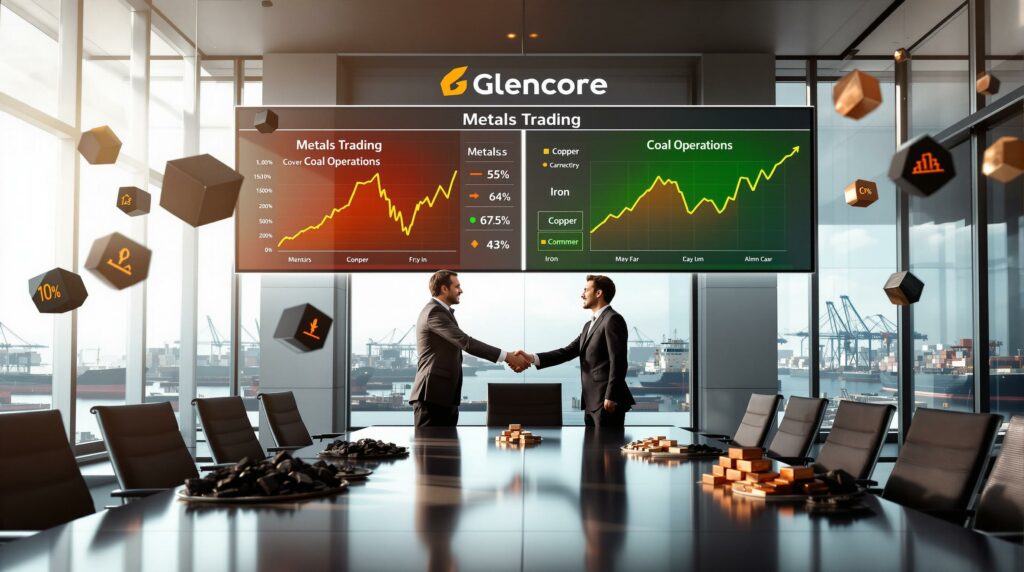
Glencore, one of the world's leading commodity giants, is implementing a substantial overhaul of its trading leadership structure. This strategic reorganization represents the most significant transformation of the company's trading division in recent years, with major implications for its coal trading operations and broader business strategy.
When big ASX news breaks, our subscribers know first
How is Glencore Reorganizing Its Trading Leadership?
The Swiss-based commodity powerhouse is fundamentally restructuring its trading operations, with several key leadership changes that signal a strategic pivot in how the company manages its diverse commodity portfolio.
Key Leadership Changes
The reorganization centers on several high-profile personnel shifts:
- Coal Trading Leadership Transition: Ruan van Schalkwyk, Glencore's veteran head of coal trading operations, is exiting the company through retirement after years of steering this crucial division
- Expanded Role for Jyothish George: Currently heading copper and cobalt trading, George will assume a substantially broader position overseeing metals, iron ore, and coal trading operations
- Reporting Structure Modifications: Multiple trading executives who previously reported directly to CEO Gary Nagle will now report to Jyothish George, including Peter Hill (head of iron ore) and Robin Scheiner (head of alumina and aluminum)
As outlined in an internal memo from CEO Gary Nagle: "We now feel the time is right to merge our steelmaking coal marketing activities with our iron ore business due to their overlapping customer bases."
Reassignment of Trading Responsibilities
The restructuring involves strategic repositioning of several key trading executives:
- David Thomas: Transitioning from his current position as head of ferroalloys trading to take over thermal coal operations
- Paymahn Seyed-Safi: Expanding his portfolio by adding chrome responsibilities to his existing nickel trading oversight
- Peter Hill: Broadening his scope from iron ore to also manage vanadium and manganese trading operations
This reconfiguration represents a deliberate move toward a more integrated, customer-centric approach to commodity trading, moving away from traditional siloed commodity categories.
Why is Glencore Restructuring Its Trading Division Now?
The timing of this major reorganization comes at a critical juncture for Glencore, following a period of mixed financial performance and strategic challenges.
Divergent Trading Performance
A key driver behind the restructuring appears to be the starkly contrasting performance across Glencore's trading operations:
- Metals Trading: Achieved record-breaking profits in the first half of 2025, demonstrating exceptional performance
- Energy and Coal Trading: Faced significant struggles during the same period, barely managing to generate profits
- Share Price Pressure: According to Bloomberg reporting, Glencore "disappointed investors with weak results for the first half of the year and is facing internal and external pressure to revive its moribund share price"
This performance disparity highlights the need for strategic realignment to capitalize on strengths while addressing underperforming segments.
Strategic Alignment with Business Evolution
The reorganization also reflects Glencore's adaptation to recent strategic moves and evolving market conditions:
- Teck Resources Acquisition: Glencore recently "significantly expanded its presence in the metallurgical coal market with its acquisition of Teck Resources Ltd.'s coal business," necessitating operational integration
- Customer-Centric Reorganization: The restructuring aims to "help align trading teams with the customers for different sets of commodities," as noted by CEO Gary Nagle
- Integration of Steelmaking Coal: The merger of steelmaking coal marketing with iron ore operations leverages "their overlapping customer bases"
This approach signals a shift toward organizing commodity trading based on customer relationships rather than traditional commodity categories, potentially creating more integrated, efficient operations.
What is Glencore's Position in Global Coal Markets?
Despite growing global pressure on fossil fuel businesses, Glencore maintains a commanding position in international coal markets.
Market Leadership
Glencore's coal operations represent a cornerstone of its overall business strategy:
- World's Largest Coal Shipper: As explicitly stated in the Bloomberg report, "Glencore is the world's largest shipper of coal," underscoring its dominant market position
- Dual Coal Focus: The company maintains substantial operations in both thermal coal (primarily used for power generation) and metallurgical coal (essential for steel production)
- Strategic Expansion: The recent acquisition of Teck Resources' coal business has significantly enhanced Glencore's presence specifically in the metallurgical coal market
This combination of existing market leadership and strategic expansion reinforces Glencore's commitment to maintaining its prominent position in global coal markets.
Management Structure
The trading division reorganization maintains certain strategic reporting lines while adjusting others:
- Energy Division Leadership: Alex Sanna, who oversees the company's oil, gas, and power trading asset strategies, will continue reporting directly to CEO Gary Nagle
- Strategic Importance: The careful restructuring of coal trading leadership, rather than diminishing its importance, signals coal's continued significance within Glencore's broader portfolio
The company, described as "an historic name in commodity trading that traces its history back to the industry's godfather Marc Rich," continues to evolve while maintaining its traditional strengths in key commodity markets.
How Does This Restructuring Impact Glencore's Business Strategy?
The comprehensive reorganization provides meaningful insights into Glencore's evolving strategic priorities and business approach.
Operational Integration
The restructuring reflects several strategic imperatives:
- Customer-Centric Approach: The reorganization explicitly aims to better align trading teams with customer needs, moving beyond traditional commodity-based organizational structures
- Efficiency Focus: Streamlining reporting structures suggests a drive toward operational efficiency and more responsive decision-making
- Strategic Consolidation: Combining related commodity trading operations, such as steelmaking coal with iron ore, leverages natural synergies and overlapping customer relationships
As CEO Gary Nagle noted, this approach will "help align trading teams with the customers for different sets of commodities," potentially creating more seamless customer experiences while optimizing internal operations.
Market Adaptation
The reorganization also signals Glencore's response to evolving market conditions:
- Addressing Performance Disparities: The stark contrast between metals trading success and energy trading struggles necessitates strategic realignment
- Portfolio Management Evolution: Adjusting organizational structure enables better management of an increasingly diverse commodity mix
- Strategic Positioning: The changes prepare Glencore for evolving market dynamics in both coal and metals markets
By consolidating leadership under high-performing executives and realigning operations around customer needs rather than traditional commodity categories, Glencore appears to be positioning itself for greater agility in responding to market shifts.
What Are the Implications for Glencore's Future?
This leadership reshuffle provides significant clues about Glencore's strategic direction and future priorities.
Business Evolution Signals
Several important indicators emerge from the reorganization:
- Continued Coal Commitment: Despite global energy transition pressures and environmental concerns, Glencore's careful restructuring of coal operations indicates ongoing commitment to this business segment
- Metals Focus: The elevation of Jyothish George from metals trading to broader oversight suggests increasing emphasis on this high-performing segment
- Integrated Approach: The move toward more integrated management of related commodities represents a strategic pivot from historically siloed operations
These signals suggest Glencore is balancing traditional strengths with adaptation to evolving market realities, maintaining its coal focus while strengthening its metals trading operations.
Investor Considerations
The reorganization has significant implications for investors:
- Performance Improvement Drive: Bloomberg reporting indicates the changes aim to address "internal and external pressure to revive its moribund share price" following disappointing first-half results
- Strategic Positioning: The restructuring represents preparation for evolving commodity market dynamics, potentially creating more resilient operations
- Long-term Vision: Rather than abandoning traditional strengths, Glencore appears to be evolving them for continued relevance in changing markets
Described as "the biggest shake-up of the company's trading unit in years," these changes signal Glencore's determination to address performance challenges while positioning for future growth.
The next major ASX story will hit our subscribers first
FAQ: Glencore's Trading Division Restructuring
How significant is coal trading to Glencore's overall business?
Coal trading represents one of Glencore's core business segments, with the company maintaining position as the world's largest coal shipper. The recent acquisition of Teck Resources' coal assets further demonstrates the strategic importance of this commodity within Glencore's portfolio, particularly in expanding its metallurgical coal market presence.
What prompted this reorganization of Glencore's trading division?
Multiple factors contributed to the restructuring, including disappointing first-half financial results in 2025, pressure to improve share price performance, stark performance differences between metals and energy trading divisions, and the strategic integration of recently acquired coal assets from Teck Resources. The reorganization addresses both immediate performance challenges and longer-term strategic positioning.
How does this restructuring reflect changing commodity markets?
The reorganization, particularly the integration of steelmaking coal with iron ore operations, reflects Glencore's adaptation to customer needs and market dynamics. By organizing trading teams around customer relationships rather than traditional commodity categories, Glencore is positioning itself to better serve key market segments while creating more integrated, efficient operations.
What does this mean for Glencore's future in coal markets?
Despite global energy transition pressures, Glencore's continued investment in coal operations and strategic reorganization of its coal trading leadership indicate an ongoing commitment to maintaining its position in both thermal and metallurgical coal markets. Rather than divesting from coal, Glencore appears to be optimizing its coal operations within a more customer-centric organizational structure.
Market Implications and Industry Context
The restructuring at Glencore occurs against a backdrop of broader industry evolution insights. While many major mining companies have been divesting coal assets due to environmental concerns and investor pressure, Glencore has taken a different approach by maintaining and even expanding its coal portfolio through strategic acquisitions.
This reorganization demonstrates how major commodity traders are adapting to changing market conditions while balancing traditional strengths with evolving customer needs. By merging steelmaking coal marketing with iron ore operations, Glencore is acknowledging the interconnected nature of these markets while potentially creating more streamlined customer experiences.
Industry Perspective: Glencore's restructuring represents a significant shift in how major commodity traders organize their operations, potentially signaling a broader industry trend away from commodity-based silos toward more customer-centric organizational structures.
For industry watchers and investors, these changes provide valuable insights into how one of the world's largest commodity traders is positioning itself for the future while addressing immediate performance challenges. The elevation of metals trading leadership, combined with careful restructuring of coal operations, suggests a balanced approach to portfolio management rather than a wholesale strategic pivot.
The reorganization also reflects broader trends in mining leadership trends and consolidation and joint ventures across the industry. Furthermore, Glencore's strategy must also account for ongoing Glencore copper challenges in its global operations.
Disclaimer: This analysis is based on available information as of August 2025 and represents current understanding of Glencore shakes up trading team with head of coal to exit. Future developments may alter the strategic implications of these organizational changes. Investors should conduct their own research before making investment decisions based on this information.
Looking for the Next Major Mineral Discovery?
Discover how significant mineral discoveries can lead to exceptional market returns by exploring Discovery Alert's dedicated discoveries page, where our proprietary Discovery IQ model instantly alerts investors to noteworthy ASX mineral announcements, providing a crucial market edge. Visit https://discoveryalert.com.au/discoveries/ today to begin your 30-day free trial and position yourself ahead of the market.