June 22, 2026
Understanding Global Aluminium Smelting Economics and Market Dynamics
The aluminium industry operates on razor-thin margins where electricity costs can determine the difference between profitability and closure. Energy expenses typically account for 30-40% of total aluminium production costs, making power pricing negotiations critical to operational viability. This economic reality drives strategic decisions across the global aluminium supply chain, where producers continuously evaluate facility locations based on energy security dynamics, cost predictability, and long-term sustainability.
Recent market conditions have intensified pressure on energy-intensive operations, particularly those dependent on hydroelectric power sources vulnerable to climate variability. The convergence of drought conditions, ageing infrastructure, and evolving government energy policies creates a complex risk matrix that aluminium producers must navigate when making long-term capital allocation decisions.
When big ASX news breaks, our subscribers know first
Strategic Context Behind South32's Mozambique Smelter Decision
The South32 Mozambique smelter mothball decision reflects fundamental economic pressures that extend beyond temporary operational challenges. South32's 63.7% stake in the Mozal Aluminium facility represents a significant portion of the company's aluminium production capacity, contributing just over 29% of total aluminium output in fiscal year 2025.
Power Cost Comparison Analysis:
| Region | Estimated Power Cost (USD/MWh) | Primary Energy Source | Grid Reliability |
|---|---|---|---|
| Mozambique | $45-65 | Hydroelectric | Variable |
| Iceland | $25-35 | Geothermal/Hydro | Excellent |
| Canada (Quebec) | $30-40 | Hydroelectric | Excellent |
| Australia | $55-75 | Coal/Gas/Renewables | Good |
| Gulf States | $20-30 | Natural Gas | Excellent |
The energy-intensive nature of aluminium production creates strategic vulnerabilities when power supply arrangements lack long-term price predictability. CEO Graham Kerr's assessment that parties remained deadlocked on appropriate electricity pricing highlights the structural challenges facing aluminium producers in regions where energy costs exceed global benchmarks.
Regional Competitiveness Factors in Smelter Operations
Multiple factors contribute to aluminium smelter competitiveness beyond raw electricity costs:
• Energy supply reliability during peak demand periods
• Long-term contract availability with predictable pricing mechanisms
• Grid infrastructure capacity to handle industrial-scale power requirements
• Government policy stability regarding energy subsidies and industrial support
• Climate resilience of primary power generation sources
The Mozal facility's dependence on Hidroeléctrica de Cahora Bassa (HCB) as primary power provider, supplemented by South African utility Eskom during shortfalls, illustrates the complex multi-jurisdictional arrangements required to maintain operations in energy-constrained environments.
Mozambique's Infrastructure Challenges in Heavy Industry
Mozambique's position as a regional aluminium producer faces significant structural constraints that extend beyond individual facility economics. The country's hydroelectric-dependent energy system creates vulnerability to climate-driven supply disruptions, particularly during extended drought cycles that reduce reservoir levels and generating capacity.
Hydroelectric Capacity Constraints During Drought Cycles
The ongoing drought conditions affecting HCB's electricity supply demonstrate the climate risks inherent in hydroelectric-dependent industrial strategies. Mozambique's energy infrastructure operates with limited backup capacity, requiring expensive cross-border power purchases when domestic generation falls short of industrial demand.
Key Infrastructure Vulnerabilities:
• Seasonal supply variability linked to rainfall patterns
• Limited grid redundancy for industrial-scale consumers
• Cross-border dependency on South African power during shortfalls
• Ageing transmission infrastructure requiring substantial capital investment
• Competing domestic priorities for limited power generation capacity
Power Grid Reliability Issues Affecting Industrial Operations
The dual-supply arrangement between HCB and Eskom reveals systematic undersupply within Mozambique's national grid capacity. Industrial operations requiring consistent, high-volume electricity face operational disruptions when primary domestic sources cannot meet full demand profiles.
This infrastructure constraint creates a competitive disadvantage for energy-intensive manufacturing, where production continuity directly impacts unit economics and customer contract fulfilment. The inability to guarantee reliable domestic power supply forces industrial users into expensive backup arrangements that erode profitability margins.
Financial Impact of the $372 Million Write-Down on South32's Portfolio Strategy
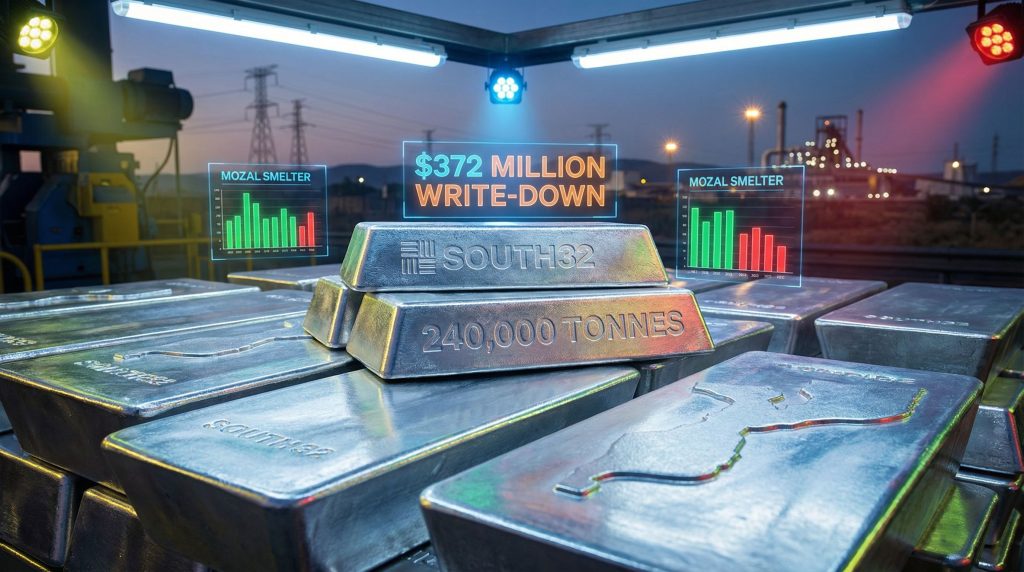
The substantial impairment charge associated with Mozal's closure represents more than accounting adjustment; it signals a fundamental strategic reorientation within South32's aluminium division. The $372 million write-down reflects the difference between the facility's book value and its recoverable economic value under current operating conditions.
Financial Restructuring and Capital Reallocation
Key Financial Metrics:
| Cost Category | Amount (USD Million) | Impact Type |
|---|---|---|
| Asset Impairment | $372 | Non-cash charge |
| Transition Costs | $60 | One-off cash outflow |
| Annual Maintenance | $5 | Ongoing cash requirement |
| Total Initial Impact | $432 | Combined financial impact |
The transition to care and maintenance status requires $60 million in one-off costs while generating $5 million in annual maintenance expenses. These figures reflect South32's strategy to preserve asset optionality whilst minimising ongoing cash burn during the facility's dormant period.
The closure decision prioritises capital preservation and return optimisation by eliminating uneconomic operations rather than continuing to operate at a loss or pursuing additional capital investment.
South32's Aluminium Division Reconfiguration
The removal of Mozal's 240,000 tonnes of annual production capacity necessitates comprehensive strategic realignment across South32's aluminium operations. This capacity reduction represents nearly 30% of the company's total aluminium output, requiring careful redistribution of production volumes and supply chain relationships.
Production Capacity Impact Analysis:
• Immediate capacity loss: 240,000 tonnes annually
• Market share reduction: Approximately 0.4% of global primary aluminium production
• Customer contract implications: Potential supply agreements requiring renegotiation
• Working capital release: Inventory liquidation generating short-term cash flow
• Operational focus shift: Concentration on remaining lower-cost facilities
The Worsley refinery alumina supply chain adjustments represent a secondary effect, as reduced internal demand for alumina feedstock may require alternative customer arrangements or production scaling adjustments.
Broader Economic Consequences for Mozambique
The Mozal closure creates ripple effects throughout Mozambique's economy, extending far beyond direct employment impacts. As the largest industrial employer in the country, the facility's shutdown represents a significant economic dislocation with both immediate and long-term developmental implications.
Industrial Employment and GDP Impact Assessment
Economic Impact Metrics:
| Impact Category | Scale | Economic Significance |
|---|---|---|
| Direct Employment | 5,000+ positions | Largest industrial employer |
| Indirect Employment | 22,000+ contractor roles | Supply chain multiplier effect |
| GDP Contribution | Approximately 3% | Substantial macroeconomic impact |
| Export Revenue | Major foreign exchange earner | Balance of payments effect |
The employment displacement extends beyond direct workers to encompass extensive contractor networks and local service providers dependent on Mozal's operations. This multiplier effect amplifies the economic disruption across multiple sectors of Mozambique's economy.
Supply Chain Disruption Analysis
Local supplier networks face immediate revenue loss as procurement contracts terminate. The facility's role as an anchor customer for various industrial services creates concentrated economic vulnerability in surrounding communities, reflecting broader energy transition challenges faced by developing economies.
Supply Chain Dependencies:
• Transportation and logistics providers serving facility operations
• Maintenance and technical services contractors
• Raw materials suppliers and local input providers
• Port and shipping services handling aluminium exports
• Financial services providers serving facility employees and contractors
The foreign exchange earnings reduction impacts Mozambique's balance of payments, as aluminium exports represented a significant source of hard currency revenues. This reduction may affect the country's ability to finance imports and service external debt obligations.
Global Aluminium Industry Transformation and Energy Security
The Mozal closure exemplifies broader structural changes occurring across the global aluminium industry, where energy security increasingly determines competitive positioning. Traditional smelting locations face pressure to adapt or risk obsolescence as producers prioritise operational sustainability over historical relationships.
Energy Security as a Competitive Advantage
Modern aluminium production strategies emphasise long-term energy cost predictability and supply reliability over short-term pricing arrangements. Regions offering renewable energy integration, grid stability, and transparent regulatory frameworks attract increasing investment capital, demonstrating industry evolution trends towards sustainability.
Global Aluminium Smelter Closures 2020-2025:
| Region | Closures | Capacity Lost (tonnes) | Primary Cause |
|---|---|---|---|
| Europe | 8 facilities | 1.2 million | Energy costs |
| North America | 3 facilities | 450,000 | Environmental regulations |
| Africa | 2 facilities | 300,000 | Infrastructure constraints |
| Asia | 5 facilities | 800,000 | Market consolidation |
Market Consolidation Trends
The aluminium industry exhibits increasing concentration among producers with access to low-cost, reliable energy sources. This consolidation trend favours facilities in regions with abundant renewable energy resources and stable regulatory environments.
Investment flows increasingly target operations that demonstrate environmental sustainability and social responsibility, creating additional pressure on facilities lacking these characteristics. Furthermore, industry consolidation strategies continue to reshape competitive dynamics across global markets.
The next major ASX story will hit our subscribers first
Strategic Options for Stakeholders
Despite the announced closure timeline, multiple stakeholders retain options for alternative outcomes. The care and maintenance approach preserves facility infrastructure whilst allowing time for potentially improved economic conditions or alternative ownership structures.
Potential Last-Minute Negotiation Scenarios
Compromise Framework Possibilities:
• Graduated pricing structures linking electricity costs to aluminium market prices
• Government subsidy programmes supporting strategic industrial operations
• Public-private partnerships sharing infrastructure investment costs
• Regional development incentives offsetting operational cost disadvantages
• Alternative energy partnerships introducing renewable generation capacity
Long-Term Facility Utilisation Alternatives
The $5 million annual maintenance cost preserves restart optionality whilst South32 evaluates market conditions and potential strategic alternatives.
Alternative Utilisation Options:
• Asset divestiture to operators with different cost structures or government support
• Industrial repurposing for alternative manufacturing applications
• Infrastructure salvage recovering valuable equipment and materials
• Regional development hub conversion for multiple industrial tenants
• Renewable energy integration projects utilising existing electrical infrastructure
Investment Implications and Market Response
The South32 share price declined 2% following the closure announcement, reflecting investor recognition of both the immediate financial impact and longer-term strategic implications. The market response suggests measured concern rather than panic, indicating confidence in South32's overall portfolio diversification.
South32 Share Price Response Analysis
Market Reaction Factors:
• Expected outcome: Extended negotiations suggested closure probability was already partially priced
• Strategic clarity: Definitive decision eliminates uncertainty premium
• Capital efficiency: Investors recognise value preservation over value destruction
• Portfolio focus: Remaining assets benefit from concentrated management attention
• Cash generation: Working capital release provides near-term liquidity improvement
Sector-Wide Investment Implications
The closure reinforces investment themes favouring aluminium producers with secure, low-cost energy access. ESG considerations increasingly influence capital allocation decisions, with investors preferring operations demonstrating environmental sustainability and community partnership.
Investment Decision Framework:
• Energy cost benchmarking against global competitive standards
• Climate resilience assessment of primary power generation sources
• Regulatory stability evaluation in target jurisdictions
• Infrastructure quality analysis supporting long-term operations
• Community relationship strength affecting social licence to operate
Global Aluminium Supply Dynamics and Pricing Impact
The removal of 240,000 tonnes of annual production capacity represents approximately 0.4% of global primary aluminium output. While individually modest, this capacity reduction occurs within a broader context of industry rationalisation and demand growth in key sectors including automotive, aerospace, and renewable energy infrastructure.
Production Gap Analysis
Supply Adjustment Mechanisms:
• Increased utilisation at existing facilities with spare capacity
• Capacity restart at currently idle facilities in other regions
• Import substitution from regions with cost advantages
• Strategic inventory drawdown by consumers and traders
• Demand elasticity responses to potential price adjustments
The aluminium market's ability to absorb this capacity loss depends on demand trajectory in key consuming sectors and the availability of alternative supply sources operating below full capacity. However, the broader implications of trade war market impact continue to influence global supply chain decisions.
Strategic Resource Security Implications
Regional aluminium supply security considerations influence government policy responses to industrial closures. Countries dependent on aluminium imports may reassess strategic reserves or domestic production incentives to reduce supply chain vulnerabilities.
Critical Considerations for Supply Chain Resilience:
• Geographic diversification of aluminium supply sources
• Strategic stockpile management for critical industrial inputs
• Regional production capacity maintenance for security purposes
• Alternative materials development reducing aluminium dependency
• Recycling capacity expansion supporting circular economy objectives
Frequently Asked Questions
When will the Mozal smelter officially cease operations?
South32 plans to place the facility under care and maintenance by March 2026, following the expiration of current power supply agreements with HCB and Eskom.
What are the total financial costs of this closure?
The company faces a $372 million impairment charge plus $60 million in transition costs, with ongoing maintenance expenses of $5 million annually during the care and maintenance period.
Could the smelter restart if conditions improve?
While South32 maintains the facility could theoretically restart under improved economic conditions, no specific timeline or investment commitment has been announced. The care and maintenance status preserves this optionality.
How does this affect global aluminium prices?
The removal of 240,000 tonnes of annual production capacity may provide modest upward pressure on global aluminium pricing, though market impact depends on overall demand conditions and alternative supply availability.
What alternatives exist for the facility's future?
Options include potential divestiture to operators with different cost structures, government intervention through subsidies or pricing agreements, alternative industrial uses, or permanent closure with asset recovery.
The South32 Mozambique smelter mothball decision exemplifies the complex interplay between energy security, infrastructure constraints, and global market dynamics shaping the modern aluminium industry. As producers increasingly prioritise operational sustainability and energy cost predictability, facilities lacking these characteristics face difficult strategic choices that extend far beyond individual company impacts to affect entire regional economies and global supply chains.
Ready to Capitalise on Market-Moving Mining Developments?
Discovery Alert's proprietary Discovery IQ model delivers instant notifications on significant ASX mineral discoveries, helping investors identify actionable opportunities across commodities including critical materials like aluminium feedstock bauxite. Begin your 30-day free trial today and position yourself ahead of market developments that shape global supply chains and industrial operations.