May 11, 2026
Understanding Global Commodity Dynamics and Their Investment Implications
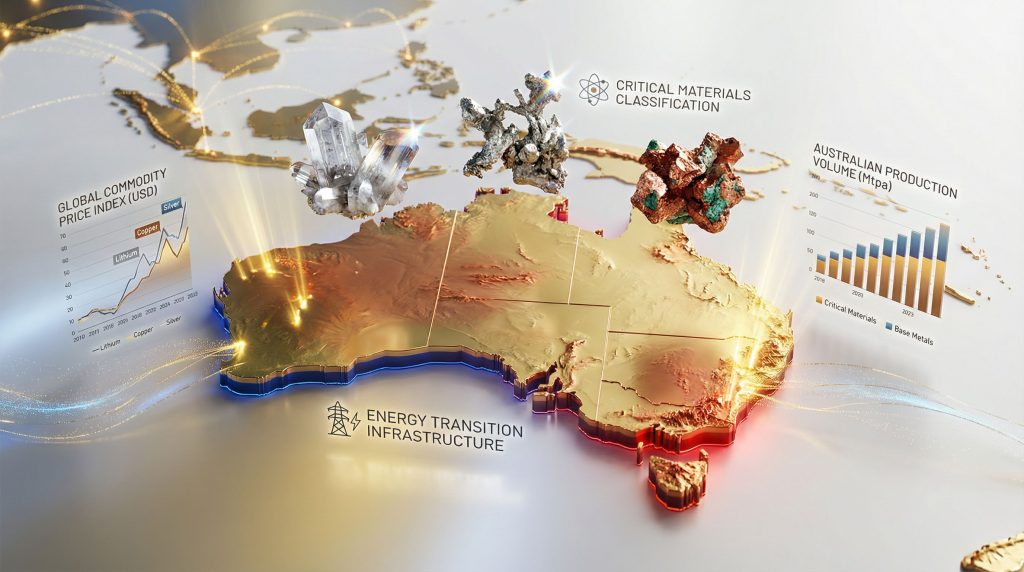
The Australian materials sector experienced unprecedented conditions during 2025, fundamentally reshaping how investors evaluate ASX mining shares 2025 opportunities. Structural demand drivers, rather than cyclical economic forces, now dominate commodity pricing mechanisms across multiple sectors. These conditions create investment environments where traditional valuation metrics require comprehensive reassessment to account for permanent shifts in global supply chains and energy infrastructure requirements.
Central bank monetary policies across developed economies have created conditions where precious metals serve dual functions as both inflation hedges and portfolio diversification assets. Furthermore, when real interest rates remain near zero or negative, non-yielding assets like gold prices inflation hedge become competitive with traditional fixed-income securities. This dynamic established baseline demand floors that persist independent of short-term economic cycle fluctuations.
The energy transition represents the largest infrastructure transformation since electrification began in the early 20th century. Unlike previous commodity cycles driven by temporary infrastructure spending, current mineral demand reflects governmental policy commitments extending across multiple decades. Battery manufacturing, renewable energy systems, and electrical grid modernisation require sustained commodity inputs that create multi-year demand growth trajectories.
When big ASX news breaks, our subscribers know first
Critical Minerals Designation and Strategic Resource Classification
The United States government's designation of silver as a critical material during 2025 represents a fundamental shift in commodity classification methodology. This reclassification extends beyond traditional supply-demand market analysis and introduces strategic stockpiling requirements that create sustained demand independent of economic cycles. Industrial silver consumption in photovoltaic manufacturing, electrical switching systems, and advanced electronics now represents substantial portions of total silver demand.
Strategic mineral classifications reflect national security considerations regarding supply chain reliability and domestic production capacity. Countries implementing critical mineral policies prioritise supply chain diversification away from single-source suppliers while building strategic reserves. Consequently, these policies create demand patterns that differ fundamentally from historical commodity consumption driven by economic growth cycles.
The integration of silver into renewable energy infrastructure creates dual demand drivers supporting price appreciation. Investment demand from precious metals portfolios combines with industrial consumption growth in solar panel manufacturing. When both investment and industrial demand increase simultaneously, commodity markets experience supply-demand imbalances that support sustained price appreciation across multiple economic scenarios. Additionally, the silver market squeeze impact demonstrates how these forces can influence global financial markets.
Industrial Silver Applications Growth:
• Photovoltaic cell manufacturing for solar energy systems
• Electrical switching applications in renewable energy infrastructure
• Advanced electronics and semiconductor manufacturing
• Medical device and antimicrobial applications
• Electric vehicle power electronics and charging systems
Central Bank Gold Purchasing and Monetary Policy Impacts
Global central bank gold purchasing programs continued throughout 2025, establishing baseline precious metals demand that operates independent of private investment cycles. Central banks accumulate gold reserves to diversify foreign exchange holdings away from individual national currencies while maintaining assets perceived as preserving purchasing power during periods of currency volatility.
Central Bank Policy Transmission Mechanisms:
| Policy Variable | Impact on Precious Metals | Duration |
|---|---|---|
| Lower Interest Rates | Reduced opportunity cost of holding non-yielding assets | 12-36 months |
| Quantitative Easing | Currency debasement concerns drive allocation | 24-60 months |
| Negative Real Rates | Precious metals provide inflation protection | Ongoing |
| Currency Volatility | Safe-haven demand increases | Variable |
A November 2025 Goldman Sachs poll revealed that one-third of institutional investors expect gold prices to exceed $5,000 per ounce, reflecting consensus expectations for sustained appreciation driven by monetary policy divergence. When institutional investors incorporate these price expectations into portfolio allocation decisions, they create demand that supports continued price appreciation across extended time periods. Furthermore, comprehensive gold market trends analysis indicates sustained growth potential.
The relationship between real interest rates and precious metals demand creates predictable market dynamics. When nominal interest rates remain below inflation rates, real interest rates become negative, eliminating the yield advantage of traditional fixed-income securities. Under these conditions, precious metals provide inflation protection characteristics without carrying counterparty or credit risks associated with traditional financial instruments.
Energy Transition Infrastructure and Commodity Demand
Copper demand experienced 42% price appreciation during 2025, driven by accelerating electrification requirements across multiple sectors. Unlike historical copper demand driven by construction and manufacturing cycles, current consumption patterns reflect permanent infrastructure transformation toward renewable energy systems, electric vehicle adoption, and data centre expansion.
Electrification Infrastructure Requirements:
• Renewable energy generation systems (wind turbines, solar installations)
• Electric vehicle manufacturing (motors, wiring, power electronics)
• Charging infrastructure development and maintenance
• Electrical grid modernisation and smart grid technology
• Data centre expansion and cooling system infrastructure
Lithium carbonate prices recovered 58% during 2025 following three years of declining values, reaching 19-month price highs by year-end. The recovery beginning in July 2025 reflected improving supply-demand balance as battery manufacturing capacity expanded while lithium production capacity additions lagged demand growth. Electric vehicle adoption commitments by major automotive manufacturers create sustained lithium demand that extends across multiple production cycles. Moreover, australia lithium innovations showcase the country's technological advancement in this sector.
The distinction between cyclical and structural commodity demand determines investment duration and magnitude expectations. Structural demand reflects permanent changes in how global energy systems operate, creating commodity consumption that persists independent of short-term economic conditions. This demand profile supports higher commodity price floors and extended appreciation cycles compared to traditional cyclical patterns.
ASX Mining Shares 2025 Performance Analysis
The Australian materials sector delivered exceptional investor returns during 2025, demonstrating how commodity price appreciation translates into equity market performance. The S&P/ASX 200 Materials Index (XMJ) achieved 31.71% price appreciation with total returns including dividends of 36.21%. This performance exceeded the broader S&P/ASX 200 Index (XJO) by approximately 4:1, with the benchmark index achieving 6.8% price appreciation and 10.32% total returns.
2025 Materials Sector Performance Breakdown:
| Performance Metric | Materials Index (XJJ) | Benchmark Index (XJO) | Outperformance |
|---|---|---|---|
| Price Appreciation | 31.71% | 6.8% | 4.66x |
| Total Returns | 36.21% | 10.32% | 3.51x |
| Dividend Yield | 4.5% | 3.52% | 0.98% |
Mining companies dominate materials sector composition, making sector performance directly relevant for evaluating mining investment opportunities. When commodity prices experience sustained appreciation, mining companies benefit from operational leverage effects where improved commodity prices generate disproportionate improvements in profit margins and cash flow generation.
The materials sector outperformance demonstrates investor recognition of structural changes in commodity demand patterns. Rather than viewing 2025 performance as cyclical appreciation, market participants increasingly evaluate mining investments within frameworks that account for permanent shifts in global commodity consumption driven by energy transition requirements. The implementation of a comprehensive critical minerals strategy further supports this transformation.
Gold Mining Sector Investment Opportunities
Gold mining companies experienced exceptional share price appreciation during 2025, with multiple ASX 200 companies achieving returns exceeding 190%. This performance reflects the combination of 65% gold price appreciation and operational leverage effects that amplify commodity price movements into equity valuations.
Top-Performing ASX 200 Gold Miners (2025):
• Pantoro Gold (ASX: PNR): 220% share price appreciation to $4.89, 52-week high $6.61
• Resolute Mining (ASX: RSG): 206% share price appreciation to $1.23, 52-week high $1.32
• Regis Resources (ASX: RRL): 196% share price appreciation to $7.55, 52-week high $7.83
• Genesis Minerals (ASX: GMD): 194% share price appreciation to $7.25, 52-week high $7.63
Large-cap gold producers provide portfolio stability during periods of monetary uncertainty while maintaining operational cash flows sufficient to support dividend distributions. These companies typically operate multiple mine sites across different geographic regions, creating natural diversification that reduces operational concentration risks while providing hedging against jurisdiction-specific regulatory developments.
Mid-tier gold producers present optimal risk-return profiles by combining proven mineral reserves with clearly defined development pathways. Companies in development phases benefit from engineering studies validating economic viability while avoiding early-stage exploration risks associated with resource definition uncertainty.
Small-cap gold exploration companies offer leveraged exposure to commodity price movements but require careful evaluation of geological prospects, management experience, and financial sustainability during development phases. These companies demonstrate limited operating cash flows, requiring continued capital market access to fund exploration programs and advance projects toward production phases.
What Drives Gold Mining Investment Returns?
Gold mining companies benefit from operational leverage during periods of commodity price appreciation. When gold prices increase, mining companies experience disproportionate profit margin improvements due to fixed operational costs. This leverage effect amplifies commodity price movements into equity valuations, creating exceptional return opportunities during sustained gold price appreciation cycles.
The next major ASX story will hit our subscribers first
Silver Mining and Industrial Demand Transformation
Silver experienced 147% price appreciation during 2025, reaching record levels of $83.62 per ounce in December. This appreciation reflects both precious metals investment demand and rapidly expanding industrial applications in renewable energy systems, electric vehicles, and advanced manufacturing processes.
Pure-play silver mining companies benefit from exposure to both investment and industrial demand drivers. When silver serves dual functions as both precious metals investment and critical material input, mining companies experience demand support across multiple economic scenarios. Industrial silver consumption in photovoltaic manufacturing creates demand that persists independent of precious metals investment cycles.
Silver-gold polymetallic operations maintain operational flexibility to optimise production profiles based on relative commodity prices. When silver prices appreciate relative to gold prices, polymetallic producers can adjust processing parameters to maximise silver recovery and capitalise on favourable price relationships.
Silver Industrial Applications (Growing Demand):
• Photovoltaic cell manufacturing (solar energy infrastructure)
• Electrical switching and conductor applications
• Advanced electronics and semiconductor manufacturing
• Electric vehicle power electronics and charging systems
• Medical devices and antimicrobial applications
The designation of silver as a critical material by the United States creates strategic stockpiling requirements that establish demand floors independent of market cycles. Critical material classifications prioritise supply chain security and domestic production capacity, creating sustained demand patterns that support commodity price appreciation across extended periods.
Lithium Sector Recovery and Battery Technology Integration
Lithium carbonate prices experienced 58% appreciation during 2025, recovering from three years of declining values to reach 19-month price highs. The recovery beginning in July 2025 reflected improving supply-demand balance as battery manufacturing capacity expanded while lithium production capacity additions lagged behind demand growth.
Liontown (ASX: LTR) achieved 197% share price appreciation to $1.58 during 2025, with a 52-week high of $1.75, demonstrating the performance potential in lithium development companies when commodity prices support improved project economics. The company's performance reflects broader lithium sector recovery as battery demand improved and electric vehicle adoption accelerated.
Integrated lithium producers controlling the entire value chain from mining through processing maintain superior margins and supply chain security. Battery manufacturers increasingly seek reliable long-term partnerships with vertically integrated suppliers, creating competitive advantages for companies controlling multiple value chain stages.
Hard rock lithium development projects in Australia provide geographic diversification away from South American brine operations while offering faster production ramp-up timelines. Spodumene processing operations can achieve production targets within shorter development periods compared to traditional evaporation pond methods used in brine operations.
Lithium Market Recovery Indicators:
| Metric | 2024 Performance | 2025 Performance | Change |
|---|---|---|---|
| Lithium Carbonate Price | Stagnant | +58% | Recovery |
| Battery Demand | Declining | Improving | Positive |
| EV Adoption | Slow | Accelerating | Growth |
| Production Capacity | Excess | Balanced | Stabilising |
Why Lithium Recovery Matters for Investors?
The lithium price recovery during 2025 signals fundamental improvements in battery supply chain dynamics. Electric vehicle manufacturers committed to ambitious production targets require reliable lithium supply, creating sustained demand that supports higher commodity prices. This recovery validates investment thesis for companies with proven lithium reserves and processing capabilities.
Operational Efficiency and Investment Evaluation Frameworks
Mining company evaluation requires comprehensive analysis of operational metrics, capital allocation efficiency, and long-term asset sustainability. Successful mining investments demonstrate consistent operational performance across commodity price cycles while maintaining disciplined capital allocation toward exploration, technology upgrades, and operational optimisation initiatives.
Mining Company Evaluation Criteria:
| Operational Metric | Gold Mining | Silver Mining | Lithium Production | Copper Operations |
|---|---|---|---|---|
| Cash Cost Per Unit | <$1,200/oz | <$15/oz | <$4,000/tonne | <$2.50/lb |
| All-In Sustaining Cost | <$1,400/oz | <$18/oz | <$5,500/tonne | <$3.00/lb |
| Reserve Life | >10 years | >8 years | >15 years | >12 years |
| Production Growth | 5-15% annually | 10-20% annually | 20-50% annually | 5-10% annually |
Capital allocation efficiency determines long-term mining company sustainability and shareholder return generation. Companies must balance immediate cash flow generation with long-term asset development through exploration programs, technology investments, and operational optimisation initiatives. Disciplined capital allocation creates sustainable competitive advantages while funding growth opportunities.
Environmental, social, and governance (ESG) considerations increasingly determine mining company access to capital markets and social licence to operate. Companies maintaining comprehensive ESG frameworks demonstrate superior long-term sustainability while reducing regulatory and operational risks associated with community relations and environmental management.
Risk Assessment and Portfolio Construction Strategies
Mining investments face inherent risks related to commodity price volatility, operational challenges, and regulatory environments. Comprehensive risk assessment requires evaluation of both upside potential and downside protection across different mining subsectors and company development stages.
Primary Mining Investment Risks:
• Commodity Price Volatility: Mining valuations remain highly sensitive to underlying commodity prices
• Operational and Geological Risks: Resource grade variability, equipment failures, geological challenges
• Regulatory and Political Considerations: Complex regulatory environments subject to political developments
• Capital Market Access: Mining development requires substantial capital with extended payback periods
Companies with diversified asset portfolios and experienced management teams typically demonstrate greater resilience during operational difficulties and commodity price downturns. Australian mining operations generally provide greater regulatory stability compared to emerging market jurisdictions while maintaining access to international capital markets.
Strategic Mining Portfolio Allocation Framework:
• Core Holdings (60-70%): Large-cap mining companies with diversified portfolios, strong balance sheets, consistent dividends
• Growth Opportunities (20-30%): Mid-cap companies with clear development pipelines and experienced management
• Speculative Positions (5-15%): Small-cap exploration companies providing leveraged commodity exposure
Effective mining portfolios maintain exposure across multiple commodity categories and geographic regions to reduce concentration risk while capturing diverse growth opportunities within the global mining sector. Dollar-cost averaging approaches smooth entry points across commodity price cycles while maintaining focus on long-term structural demand trends.
How to Manage Mining Investment Risk?
Diversification across commodity types, company sizes, and development stages provides optimal risk management for mining portfolios. However, investors should focus on companies with proven management teams and strong operational track records to minimise execution risks. Furthermore, maintaining exposure to commodities benefiting from energy transition themes provides protection against cyclical downturns.
Technology Innovation and Sustainable Mining Practices
Modern mining operations increasingly rely on automation, digital transformation, and sustainable practices to optimise production efficiency while reducing environmental impact. Technological advancement creates competitive advantages for companies adopting innovative mining methods and processing technologies.
Autonomous equipment, predictive maintenance systems, and real-time data analytics enable mining companies to optimise operational efficiency while reducing equipment downtime and maintenance costs. Digital transformation initiatives create operational leverage that improves profit margins during favourable commodity price environments.
Sustainable mining practices include renewable energy adoption, water recycling technologies, and waste reduction initiatives that improve operational sustainability while reducing long-term operating costs. Environmental considerations drive technology adoption that creates both operational and cost advantages for forward-thinking mining companies.
Mining Technology Advancement Areas:
• Automation and autonomous equipment operation
• Predictive maintenance and equipment optimisation
• Digital monitoring and real-time operational analytics
• Renewable energy integration and energy efficiency
• Advanced mineral processing and extraction techniques
• Environmental impact reduction and waste management
Processing technology innovations enable economic production from previously marginal ore bodies while improving overall resource recovery rates. Metallurgical advances and extraction technique improvements create opportunities to extend mine life and improve project economics across existing operations.
According to recent ASX analysis, technology adoption and operational efficiency improvements directly correlate with superior shareholder returns. Furthermore, industry reports indicate that mining sector transformation accelerated significantly during 2025.
Investment Strategy Implementation and Market Positioning
Successful mining sector investment requires comprehensive understanding of operational fundamentals, management quality, and long-term commodity demand trends rather than short-term price movement speculation. Companies demonstrating proven operational capabilities, disciplined capital allocation, and exposure to commodities benefiting from energy transition themes provide optimal positioning for sustained appreciation.
Diversified investment approaches across commodity categories and company sizes provide optimal risk-adjusted returns while capturing comprehensive opportunities within ASX mining shares 2025. Geographic and operational diversification reduces concentration risks while maintaining exposure to multiple growth themes within global commodity markets.
The Australian mining sector offers compelling investment opportunities driven by structural demand growth, technological advancement, and favourable regulatory environments compared to emerging market alternatives. Investors focusing on companies with strong operational track records and exposure to energy transition commodities position portfolios for long-term appreciation independent of short-term market volatility.
Key Investment Considerations:
• Focus on companies with proven operational capabilities and experienced management teams
• Prioritise exposure to commodities benefiting from energy transition and technological advancement
• Maintain diversification across commodity categories and company development stages
• Evaluate long-term structural demand trends rather than cyclical price movements
• Consider regulatory stability and ESG framework quality in company selection
Mining sector investments require patience and long-term perspective to capture benefits from structural commodity demand growth driven by global energy transformation. Companies positioned to benefit from electrification infrastructure, renewable energy deployment, and critical material supply chains offer exposure to multi-decade growth themes that extend beyond traditional economic cycles.
Want to Stay Ahead of the Next Major Mining Discovery?
Discovery Alert provides instant notifications on significant ASX mineral discoveries using its proprietary Discovery IQ model, transforming complex mining data into actionable investment insights for both short-term traders and long-term investors. Explore how major mineral discoveries have generated exceptional returns throughout history and begin your 30-day free trial today to position yourself ahead of market-moving announcements.