
July 3, 2026
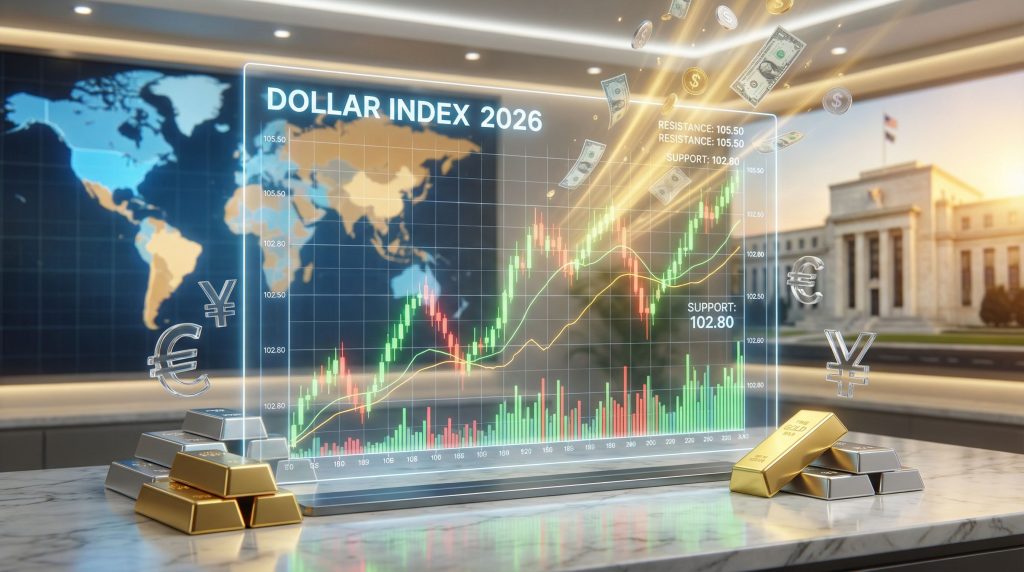
The Global Currency Landscape Faces Historic Volatility
International monetary dynamics in 2026 present unprecedented complexity as multiple economic forces converge to reshape currency relationships worldwide. Central bank policies, geopolitical tensions, and structural economic shifts create an environment where traditional currency patterns face significant disruption. Understanding these macro-level trends becomes essential for investors navigating an increasingly interconnected global financial system.
The U.S. dollar uptrend that began following the 2008 financial crisis continues to influence international capital flows, despite periodic corrections and regional challenges. This long-term structural shift affects everything from commodity pricing to international trade relationships, making currency analysis a critical component of comprehensive investment strategy.
When big ASX news breaks, our subscribers know first
What's Driving the Current Dollar Strength Debate?
Federal Reserve Policy Uncertainty Creates Market Volatility
Monetary policy divergence between the Federal Reserve and other major central banks creates significant currency volatility as markets attempt to price future interest rate paths. The Fed's approach to balancing inflation concerns with economic growth requirements directly influences dollar valuation through real interest rate differentials.
Market participants closely monitor Federal Open Market Committee communications for signals regarding the timing and magnitude of potential policy adjustments. Interest rate expectations drive currency positioning as investors seek higher-yielding assets during periods of monetary policy tightening.
The relationship between Fed policy and dollar strength operates through multiple transmission mechanisms:
- Real interest rate differentials between the U.S. and international markets
- Capital flow patterns responding to yield differentials
- Inflation expectations reflected in Treasury Inflation-Protected Securities pricing
- Forward guidance effectiveness in managing market expectations
Geopolitical Tensions Fuel Safe-Haven Demand
International uncertainty drives capital toward traditional safe-haven assets, with the dollar benefiting from its reserve currency status during periods of global instability. The currency's liquidity and the depth of U.S. Treasury markets make dollar-denominated assets attractive during risk-off periods.
The dollar's role as the primary global reserve currency creates structural demand that transcends short-term economic fundamentals, particularly during periods of international uncertainty.
Geopolitical risk premiums embedded in currency valuations reflect market assessment of international stability. Safe-haven flows often overwhelm fundamental economic factors during acute crisis periods, creating temporary currency dislocations that subsequently reverse as conditions normalise.
The sustainability of geopolitically-driven currency strength depends on the duration and severity of international tensions, with prolonged uncertainty potentially creating structural shifts in global currency preferences. Furthermore, US‑China trade war impact continues to influence investor sentiment regarding currency stability.
Is the Dollar Index Breaking Long-Term Technical Patterns?
Multi-Year Chart Analysis Reveals Structural Trends
Technical analysis of the Dollar Index reveals a structural uptrend extending back to 2008, representing nearly two decades of dollar strength relative to major trading partners. This long-term pattern includes multiple rally phases, with significant advances occurring during 2014-2015 and 2021.
The early 2015 breakout marked a critical technical development, establishing higher resistance levels that were subsequently validated through continued price action. Current positioning near the 38.2% Fibonacci retracement level suggests potential support at mathematically significant technical levels.
Key technical levels for 2026 analysis include:
| Technical Indicator | Significance | Implication |
|---|---|---|
| Long-term rising support | Trend validation | Uptrend integrity maintained |
| 38.2% Fibonacci retracement | Mathematical support | Potential reversal zone |
| 2015 breakout verification | Pattern completion | Structural shift confirmed |
| April 2025 bottom hold | Support establishment | Foundation for advance |
Currency Momentum Indicators Signal Direction Changes
Momentum analysis reveals that previous Dollar Index rallies corresponded with significant declines in commodity markets, particularly precious metals. The negative correlation between dollar strength and gold prices demonstrates the currency's influence on alternative asset valuations.
Recent return to the rising support trendline, combined with Fibonacci retracement level confluence, creates technical conditions similar to previous major rally initiation points. Volume patterns during these technical developments provide additional confirmation of potential directional changes.
Historical analysis shows that when the Dollar Index launched significant upward movements, precious metals not only ceased advancing but experienced substantial declines. This relationship suggests that currency technical patterns can provide leading indicators for commodity sector performance.
Which Economic Factors Will Shape Dollar Performance?
Inflation Expectations Drive Interest Rate Differentials
Core Personal Consumption Expenditures (PCE) trends directly influence Federal Reserve policy decisions, creating feedback loops between inflation data and currency valuation. Real interest rates calculated by subtracting inflation expectations from nominal yields provide crucial metrics for international capital allocation decisions.
Market-based inflation compensation measures, including Treasury Inflation-Protected Securities spreads, offer real-time gauges of investor sentiment regarding future price stability. These metrics influence currency valuations through their impact on monetary policy expectations.
The relationship between inflation expectations and currency strength operates through several channels:
- Monetary policy reaction functions responding to inflation trends
- Real yield calculations driving international capital flows
- Purchasing power considerations affecting long-term currency demand
- Central bank credibility influencing inflation expectation formation
Moreover, gold prices record highs often coincide with periods of currency uncertainty, as investors seek alternative hedges against inflation pressures.
Labour Market Dynamics Influence Monetary Policy Timing
Employment data releases significantly impact currency markets through their influence on Federal Reserve policy timing. Wage growth sustainability and productivity gains determine the Fed's assessment of labour market tightness and inflation pressures.
Labour force participation rates provide additional context for employment data interpretation, with demographic trends and structural economic changes affecting the relationship between employment levels and inflationary pressures.
Key employment metrics monitored by currency traders include:
- Monthly payroll additions versus consensus expectations
- Unemployment rate changes and duration statistics
- Average hourly earnings growth as wage inflation indicator
- Labour force participation trends reflecting structural changes
How Do Global Central Bank Policies Affect Dollar Strength?
European Central Bank Divergence Creates Opportunities
Policy divergence between the Federal Reserve and European Central Bank creates EUR/USD exchange rate volatility as markets adjust to differential monetary policy stances. European economic resilience compared to U.S. growth patterns influences relative currency attractiveness.
Energy price impacts on European currencies reflect the continent's energy import dependency and its effects on inflation dynamics. Policy coordination challenges between the ECB and national fiscal authorities create additional complexity for currency market participants.
The potential for EUR/USD parity considerations stems from fundamental economic differences between regions, including:
- Growth rate disparities between European and U.S. economies
- Energy security concerns affecting European economic stability
- Fiscal policy coordination challenges within the eurozone
- Monetary policy transmission differences across member states
Emerging Market Currency Pressures Support Dollar Demand
Capital flow patterns from developing economies toward dollar-denominated assets create structural demand for U.S. currency during periods of international uncertainty. Debt servicing costs for dollar-denominated obligations increase during dollar strength periods, potentially constraining emerging market economic growth.
Central bank foreign exchange interventions in emerging markets often involve dollar purchases to maintain currency stability, contributing to underlying dollar demand. Trade balance adjustments and current account dynamics further influence emerging market currency pressures.
In addition, emerging market investors can monitor US Dollar performance in real-time to assess potential currency pressures on their domestic markets.
What Are the Investment Implications of Dollar Trends?
Precious Metals Performance During Currency Cycles
Historical analysis reveals that Dollar Index rallies typically coincide with precious metals sector declines, as investors rotate between alternative stores of value. The 2014-2015 and 2021 dollar advances corresponded with significant gold and silver price decreases, demonstrating this inverse relationship.
Mining sector equity valuations reflect both underlying commodity prices and currency exposure through international operations. Currency hedging strategies employed by mining companies influence their exposure to dollar strength periods.
Central bank gold purchasing patterns provide insight into official sector attitudes toward currency diversification and monetary reserve composition. These institutional flows can offset private sector selling during dollar strength periods.
Current market conditions show:
- Silver intraday volatility equivalent to levels seen 15 years earlier
- CME margin requirement increases potentially constraining silver futures positioning
- Geopolitically-driven safe-haven buying beginning to fade from precious metals markets
- Market focus returning to currency strength as primary commodity driver
International Portfolio Allocation Strategies
Currency hedging costs and effectiveness calculations become critical considerations for international portfolio management during periods of dollar volatility. Hedging instrument pricing reflects market expectations for future currency movements and volatility levels.
Emerging market exposure during dollar rallies requires careful consideration of currency translation effects on returns. Commodity sector positioning must account for dollar strength impacts on resource company valuations and international demand patterns.
Optimal portfolio allocation strategies during currency uncertainty include:
- Geographic diversification across currency zones
- Sector rotation based on currency sensitivity analysis
- Hedging cost-benefit analysis for international exposures
- Timing considerations for currency-sensitive investments
Furthermore, understanding how tariffs impact markets becomes essential for investors considering international exposure during periods of trade policy uncertainty.
The next major ASX story will hit our subscribers first
Which Scenarios Could Reverse Dollar Momentum?
Fiscal Policy Changes May Alter Currency Dynamics
Government spending patterns and fiscal policy modifications directly influence currency valuation through their effects on inflation expectations and interest rate requirements. Tax policy changes affect capital flow patterns and international competitiveness measures.
Debt ceiling negotiations and Treasury market stability concerns can create temporary currency volatility as markets assess fiscal sustainability. The relationship between fiscal policy and monetary policy coordination influences currency market confidence.
Critical fiscal policy considerations for currency markets include:
- Budget deficit trajectories and their financing requirements
- Tax policy modifications affecting international capital flows
- Government spending composition between consumption and investment
- Debt sustainability metrics influencing long-term currency confidence
Trade Policy Developments Create Currency Volatility
Tariff implementation effects on international trade flows create currency market volatility as trade balances adjust to policy changes. Supply chain reshoring impacts affect trade relationships and current account dynamics.
International trade agreement modifications influence currency valuations through their effects on bilateral trade flows and investment patterns. Trade policy uncertainty creates additional volatility as markets attempt to price future trade relationship changes.
With current administration policies under Donald Trump's presidency, trade policy focus areas include:
- Bilateral trade balance corrections through tariff mechanisms
- Domestic manufacturing incentives affecting import demand
- Trade agreement renegotiations altering established relationships
- Strategic sector protection influencing specific industry trade flows
Additionally, US economy tariffs create secondary effects on currency valuations through their impact on inflation expectations and trade balances.
How Should Investors Position for Dollar Uncertainty?
Risk Management Strategies for Currency Exposure
Diversification techniques across currency zones require understanding correlation patterns between different monetary policy regimes. Portfolio rebalancing frequency must account for currency volatility and transaction costs associated with international exposure adjustments.
Currency hedging instrument selection depends on investment time horizon and volatility tolerance. Options-based strategies provide flexibility but require premium payments, while forward contracts offer certainty at the cost of upside participation.
Effective risk management approaches include:
- Dynamic hedging ratios adjusted based on volatility conditions
- Multi-currency exposure to reduce single-currency concentration
- Correlation analysis between currencies and underlying investments
- Cost-effectiveness monitoring of hedging strategies over time
Sector Rotation Opportunities During Currency Shifts
Export-sensitive industries typically underperform during periods of domestic currency strength, while import-dependent sectors may benefit from reduced input costs. Financial services positioning becomes important during interest rate environment changes that accompany currency movements.
Technology sector exposure to international markets creates currency sensitivity that varies by company-specific revenue geographic distribution. Commodity-related investments face direct pressure during dollar strength periods due to pricing denomination effects.
Sector rotation considerations include:
| Sector | Dollar Strength Impact | Investment Implication |
|---|---|---|
| Export-heavy manufacturing | Negative revenue translation | Underweight positioning |
| Import-dependent retail | Lower input costs | Potential overweight |
| Financial services | Interest rate sensitivity | Policy-dependent positioning |
| Commodities/Mining | Direct pricing pressure | Significant underweight |
Consequently, investors can access comprehensive currency market analysis to evaluate specific currency pair dynamics during periods of dollar strength.
What Does History Tell Us About Dollar Cycle Duration?
Previous Currency Cycles Provide Timing Insights
The current U.S. dollar uptrend beginning in 2008 represents an unusually extended currency cycle, spanning approximately 18 years by 2026. This duration exceeds typical currency cycle lengths observed in previous decades, suggesting either exceptional underlying support or potential for eventual reversal.
Historical analysis of currency cycles since 1980 shows average trend duration of 6-8 years, making the current dollar strength period statistically unusual. Economic conditions that typically accompany cycle endings include fiscal imbalances, current account deterioration, or significant policy regime changes.
Previous dollar cycle characteristics reveal:
- 1980s dollar strength ended with Plaza Accord intervention
- Late 1990s technology boom supported dollar until 2002
- 2002-2008 weakness period coincided with housing bubble and fiscal expansion
- Current cycle initiation followed 2008 financial crisis policy responses
Comparative Analysis with Other Reserve Currencies
British pound historical patterns during its reserve currency status provide insights into long-term currency dominance cycles. The transition from pound to dollar dominance occurred gradually over several decades rather than through sudden shifts.
Japanese yen internationalisation attempts in the 1980s-1990s faced structural limitations that prevented reserve currency status achievement. Euro introduction effects on global currency dynamics created additional complexity but did not fundamentally alter dollar dominance.
Chinese yuan internationalisation progress faces similar structural challenges, including:
- Capital account restrictions limiting international usage
- Financial market development requirements for reserve currency status
- Institutional framework needs for international confidence
- Economic size versus financial system sophistication gaps
However, tariff economic implications may accelerate discussions about alternative currency arrangements for international trade settlement.
Key Takeaways: Navigating Dollar Volatility in 2026
Short-Term Outlook Through Mid-Year
Current technical positioning suggests potential for continued dollar strength, with the currency index rallying since late December 2025 and maintaining positive performance in early 2026. The April 2025 bottom held, providing technical support reference points for near-term analysis.
Critical economic data releases to monitor include Federal Reserve policy announcements, inflation data through Core PCE reports, and employment statistics that influence monetary policy expectations. Policy announcement timing creates scheduled volatility events requiring position management consideration.
Expected developments through mid-2026:
- Federal Reserve policy decisions affecting interest rate expectations
- Inflation data releases influencing monetary policy timing
- International economic data affecting policy divergence prospects
- Geopolitical developments creating safe-haven flow patterns
Long-Term Strategic Considerations
Structural factors supporting dollar dominance include deep financial markets, institutional frameworks supporting international transactions, and network effects from widespread usage. However, potential challenges to reserve currency status could emerge from fiscal sustainability concerns or successful internationalisation of alternative currencies.
Investment positioning for multiple scenarios requires flexibility and regular reassessment as conditions evolve. The 18-year duration of the current U.S. dollar uptrend suggests either exceptional fundamental support or increasing probability of eventual trend reversal.
Long-term strategic factors include:
- Fiscal sustainability trajectories affecting currency confidence
- Monetary policy framework evolution influencing international perception
- Alternative currency development creating potential competition
- Global economic rebalancing affecting trade and capital flow patterns
Disclaimer: This analysis is for informational purposes only and should not be considered as financial advice. Currency markets involve significant risks, and past performance does not guarantee future results. Investors should conduct their own research and consult with qualified financial professionals before making investment decisions.
Ready to Navigate Currency-Driven Market Opportunities?
The complex global currency landscape creates significant opportunities for astute investors who can identify how dollar movements impact ASX-listed companies with international exposure. Discovery Alert's proprietary Discovery IQ model provides real-time alerts on mineral discoveries that could benefit from currency tailwinds, helping subscribers capitalise on market-moving announcements before broader recognition occurs. Begin your 30-day free trial today to gain the analytical edge needed for navigating currency-sensitive investment opportunities.