July 12, 2026
Global Energy Chokepoint Vulnerabilities and Maritime Security Challenges
Energy transportation networks across international waters face increasing complexity as geopolitical tensions reshape global shipping patterns. These strategic waterways, where geographic constraints meet political volatility, create systemic vulnerabilities that extend far beyond regional boundaries into worldwide economic stability. Furthermore, ensuring safe passage in the Strait of Hormuz has become a critical priority for maintaining global energy security.
Understanding how maritime chokepoints function within global energy security frameworks requires examining the intersection of physical geography, international law, naval capabilities, and market dynamics. When these elements converge in strategically vital locations, the resulting vulnerabilities can trigger cascading effects throughout interconnected supply chains.
The analysis of such chokepoints reveals patterns of dependency, risk concentration, and adaptive responses that illuminate broader trends in global energy governance and security coordination.
When big ASX news breaks, our subscribers know first
Geographic Bottlenecks and Strategic Dependencies in Global Energy Transit
The world's most critical energy transit corridors share common characteristics that amplify their strategic importance while creating inherent vulnerabilities. These narrow waterways handle disproportionate volumes of global energy flows, creating concentration risks that affect multiple continents simultaneously. Consequently, the energy security challenges faced by nations become increasingly complex when traditional shipping routes face disruption.
Physical constraints in these corridors limit alternative routing options while increasing operational complexity for commercial vessels. Water depths, channel widths, and navigational hazards combine to create environments where minor disruptions can escalate into major supply chain interruptions.
Physical Infrastructure Limitations and Navigation Challenges
Modern energy tankers require specific depth and width parameters that limit routing flexibility through strategic waterways. These technical constraints mean that alternative passages often cannot accommodate the largest vessels that provide economies of scale in global energy transport.
Navigation through constrained waterways demands specialised piloting expertise and enhanced safety protocols. Commercial operators must balance speed and efficiency against heightened collision risks and potential environmental consequences in these high-traffic corridors.
Key Operational Challenges:
• Vessel size limitations restricting routing options
• Weather-dependent transit windows affecting schedule reliability
• Increased insurance requirements for high-risk passages
• Enhanced crew training requirements for specialised navigation
• Extended transit times through alternative routes
Regional Energy Flow Dependencies and Alternative Capacity Constraints
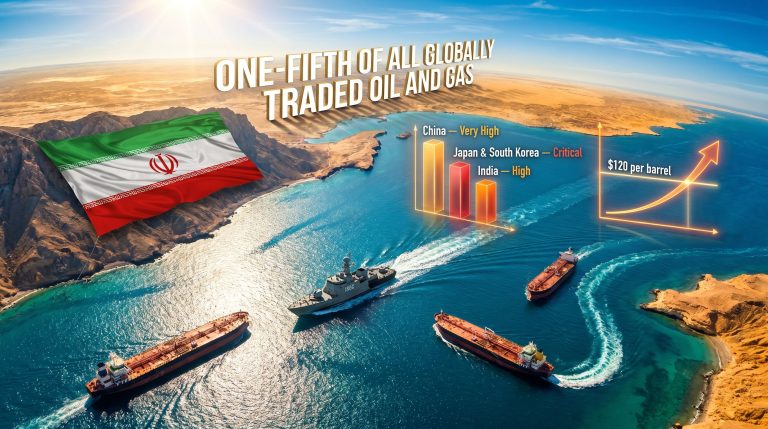
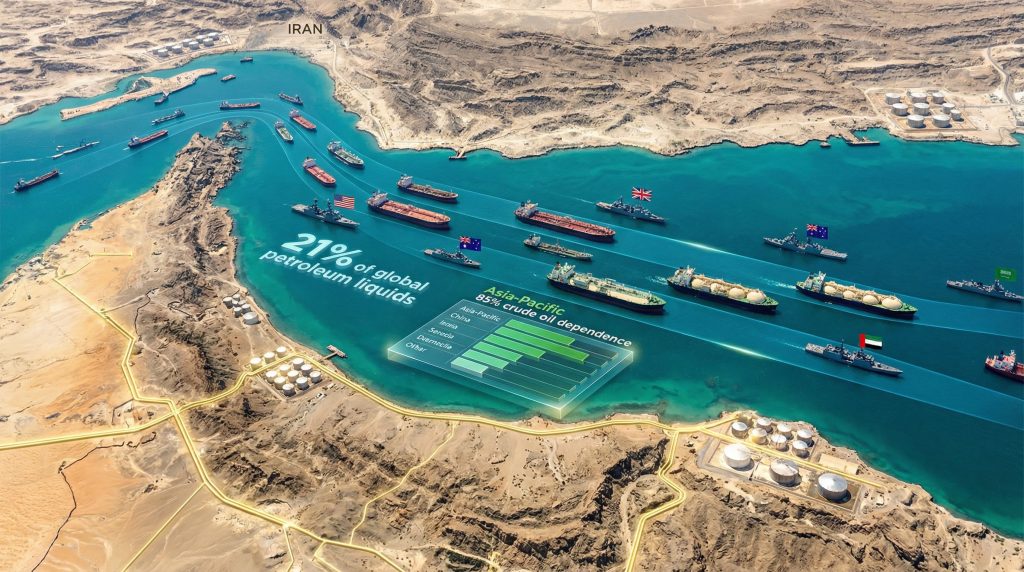
Asia-Pacific economies demonstrate the highest dependency on specific chokepoint transits, with limited pipeline alternatives creating vulnerability to supply disruptions. European markets benefit from greater infrastructure diversity, though still face significant exposure during crisis periods. Moreover, Australia faces particular energy exports challenges as global shipping patterns shift.
North American markets show lower dependency due to domestic production capacity and diversified import sources, yet remain connected to global price volatility through integrated commodity markets.
| Region | Chokepoint Dependency | Alternative Infrastructure | Crisis Vulnerability |
|---|---|---|---|
| Asia-Pacific | 75-85% for key routes | Limited pipeline capacity | High |
| Europe | 30-45% for specific sources | Multiple route options | Medium |
| North America | 15-25% for imports | Domestic alternatives | Low-Medium |
Current Security Environment and Commercial Risk Assessment
Recent developments in maritime security have fundamentally altered risk calculations for commercial shipping operations. The dramatic reduction in vessel transits through critical waterways demonstrates how quickly operational environments can deteriorate. In addition, the potential for trade war market impact adds another layer of complexity to maritime security planning.
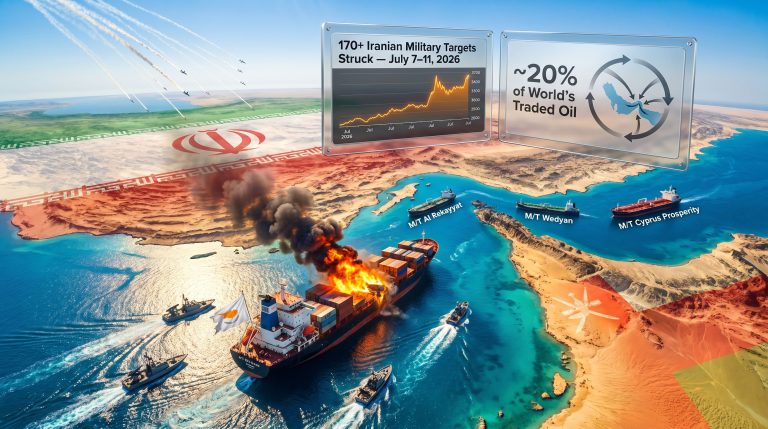
Analytics firm Kpler reported that commodities carriers made just 116 crossings through the Strait of Hormuz from March 1-19, 2026, representing a 95 percent decrease from peacetime averages. This unprecedented reduction illustrates the immediate impact of escalating security concerns on global energy flows.
Evolving Threat Landscape and Commercial Response Patterns
Commercial operators now navigate complex threat environments involving both traditional military risks and emerging technological challenges. Electronic warfare capabilities, including navigation system interference, create new categories of operational hazards that require specialised countermeasures. Meanwhile, the broader oil price rally analysis reveals how security concerns translate into market volatility.
Modern Threat Categories:
• Unmanned surface vessel attacks on commercial targets
• Sea mine deployment in shipping lanes
• Anti-ship missile systems threatening large vessels
• Cyber attacks on navigation and communication systems
• Electronic warfare disrupting GPS and AIS systems
Insurance markets have responded with dynamic pricing models that adjust coverage costs based on real-time threat assessments. War risk insurance now requires pre-approval for transits through designated high-risk zones, with potential coverage voidance for vessels entering unauthorised areas.
Commercial Decision-Making Under Uncertainty
Shipping companies employ sophisticated risk management frameworks that weigh security threats against commercial pressures and contractual obligations. Route selection involves analysing alternative pathways, convoy participation options, and enhanced security protocol implementation.
The decision to transit high-risk areas now requires board-level approval at major shipping companies, with comprehensive insurance verification and crew consent procedures. These enhanced protocols can add 15-30 days to delivery schedules while significantly increasing operational costs.
International Legal Framework and Transit Rights Protection
The United Nations Convention on the Law of the Sea (UNCLOS) provides the primary legal framework governing passage rights through international straits. This treaty establishes specific provisions for transit passage that cannot be unilaterally suspended, even during periods of armed conflict.
Transit passage rights differ fundamentally from innocent passage provisions, offering stronger protections for commercial shipping. Under transit passage rules, coastal states cannot impose restrictions on navigation or require advance notification for vessel transits. However, ensuring safe passage in the Strait of Hormuz requires more than legal frameworks when geopolitical tensions escalate.
Legal Distinctions and Practical Enforcement Challenges
Transit passage applies to straits connecting two areas of high seas or exclusive economic zones, providing continuous navigation rights without coastal state interference. This legal framework creates binding obligations for strait-adjacent countries to maintain navigational safety and freedom of passage.
Transit Passage Protections:
• Continuous navigation without interference
• No advance notification requirements
• Protection from arbitrary closure
• Binding coastal state safety obligations
• International dispute resolution mechanisms
However, practical enforcement often depends on naval power projection rather than legal precedent. International Court of Justice proceedings and UNCLOS arbitration provide formal dispute resolution mechanisms, though their effectiveness requires voluntary compliance by all parties.
Enforcement Mechanisms and State Practice
International maritime law provides several enforcement pathways, including ICJ litigation, specialised maritime tribunals, and UN Security Council intervention. Historical precedent demonstrates mixed effectiveness for these mechanisms when confronting determined state actors.
State practice and customary international law supplement treaty obligations, though interpretation varies among coastal states and transit nations. The tension between legal rights and geopolitical realities creates ongoing challenges for maintaining consistent application of international maritime law.
International Coalition Coordination and Naval Security Operations
A coalition of 22 nations has committed to ensuring safe passage in the Strait of Hormuz, representing the largest maritime security coordination effort in recent history. This multinational approach reflects both the global stakes involved and the complexity of maintaining security in international waters. Additionally, the broader context of OPEC market influence demonstrates why such coordination efforts are essential.
The coalition condemned Iran's attacks on unarmed commercial vessels, civilian infrastructure including oil and gas installations, and the effective closure of the strategic waterway. European countries, along with the UAE and Bahrain, formed the core of this diplomatic initiative.
Operational Coordination and Command Structure
Joint naval operations require sophisticated coordination mechanisms that address different national capabilities, rules of engagement, and operational procedures. Maritime Domain Awareness systems provide real-time intelligence sharing capabilities among coalition partners.
Coalition Operational Elements:
• Rotating command authority among major naval powers
• Standardised communication protocols for multinational forces
• Joint patrol schedules covering critical transit zones
• Shared intelligence analysis and threat assessment
• Coordinated response procedures for commercial vessel protection
The layered defence approach combines air surveillance, surface vessel escorts, and underwater monitoring capabilities. Integration challenges arise from different national systems, classification levels, and varying technological capabilities among coalition members.
Technology Integration and Surveillance Capabilities
Advanced radar systems, satellite monitoring, and autonomous underwater vehicles provide comprehensive domain awareness for coalition forces. Artificial intelligence algorithms analyse vessel behaviour patterns to identify potential threats before they materialise into actual attacks.
However, technology integration faces significant challenges when combining systems from multiple nations with different technical standards and security protocols. Interoperability requirements often limit the effectiveness of advanced capabilities when operating in multinational environments.
Energy Market Response Mechanisms and Price Volatility
Global energy markets have implemented sophisticated hedging strategies to manage supply disruption risks from critical chokepoint closures. Forward curve pricing now incorporates permanent risk premiums that reflect the ongoing probability of transit interruptions.
Approximately 20 percent of the world's oil and gas normally flows through the Strait of Hormuz, creating concentrated exposure that amplifies market reactions to security developments. Natural gas markets demonstrate even greater volatility due to limited alternative transportation options compared to crude oil.
Strategic Reserve Utilisation and Market Stabilisation
National strategic petroleum reserves provide critical buffer capacity during supply emergencies, though coordination among major consuming nations requires careful diplomatic management. The International Energy Agency coordinates emergency response protocols among member countries.
Strategic Reserve Capabilities:
• United States: 90-day emergency supply capacity with presidential release authority
• European Union: 90-day minimum reserves with commission coordination
• Japan: Extended 200-day capacity reflecting geographic vulnerability
• China: Estimated 80-day capacity with limited transparency on release procedures
Release coordination among these major consumers can stabilise markets during crisis periods, though political considerations often complicate technical responses to supply disruptions.
Price Transmission and Market Psychology
Energy price volatility extends beyond physical supply disruptions to incorporate market psychology and speculative positioning. Fear premiums in commodity futures can exceed actual supply shortage impacts, creating additional economic costs from chokepoint vulnerabilities.
Brent crude oil pricing demonstrates 15-25 percent volatility during historical crisis periods, while refined product markets show amplified responses due to regional refining capacity constraints. These price impacts cascade through transportation, manufacturing, and consumer sectors.
The next major ASX story will hit our subscribers first
Alternative Transportation Infrastructure and Capacity Limitations
Regional energy exporters have invested extensively in pipeline networks and alternative shipping routes to reduce chokepoint dependencies, though none provide complete substitution for strategic waterway capacity. The East-West Pipeline system handles approximately 5 million barrels per day, representing roughly 25 percent of typical Hormuz flows.
Pipeline infrastructure faces distinct security vulnerabilities and operational constraints that limit effectiveness as complete chokepoint alternatives. Maintenance requirements, pumping station security, and geographic limitations create different risk profiles compared to maritime transport.
Pipeline Network Capabilities and Constraints
The Sumed Pipeline connecting the Red Sea and Mediterranean provides alternative routing for some Gulf exports, though capacity limitations prevent full substitution during crisis periods. Pipeline networks require sustained security along entire route lengths, creating extended vulnerability profiles.
Alternative Infrastructure Assessment:
• East-West Pipeline: 5 million bpd capacity with Saudi operation
• Sumed Pipeline: Strategic Red Sea-Mediterranean connection
• Overland routes: Limited capacity with extended transit times
• Red Sea shipping: Alternative routing through Suez Canal
• Rail transport: Minimal capacity for large-scale energy flows
Recent disruptions in the Red Sea corridor have highlighted interconnected chokepoint risks, where problems in one strategic waterway cascade into other transportation routes. Combined capacity limitations mean no single alternative can replace major chokepoint closures entirely.
Infrastructure Development and Investment Priorities
Long-term strategic planning focuses on pipeline capacity expansion, floating storage development, and alternative export terminal construction. These projects require multi-year development timelines and face their own security and financing challenges.
Regional cooperation on infrastructure development remains limited due to political tensions and competitive dynamics among energy exporters. Technical integration between different national systems creates additional complexity for alternative route development.
Naval Security Operations and Rules of Engagement
Modern naval security operations in contested waters employ multi-domain approaches combining surface vessels, aerial surveillance, underwater monitoring, and electronic warfare capabilities. Command and control systems must integrate information from diverse platforms while maintaining operational security.
Coalition naval forces operate under carefully calibrated rules of engagement designed to protect commercial shipping while avoiding escalation. Warning procedures progress through radio communications, signal flares, and warning shots before authorising defensive action. Consequently, establishing safe corridor protocols becomes essential for maintaining predictable navigation.
Technology Integration and Operational Coordination
Advanced surveillance systems provide real-time threat detection and tracking capabilities, though data fusion from multiple national sources creates technical and security challenges. Artificial intelligence systems analyse vessel behaviour patterns to distinguish commercial traffic from potential threats.
Naval Technology Integration:
• Multi-static radar networks covering extended maritime areas
• Satellite surveillance with automated threat detection
• Autonomous underwater vehicles for subsurface monitoring
• Electronic warfare systems countering navigation interference
• Secure communication networks linking multinational forces
Escalation Management and Conflict Prevention
Rules of engagement balance commercial vessel protection with conflict prevention, requiring precise threat assessment and proportional response measures. Training scenarios prepare naval personnel for complex decision-making under pressure while operating in multinational command structures.
Coordination challenges arise from different national legal frameworks, operational procedures, and political sensitivities among coalition partners. Standard operating procedures must accommodate varying national authorities while maintaining unified operational effectiveness.
Economic Impact Assessment and Sectoral Vulnerabilities
Complete closure of major energy chokepoints would trigger immediate global economic disruption, with energy-intensive industries facing production shutdowns within weeks. Manufacturing sectors show varying vulnerability levels based on energy input dependencies and supply chain flexibility.
Transportation and logistics sectors experience cascading effects as fuel costs and availability fluctuate dramatically. Chemical, aluminium, and steel industries demonstrate high vulnerability due to energy-intensive production processes and limited alternative suppliers. Furthermore, maintaining safe passage in the Strait of Hormuz becomes critical for preventing such economic disruptions.
Regional Economic Exposure Analysis
Economic modelling suggests differential regional impacts based on energy import dependencies, alternative supply availability, and domestic production capacity. Asia-Pacific economies face the highest vulnerability due to concentrated import dependencies and limited alternative sources.
Regional Impact Projections:
• Asia-Pacific: GDP contraction of 2.5-4.0% with severe industrial disruption
• Europe: Economic impact of 1.0-2.0% GDP decline with moderate adjustment capacity
• North America: Limited exposure of 0.5-1.5% GDP impact due to domestic alternatives
Disclaimer: These economic impact projections represent theoretical modelling scenarios based on historical precedent and should not be interpreted as definitive forecasts. Actual impacts would depend on crisis duration, policy responses, and market adaptation mechanisms.
Industrial Sector Vulnerability Assessment
Manufacturing industries demonstrate varied exposure based on energy intensity, supply chain complexity, and geographic location. Petrochemical sectors face immediate input shortages, while transportation-dependent industries experience secondary effects through logistics disruption.
Supply chain resilience varies significantly among sectors, with some industries maintaining strategic inventory buffers while others operate on just-in-time delivery models that amplify disruption impacts.
Commercial Vessel Security Protocols and Risk Management
Commercial shipping companies have implemented comprehensive security protocols addressing crew training, vessel modifications, and operational procedures for high-risk transit zones. These measures balance security requirements with operational efficiency and regulatory compliance. Moreover, achieving safe passage in the Strait of Hormuz requires coordinated implementation of these enhanced security measures.
Vessel hardening includes physical modifications such as reinforced bridge structures, enhanced communication systems, and defensive equipment installations. However, modifications must comply with international maritime regulations while maintaining operational capabilities.
Crew Training and Emergency Response Procedures
Modern security training programmes prepare commercial crews for threat recognition, emergency communications, and coordination with naval forces. Standardised procedures ensure consistent responses across different vessel types and operational environments.
Essential Security Training Components:
- Threat pattern recognition and early warning systems
- Emergency communication protocols with coalition naval forces
- Evasive manoeuvring techniques for small boat encounters
- Bridge and engine room security lockdown procedures
- Coordination protocols with embarked security teams when authorised
Insurance Requirements and Commercial Risk Assessment
War risk insurance coverage requires comprehensive security protocol implementation and often mandates specific routing, timing, and coordination requirements. Insurance companies employ dynamic pricing models that adjust premiums based on real-time threat intelligence.
Commercial operators must balance insurance requirements against operational flexibility and cost considerations. Some shipping companies have withdrawn from high-risk routes entirely, while others accept elevated costs as necessary for maintaining service commitments.
Long-term Strategic Solutions and Infrastructure Development
Sustainable solutions to chokepoint vulnerabilities require coordinated international investment in alternative infrastructure, diversified supply chains, and enhanced security cooperation mechanisms. These strategic approaches demand multi-decade planning horizons and sustained political commitment.
Pipeline network expansion offers the most promising alternative to maritime chokepoint dependencies, though projects require extensive international cooperation and security guarantees along extended route corridors.
Infrastructure Investment and Regional Cooperation
Major infrastructure projects face financing, security, and technical challenges that limit implementation speed and effectiveness. Regional cooperation on pipeline development remains constrained by political tensions and competitive dynamics among energy exporters.
Strategic Infrastructure Priorities:
• Expanded pipeline capacity with enhanced security protection
• Floating storage and offloading facilities in alternative locations
• Enhanced port infrastructure for diversified shipping routes
• Advanced monitoring systems for early threat detection
• Redundant transportation networks reducing single-point failures
Diplomatic and Multilateral Security Architecture
Long-term security solutions require diplomatic frameworks that transcend current geopolitical divisions while establishing permanent international maritime security mechanisms. Automated threat detection systems and multilateral response protocols could reduce dependence on ad hoc coalition arrangements.
Future Security Framework Vision: Proposed solutions include internationally operated monitoring systems, standardised threat response protocols, and regional security cooperation agreements that operate independently of broader political tensions. Implementation requires unprecedented levels of sustained international coordination.
These strategic approaches must balance operational effectiveness with political feasibility, recognising that perfect solutions may not exist for fundamental geographic and political constraints affecting global energy chokepoint security.
Investment Considerations: Investors and stakeholders interested in maritime security and energy infrastructure should consider the long-term trends toward supply chain diversification and enhanced security protocols when evaluating opportunities in related sectors. Professional financial advice should be sought before making investment decisions based on geopolitical risk assessments.
Concerned About Energy Security Investment Opportunities?
Discovery Alert's proprietary Discovery IQ model delivers real-time alerts on significant mineral discoveries across critical commodities essential for energy infrastructure and security, instantly empowering subscribers to identify actionable opportunities ahead of the broader market. Begin your 14-day free trial today and position yourself to capitalise on the growing demand for strategic minerals that underpin global energy security.