July 25, 2026
Global Energy Chokepoints and Maritime Security Dynamics
The intricate web of global energy security rests upon a handful of critical maritime passages where geography intersects with geopolitical power dynamics. These narrow waterways function as strategic pressure points, capable of triggering cascading economic disruptions that ripple through international markets within hours. Understanding how energy flows through these chokepoints reveals the underlying vulnerabilities that shape modern economic relationships and military positioning across continents.
Energy transportation networks demonstrate remarkable fragility when concentrated through singular geographic bottlenecks. The global economy's dependence on uninterrupted petroleum flows creates scenarios where regional conflicts can instantly transform into worldwide economic crises, affecting everything from industrial production to consumer fuel prices across distant nations.
When big ASX news breaks, our subscribers know first
The Strategic Importance of the Strait of Hormuz Oil Route
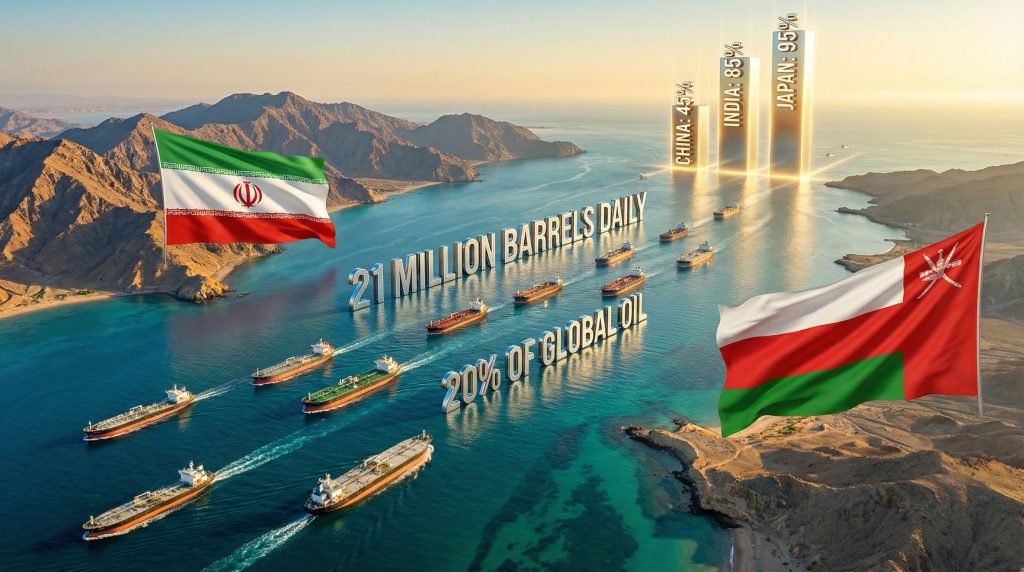
The Strait of Hormuz oil route represents the world's most critical energy transportation corridor, functioning as the primary gateway between Persian Gulf producers and global consumption centers. This narrow waterway, spanning approximately 21 miles at its narrowest point, channels roughly 21 million barrels of petroleum daily, representing approximately 20-21% of global oil transit volumes.
Geographic positioning creates unparalleled strategic leverage for nations controlling access to this corridor. The shallow waters and confined shipping lanes concentrate massive energy flows through a space vulnerable to disruption through various means, from conventional naval blockades to asymmetric warfare tactics involving mines or small vessel harassment.
Key Transit Statistics:
- Daily crude oil flow: 21 million barrels
- Percentage of global petroleum transit: 20-21%
- Primary destination markets: 82% to Asian economies
- LNG volume share: 20% of worldwide liquefied natural gas shipments
The economic significance extends beyond simple volume measurements. Asian economies, particularly China, India, Japan, and South Korea, demonstrate extreme dependence on Strait of Hormuz oil route shipments for industrial operations and energy security. This concentration creates asymmetric vulnerabilities where disruptions disproportionately affect specific regions while leaving others relatively insulated.
Maritime Infrastructure and Shipping Constraints
The Strait's physical characteristics impose natural limitations on alternative routing options. Tanker vessels require specific water depths and navigation channels that cannot be replicated through other regional waterways. These constraints mean that even partial disruptions can create bottlenecks affecting global energy markets for extended periods.
Modern shipping patterns have evolved around the assumption of uninterrupted Strait access, with refineries, storage facilities, and distribution networks optimised for regular petroleum deliveries through this single corridor. This optimisation creates systemic risk where alternative arrangements require substantial time and cost investments to implement effectively.
Market Volatility and Price Discovery Mechanisms
Energy markets demonstrate extraordinary sensitivity to perceived threats affecting the Strait of Hormuz oil route, with price movements often exceeding $10-15 per barrel within hours of tension escalation. This responsiveness reflects traders' understanding that supply disruptions would immediately affect 21 million barrels daily, creating scarcity conditions in petroleum markets.
Recent market behaviour illustrates these dynamics clearly. For instance, following geopolitical developments in early 2026, an oil price rally demonstrated dramatic swings, with Brent crude initially declining to approximately $100 per barrel before surging over 4% to $106 following policy announcements. Furthermore, the complex dynamics behind such oil price movements reveal how West Texas Intermediate exhibited similar volatility, rising 3% to $103 as markets repriced supply disruption risks.
Typical Market Response Patterns:
- Initial tension announcements: 3-5% price increases
- Sustained threat periods: 15-25% extended rallies
- Volatility duration: Weeks beyond conflict resolution
- Regional price differentials: Asian markets show premium pricing
The speed of these price movements reflects sophisticated risk assessment mechanisms within energy trading systems. Futures markets, strategic petroleum reserve policies, and inventory management decisions by major consumers all contribute to amplifying initial price signals when Strait accessibility appears threatened.
Financial Instrument Responses
Different petroleum product contracts respond distinctively to Strait of Hormuz disruption scenarios. Crude oil futures typically show the most immediate volatility, while refined product spreads and heating oil contracts may exhibit delayed but more sustained price movements as supply chain disruptions propagate through processing and distribution networks.
Moreover, analysis of potential oil price crash analysis scenarios shows that the correlation between Brent crude and West Texas Intermediate pricing also shifts during Middle Eastern tensions, as Asian refineries dependent on Gulf imports bid more aggressively for available supplies, creating temporary price premiums that can persist even after physical threats subside.
Alternative Transportation Routes and Infrastructure Capacity
When the Strait of Hormuz oil route becomes inaccessible, regional producers must activate alternative transportation systems with significantly limited capacity compared to normal shipping volumes. These alternatives demonstrate the challenge of replacing 21 million barrels daily through pipeline networks and extended maritime routing.
Pipeline Bypass Capacity Analysis:
| Alternative Route | Current Capacity | Maximum Potential | Primary Users |
|---|---|---|---|
| Saudi East-West Pipeline | 5 million b/d | 7 million b/d | Saudi Arabia |
| UAE Habshan-Fujairah | 1.5 million b/d | 1.8 million b/d | UAE/Abu Dhabi |
| Iran Goreh-Jask | 0.3 million b/d | 1 million b/d | Iran (limited) |
These pipeline systems collectively provide approximately 6.8 million barrels daily of current alternative capacity, representing roughly 32% of normal Strait transit volumes. Even with maximum expansion potential reaching 9.8 million barrels daily, significant supply gaps would persist during extended closures.
Maritime Rerouting Challenges
Non-Gulf producers facing Strait disruptions must redirect tanker shipments around Africa's Cape of Good Hope, adding 14-21 days to typical transit times and substantially increasing transportation costs. This alternative routing creates additional pressures on global tanker availability and port infrastructure capacity outside the Persian Gulf region.
The economic implications of extended routing include:
- Insurance premium increases for longer voyage durations
- Fuel cost escalation for additional sailing distances
- Port congestion at alternative loading facilities
- Seasonal weather constraints affecting Cape route reliability
Historical precedent suggests that during previous disruption periods, available alternative capacity becomes rapidly saturated, creating competition among producers for pipeline access and preferred shipping slots through alternative routes.
Regional Power Dynamics and Strategic Control
Nations positioned around the Strait of Hormuz oil route possess varying capabilities to influence energy flows through this critical corridor. Iran maintains theoretical capacity to disrupt transit through multiple mechanisms, including naval mine deployment, anti-ship missile systems, patrol vessel harassment, and submarine operations in shallow Persian Gulf waters.
Recent military developments have significantly altered the strategic balance around the Strait. According to statements made in April 2026, Iranian military capabilities have been substantially degraded, with naval forces, air defense systems, and missile production facilities experiencing extensive damage through coordinated military operations.
Iranian Disruption Capabilities (Historical Analysis):
- Mine-laying potential: Historical precedent during 1980s tanker war
- Coastal missile systems: Anti-ship weapons positioned along Iranian shoreline
- Patrol craft harassment: Revolutionary Guard Corps small vessel operations
- Submarine warfare: Limited effectiveness in shallow water environments
International Security Response Frameworks
Multilateral naval cooperation has evolved to address threats to energy transportation through the Strait of Hormuz oil route. The United States Fifth Fleet maintains permanent presence in Bahrain, while international coordination mechanisms include the International Maritime Security Construct and European Maritime Awareness Mission monitoring systems.
These security arrangements provide:
- Real-time vessel tracking and threat assessment
- Coordinated escort services for commercial shipping
- Intelligence sharing between allied naval forces
- Emergency response protocols for incident management
The effectiveness of these mechanisms depends on sustained international cooperation and adequate naval asset deployment to maintain credible deterrence against potential disruptors.
Economic Impact Scenarios and Timeline Analysis
Extended closure of the Strait of Hormuz oil route would trigger progressively severe economic disruptions across multiple timeframes, beginning with immediate price volatility and evolving into fundamental supply chain reorganisation affecting global industrial activity.
Short-Term Consequences (0-30 days)
Immediate market responses include:
- Oil price increases: 25-40% above baseline levels
- Strategic reserve releases: Government stockpile activation
- Emergency shipping coordination: Alternative route prioritisation
- Industrial demand reduction: Energy-intensive production curtailment
During initial disruption periods, existing petroleum inventories provide temporary buffer capacity while alternative supply arrangements activate. However, psychological market effects often exceed physical supply constraints, creating price premiums based on anticipated rather than actual scarcity.
Medium-Term Adaptations (30-90 days)
Supply chain adjustments involve:
- Pipeline capacity maximisation: Existing infrastructure utilisation increases
- Regional refinery reallocation: Processing capacity shifts to alternative crude sources
- Shipping route optimisation: Cape of Good Hope routing standardisation
- Demand rationing implementation: Priority allocation systems
This adaptation phase requires substantial logistical coordination as energy distribution networks reorganise around alternative supply sources and transportation methods. Costs during this period typically remain elevated due to inefficiencies in substitute arrangements.
Long-Term Structural Changes (90+ days)
Permanent market transformations include:
- Renewable energy acceleration: Alternative energy investment increases
- Strategic reserve expansion: National stockpile capacity enhancement
- Supply relationship diversification: Reduced dependence on Gulf producers
- Energy security policy restructuring: Strategic framework modifications
Extended disruptions historically trigger fundamental reassessment of energy security strategies, with consuming nations implementing policies designed to reduce vulnerability to future chokepoint closures.
The next major ASX story will hit our subscribers first
National Vulnerability Assessments
Different countries demonstrate varying degrees of exposure to Strait of Hormuz oil route disruptions based on import dependency ratios, strategic reserve capacity, and alternative supply accessibility. Asian economies face disproportionate vulnerability due to geographic proximity and established trade relationships with Gulf producers.
High-Risk Nation Analysis:
China: Approximately 90% of Iranian oil imports transit through the Strait, with overall 45% Gulf dependence for petroleum requirements
India: 85% of oil imports utilise Strait routing, combined with limited strategic reserve duration
Japan: 95% energy import dependency with only 30-day strategic petroleum reserves
South Korea: 70% Middle East energy dependence creates industrial economy exposure
Regional Impact Distribution
European nations demonstrate relatively lower direct vulnerability due to diversified supply sources including North Sea production, Russian pipeline imports, and African maritime shipments. However, indirect effects through global price increases and supply competition still create significant economic pressures.
Developing Asian economies face particularly acute challenges due to limited financial capacity to absorb sudden energy cost increases and restricted access to alternative supply sources during crisis periods.
Technological Innovation and Monitoring Systems
Modern surveillance and tracking technologies have enhanced capabilities for monitoring energy flows through the Strait of Hormuz oil route, providing real-time visibility into shipping patterns and potential disruption threats. These systems combine satellite observation, automated vessel identification, and coordinated naval intelligence sharing.
Advanced Monitoring Capabilities:
- Satellite-based tracking networks: Continuous vessel position monitoring
- Automated threat detection: Algorithm-based risk assessment systems
- Naval intelligence coordination: Multilateral information sharing protocols
- Commercial protection services: Industry-specific security arrangements
These technological advances improve response time for security incidents while providing detailed data for economic impact assessment during disruption scenarios.
Investment Implications and Strategic Opportunities
Strait of Hormuz oil route vulnerabilities create specific investment themes focused on energy security enhancement and alternative transportation infrastructure. Companies positioned to benefit from diversification efforts or alternative energy development often experience increased investor interest during tension periods.
Strategic Infrastructure Investment Areas:
- Pipeline capacity expansion: Alternative route development projects
- Strategic reserve construction: National stockpile facility enhancement
- Port facility modernisation: Alternative loading terminal capacity
- Energy security technology: Monitoring and protection system innovation
Market Positioning Strategies
Consequently, investors increasingly prioritise companies demonstrating:
- Supply chain diversification: Reduced dependence on single transportation routes
- Strategic reserve management: Inventory optimisation during volatility periods
- Alternative energy exposure: Renewable technology and infrastructure investments
- Geopolitical risk expertise: Proven crisis management capabilities
In addition, considerations such as Saudi exploration impact on global energy security and how tariffs impact markets illustrate growing recognition that energy security considerations will continue influencing market valuations and strategic planning across multiple industries.
Future Energy Transition Impacts
The long-term strategic importance of the Strait of Hormuz oil route will evolve as global energy systems transition toward renewable sources and alternative fuel technologies. However, this transition timeline suggests continued critical importance for the next 15-20 years as petroleum demand remains substantial.
Transition Timeline Projections:
- 2025-2030: Continued high petroleum dependence maintaining current strategic importance
- 2030-2040: Gradual demand reduction through electrification and efficiency improvements
- 2040+: Significantly reduced strategic relevance for traditional oil flows
Alternative Energy Carrier Implications
Emerging energy carriers including hydrogen and synthetic fuels may utilise existing LNG infrastructure through the Strait, potentially maintaining its strategic relevance even as conventional oil demand declines. This evolution could transform rather than eliminate the chokepoint's importance in global energy security calculations.
Furthermore, the United Nations Conference on Trade and Development has highlighted how disruptions could affect broader global trade patterns beyond just energy commodities.
Crisis Management and Policy Lessons
Effective energy security policy requires balancing immediate crisis response capabilities with long-term vulnerability reduction through systematic diversification and alternative energy development. Historical analysis of previous Strait disruptions provides valuable insights for optimising emergency response protocols.
Critical Success Factors:
- International coordination mechanisms: Rapid multilateral response activation
- Strategic reserve utilisation: Coordinated stockpile release timing
- Alternative capacity activation: Pre-positioned infrastructure utilisation
- Demand management protocols: Systematic consumption prioritisation
The most effective approaches combine short-term crisis management with sustained investment in vulnerability reduction, recognising that energy security represents an ongoing strategic challenge rather than a problem requiring singular solutions.
Understanding the complex dynamics surrounding critical energy chokepoints like the Strait of Hormuz oil route enables better preparation for potential disruptions while informing strategic decisions about energy policy, investment allocation, and international cooperation frameworks essential for maintaining global economic stability.
Ready to Capitalise on Energy Market Volatility?
Discovery Alert's proprietary Discovery IQ model delivers real-time alerts on significant ASX mineral discoveries, helping you identify opportunities in critical materials that power global energy infrastructure and security. With geopolitical tensions affecting energy markets, position yourself ahead of commodity cycles by exploring historic discovery returns and begin your 14-day free trial today to gain actionable insights into the resources sector.