June 24, 2026
The global energy landscape operates through a complex network of maritime chokepoints that function as critical arteries for international commerce. These narrow waterways carry disproportionate importance relative to their physical size, with disruptions capable of triggering cascading economic effects across multiple continents. The closure of Strait of Hormuz represents one such critical vulnerability that demonstrates how regional conflicts can rapidly transform into global economic crises, fundamentally altering market dynamics and forcing rapid adaptation across industries.
Energy security considerations have evolved beyond simple supply-demand calculations to encompass geopolitical risk assessment, infrastructure vulnerability analysis, and strategic reserve management. The concentration of global oil flows through specific geographic corridors creates systemic vulnerabilities that extend far beyond the energy sector itself, influencing monetary policy decisions, inflation expectations, and currency markets worldwide.
Understanding the Strategic Importance of Global Energy Chokepoints
Geographic Bottlenecks and Supply Concentration
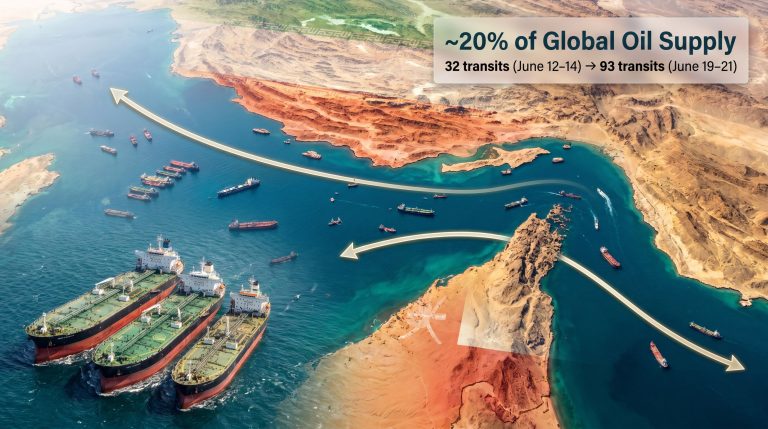
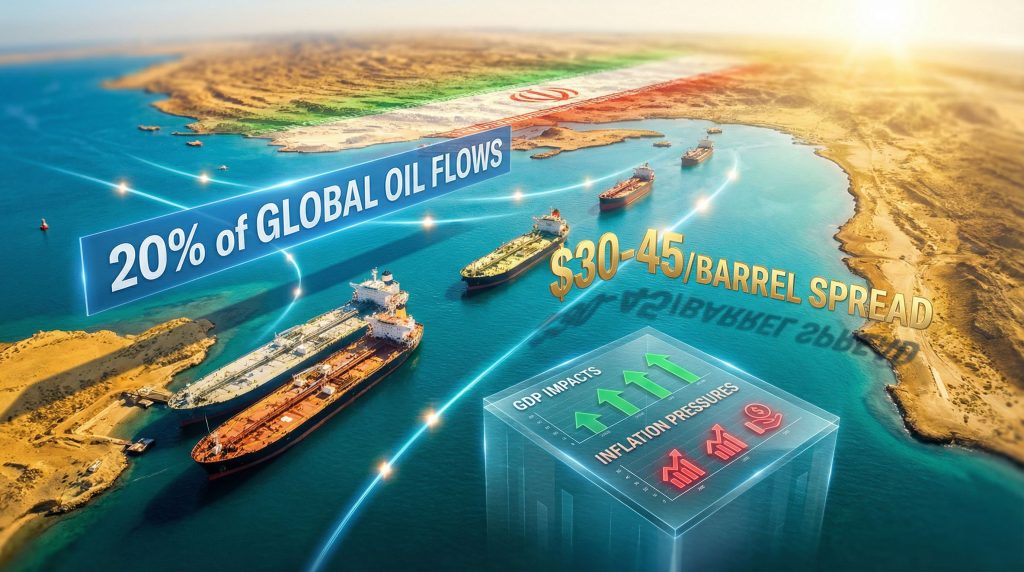
The closure of Strait of Hormuz demonstrates how geographic constraints can instantly reshape global energy markets. Under normal operating conditions, maritime routes through the Persian Gulf facilitate complex supply chains that have developed over decades. The current crisis has eliminated approximately one-fifth of global oil flows through traditional waterborne exports, forcing dramatic infrastructure adjustments.
Alternative routing mechanisms reveal the limitations of backup systems during crisis periods. The Saudi East-West Pipeline, previously operating at moderate capacity levels, has become the primary conduit for Middle Eastern exports, now handling approximately 5.5 million barrels per day compared to the typical 1.5 million barrels per day through conventional maritime channels. This represents a nearly four-fold increase in pipeline utilization rates, approaching maximum design capacity.
The concentration of global energy flows through such narrow passages creates vulnerability patterns that traditional risk models often underestimate. When physical barriers prevent normal transit routes, the resulting supply constraints cannot be easily substituted through alternative infrastructure, regardless of price incentives.
Infrastructure Dependency and Substitution Limitations
Pipeline capacity constraints become apparent during crisis scenarios when maximum utilization rates cannot accommodate typical export volumes. Even with the East-West Pipeline operating at peak capacity, the total available export routes fall significantly short of normal Persian Gulf production levels. This gap highlights the fundamental challenge of infrastructure substitution during maritime disruptions.
The temporal dimension of supply disruption adds complexity to infrastructure planning. Each day of continued closure compounds the physical supply shortage, creating accelerating pressure on spot markets while revealing the limitations of inventory management strategies. Storage facilities and floating inventory provide only temporary buffers against sustained supply disruptions.
Transportation alternatives require substantial lead times for capacity expansion, making rapid response to crisis situations difficult. The existing pipeline network reflects decades of development optimized for normal operating conditions rather than emergency scenarios, resulting in significant capacity gaps during crisis periods.
When big ASX news breaks, our subscribers know first
How Does Strait Closure Impact Global Oil Markets?
Physical vs. Financial Market Divergence
The closure of Strait of Hormuz has created unprecedented divergence between physical oil markets and financial futures contracts. Dated Brent spot prices reached $132.50 per barrel on April 13, 2026, while the June Brent futures contract traded at $98.60 per barrel, creating a spread of approximately $34 per barrel. This compares dramatically against historical norms where the spread typically ranges between $1-2 per barrel.
| Market Indicator | Normal Conditions | Crisis Conditions | Spread Magnitude |
|---|---|---|---|
| Dated Brent Spot | $70-80/barrel | $132.50/barrel | +65-90% |
| ICE Brent Futures (June) | $69-79/barrel | $98.60/barrel | +25-43% |
| Spot-Futures Spread | $1-2/barrel | $34/barrel | 1,600-3,400% |
This extraordinary divergence reflects market dysfunction in arbitrage mechanisms that typically maintain price alignment between physical and paper markets. Under normal conditions, traders can simultaneously purchase futures contracts while selling physical barrels to capture spread differentials. However, the current unavailability of physical barrels for immediate delivery eliminates this arbitrage opportunity.
Time Premium Valuation in Crisis Markets
The extreme spot premium indicates that immediate availability has become extraordinarily valuable relative to deferred supply. Market participants are effectively paying substantial premiums for time, with each day of delayed delivery carrying significant cost implications. This represents a fundamental shift from traditional supply-demand pricing to scarcity-based temporal valuation.
Futures contract pricing reveals market confidence in relatively near-term crisis resolution. The June contract's pricing at $98.60 per barrel implies market expectations that the closure will be resolved by May 1, 2026. This conditional expectation framework suggests that if the crisis extends beyond this timeline, futures prices will undergo substantial repricing to reflect extended supply disruption.
Price projection scenarios indicate escalating consequences for prolonged closures. Analysis suggests that if the Strait remains closed beyond April 30, 2026, Dated Brent could advance toward $150 per barrel, with financial contracts eventually forced to follow spot prices higher as the temporal gap narrows.
Inventory Depletion and Market Tightening
The physical supply situation continues deteriorating with each day of sustained closure. Oil supplies that were in transit before the crisis began have largely reached destination markets, meaning current pricing reflects forward-looking scarcity rather than depletion of existing floating inventory.
Market tightening accelerates through reduced inventory replenishment cycles. Refineries and distribution networks that typically maintain strategic reserves face increasing pressure as replacement supplies become unavailable through traditional maritime routes. This creates compounding effects where each day of closure increases the severity of physical market constraints.
What Economic Sectors Face Maximum Vulnerability?
Energy-Intensive Manufacturing Impact
European industrial competitiveness faces particular vulnerability due to high energy costs and limited alternative supply sources. The immediate surge in oil prices above $100 per barrel forces rapid repricing of inflation expectations across energy-sensitive economies, particularly affecting manufacturing sectors dependent on petroleum-based inputs.
Petrochemical production chains experience cascading disruptions as feedstock costs surge while availability becomes uncertain. Production facilities operating on just-in-time inventory models face particular challenges when supply security cannot be guaranteed regardless of price considerations.
Asian manufacturing centers dependent on Middle Eastern energy imports must rapidly adjust production schedules and sourcing strategies. The concentration of global manufacturing capacity in regions with high energy import dependency creates amplified vulnerability during supply disruptions, as seen in our analysis of energy transition challenges.
Transportation and Logistics Sector Pressures
Global equities have opened under decisive pressure as escalating Middle East tensions trigger sharp risk-off shifts across markets. The transportation sector faces dual pressures from rising fuel costs and potential route disruptions affecting international shipping schedules.
Aviation industry margins compress rapidly as jet fuel prices surge alongside crude oil. Airlines operating long-haul routes through affected regions must implement fuel hedging strategies while adjusting route planning to account for potential airspace restrictions.
Maritime shipping costs escalate beyond fuel price increases to include war risk premiums and alternative routing expenses. Container shipping schedules require fundamental restructuring as vessels avoid affected waterways, creating delays and capacity constraints throughout global supply chains. The implications extend to broader oil price trade dynamics.
Agricultural Supply Chain Vulnerabilities
Fertilizer production dependency on natural gas and petroleum-based inputs creates vulnerability for global agricultural systems. Nitrogen fertilizer manufacturing requires substantial energy inputs, making agricultural commodity prices sensitive to energy market disruptions.
Food security implications extend beyond direct fuel costs to include transportation and storage expenses. Refrigerated transport systems and grain storage facilities operating in energy-intensive environments face significant cost pressures that ultimately affect food pricing.
Seasonal planting cycles add temporal urgency to fertilizer and fuel availability. Agricultural producers operating on fixed seasonal schedules cannot easily adjust timing to account for energy price volatility, creating potential impacts on crop yields and food production capacity.
How Do Geopolitical Risk Premiums Reshape Investment Strategies?
Energy Security Investment Priorities
Markets have transitioned into a headline-driven regime where geopolitical developments, rather than fundamental supply-demand metrics, dictate price movements. This shift requires investment strategies that prioritize political risk assessment alongside traditional economic analysis.
Strategic petroleum reserve utilization becomes critical for energy-importing nations seeking to moderate domestic price volatility. Government stockpiling policies and emergency release mechanisms gain increased importance as private sector inventory management proves insufficient during sustained crises.
Alternative energy infrastructure projects receive accelerated development timelines as energy security concerns override traditional return-on-investment calculations. Solar, wind, and nuclear power projects previously considered economically marginal become strategically valuable as insurance against supply disruptions.
Portfolio Risk Management Adjustments
Volatility resets higher across energy-sensitive equity sectors as uncertainty regarding conflict duration and resolution mechanisms increases. Traditional portfolio diversification strategies require adjustment when geopolitical risks affect multiple asset classes simultaneously.
Currency markets experience heightened volatility as energy-importing nations face deteriorating trade balances. Central banks in affected economies must balance inflation pressures against economic growth concerns, creating complex monetary policy challenges related to US tariffs and inflation.
Commodity exposure hedging strategies become essential for corporations with significant energy inputs. Companies operating in energy-intensive industries require sophisticated risk management frameworks to navigate price volatility that exceeds normal trading ranges.
Regional Investment Flow Redirections
Investment capital seeks alternative geographic exposure as Middle Eastern assets become subject to increased political risk assessment. Emerging markets with stable energy export capacity attract increased attention from institutional investors seeking diversified exposure.
Technology sector investments in energy efficiency and alternative fuel systems receive premium valuations as strategic value supplements traditional financial metrics. Research and development spending in energy technologies accelerates as corporations seek to reduce dependency on volatile supply sources.
Furthermore, the Saudi energy licenses impact demonstrates how infrastructure development projects in stable regions gain enhanced investment appeal as supply chain security becomes a primary consideration for long-term capital allocation decisions.
What Are the Long-Term Economic Restructuring Effects?
Permanent Supply Chain Reconfigurations
The crisis accelerates existing trends toward supply chain regionalization and reduced dependency on single-source suppliers. Manufacturing networks that previously prioritized cost efficiency over supply security are forced to recalibrate risk-return calculations.
| Closure Duration | Global GDP Impact | Inflation Pressure | Recovery Timeline |
|---|---|---|---|
| 1-2 weeks | -0.1 to -0.2% | +0.5-1.0% | 3-6 months |
| 1-2 months | -0.5 to -0.8% | +2.0-3.5% | 12-18 months |
| 3+ months | -1.2 to -2.0% | +4.0-6.0% | 24+ months |
Transportation infrastructure investment priorities shift toward redundancy and security rather than pure efficiency optimization. Shipping routes, pipeline networks, and storage facilities require enhanced backup systems to manage future disruption risks.
International trade agreements increasingly incorporate energy security provisions alongside traditional economic considerations. Bilateral and multilateral arrangements prioritize supply chain resilience through diversified sourcing arrangements and emergency sharing mechanisms.
Regional Economic Development Patterns
Energy-exporting regions outside the Persian Gulf experience accelerated development as global demand seeks alternative supply sources. Countries with underdeveloped energy infrastructure receive increased foreign investment for exploration and production expansion projects.
Manufacturing capacity migration accelerates toward regions with secure energy access and stable geopolitical environments. Industrial development patterns shift away from pure labour cost considerations toward comprehensive risk assessment including energy security and political stability.
Technology transfer and infrastructure development programs expand as importing nations seek to reduce dependency vulnerabilities through enhanced domestic production capabilities and alternative energy systems.
How Do Central Banks Respond to Energy-Driven Inflation?
Monetary Policy Dilemmas
Central banks face complex trade-offs between combating energy-driven inflation and supporting economic growth during supply shocks. Traditional monetary policy tools prove less effective when inflation stems from supply constraints rather than demand excess.
Interest rate policy effectiveness diminishes during supply-driven inflation episodes because higher rates cannot directly address physical supply shortages. Central banks must carefully balance inflation expectations management against the risk of inducing unnecessary economic contraction.
Quantitative easing considerations become complicated when inflation pressures exist alongside economic uncertainty. Expansionary monetary policy risks exacerbating inflation while contractionary policy may amplify economic disruption from energy supply constraints.
International Monetary Coordination
Currency swap arrangements and international liquidity facilities become crucial for energy-importing nations facing balance of payments pressures. Central bank cooperation mechanisms help stabilise exchange rates during energy price volatility periods.
Reserve accumulation strategies require adjustment as foreign exchange reserves face depletion through energy import financing. Central banks in energy-dependent economies must maintain higher reserve levels to manage extended crisis scenarios.
Inflation targeting frameworks require temporary adjustment to account for energy price volatility that exceeds normal policy response capabilities. Central banks communicate modified targets to prevent inflation expectations from becoming unanchored during crisis periods, particularly relevant to the broader oil price rally analysis.
The next major ASX story will hit our subscribers first
What Alternative Energy Infrastructure Gains Strategic Value?
Pipeline Network Optimization
Alternative pipeline routes experience maximum utilisation as maritime transport becomes unavailable. The East-West Pipeline system, previously operating below capacity, now functions as a critical supply lifeline handling dramatically increased throughput volumes.
Key Alternative Infrastructure Routes:
• Saudi East-West Pipeline: Currently operating at 5.5 million bpd capacity, representing near-maximum utilisation
• Iraq-Turkey Pipeline: Northern route optimisation provides additional export capacity outside Persian Gulf maritime dependency
• Trans-Arabian Pipeline System: Enhanced utilisation of existing infrastructure for emergency supply routing
• Caspian Sea Export Routes: Development acceleration for alternative supply sources bypassing Persian Gulf chokepoints
Regional pipeline interconnection projects receive accelerated development timelines as infrastructure redundancy becomes strategically valuable. Cross-border pipeline capacity expansion provides insurance against single-route dependency vulnerabilities.
Underground storage facilities and pipeline system flexibility gain enhanced importance for managing supply volatility. Infrastructure designed for bidirectional flow capability provides operational advantages during crisis scenarios requiring rapid supply route adjustments.
Renewable Energy Strategic Positioning
Energy security considerations drive premium valuations for renewable energy projects that reduce dependency on imported fossil fuels. Solar, wind, and nuclear power installations gain strategic value beyond traditional economic metrics.
Grid stability infrastructure requirements accelerate as renewable energy integration becomes an energy security priority. Battery storage systems and grid management technologies receive increased investment as insurance against supply disruption risks.
Domestic energy production capacity development gains policy support as energy independence becomes a national security consideration. Regulatory frameworks adjust to prioritise energy security alongside environmental considerations in project approval processes.
How Do Insurance and Shipping Markets Adapt?
Maritime Risk Assessment Evolution
War risk premiums undergo substantial recalibration as geopolitical tensions affect previously stable shipping routes. Insurance providers must rapidly adjust pricing models to account for elevated political risk across multiple maritime corridors.
Vessel availability constraints emerge as shipping companies avoid high-risk areas, reducing effective global fleet capacity. Alternative routing requirements increase voyage times and fuel consumption, fundamentally altering shipping economics.
Port facility risk assessment expands beyond traditional operational considerations to include geopolitical stability and emergency response capabilities. Insurance coverage for port infrastructure and cargo storage facilities requires enhanced political risk provisions.
Logistics Cost Structure Transformation
Alternative shipping routes command premium pricing as demand exceeds available capacity on safer passages. Shipping companies operating vessels through unaffected corridors experience enhanced pricing power and capacity utilisation rates.
"Energy market disruptions fundamentally alter the relationship between physical and financial commodity markets, with time premiums reaching levels that transform traditional arbitrage relationships and require new risk management approaches across energy-dependent sectors."
Container shipping schedules require complete restructuring to accommodate longer voyage times and alternative port utilisation. Supply chain timing models must incorporate significantly higher uncertainty factors and extended delivery windows.
Inventory management strategies shift toward higher safety stock levels to buffer against extended delivery delays. Companies operating lean inventory models face pressure to increase working capital requirements for enhanced supply chain security.
What Are the Resolution Timeline Economic Implications?
Market Confidence and Expectations
Forward curve pricing mechanisms reveal market expectations regarding crisis resolution timing. The June futures contract pricing implies strong market confidence that normalisation will occur by May 1, 2026, creating a definitive timeline for expectation validation.
Volatility surface evolution provides insight into market uncertainty regarding resolution pathways. Options pricing reflects elevated uncertainty premiums while maintaining differentiation between near-term and longer-term supply concerns.
Credit spread implications affect corporate financing costs across energy-sensitive sectors. Companies with significant energy exposure face higher borrowing costs as credit markets price increased operational risk from sustained energy price volatility.
Scenario-Based Recovery Modelling
Rapid Resolution Pathway (2-4 weeks):
• Market normalisation achievable within 6 months as spot-futures spreads compress toward historical norms
• Inventory replenishment cycles restore supply chain functionality
• Corporate earnings adjustments prove temporary rather than structural
Extended Closure Scenario (2-3 months):
• Structural economic adjustments required across energy-intensive industries
• Strategic petroleum reserve utilisation becomes necessary to moderate domestic price impacts
• Alternative supply arrangements develop permanence, creating lasting trade pattern changes
Prolonged Crisis Framework (6+ months):
• Permanent supply chain reconfiguration accelerates regional energy independence initiatives
• Manufacturing capacity migration toward energy-secure regions
• Technology adoption acceleration for energy efficiency and alternative fuel systems
International Cooperation Mechanisms
Strategic reserve coordination becomes essential for managing extended crisis scenarios. International Energy Agency emergency sharing protocols provide frameworks for collective response to sustained supply disruptions.
Emergency sharing agreement activation helps moderate regional price disparities and prevents competitive bidding that exacerbates global price volatility. Coordinated release policies can provide temporary supply buffers while alternative arrangements develop.
Diplomatic resolution economic incentives create pressure for rapid conflict resolution as economic costs escalate. The financial impact of sustained closure provides motivation for all parties to seek compromise solutions that restore normal commerce.
Navigating Energy Security in a Multipolar World
Long-Term Resilience Frameworks
The closure of Strait of Hormuz demonstrates the critical importance of diversified energy supply portfolios and robust infrastructure redundancy for maintaining economic stability. Energy security considerations must be integrated into strategic planning frameworks alongside traditional economic optimisation metrics.
Regional cooperation mechanisms provide essential buffers against supply disruptions while reducing individual nation vulnerability to geopolitical pressures. Multilateral agreements that prioritise energy security through shared infrastructure and emergency response protocols enhance collective resilience.
Infrastructure redundancy investment requirements extend beyond immediate economic returns to include strategic value from reduced dependency risks. Pipeline networks, storage facilities, and alternative energy systems provide insurance value that justifies premium investment costs during stable periods.
Investment Strategy Evolution
Energy security considerations fundamentally alter traditional investment risk-return calculations. Portfolio allocation strategies must incorporate geopolitical risk assessment alongside financial metrics when evaluating energy-exposed sectors and geographic regions.
Technology transition acceleration opportunities emerge from crisis scenarios that highlight vulnerability to traditional energy systems. Investment in renewable energy infrastructure, energy efficiency technologies, and alternative fuel systems gains strategic premiums beyond environmental considerations.
Geographic diversification requirements expand to include supply chain security alongside traditional portfolio diversification benefits. Investment strategies that prioritise exposure to energy-secure regions and self-sufficient economic systems provide valuable hedges against geopolitical uncertainty.
Market Structure Transformation
The crisis reveals fundamental limitations in existing energy market structures that prioritised efficiency over security. Future market development must balance cost optimisation with resilience requirements, creating investment opportunities in enhanced infrastructure and alternative systems.
Risk management frameworks require substantial enhancement to address the intersection of geopolitical and economic uncertainties. Traditional hedging strategies prove insufficient during sustained supply disruptions, necessitating development of more sophisticated risk mitigation approaches.
Energy market integration continues advancing while incorporating lessons from chokepoint vulnerabilities. Future integration efforts must prioritise redundancy and alternative routing capabilities to prevent single-point-of-failure scenarios that can affect multiple economic regions simultaneously, as highlighted by recent developments in sea mines near the Strait of Hormuz.
This analysis is based on market conditions and expert assessments as of April 14, 2026. Energy market dynamics remain highly volatile during geopolitical crises, and investors should carefully consider their risk tolerance and seek professional advice when making investment decisions during periods of elevated uncertainty.
Looking to Capitalise on Energy Market Volatility?
Discovery Alert's proprietary Discovery IQ model delivers real-time notifications on significant ASX mineral discoveries, providing subscribers with actionable insights to navigate market turbulence and identify opportunities as energy security concerns reshape global investment priorities. Begin your 14-day free trial today to gain an immediate market advantage during these unprecedented market conditions.