June 24, 2026
The World's Most Critical Shipping Lane Has Become a Humanitarian Crisis
When geopolitical conflict intersects with the world's most strategically loaded waterway, the consequences extend far beyond energy prices and geopolitical scoreboards. The human cost materialises in the form of thousands of merchant sailors trapped aboard vessels with dwindling supplies, no clear exit, and no certainty about when conditions will allow them to leave. That is the reality currently unfolding in the Persian Gulf, where the Strait of Hormuz evacuation plan announced by the International Maritime Organization on June 23, 2026, represents one of the most complex multilateral maritime rescue operations in modern history.
Understanding why this situation escalated to crisis level, how the evacuation framework operates, and what the phased reopening signals for global energy markets requires moving beyond headlines and into the structural realities of maritime governance, energy logistics, and multilateral diplomacy.
When big ASX news breaks, our subscribers know first
Why the Persian Gulf Became a Maritime Trap
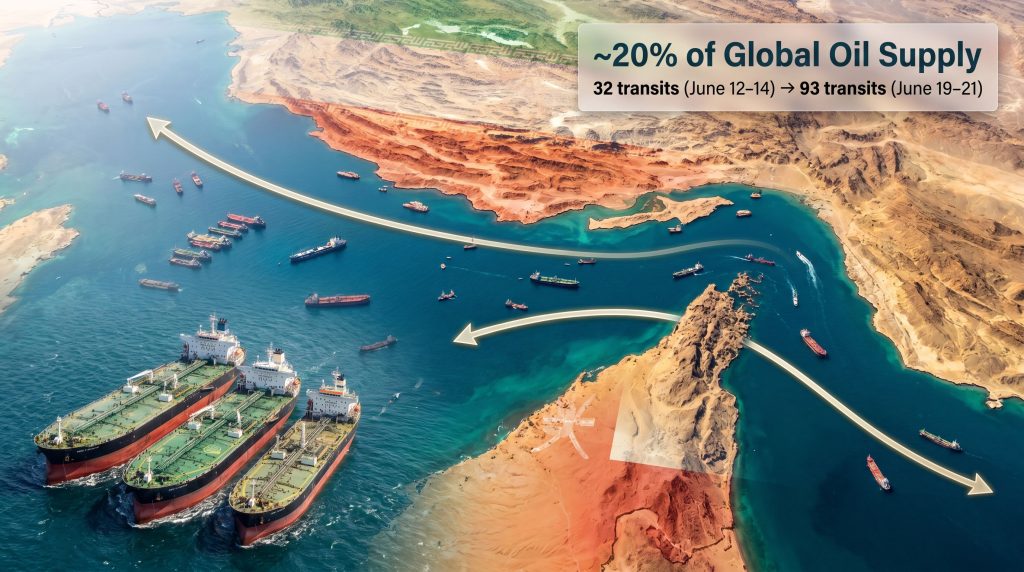
The Strait of Hormuz has long been recognised as the single most consequential chokepoint in global energy infrastructure. At its narrowest navigable point, the strait measures roughly 33 kilometres across, yet before the outbreak of conflict in early 2026, it carried approximately 20% of the world's total oil supply through its waters on a daily basis. More than 100 vessel transits occurred each day under normal operating conditions, making it a critical artery not just for crude oil exporters but also for Qatar's liquefied natural gas shipments, which represent a separate and significant dimension of the disruption. The LNG supply outlook heading into 2025 had already flagged vulnerabilities in this critical region.
The crisis originated on February 28, 2026, when U.S. and Israeli military forces struck Iran. The immediate consequence was Iran's retaliatory campaign against commercial shipping in the Persian Gulf, which caused tanker traffic to collapse almost immediately. Vessels that had already entered the Gulf found themselves unable to exit safely, and incoming traffic dried up rapidly as operators assessed the risk environment.
The result was an unprecedented accumulation of stranded vessels. Estimates of the affected fleet vary depending on the counting methodology used:
- Approximately 550 to 600 IMO-registered merchant vessels are confirmed stranded within the Gulf
- The broader affected fleet, including vessels of various registry types, is estimated at around 1,600 ships
- Between 11,000 and 20,000 seafarers are believed to be stranded, with the range reflecting the difference between counting only merchant vessel crew or including all affected maritime workers
This is not simply a logistical inconvenience. Crews aboard stranded vessels face deteriorating conditions over weeks and months, including dwindling provisions, mechanical maintenance challenges without port access, and significant psychological strain. The humanitarian dimension of the Strait of Hormuz evacuation plan is therefore as pressing as its strategic importance.
How the IMO Evacuation Framework Is Structured
Institutional Architecture and Multilateral Coordination
The International Maritime Organization serves as the coordinating authority for the evacuation operation, having secured what it describes as the necessary safety guarantees from the relevant parties. IMO Secretary-General Arsenio Dominguez confirmed that navigation conditions have been verified and that the framework for safe transit has been established through cooperation with Iran, Oman, the United States, other regional coastal states, and the broader maritime industry.
Oman occupies a particularly significant operational role within this structure. The Omani Navy was designated as the authority responsible for issuing the formal departure coordination bulletin, which outlines the corridor routing strategy and the sequencing methodology. Oman's geographic position and its established diplomatic relationships with both Iran and Western nations made it a natural operational anchor for the plan.
The Two-Corridor Routing Strategy
The pre-war Traffic Separation Scheme, originally established in 1968 through an Iran-Oman bilateral arrangement and subsequently adopted by the IMO, is currently considered unsafe for transit. The reason is straightforward: Iran mined large segments of the strait, as confirmed by U.S. Secretary of State Marco Rubio in congressional testimony delivered on June 2, 2026. The IMO has been explicit that there is no safe transit anywhere within the existing TSS corridors.
In response, the Oman Navy bulletin established two alternative exit pathways:
- A northern corridor running above the existing TSS alignment
- A southern corridor running below the TSS alignment, potentially incorporating Omani territorial waters as an extraordinary routing pathway
Individual vessels will not simply be directed into one of these corridors and left to proceed. Instead, each ship will receive personalised departure instructions, including an assigned transit day. This individualised approach reflects both the logistical complexity of coordinating hundreds of simultaneous movements and the ongoing mine risk that makes any deviation from assigned parameters potentially catastrophic.
Prioritisation Logic for Departing Vessels
The sequencing of departures is governed primarily by humanitarian criteria rather than commercial or flag-state priority. Key factors include:
- Duration of crew entrapment, with vessels whose crews have been stranded the longest receiving higher priority
- Coordination input from flag states, maritime NGOs, and seafarer welfare organisations
- A phased rollout approach that deliberately avoids mass simultaneous transit to reduce the risk of accidents, mine contact, or security incidents
The phased structure is significant from a risk management perspective. A coordinated mass departure might seem more efficient, but in a minefield environment with incomplete clearance, concentrating hundreds of vessels into a narrow corridor simultaneously multiplies exposure. The staged approach, while slower, distributes risk across time rather than concentrating it.
The Three Conditions That Must Be Met
The Strait of Hormuz evacuation plan is contingent on three distinct safety thresholds being satisfied, and as of June 23, 2026, none of them had been fully achieved:
| Condition | Status as of June 23, 2026 |
|---|---|
| Confirmed de-escalation of active conflict | Partially met following MOU signed June 17, 2026 |
| Mine clearance verification across the strait | Ongoing, no confirmed safe transit zones established |
| Multilateral non-attack guarantees on maritime assets | Secured per IMO statement |
The mine threat represents the most technically demanding bottleneck. Demining operations in a contested maritime environment involve multiple nations coordinating survey and clearance assets, with verification protocols that must satisfy both operational and diplomatic requirements before transit can be declared safe. The IMO's working group has been engaging with multiple nations on this effort, but the timeline for completion remains uncertain.
What the June 17 MOU Did and Did Not Resolve
The memorandum of understanding signed between the United States and Iran on June 17, 2026, established a diplomatic framework for reopening the Strait of Hormuz. Its impact on vessel traffic was measurable and relatively rapid. According to ship-tracking data from Kpler's MarineTraffic service, transits increased dramatically within days of the agreement being signed.
| Period | Vessel Transits | Context |
|---|---|---|
| Pre-war (daily average) | 100+ per day | Normal operating baseline |
| June 12-14, 2026 | 32 total across 3 days | Near-complete blockade conditions |
| June 19-21, 2026 | 93 total across 3 days | Post-MOU partial recovery |
| June 23, 2026 | 39 in a single day | Gradual normalisation underway |
The tripling of transits within a single week following the MOU is a meaningful signal, but the gap between 39 daily crossings and the pre-war baseline of more than 100 illustrates that diplomatic agreement and physical operational safety are not equivalent. The MOU created the conditions for resumption; it did not create the safety infrastructure required for full resumption.
One additional complication flagged by insurers involves the possibility of a transit toll mechanism emerging from the MOU framework. Any fee arrangement tied to Iranian-controlled passage could expose shipowners to sanctions-related legal liability, creating a secondary compliance risk alongside the physical security threat. Furthermore, this represents an underappreciated dimension of the reopening process, particularly for operators navigating sanctions and oil trade compliance requirements with U.S. regulatory exposure.
Quantifying the Energy Market Disruption
The Strait of Hormuz closure has been characterised as triggering the largest oil supply disruption in recorded history. That description reflects both the volume of supply affected and the duration of the disruption, which distinguishes this crisis from historical precedents. Consequently, the resulting oil market disruption has reverberated through every segment of the global energy complex.
Comparative context helps frame the scale:
- The 1973 Arab oil embargo removed approximately 5% of global oil supply for several months
- The 1980s Tanker War disrupted Gulf shipping intermittently over multiple years but without achieving a sustained near-complete closure
- The 2026 Hormuz closure effectively removed 20% of global oil supply from free transit, with transits dropping to as few as 32 across a three-day period at the crisis peak
Beyond crude oil, the disruption has cascading implications for Qatar's LNG export operations, which transit the same chokepoint. LNG supply disruptions carry different market dynamics than crude oil disruptions, affecting long-term contract obligations, spot market pricing in Asia and Europe, and the competitiveness of alternative LNG supply routes.
Insurance Markets and Legal Exposure
The collapse of tanker traffic through Hormuz triggered a parallel crisis in maritime insurance markets. War-risk surcharges for vessels operating in the Persian Gulf escalated sharply as Iranian retaliatory strikes on commercial vessels made underwriting calculations extremely difficult. Analysts tracking crude oil price trends noted that insurance cost escalation added a secondary layer of market volatility beyond the supply constraint itself.
Stranded cargo compounds these losses. Vessels immobilised for weeks or months accumulate operating costs, crew welfare obligations, and contractual penalties while generating no revenue. The economic cost of immobilisation across an estimated 550 to 600 IMO-registered merchant vessels represents a substantial aggregate loss spread across shipowners, charterers, cargo interests, and insurers.
Scenarios for Full Strait Reopening
Recovery from a crisis of this magnitude is unlikely to follow a linear path. Three distinct scenarios frame the range of possible outcomes:
Scenario A: Accelerated Resolution (3-6 months)
Demining operations conclude successfully, ceasefire conditions hold, and IMO corridor operationalisation proceeds on schedule. Near-full traffic restoration becomes achievable by late 2026, with the TSS returning to operational status shortly thereafter.
Scenario B: Protracted Partial Opening (6-18 months)
Mine clearance encounters technical or political delays. The two-corridor system becomes a semi-permanent arrangement operating at reduced capacity. Full TSS restoration is deferred into 2027, and shipping markets adapt to a constrained Hormuz throughput environment over an extended period.
Scenario C: Renewed Escalation
MOU compliance breaks down, or a new military incident triggers renewed hostilities. Transit gains reverse, additional vessels become stranded, and the international community must renegotiate the safety framework from a less cooperative starting position.
Traffic data will serve as the most reliable leading indicator of which scenario is materialising. The trajectory from 32 transits across three days to 93 transits across the subsequent three days suggests Scenario A remains within reach, but the gap to pre-war baseline levels is still substantial.
The next major ASX story will hit our subscribers first
The Stakeholder Web Underpinning the Operation
The Strait of Hormuz evacuation plan involves a more complex multilateral coordination structure than most maritime operations. In addition, the geopolitical trade tensions that preceded this crisis have made achieving consensus between parties considerably more difficult:
- IMO: Institutional coordinator, safety guarantor, and framework architect
- Iran: Consent provider and non-attack guarantee issuer, also responsible for the mine placement that created the primary hazard
- Oman: Operational bulletin authority, provider of alternative routing through Omani waters, and key diplomatic intermediary
- United States: MOU co-signatory, regional naval presence, and concurrent sanctions enforcement authority
- Flag States: Vessel-level coordination responsibilities and crew welfare obligations
- Maritime Industry Bodies: Logistics planning and departure sequencing input
- NGOs and Seafarer Welfare Organisations: Humanitarian advocacy and crew prioritisation input
The simultaneous presence of the United States as both an MOU co-signatory and a sanctions enforcement authority creates an inherent tension within the coordination structure. Any transit arrangement that generates revenue flows to Iran risks triggering sanctions review, which could discourage participation from flag states and operators subject to U.S. regulatory jurisdiction.
What the Crisis Exposes About Maritime Governance Architecture
Beyond the immediate humanitarian and energy market dimensions, the Hormuz crisis has revealed a significant gap in international maritime governance: there is no pre-established humanitarian corridor protocol for chokepoint closures. The IMO's response has been reactive, assembled under extreme pressure without a pre-existing playbook for this category of crisis.
The absence of such a framework reflects a broader assumption in maritime governance that the world's critical chokepoints, including Hormuz, the Strait of Malacca, and the Bab-el-Mandeb, would never experience a sustained complete closure. That assumption has now been tested and found inadequate.
The intersection of sanctions policy, military operations, and civilian maritime welfare as an unresolved governance challenge suggests that the post-crisis period will require serious institutional reform. A permanent multilateral maritime safety framework for high-risk transit zones, with pre-negotiated humanitarian corridor protocols and demining coordination procedures, would represent a meaningful structural improvement over the reactive model currently being stress-tested in the Persian Gulf.
Frequently Asked Questions
How many seafarers are stranded in the Persian Gulf?
Estimates range from approximately 11,000 to 20,000 seafarers, depending on whether the count covers only IMO-registered merchant vessels or the broader fleet of all affected vessels.
When will the Strait of Hormuz evacuation begin?
The IMO announced on June 23, 2026, that it will begin implementing the evacuation plan. Full activation depends on confirmed mine clearance and sustained de-escalation.
What routes will evacuating ships use?
Vessels will exit via two temporary maritime corridors, one north and one south of the existing Traffic Separation Scheme, as the TSS itself remains unsafe due to mining activity.
How are ships being prioritised for evacuation?
Departure sequencing is based on humanitarian criteria, with priority given to crews who have been stranded the longest. Individual vessels receive direct departure instructions and assigned transit days.
Why is the Traffic Separation Scheme not currently usable?
Iran mined large segments of the strait, as confirmed by U.S. Secretary of State Marco Rubio in congressional testimony on June 2, 2026. The IMO has stated there is currently no safe transit anywhere within the TSS.
This article contains forward-looking scenario analysis based on publicly available information as of June 23, 2026. Conditions in the Strait of Hormuz remain dynamic. Nothing in this article constitutes financial, investment, or legal advice. Readers should consult qualified professionals for guidance relevant to their specific circumstances.
Want To Stay Ahead of Market-Moving Geopolitical Events Affecting ASX Commodities?
Discovery Alert's proprietary Discovery IQ model delivers real-time alerts on significant ASX mineral discoveries the moment they are announced, transforming complex market data into actionable investment insights — explore historic discoveries and their returns to understand the opportunity, then begin your 14-day free trial at Discovery Alert to position yourself ahead of the broader market.