May 15, 2026
The Strategic Evolution of Global Energy Corridors
Energy security has never been more dependent on infrastructure redundancy than in today's interconnected world. As traditional maritime chokepoints face unprecedented disruption, the activation of alternative transport systems reveals the prescient planning of nations that anticipated such scenarios decades ago. The petroleum industry now witnesses a fundamental shift from maritime-dependent logistics to pipeline-based supply chains, fundamentally altering how crude oil reaches global markets.
This transformation demonstrates how prepared energy exporters can maintain market access during geopolitical crises. While the Strait of Hormuz remains effectively blocked due to regional conflicts, the Saudi pipeline bypassing Hormuz provides a crucial alternative for maintaining global energy flows. Furthermore, this capability showcases the importance of strategic energy planning and long-term infrastructure development.
When big ASX news breaks, our subscribers know first
Understanding the East-West Pipeline's Technical Capabilities
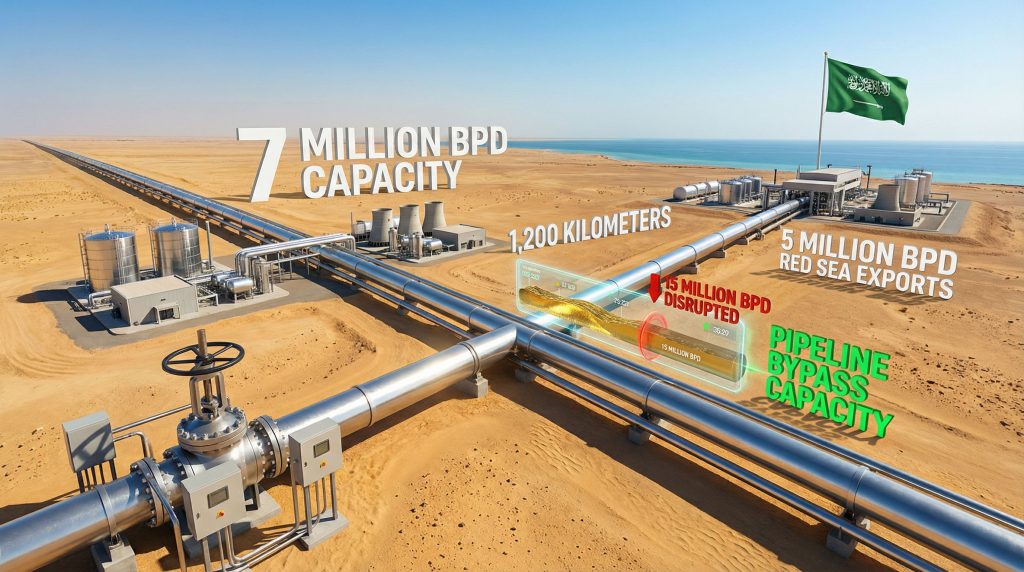
The Saudi pipeline bypassing Hormuz represents one of the world's most significant energy infrastructure achievements. This 1,200-kilometer system spans the Arabian Peninsula, connecting eastern production facilities directly to Red Sea export terminals. Built during the 1980s Iran-Iraq War, this pipeline demonstrates how long-term strategic thinking can provide critical flexibility during modern crises.
Pipeline Performance Metrics:
- Maximum daily capacity: 7 million barrels per day
- Red Sea crude exports: 5 million barrels per day
- Refined product exports: 700,000-900,000 barrels per day
- Domestic refinery supply: 2 million barrels per day
- Total route distance: 1,200 kilometres
The system's current utilisation at maximum capacity reflects the complete redirection of Saudi export flows from Persian Gulf terminals to Red Sea ports. In addition, this operational pivot eliminates Saudi Arabia's dependence on Hormuz passage while maintaining substantial export revenues during global supply disruptions. According to Reuters analysis, the pipeline's activation represents a significant milestone in regional energy infrastructure utilisation.
Technical Infrastructure Advantages
Pipeline transport offers distinct advantages over maritime shipping in contested environments. Unlike tanker traffic, which requires naval protection and clear waterways, pipeline infrastructure provides continuous flow regardless of maritime conditions. The Saudi system operates with minimal weather dependencies and maintains consistent delivery schedules to Red Sea terminals.
Operational Benefits:
- Continuous 24-hour flow capacity
- Reduced shipping insurance costs
- Eliminated maritime security risks
- Weather-independent operations
- Predictable delivery schedules
However, these Saudi energy initiatives extend beyond emergency response capabilities. They represent fundamental shifts in how regional energy exports are managed and distributed globally.
Impact of Hormuz Closure on Global Energy Markets
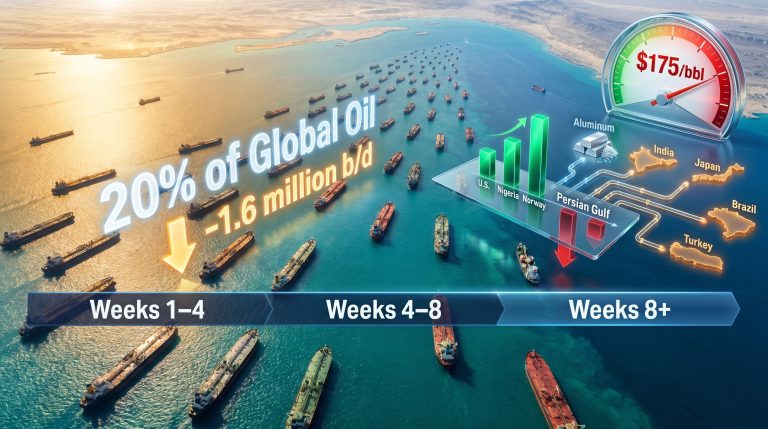
The effective closure of the Strait of Hormuz has removed approximately 15 million barrels per day from global oil flows, representing roughly one-fifth of worldwide petroleum supplies. This disruption stems from escalating regional conflicts that have made the waterway impassable for commercial tanker traffic.
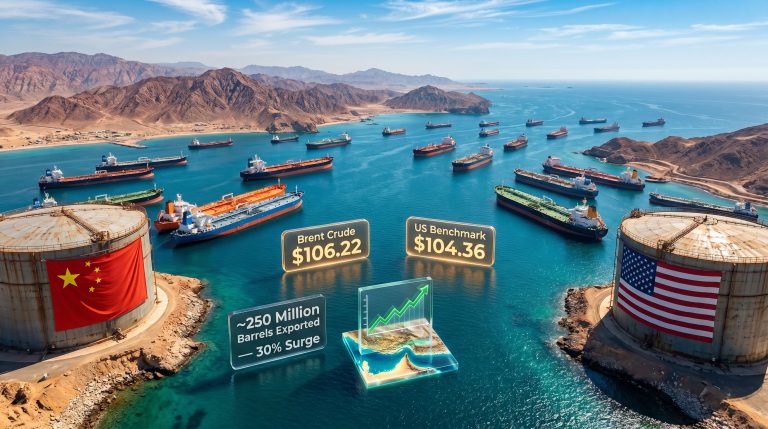
Market responses have been swift and dramatic. Crude oil prices have surged above $100 per barrel, reflecting supply uncertainty and logistical complications. The Saudi pipeline bypassing Hormuz now carries nearly half of the disrupted Hormuz capacity, providing crucial market stability during this crisis.
Global Supply Impact Analysis:
| Metric | Pre-Crisis | Current Status | Change |
|---|---|---|---|
| Daily Hormuz flows | 15 million bpd | 0 bpd | -15 million bpd |
| Saudi pipeline capacity | 5 million bpd | 7 million bpd | +2 million bpd |
| Global supply gap | 0 bpd | 8 million bpd | -8 million bpd |
| Crude oil prices | $75/barrel | $105/barrel | +40% |
Consequently, these disruptions highlight the critical importance of energy security priorities in modern geopolitical planning. Nations with alternative infrastructure demonstrate remarkable resilience compared to those dependent solely on maritime routes.
Alternative Route Development
Beyond Saudi infrastructure, other regional producers are activating alternative transport corridors. The UAE-Oman pipeline system provides additional bypass capacity, while Iraqi crude increasingly flows through Turkish terminals. These developments represent a fundamental restructuring of Middle Eastern energy logistics.
Regional Pipeline Network:
- Saudi East-West system: 7 million bpd active capacity
- UAE-Oman corridor: 1.5 million bpd potential
- Iraq-Turkey pipeline: Northern route activation
- Overland trucking: Limited refined product capacity
Furthermore, the International Energy Agency has documented how these alternative corridors reduce global energy vulnerability to single-point failures in critical maritime chokepoints.
Investment Implications of Infrastructure Shifts
The current crisis highlights massive infrastructure investment requirements across the global energy system. Pipeline companies with existing alternative route capacity are experiencing significant valuation increases, while new infrastructure projects receive accelerated development timelines.
Strategic storage facilities have gained particular importance as companies seek to maintain inventory buffers during supply disruptions. The Saudi pipeline bypassing Hormuz demonstrates how existing infrastructure can provide immediate value during geopolitical crises.
Investment Opportunity Categories:
-
Existing Pipeline Infrastructure
- Companies operating alternative routes
- Storage facility operators
- Terminal and port infrastructure
-
Development Projects
- New pipeline construction
- Capacity expansion initiatives
- Strategic reserve development
-
Supporting Technologies
- Pipeline monitoring systems
- Security technology providers
- Energy efficiency solutions
Market Psychology and Risk Assessment
Investor sentiment has shifted dramatically toward infrastructure assets that provide energy security benefits. The Saudi pipeline's activation demonstrates how dormant or underutilised assets can become critical during supply disruptions.
Risk assessment frameworks now prioritise geographic diversification and alternative routing capabilities. Energy companies without pipeline access face significant logistics premiums and supply uncertainty, creating competitive disadvantages in current market conditions. For instance, understanding oil price dynamics becomes crucial when evaluating infrastructure investments during geopolitical uncertainties.
Long-Term Structural Changes in Energy Markets
The current disruption accelerates existing trends toward energy supply diversification and infrastructure redundancy. The Saudi pipeline bypassing Hormuz represents just one component of a broader transformation in how energy reaches global markets.
Emerging Market Structures:
- Multiple route supply chains
- Regional energy hub development
- Enhanced storage capacity requirements
- Technology-integrated monitoring systems
Policy coordination between energy-producing and consuming nations has intensified as governments recognise the economic impacts of supply disruptions. International cooperation frameworks now prioritise infrastructure development and emergency response capabilities.
Regional Energy Hub Evolution
The Middle East energy landscape is evolving toward multiple export hubs rather than Hormuz-dependent systems. Red Sea ports, Mediterranean terminals, and overland routes are gaining strategic importance as primary export channels rather than secondary alternatives.
This diversification reduces single-point failure risks while providing producing nations with enhanced negotiating leverage. Moreover, effective investment strategy components must now account for infrastructure resilience and alternative routing capabilities.
Additionally, these changes align with broader industry evolution trends that prioritise operational flexibility and supply chain resilience across commodity sectors.
The next major ASX story will hit our subscribers first
Future Energy Security Frameworks
The activation of the Saudi pipeline bypassing Hormuz establishes new benchmarks for energy security planning. Nations and companies are reassessing infrastructure requirements with emphasis on alternative routing capabilities and supply chain resilience.
Strategic Planning Priorities:
- Infrastructure redundancy development
- Emergency response capability enhancement
- International cooperation framework expansion
- Technology integration advancement
Investment in energy security infrastructure will likely accelerate as the current crisis demonstrates the economic value of alternative supply routes. The Saudi pipeline's successful activation provides a model for other regions seeking to reduce dependency on vulnerable maritime chokepoints.
Energy market participants are adapting to new realities where pipeline capacity commands premium valuations and alternative routing infrastructure becomes essential for competitive operations. This fundamental shift toward land-based energy transport represents one of the most significant changes in global energy logistics in recent decades.
"Investment Disclaimer: This analysis contains forward-looking statements and market projections based on current conditions. Energy market investments carry significant risks including geopolitical, operational, and commodity price volatility. Past performance does not guarantee future results. Investors should conduct independent research and consult qualified advisors before making investment decisions in energy infrastructure or related securities."
Looking to Capitalise on Energy Infrastructure Opportunities?
Discovery Alert's proprietary Discovery IQ model delivers real-time alerts on significant energy and critical minerals discoveries across the ASX, instantly empowering subscribers to identify actionable opportunities ahead of the broader market. Begin your 14-day free trial today at Discovery Alert and secure your market-leading advantage in the evolving energy sector.