August 7, 2026
Global Energy Market Disruption: How Sanctions Policy Creates Systemic Vulnerabilities
Energy markets operate within complex regulatory frameworks that can shift rapidly based on geopolitical considerations. The US will not renew Iran crude sanctions waiver decision exemplifies how administrative choices create immediate market consequences. Understanding these dynamics requires examining how decisions cascade through interconnected systems of finance, shipping, and commodity trading.
Treasury Department authorization mechanisms represent one of the most powerful tools in modern economic statecraft, capable of disrupting established trade patterns without legislative oversight. These regulatory instruments operate through binary enforcement structures that create immediate market consequences when activated or terminated.
When big ASX news breaks, our subscribers know first
Understanding the Strategic Framework Behind US Sanctions Policy
The Treasury Department's approach to sanctions enforcement operates through administrative authorizations that bypass traditional legislative processes. This mechanism enables rapid policy implementation without congressional approval, creating a binary system where market access can be granted or withdrawn through executive action. The framework demonstrates how regulatory authority extends beyond domestic jurisdiction through secondary sanctions threats.
On April 14, 2026, the US Treasury Department announced it would not renew the Iranian crude sanctions waiver authorization set to expire on April 19, 2026. This decision represented a significant policy shift from the previous waiver issued on March 20, 2026, which was designed to address Middle East Gulf supply disruption.
Key Policy Timeline:
- March 20, 2026: Treasury issues Iranian crude waiver
- April 7, 2026: US military attacks against Iran paused
- April 14, 2026: Treasury announces non-renewal decision
- April 19, 2026: Waiver expiration date
Treasury officials emphasized their commitment to pursuing an "Economic Fury" policy framework, referencing Operation Epic Fury military operations. The department warned it was prepared to deploy secondary sanctions against foreign financial institutions continuing to support Iranian activities, demonstrating the integration of financial and military pressure mechanisms.
Furthermore, the broader implications of the US will not renew Iran crude sanctions waiver decision extended beyond bilateral trade relationships. The tariff market impact analysis suggests similar administrative decisions create cascading effects across multiple sectors.
Economic Impact Assessment
The broader economic consequences of the sanctions policy became evident through International Monetary Fund analysis. IMF Chief Economist Pierre-Olivier Gourinchas stated that "some damage was already done, with downside risks remaining elevated due to the energy shock". The ultimate magnitude would depend on conflict duration and how quickly energy production normalised after hostilities ended.
The IMF downgraded global growth forecasts for 2026 to 3.1%, representing a 0.2 percentage point reduction from January projections. This revision was described as a reference forecast rather than a baseline case, highlighting the unpredictable nature of geopolitical conflicts on economic planning.
IMF Growth Scenarios for 2026:
- Reference case: 3.1% global growth
- Adverse scenario: 2.5% global growth
- Severe scenario: 2.0% global growth
Regulatory Authority Structure
The legal architecture underlying sanctions enforcement relies on the International Emergency Economic Powers Act, which grants Treasury substantial authority over international transactions. This framework enables the designation of foreign financial institutions for secondary sanctions, leveraging the dollar-denominated global financial system to extend regulatory reach internationally.
Unlike congressionally-mandated sanctions requiring formal legislative repeal, Treasury-administered waivers can be modified through executive action. This creates flexibility in policy implementation but also introduces uncertainty for market participants who must navigate changing regulatory environments.
How Do Oil Sanctions Waivers Actually Function in Practice?
Sanctions waivers operate as temporary exemptions requiring detailed compliance frameworks and monitoring systems. The operational structure demands participating countries establish comprehensive reporting mechanisms documenting transaction specifics, payment methods, and end-use verification.
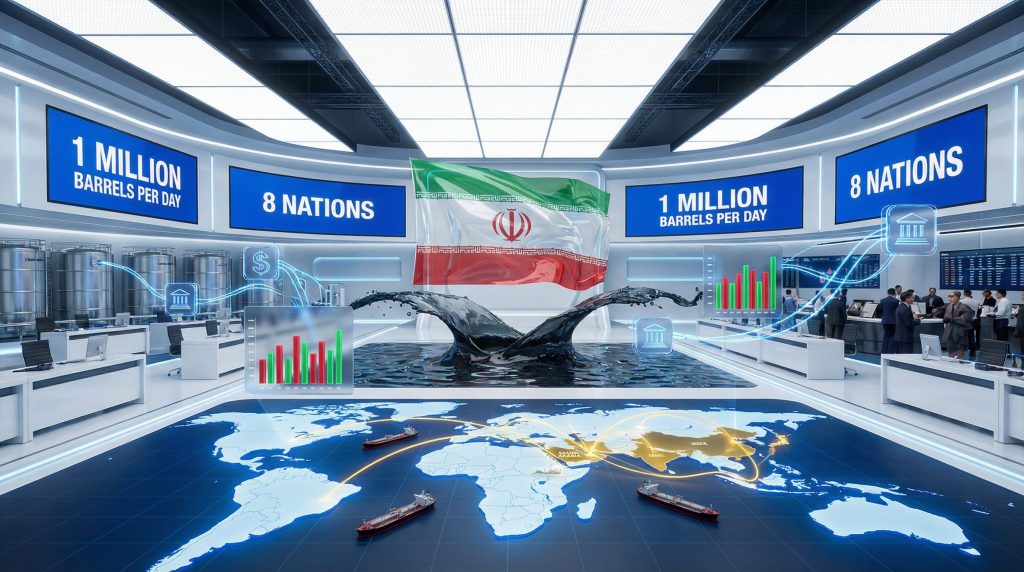
Historical waiver implementation during 2018-2019 permitted eight nations to maintain Iranian oil imports under strict conditions. The framework included China, Greece, India, Italy, Japan, South Korea, Taiwan, and Turkey, each subject to country-specific volume limitations and enhanced reporting requirements.
Waiver Operational Characteristics:
- Six-month renewable periods requiring active renewal decisions
- Individual country-specific volume allocations
- Mandatory compliance reporting to Treasury officials
- Automatic expiration provisions preventing indefinite authorisation
- Enhanced due diligence requirements for financial intermediaries
Current Market Context
Independent Chinese refiners maintained continuous Iranian oil import access following the 2019 industry ban, operating under explicit Treasury authorisation. The April 2026 waiver termination directly affected these refiners' supply access, forcing immediate supply chain adjustments.
In addition, market participants demonstrated limited interest in the temporary availability window despite waiver authorisation. At least one Iranian cargo diverted from Chinese destinations to India's IOC Paradip refinery as of April 7, 2026, but broader market engagement remained constrained due to compliance concerns and expectations of sanctions resumption.
The interconnected nature of energy markets means decisions regarding the US will not renew Iran crude sanctions waiver affect global trading patterns. This exemplifies similar challenges documented in the US–China trade war analysis.
Supply Chain Disruption Scale
The March 2026 conflict caused global oil supply to decline by 10.1 million barrels per day, with demand falling by 800,000 barrels per day year-on-year. Early April 2026 loadings of crude, natural gas liquids, and refined products from the Middle East Gulf averaged approximately 3.8 million barrels per day, compared to over 20 million barrels per day in February 2026 before the war.
Middle East and Asian refineries reduced runs by approximately 6 million barrels per day in April 2026, with total global refinery runs expected to fall by 1 million barrels per day for 2026 overall.
What Are the Immediate Market Disruption Patterns?
Supply disruption patterns reveal the concentrated nature of global energy infrastructure vulnerability. The International Energy Agency documented severe disruption across multiple market segments, with regional impacts varying based on supply route dependencies and alternative source availability.
Regional Production Shut-ins (March 2026):
| Country | Production Decline (million b/d) |
|---|---|
| Saudi Arabia | 3.15 |
| Iraq | 3.00 |
| Kuwait | 1.35 |
| UAE | 1.27 |
| Bahrain | 0.14 |
| Iran | 0.06 |
Demand Destruction Dynamics
The IEA projected global oil demand would drop by 2.3 million barrels per day year-on-year in April 2026, with second quarter demand declining by 1.5 million barrels per day. Full-year 2026 demand was forecast to fall by 80,000 barrels per day, representing the fastest contraction since the Covid-19 pandemic.
Asian petrochemical producers experienced the largest demand impact, with facilities slashing output due to lost LPG/ethane and naphtha feedstocks. These two product categories alone accounted for 1.8 million barrels per day of projected April 2026 demand decline.
Demand Impact by Sector:
- Petrochemicals: 1.8 million b/d decline
- Transportation fuels: Regional variations based on price pass-through
- Jet fuel: Sharp declines from flight cancellations
- Industrial feedstocks: Supply chain disruptions
Transportation Infrastructure Constraints
Approximately 390 vessels became trapped in the Strait of Hormuz when conflict began on February 28, 2026, including 210 laden tankers. Since conflict onset, a net 49 tankers exited the strait, while many ballast tankers waiting outside moved to other markets, creating potential delays for cargo loading resumption.
Saudi Arabia, UAE, and Iraq increased exports through bypass routes from approximately 4 million barrels per day before the war to 7.2 million barrels per day. Despite this 3.2 million barrels per day increase, net regional export losses exceeded 13 million barrels per day, demonstrating Hormuz dependency scale.
Inventory Management Crisis
Global observed oil inventories fell by 85 million barrels in March 2026, with stocks outside the Middle East Gulf declining by 205 million barrels. Offsetting these declines, Middle East Gulf floating storage rose by 100 million barrels and onshore stocks increased by 20 million barrels, indicating supply chain bottlenecks rather than absolute shortage.
How Do Secondary Sanctions Create Global Compliance Pressure?
Secondary sanctions mechanisms extend regulatory authority beyond direct trade relationships through financial system leverage. Foreign financial institutions face exclusion threats from US dollar markets, creating compliance cascades that affect global banking operations regardless of home country policies.
The Treasury Department's warning about deploying secondary sanctions against foreign financial institutions supporting Iranian activities demonstrates this enforcement approach. Banks preemptively enhance transaction screening and terminate Iranian counterparty relationships to protect correspondent banking access.
Banking Sector Adaptation
Financial institutions implement comprehensive compliance frameworks anticipating sanctions volatility. These systems create permanent operational changes extending beyond specific sanctions episodes, affecting transaction processing and relationship management across multiple jurisdictions.
Banking Compliance Measures:
- Enhanced transaction screening for Iranian-related activities
- Preemptive counterparty relationship termination
- Correspondent banking relationship protection prioritisation
- Enhanced due diligence for Middle Eastern energy trades
- Real-time sanctions list monitoring systems
Insurance and Maritime Industry Impact
Marine insurance markets face similar compliance pressures as exclusion from US financial systems threatens global operations. The Joint War Committee updated listed areas on March 3, 2026, including Bahrain, Djibouti, Kuwait, Oman, and Qatar, expanding geographical scope to cover Persian/Arabian Gulf regions, Gulf of Oman, and Indian Ocean areas.
War risk premiums fluctuated dramatically based on geopolitical developments. Additional war risk premium levels for tankers and bulk carriers reached approximately 1% on April 13, 2026, with 35-50% no claim bonuses applied to vessels remaining in the Middle East Gulf.
Insurance Cost Structure:
- Gulf of Oman: 0.5% of vessel value
- Bab el-Mandeb strait: 0.75% of vessel value
- Strait of Hormuz: 3% single passage (quotes frequently withdrawn)
- Blocking and trapping coverage: Extended protection for immobilised vessels
However, the insurance industry faces additional challenges from evolving regulatory frameworks. The Executive order on minerals demonstrates how administrative decisions create new compliance requirements across multiple sectors.
What Alternative Export Mechanisms Emerge Under Sanctions?
Despite zero-export policy objectives, alternative trading channels developed to maintain Iranian oil flows through grey market mechanisms. Industry analysis suggested continued Iranian oil movements between 300,000-700,000 barrels per day utilising sophisticated evasion techniques.
Ship-to-ship transfers, flag-switching, and destination obfuscation became common methods for circumventing enforcement. Automatic Identification System signal manipulation allowed vessels to operate without detection, while complex ownership structures created plausible deniability for end-users.
Transshipment Hub Development
Certain jurisdictions evolved as transshipment points for sanctioned crude, creating new trading patterns complicating enforcement efforts. These hubs maintained plausible deniability while facilitating continued trade flows through third-country arrangements and barter mechanisms bypassing traditional financial systems.
Common Evasion Techniques:
- AIS signal manipulation for vessel tracking avoidance
- Complex ownership structures obscuring beneficial ownership
- Third-country transshipment through neutral jurisdictions
- Barter trade mechanisms avoiding financial system detection
- Quality blending to disguise crude origin characteristics
Regional Trading Pattern Evolution
Independent Chinese refiners represented the primary ongoing customer base for Iranian crude following comprehensive sanctions implementation. These companies operated under specific Treasury authorisations, creating a concentrated but persistent trade relationship that maintained Iranian export capabilities at reduced volumes.
Market participants expected sanctions resumption and remained wary of compliance scrutiny, limiting engagement even during temporary authorisation windows. This demonstrated how regulatory uncertainty affects commercial decision-making beyond formal policy parameters.
The next major ASX story will hit our subscribers first
How Do Producer Countries Coordinate Supply Replacement?
OPEC+ production flexibility mechanisms enabled coordinated response to Iranian export disruptions through targeted production increases by specific members. The US coordinated with Saudi Arabia and UAE to offset Iranian declines, effectively suspending cartel production discipline for designated producers.
However, replacement capabilities proved insufficient to offset full disruption scale. While bypass route capacity increased significantly, net regional export losses exceeded replacement volumes, highlighting structural dependencies on Strait of Hormuz transit routes.
Production Recovery Constraints
The IEA estimated approximately 50% of Middle East Gulf oil fields possessed sufficient reservoir pressure and fluid characteristics to return to pre-war output within two weeks of export resumption, rising to 80% after one month. The remaining 20% faced complications requiring extended restart periods.
Fields dependent on secondary or enhanced oil recovery faced particular challenges, requiring uninterrupted supplies of gas, power, steam, and chemicals. Many complicated fields were located in Iraq and Kuwait, where some lost production might not return to pre-war levels.
Production Restart Timeline:
- Week 1-2: 50% of fields capable of full production restoration
- Month 1: 80% of fields achieving pre-war output levels
- Extended period: 20% of fields requiring specialised intervention
- Iraq specific: Limited port storage capacity constraining exports
Strategic Petroleum Reserve Coordination
Compensation strategies included targeted production increase authorisation, quality-specific crude grade adjustments, and transportation route optimisation. Strategic petroleum reserve coordination provided additional market stabilisation mechanisms during transition periods.
The replacement strategy highlighted global oil market concentration risks, as alternative suppliers gained enhanced market leverage while buyer countries accelerated supply diversification initiatives to reduce future vulnerability.
What Are the Broader Geopolitical Strategy Implications?
The Iranian sanctions case study demonstrates both potential and limitations of energy-based economic pressure. While creating significant revenue disruption, complete market exclusion proved difficult to achieve, suggesting diminishing returns for escalatory approaches in interconnected global energy systems.
Alliance coordination challenges emerged between US strategic objectives and allied energy security priorities, particularly affecting European and Asian partners with limited alternative supply access. This dynamic illustrates the complexity of maintaining multilateral sanctions coordination across diverse energy import profiles.
Long-term Strategic Considerations
Energy weapon effectiveness requires realistic objective definition and achievement timelines. Binary goals like "zero exports" may prove counterproductive if they encourage sophisticated evasion network development that becomes institutionalised over time.
The policy created tensions between US objectives and allied energy security requirements, suggesting need for more flexible waiver frameworks that balance strategic pressure with allied economic stability. Future sanctions design must account for global energy infrastructure interdependencies.
Market Structure Evolution
Sanctions uncertainty affects long-term energy infrastructure investment as projects requiring multi-decade payback periods must account for potential policy disruption risks. This creates structural changes in investment patterns extending beyond specific sanctions episodes.
Regional hub development and alternative payment systems emerge as permanent features of global energy trade, potentially reducing future sanctions effectiveness through institutionalised circumvention mechanisms.
How Do Market Participants Adapt to Sanctions Uncertainty?
Energy companies and financial institutions developed enhanced compliance frameworks anticipating future sanctions volatility. These systems create permanent operational changes extending beyond specific sanctions episodes, affecting transaction processing, relationship management, and strategic planning across multiple time horizons.
Risk management evolution includes diversified supplier relationship development, enhanced legal and compliance team capabilities, and scenario planning for multiple sanctions outcomes. Technology solutions for trade monitoring become standard operational requirements rather than crisis responses.
Investment Decision Impact
Sanctions uncertainty affects long-term energy infrastructure investment as projects requiring multi-decade payback periods must account for potential policy disruption risks. This creates structural changes in capital allocation patterns and project evaluation criteria.
Adaptive Strategies Include:
- Diversified supplier relationship portfolios to reduce concentration risk
- Enhanced legal and compliance capabilities for regulatory navigation
- Multi-scenario planning frameworks for sanctions policy variations
- Technology investment for real-time trade monitoring and compliance
- Geographic diversification of operational footprints
Operational Framework Development
Companies implement permanent compliance infrastructure capable of rapid policy adaptation. These frameworks include automated screening systems, enhanced due diligence procedures, and real-time sanctions list monitoring to ensure ongoing regulatory compliance across multiple jurisdictions.
Financial institutions particularly invest in correspondent banking relationship protection, recognising that secondary sanctions threats create systemic risks to global operations beyond specific transaction exposures.
What Lessons Apply to Future Sanctions Design?
The Iranian case demonstrates that sanctions success requires clear objective definition and realistic achievement timelines. Effectiveness measurement frameworks must account for evasion network development and unintended economic consequences affecting allied partners and global market stability.
Binary enforcement approaches may create more sophisticated circumvention mechanisms than graduated pressure systems that maintain engagement channels. Future sanctions design should consider adaptive evasion capabilities and long-term institutional changes in global trading patterns.
Coordination Mechanism Optimisation
Future sanctions effectiveness depends on enhanced international coordination mechanisms balancing US strategic objectives with allied energy security requirements. This suggests need for more flexible waiver frameworks that provide predictable parameters while maintaining pressure effectiveness.
Coalition management becomes critical as energy market disruptions affect partners differently based on supply dependencies and alternative access capabilities. Coordination mechanisms must account for these variations while maintaining strategic coherence across diverse stakeholder interests.
Technological Enforcement Evolution
Advanced monitoring technologies enable more sophisticated enforcement while evasion techniques simultaneously evolve to counter detection capabilities. This technological arms race affects both sanctions implementation costs and evasion infrastructure investment requirements.
Consequently, real-time market monitoring and automated compliance systems become essential for effective enforcement, while circumvention networks invest in corresponding technological sophistication. The balance between enforcement capabilities and evasion innovation affects long-term sanctions utility as policy tools.
Furthermore, energy market participants must navigate increasingly complex regulatory environments. The US uranium import ban demonstrates similar challenges across different energy sectors. Additionally, the oil production market impact analysis reveals how domestic production changes affect global market dynamics.
The US will not renew Iran crude sanctions waiver decision exemplifies how administrative choices create lasting structural changes in global energy markets. As Bloomberg reported, the decision reflects broader strategic considerations regarding regional stability and energy security. Additionally, analysis from India Today highlights how such decisions affect international partnerships and economic relationships across multiple regions.
Investment decisions regarding energy markets involve substantial risks due to geopolitical volatility and regulatory uncertainty. Market participants should conduct comprehensive due diligence and consult qualified professionals before making investment commitments. Past performance and policy patterns do not guarantee future outcomes in rapidly evolving geopolitical environments.
Want to Capitalise on Geopolitical Energy Market Shifts?
Discovery Alert's proprietary Discovery IQ model delivers real-time alerts on significant ASX mineral discoveries, enabling subscribers to identify actionable opportunities in energy and mining sectors as geopolitical disruptions reshape global markets. Understand why historic discoveries can generate substantial returns and begin your 14-day free trial today to position yourself ahead of market volatility.