June 8, 2026
Global Energy Market Fundamentals and Geopolitical Risk Assessment
The global energy landscape operates within a complex framework where supply disruptions, geopolitical tensions, and market psychology intersect to create volatile pricing dynamics. The recent Iran protests oil prices volatility demonstrates how domestic instability can ripple through international commodity trading networks, creating significant market uncertainty. Understanding these interconnected systems requires examining both the structural foundations of energy markets and the mechanisms through which external shocks propagate globally.
Modern oil markets function with relatively limited spare production capacity, typically maintaining only 2-3 million barrels per day of readily available additional output globally. This narrow margin between supply and demand creates inherent vulnerability to any perceived threats to major producing regions, amplifying price responses even when actual disruptions remain theoretical rather than realised.
When big ASX news breaks, our subscribers know first
Iran's Position Within Global Energy Infrastructure
Iran maintains significant influence within international energy markets through multiple strategic advantages that extend far beyond current production volumes. The nation's proven crude oil reserves of approximately 158.4 billion barrels represent the world's second-largest deposits, surpassed only by Venezuela's reserves. This substantial resource base provides long-term production potential that could theoretically support output near 4 million barrels per day under optimal operational conditions.
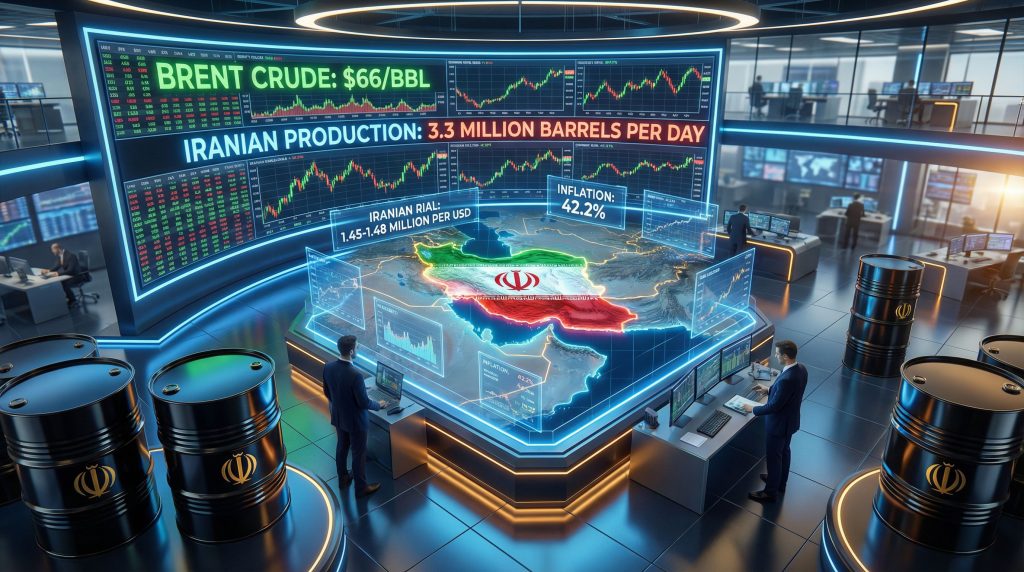
Current Iranian production averages 3.3 million barrels per day, positioning the country as the fourth-largest producer within OPEC framework coordination structures. Furthermore, this output represents approximately 3.2% of global crude oil supply, creating meaningful market influence despite sanctions-related constraints that have reduced production from historical peaks exceeding 3.8 million barrels per day prior to 2018. Analysts tracking OPEC production insights note that Iranian capacity remains a crucial variable in global supply calculations.
The strategic value of Iran's geographic position cannot be understated. Iranian territory provides control over critical sections of the Strait of Hormuz, a maritime chokepoint through which approximately 21-22% of global petroleum liquids transit daily. This waterway, measuring only 21 miles at its narrowest point, represents one of the world's most critical energy security vulnerabilities, with any disruption potentially affecting 21 million barrels per day of crude oil and petroleum product flows.
Reserve Quality and Production Characteristics
Iranian crude oil fields demonstrate favourable geological characteristics that distinguish them from many other major producing regions. The majority of Iranian crude production features medium-gravity characteristics with API ratings between 28-34 degrees, making it suitable for a wide range of refinery configurations globally. Sulphur content typically ranges from 1.0-2.5%, classifying most Iranian crude as medium-sour, which commands specific pricing differentials in international markets.
The North Pars/South Pars gas field complex, shared with Qatar, represents one of the world's largest natural gas reserves, adding substantial hydrocarbon wealth beyond crude oil production capacity. This dual oil and gas resource base provides diversified energy export potential, though international sanctions have constrained development of these assets significantly.
Economic Crisis Dynamics and Domestic Instability
Iran's economic foundation has experienced severe deterioration across multiple indicators, creating conditions that directly contributed to widespread civil unrest during January 2026. The Iranian rial's collapse represents one of the most dramatic currency devaluations globally, with the exchange rate deteriorating to approximately 1.45-1.48 million rials per U.S. dollar by mid-January 2026.
This currency depreciation reflects a cumulative decline exceeding 50% over the preceding 24-month period, with particularly acute deterioration during crisis periods. The rial's collapse creates cascading effects throughout the domestic economy, as imported goods become prohibitively expensive while domestic wages fail to keep pace with inflation. In addition, the economic pressures have contributed to trade war impacts globally as nations reconsider their energy security strategies.
Inflation Measurement Discrepancies
Official Iranian inflation statistics reported 42.2% annual price increases as of January 2026, though independent economic analysis suggests these figures substantially understate actual price pressures experienced by ordinary citizens. Shadow economy research indicates actual inflation for essential goods categories approaches 75-80% annually, creating a significant gap between government-reported conditions and lived economic reality.
This divergence between official and actual inflation reflects several methodological issues:
- Official measurement baskets may underweight items experiencing severe price increases
- Government-subsidised goods receive disproportionate weighting in official calculations
- Black market pricing for scarce goods remains excluded from official surveys
- Regional price variations may not be adequately captured in national statistics
Food price inflation has exceeded official statistics substantially, with bread prices increasing 60-70% year-over-year, meat prices rising 50-65%, and dairy products experiencing 45-55% increases. These essential commodity price increases directly impact household purchasing power and contribute to social unrest pressures.
Oil Revenue Constraints and Fiscal Pressures
Iranian government revenues have declined substantially due to sanctions limiting crude oil export capacity and constraining access to international financial systems. Oil revenues historically represented 60-70% of government foreign exchange earnings but fell to approximately 30-40% of historical averages during peak sanction periods.
This revenue decline occurs simultaneously with increased government expenditure requirements for domestic security, subsidy programs, and economic stabilisation efforts. Consequently, the resulting fiscal deficits contribute to monetary expansion and additional inflationary pressures, creating a self-reinforcing cycle of economic deterioration.
Oil Market Response Mechanisms During Geopolitical Crises
Energy markets demonstrate specific behavioural patterns when processing geopolitical risk information, with pricing mechanisms reflecting probability-weighted assessments of multiple disruption scenarios rather than binary outcomes. During the January 2026 Iran protests oil prices experienced significant volatility as markets incorporated changing assessments of intervention probabilities and potential supply disruptions.
Brent crude prices surged above $66 per barrel during peak uncertainty periods, representing the upper end of the preceding 12-week trading range. The specific price trajectory demonstrated classic risk-premium patterns: initial spikes during uncertainty peaks, followed by gradual decline as protest suppression became evident, and ultimate stabilisation at $64.19 per barrel by January 19, 2026.
Derivatives Market Risk Assessment
Options markets provided insight into market participants' assessment of tail-risk scenarios, with certain contracts pricing potential crude prices reaching $85-91 per barrel under complete Iranian supply disruption scenarios. These derivative pricing levels reflected sophisticated probability-weighted calculations incorporating multiple potential outcomes:
| Risk Scenario | Market-Implied Probability | Potential Price Impact | Expected Duration |
|---|---|---|---|
| Partial production cuts (0.5-1.0 mb/d) | Moderate (25-30%) | $5-10/bbl premium | Weeks to months |
| Complete export halt (2.5-3.0 mb/d) | Low-Moderate (15-20%) | $15-25/bbl premium | Months |
| Strait of Hormuz closure | Low (5-10%) | $30-50/bbl premium | Days to weeks |
The Iran premium during peak uncertainty was estimated at approximately $3-8 per barrel, representing 5-12% of baseline crude prices. As noted by IG market analyst Tony Sycamore, markets demonstrated swift unwinding of this premium when signs of easing protests emerged, highlighting the reactive nature of geopolitical risk pricing.
Supply Chain Vulnerability Analysis
Global spare crude production capacity remains concentrated primarily among Gulf Cooperation Council members, with Saudi Arabia, UAE, and Kuwait maintaining the majority of readily available additional output. This concentration creates specific vulnerability patterns when Iranian supply faces potential disruption.
A partial Iranian production reduction of 0.5-1.0 million barrels per day could theoretically be offset through spare capacity activation, though this would eliminate virtually all available buffer capacity globally. However, complete Iranian export cessation would create supply deficits exceeding spare capacity availability, necessitating either demand destruction through higher prices or coordinated strategic petroleum reserve releases.
Government Suppression Strategies and Market Stabilisation
Iranian authorities implemented comprehensive suppression measures that effectively quelled immediate unrest while demonstrating the government's capacity for maintaining control despite severe economic pressures. These measures included nationwide internet blackouts, Revolutionary Guard force mobilisation, and reported deployment of allied militia units from neighbouring countries.
The reported casualty toll of approximately 5,000 fatalities during peak crackdown periods illustrates the intensity of government response and the extent of civil unrest that had developed. This level of suppression activity succeeded in reducing immediate protest intensity but failed to address underlying economic grievances driving social unrest.
International Policy Response Coordination
The Trump administration's response included multiple policy instruments designed to pressure Iranian authorities while avoiding direct military intervention:
- Implementation of 25% tariffs on nations maintaining Iranian trade relationships
- Expanded sanctions targeting officials involved in protest suppression
- Enhanced military presence in Gulf waters as deterrent positioning
- Diplomatic pressure through UN Security Council briefings and allied coordination
These policy responses demonstrated preference for economic pressure over military intervention while maintaining credible deterrent capabilities. Furthermore, the combination of economic sanctions and military positioning created market uncertainty about potential escalation pathways, contributing to tariff policy effects on global trading relationships.
Regional Energy Security Implications
Iran's domestic instability creates ripple effects throughout Middle Eastern energy networks that extend beyond immediate supply concerns. Gulf states maintain relationships with Iranian authorities that complicate regional response strategies, while shared oil field developments and maritime boundary agreements create interdependencies that persist despite political tensions.
The potential for protest activity to spread to other regional producers represents an additional risk factor that energy markets must evaluate. Historical precedents from the Arab Spring period demonstrate how domestic unrest can propagate across borders, particularly when economic grievances create similar pressures in neighbouring countries.
Strategic Petroleum Reserve Policies
Major oil-consuming nations maintain strategic petroleum reserves as buffer capacity against supply disruptions, though reserve release coordination requires careful timing and international cooperation. The U.S. Strategic Petroleum Reserve contains approximately 400-450 million barrels, while International Energy Agency member countries collectively maintain 1.5 billion barrels of emergency reserves.
Reserve release effectiveness depends on disruption duration and severity, with short-term disruptions more easily managed through strategic stocks than extended supply interruptions. For instance, Iranian disruption scenarios require assessment of potential duration to determine appropriate reserve utilisation strategies.
The next major ASX story will hit our subscribers first
Investment Strategy Implications and Risk Management
Energy sector investors must incorporate Iranian instability into comprehensive risk management frameworks that account for multiple potential scenarios and their market implications. Traditional portfolio diversification strategies may provide limited protection during geopolitical crises that affect broad energy commodity categories simultaneously.
Hedging Strategy Development
Institutional investors and energy companies employ various hedging mechanisms to manage crude price volatility:
- Futures contracts for establishing price floors and ceilings
- Options strategies for asymmetric risk protection
- Swap agreements for converting floating price exposure to fixed costs
- Geographic diversification across multiple supply sources
- Strategic inventory management to buffer short-term disruptions
The effectiveness of these hedging approaches depends on correlation patterns between different crude oil benchmarks and the duration of potential supply disruptions. Iranian-related volatility typically affects all major crude benchmarks simultaneously, limiting the effectiveness of spread-based hedging strategies. Additionally, tracking oil price movements becomes crucial for timing hedging decisions effectively.
Broader Portfolio Implications
Iranian developments influence multiple asset classes beyond energy commodities, creating portfolio-wide risk exposures that require comprehensive management approaches:
- Currency markets experience flight-to-safety flows toward reserve currencies
- Precious metals attract safe-haven investment during geopolitical uncertainty
- Regional equity markets face pressure from increased political risk premiums
- Transportation and logistics sectors benefit from higher freight rates during supply chain disruptions
Market Psychology and Behavioural Dynamics
Energy market psychology during geopolitical crises demonstrates specific behavioural patterns that can create price movements disproportionate to actual supply impacts. Market participants often overreact to initial uncertainty, creating volatility spikes that subsequently correct as actual risk assessments become more refined.
The January 2026 Iran protests oil prices response exemplified these behavioural dynamics. Initial price spikes reflected worst-case scenario pricing, while subsequent corrections occurred as market participants concluded that actual supply disruption probabilities were lower than initially feared.
Information Processing and Price Discovery
Modern commodity markets process information continuously through electronic trading platforms that operate globally across multiple time zones. News regarding Iranian developments can trigger immediate price responses regardless of trading session location, creating 24-hour price discovery mechanisms.
Social media and real-time news reporting accelerate information transmission, though this can also amplify misinformation impacts on short-term price movements. Consequently, market participants must distinguish between verified information and speculation when making trading decisions during rapidly evolving geopolitical situations.
Technical Analysis and Market Structure Considerations
Oil futures markets demonstrate specific technical characteristics during geopolitical stress periods that differ from normal trading patterns. Volume typically increases substantially during uncertainty periods as both hedging activity and speculative trading intensify.
Backwardation patterns often emerge or strengthen during supply disruption concerns, as near-term delivery contracts command premiums over longer-dated futures. This market structure reflects expectations that current disruption concerns may resolve over time, reducing longer-term supply risk premiums.
What Factors Drive Liquidity During Geopolitical Crises?
Market liquidity can deteriorate during extreme geopolitical uncertainty as market makers widen bid-ask spreads to compensate for increased volatility and position risk. This liquidity reduction can amplify price movements beyond levels justified by fundamental supply-demand factors.
High-frequency trading algorithms may withdraw from markets during periods of extreme volatility, further reducing liquidity and potentially creating temporary price dislocations. These technical market structure factors can create additional price volatility beyond geopolitical risk fundamentals. Moreover, understanding economics behind Iranian unrest helps explain why markets remain sensitive to developments in the region.
Long-term Structural Considerations and Outlook
Iran's economic challenges extend beyond immediate political stability concerns, encompassing structural issues that will persist regardless of short-term protest outcomes. The sanctions regime constraining Iranian energy exports is likely to continue under current U.S. policy frameworks, limiting Iranian market influence over intermediate time horizons.
Currency stabilisation requires fundamental policy reforms addressing fiscal deficits, monetary expansion, and international isolation. Without access to international financial institutions and foreign investment, Iran's economic recovery options remain severely constrained. However, regional producers like the US face their own challenges, as evidenced by the US oil production decline that affects global supply calculations.
Energy Infrastructure Investment Needs
Iranian oil production infrastructure requires substantial investment to maintain current output levels and develop additional capacity. International sanctions limit access to advanced drilling technology, production equipment, and technical expertise necessary for optimal field development.
Deferred maintenance on existing production facilities creates long-term production decline risks even without additional sanctions pressure. The reserve-to-production ratio exceeding 100 years indicates substantial resource availability, though extraction requires continued capital investment currently constrained by international restrictions.
Scenario Analysis and Future Risk Assessment
Multiple scenarios for Iranian political and economic development create different implications for global energy markets over various time horizons. Base case assumptions suggest continued economic pressure and periodic social unrest without fundamental regime change or complete state collapse.
Upside scenarios involving sanctions relief or political reform could potentially add 1-2 million barrels per day to global supply within 12-18 months, creating downward pressure on crude prices. Downside scenarios involving increased international isolation or domestic instability could reduce Iranian production further below current levels.
Probabilistic Risk Modeling
Energy market participants increasingly employ probabilistic modelling approaches that assign percentage likelihood estimates to different scenarios rather than relying on single-point forecasts. These models incorporate multiple variables including sanctions policy, domestic political stability, regional conflict risks, and global demand growth patterns.
Monte Carlo simulation techniques allow for testing portfolio performance under thousands of potential scenario combinations, providing more robust risk management frameworks than traditional sensitivity analysis approaches. These quantitative methods become particularly valuable during periods of elevated geopolitical uncertainty.
The intersection of Iran's domestic economic crisis with global energy market dynamics illustrates the complex relationships between local political developments and international commodity pricing. Understanding these connections requires analysis of both immediate market mechanisms and longer-term structural factors that will influence energy security considerations over multiple time horizons.
Market participants must balance current risk assessment with scenario planning for multiple potential futures, incorporating both upside and downside possibilities into comprehensive risk management strategies. The Iranian situation demonstrates how domestic economic mismanagement can create international market implications through the interconnected nature of global energy infrastructure systems.
This analysis incorporates publicly available information and market data current as of January 19, 2026. Energy market conditions and geopolitical situations can change rapidly, requiring continuous monitoring and assessment updates. Investment decisions should consider multiple information sources and professional risk management consultation.
How Can Geopolitical Energy Crises Create Investment Opportunities?
Discovery Alert's proprietary Discovery IQ model delivers real-time alerts on significant mineral discoveries across the ASX, helping investors identify actionable opportunities during volatile market conditions like those triggered by Iran's domestic instability. Understanding why major mineral discoveries can lead to substantial market returns by exploring Discovery Alert's dedicated discoveries page, showcasing historic examples of exceptional outcomes, whilst beginning your 30-day free trial today to position yourself ahead of market volatility.