July 18, 2026
Current Global Energy Market Transformation Under Crisis Conditions
The contemporary energy landscape faces unprecedented structural shifts as traditional supply chains encounter severe disruption patterns not witnessed since the 1970s petroleum crises. The Trump Iran war supply shock has fundamentally altered how energy markets operate, creating a complex web of supply constraints and geopolitical risk premiums. Multiple converging factors have created conditions where oil price movements demonstrate extreme volatility patterns.
Historical precedents suggest that major energy disruptions typically emerge from conflicts in strategically important production regions. However, the current situation demonstrates unique characteristics that distinguish it from previous supply shocks. The interconnected nature of modern energy infrastructure, combined with sophisticated targeting capabilities, has amplified vulnerability across multiple energy sectors simultaneously.
Energy market participants now confront a reality where traditional spare capacity buffers prove insufficient to absorb disruptions of the magnitude currently observed. Insurance markets have responded with dramatic premium increases, effectively creating additional supply constraints beyond physical limitations.
When big ASX news breaks, our subscribers know first
Understanding the Trump Iran War Supply Shock Mechanics
The Trump Iran war supply shock represents a convergence of geopolitical escalation and critical infrastructure vulnerability that has fundamentally altered global energy flow patterns. This crisis emerged from strategic miscalculations by policymakers who underestimated the potential for comprehensive infrastructure targeting across multiple chokepoints simultaneously.
Scale and Scope of Current Disruptions
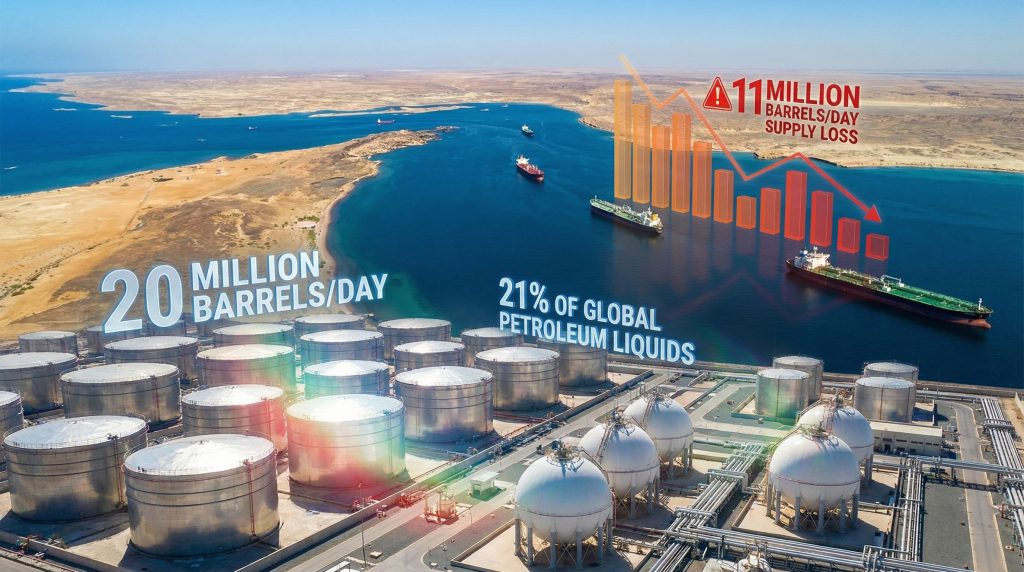
Current energy supply disruptions affect approximately 21% of global petroleum liquids trade through the Strait of Hormuz alone, according to U.S. Energy Information Administration data. The scale of affected volumes creates unprecedented market stress, with multiple critical infrastructure facilities experiencing various degrees of operational disruption.
Key Disruption Metrics:
• Oil transit disruption: 20 million barrels/day affected
• LNG supply reduction: Significant capacity offline
• Total supply loss: 11 million barrels/day
• Insurance premium increases: 500-800% for remaining transits
• Alternative route capacity: Limited to 5-7 million barrels/day
The magnitude of these disruptions exceeds most analysts' worst-case scenario planning. Furthermore, the sophisticated nature of coordinated asymmetric warfare tactics targeting energy infrastructure highlights inadequate traditional risk assessment models.
Intelligence Failures and Strategic Miscalculations
Military planners historically underestimated the sophisticated nature of regional response capabilities, particularly regarding coordinated simultaneous strikes across multiple critical facilities. The 2019 attacks on Saudi Aramco facilities, which temporarily reduced global oil supply by 5.7 million barrels per day, provided a preview of current targeting precision.
Intelligence assessments failed to adequately account for:
• Enhanced drone and missile capabilities
• Regional proxy network coordination
• Sophisticated infrastructure targeting knowledge
• Insurance market vulnerability to war risk exclusions
Lloyd's of London and other major maritime insurers suspended coverage for Strait of Hormuz transits, creating de facto blockade conditions. Consequently, oil price stagnation has been replaced by dramatic price spikes as financial mechanisms amplify physical supply constraints.
Critical Chokepoints Driving Energy Price Volatility
How Vulnerable is the Strait of Hormuz?
The Strait of Hormuz represents the world's most strategically important energy transit route, handling approximately 21% of global petroleum liquids and significant LNG volumes destined primarily for Asian markets. Current operational restrictions have reduced daily flows from over 20 million barrels oil equivalent to less than 2 million barrels per day.
Strait of Hormuz Impact Analysis:
| Metric | Pre-Crisis Volume | Current Operational Level | Percentage Reduction |
|---|---|---|---|
| Crude Oil Transit | 17 million bpd | <1.5 million bpd | 91% reduction |
| LNG Shipments | 3.5 million boe/day | Minimal authorized flows | 85%+ reduction |
| Refined Products | 2-3 million bpd | Sporadic tanker movements | 80%+ reduction |
Alternative routing through Red Sea pipelines provides only 5-7 million barrels per day capacity, insufficient to absorb the full disruption. Saudi Arabia's Yanbu pipeline system operates near maximum capacity but cannot compensate for the complete Strait of Hormuz closure.
Infrastructure Damage Assessment
Critical energy infrastructure has sustained varying degrees of damage, with repair timelines extending from months to years depending on facility complexity. The concentrated nature of LNG infrastructure makes repairs particularly challenging, as specialized equipment requirements create extended downtime periods.
Facility Impact Summary:
• Qatar Ras Laffan LNG Complex: Multiple train outages affecting global LNG supply
• Saudi Yanbu Terminal: Reduced throughput capacity impacting Red Sea alternative routes
• UAE Fujairah Hub: Storage and blending operations disrupted
• Iranian Export Facilities: Various degrees of operational impairment
Historical precedents from natural disaster damage suggest 18-24 month repair timelines for major LNG facility reconstruction. Moreover, the Trump Iran war supply shock has demonstrated how rapidly energy security can deteriorate.
Regional Economic Adaptation Strategies
North American Energy Independence Advantages
The United States demonstrates relative resilience due to domestic production capabilities averaging 13.2 million barrels per day and substantial refining infrastructure. However, integrated global markets ensure that refined product prices reflect international crude oil benchmarks despite domestic supply security.
U.S. Market Response Indicators:
• Refining capacity utilisation: Operating above 95% to maximise output
• Strategic Petroleum Reserve releases: 1 million barrels per day authorised
• Gasoline prices: Surged past $4 per gallon for first time since 2022
• Political pressure: Rising fuel costs create electoral considerations
The Trump administration's approach to Strategic Petroleum Reserve management emphasises market stabilisation over long-term stockpile preservation. Additionally, the US natural gas forecast indicates potential for enhanced domestic energy security through increased production.
European Energy Security Crisis Intensification
European economies face compounded challenges, having already reduced Russian gas imports by approximately 80% following the Ukraine conflict. The Middle East crisis eliminates critical LNG alternative supplies precisely when heating demand typically peaks seasonally.
European Vulnerability Assessment:
• LNG import dependency: 45% of total gas supply
• Middle East LNG share: 35% of total LNG imports
• Industrial curtailment: 15-20% reduction in energy-intensive manufacturing
• Recession probability: 70% according to European Central Bank stress testing
Manufacturing sectors implement emergency demand management protocols, with aluminium smelters, steel producers, and chemical plants reducing operations. These industrial curtailments create secondary economic effects through supply chain disruptions and employment impacts.
Asian Manufacturing Supply Chain Pressures
Asian economies demonstrate the highest vulnerability due to heavy reliance on Middle Eastern energy imports and limited alternative supply sources. South Korea, Japan, and China face particularly acute challenges as their manufacturing sectors depend on consistent energy flows.
Emergency protocols include:
• Industrial load shedding during peak demand periods
• Enhanced energy efficiency mandates for manufacturing
• Accelerated renewable energy deployment timelines
• Strategic fuel stockpile utilisation
Fiscal Breakeven Analysis for Energy Producers
Gulf State Budget Sustainability Under High Price Environment
Different Gulf producers demonstrate varying fiscal resilience based on budget breakeven oil prices and economic diversification strategies. The current high-price environment benefits some producers significantly while others struggle to achieve fiscal balance.
Gulf State Fiscal Breakeven Analysis:
| Country | Fiscal Breakeven Price | Current Price Benefit | Budget Outlook |
|---|---|---|---|
| UAE | $66/barrel | Substantial surplus expected | Strong multi-year position |
| Qatar | $50-55/barrel | Maximum benefit scenario | Enhanced fiscal flexibility |
| Saudi Arabia | $90-100/barrel | Marginal improvement only | Deficit reduction likely |
| Oman | $65-80/barrel | Moderate surplus potential | Balanced budget achievable |
| Bahrain | $125+/barrel | Insufficient for balance | Continued deficit financing |
The UAE's economic diversification strategy, emphasising financial services, tourism, and renewable energy, provides fiscal stability at relatively low oil prices. In contrast, the OPEC production impact continues to influence global supply dynamics amidst the crisis.
North American Producer Economics
Alberta's fiscal position improves substantially under current price conditions, though the province still faces challenges achieving budget balance. Finance Minister Nate Horner indicates that while the deficit will narrow considerably from earlier projections, a surplus remains unlikely for the current fiscal year.
Alberta Fiscal Impact Calculations:
• Revenue sensitivity: $680 million per $1 WTI price change
• 2026 breakeven requirement: $74-77 average oil price
• Projected deficit reduction: From $9.4 billion to approximately $2-3 billion
• Surplus probability: Requires sustained $85+ oil through full fiscal year
The province's heavy dependence on oil revenues creates vulnerability to price volatility. Furthermore, this highlights the importance of economic diversification strategies for resource-dependent jurisdictions.
Long-Term Energy Investment Strategy Transformation
Accelerated Energy Transition Economics
High fossil fuel prices create complex investment allocation decisions across energy sectors. While short-term fossil fuel project returns improve dramatically, the same high prices accelerate renewable energy investment by enhancing alternative technology competitiveness.
Investment Flow Redirection Patterns:
• Renewable energy capital expenditure: 25-30% increase in announced projects
• Strategic petroleum infrastructure: Enhanced storage and pipeline investments
• LNG terminal development: Expedited permitting for import facilities
• Nuclear power revival: Renewed baseload generation interest
The crisis demonstrates the strategic value of energy independence, driving policy support for domestic renewable energy deployment. Consequently, the Trump Iran war supply shock accelerates energy transition and security considerations despite high fossil fuel prices.
Geopolitical Risk Premium Integration
Energy markets permanently reprice geopolitical risk, with implications extending beyond immediate price impacts to fundamental project economics. Traditional financial models require adjustment to account for elevated baseline risk levels.
Risk Premium Adjustments:
• Middle East project hurdle rates: Increased by 200-300 basis points
• Alternative supply route premiums: 10-15% price premiums for non-chokepoint routes
• Strategic stockpile economics: Enhanced value proposition for domestic storage
• Energy security insurance: Development of new financial instruments
Investment decision frameworks now incorporate scenario planning for extended supply disruptions. This shift favours investments in geographically diversified portfolios and technologies that reduce dependence on vulnerable supply chains.
The next major ASX story will hit our subscribers first
Economic Scenario Development and Probability Assessment
What Are the Most Likely Outcomes?
Three primary scenarios emerge from current geopolitical analysis, each with distinct probability assessments based on diplomatic incentives and military capabilities. The Trump Iran war supply shock trajectory depends significantly on international mediation efforts and regional power calculations.
Scenario 1: Rapid Diplomatic Resolution (25% Probability)
Diplomatic engagement succeeds in restoring normal energy flows within 3-6 months, though elevated risk premiums become permanently embedded in energy pricing structures. This scenario requires significant political compromises from all parties and international pressure to prioritise energy market stability.
Economic implications include:
• Oil price normalisation to $75-85 range by late 2026
• Inflation pressure moderation by Q3 2026
• Permanent elevation in strategic reserve policies globally
• Enhanced diversification of energy supply chains
Scenario 2: Extended Standoff (50% Probability)
Prolonged restrictions lasting 12-18 months force structural economic adaptations and accelerate energy transition timelines. This scenario reflects the most likely outcome given current geopolitical dynamics and limited incentives for rapid resolution.
Economic implications include:
• Sustained $90-110 oil price environment through 2027
• Recession probability in energy-import dependent regions exceeds 60%
• Accelerated renewable energy deployment reducing fossil fuel demand
• Permanent supply chain diversification away from vulnerable chokepoints
Scenario 3: Regional Conflict Escalation (25% Probability)
Broader military engagement could eliminate 25-30% of global energy supplies, triggering emergency economic measures worldwide. This scenario involves direct military confrontation between major powers.
Economic implications include:
• Oil prices potentially reaching $150-200 range
• Global recession with stagflation characteristics
• Emergency rationing and industrial curtailment programmes
• Fundamental restructuring of international energy architecture
The Brookings Institution analysis suggests that "the full economic impact of energy market disruption may not materialise for several quarters", indicating delayed economic consequences.
Strategic Market Participant Implications
Energy Security Policy Transformation
The Trump Iran war supply shock demonstrates the fragility of just-in-time energy supply chains and highlights the strategic importance of diversified energy portfolios. Market participants must integrate substantially higher geopolitical risk premiums into long-term planning while governments reassess energy security policies fundamentally.
Critical success factors for market adaptation:
• Supply chain resilience: Diversification away from single-point-of-failure transit routes
• Strategic storage enhancement: Improved inventory management for disruption scenarios
• Alternative energy acceleration: Reduced dependence on geopolitically sensitive regions
• Financial risk management: Sophisticated hedging strategies for extended volatility periods
Investment Strategy Considerations
Energy market participants require fundamental shifts in investment approach, balancing short-term opportunities from high prices against long-term structural changes. The crisis accelerates existing trends while creating new investment themes.
Key investment considerations:
• Energy infrastructure located in stable jurisdictions commands premium valuations
• Renewable energy projects benefit from enhanced economic competitiveness
• Strategic storage facilities demonstrate improved return profiles
• Energy-efficient technologies gain accelerated adoption curves
The crisis ultimately represents both a significant challenge and a catalyst for transformation within global energy markets. However, according to CNN's energy market analysis, participants who successfully navigate immediate disruptions while positioning for long-term structural changes will likely emerge with enhanced competitive positions.
Risk Management Disclaimer: The analysis presented involves significant uncertainties regarding geopolitical developments, military actions, and economic responses. Energy market conditions can change rapidly based on diplomatic, military, or economic developments not anticipated in current scenario planning. Market participants should conduct independent analysis and maintain flexible strategies capable of adapting to rapidly evolving conditions.
Want to Capitalise on Energy Market Volatility?
With global energy markets experiencing unprecedented disruption from the Trump Iran war supply shock, savvy investors are turning to commodity-focused opportunities for potential gains. Discovery Alert's proprietary Discovery IQ model instantly identifies significant ASX mineral discoveries across energy-critical commodities, providing subscribers with real-time alerts on actionable investment opportunities that could benefit from the current high-price environment. Begin your 14-day free trial today to position yourself ahead of market developments and gain insights into the next generation of energy and critical mineral discoveries.