May 15, 2026
Global energy markets operate through intricate coordination mechanisms that extend far beyond simple supply and demand dynamics. Russia and Saudi Arabia, two of the world's largest oil producers, have agreed to extend their voluntary oil cuts into 2024 in an effort to support crude prices amid ongoing market volatility. The petroleum industry's most influential production decisions emerge from sophisticated alliance structures that have evolved to manage market volatility through strategic output adjustments. Understanding how these coordination frameworks function requires examining the institutional mechanisms that govern production flexibility, the economic indicators that trigger policy shifts, and the geopolitical considerations that shape long-term market management strategies.
The Institutional Framework Behind Coordinated Production Management
The governance structure for global oil production coordination rests on the 2022 Declaration of Cooperation, which established formal mechanisms for voluntary production adjustments alongside traditional quota systems. This dual-track approach allows major producers to implement rapid market responses without requiring unanimous consensus across all participating nations.
The Joint Ministerial Monitoring Committee (JMMC) serves as the primary oversight mechanism, conducting regular assessments of market conditions and production compliance. Unlike mandatory quota enforcement, voluntary production adjustments operate through individual country commitments that can be modified based on unilateral decision-making processes.
Key Features of the Voluntary Adjustment Framework:
• Independent announcement mechanisms through national energy ministries
• Flexibility to extend, modify, or terminate commitments without collective approval
• No formal penalty structures for adjustment modifications
• Separate operational authority from traditional OPEC+ quota management
Evolution of Production Coordination (2023-2024)
The strategic implementation of voluntary production adjustments demonstrated significant coordination between major producers during 2023-2024. Saudi Arabia announced a 1 million barrel per day voluntary cut effective May 2023, representing an additional commitment beyond the October 2022 collective reduction of 2 million barrels per day.
Russia simultaneously extended its production reduction commitments, initially announcing a 500,000 barrel per day adjustment in June 2023, later extended through the end of 2024. These coordinated yet independently announced adjustments created a combined market impact of 1.5 million barrels per day during the initial implementation phase.
| Period | Saudi Action | Russia Action | Combined Impact |
|---|---|---|---|
| Q1 2023 | 1M bpd voluntary cut | 500K bpd reduction | 1.5M bpd removed |
| Q2-Q4 2023 | Extended cuts | Maintained reductions | 2M bpd total adjustment |
| Q1 2024 | Continued coordination | Deepened commitments | Market stabilization achieved |
The extension patterns revealed sophisticated market timing strategies. Saudi Arabia's December 2023 announcement extending cuts through Q1 2024 coincided with Russia's November decision to maintain reductions through 2024, demonstrating coordinated market management despite operating through separate decision-making processes.
When big ASX news breaks, our subscribers know first
Market Dynamics Driving Extended Production Adjustments
Economic indicators throughout 2025 revealed challenging market conditions that necessitated sustained production management strategies. Furthermore, the oil price rally experienced significant volatility, with benchmark crude experiencing declines exceeding 18% during various periods, creating uncertainty for both producers and consumers.
Global inventory levels reached critical thresholds as demand forecasting became increasingly complex amid economic uncertainty. Storage capacity utilisation approached concerning levels in key markets, while regional demand variations created geographic imbalances that traditional market mechanisms struggled to address effectively.
The 1.65 Million Barrel Framework Implementation
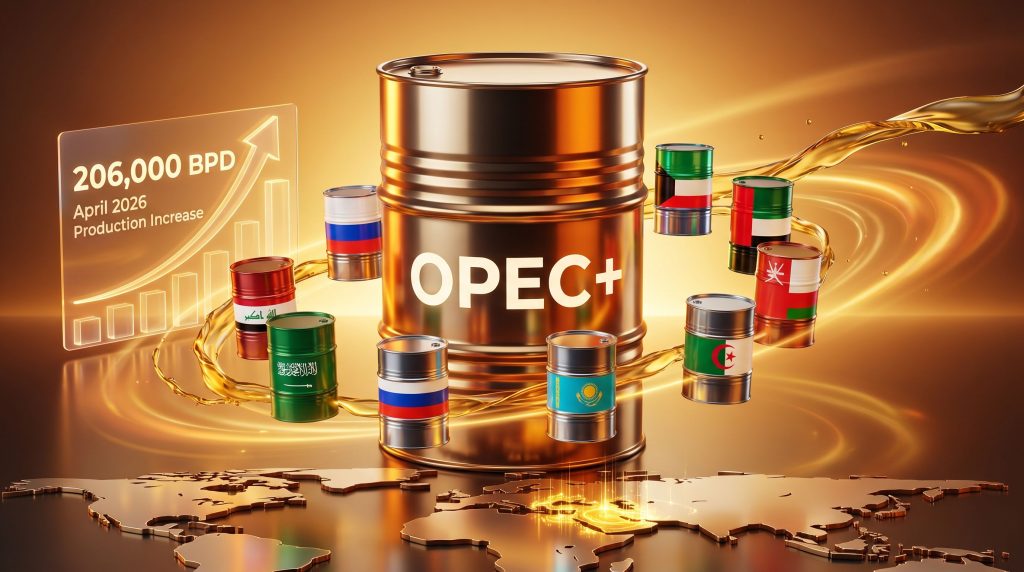
An eight-country coalition structure emerged to coordinate voluntary production adjustments totalling 1.65 million barrels per day. This framework incorporated compensation mechanisms for overproduction since January 2024, ensuring that participating countries could balance previous output variations with current market requirements.
"The coordination mechanism established clear market monitoring protocols with specific adjustment triggers, allowing participating nations to respond rapidly to changing economic conditions while maintaining overall production discipline across the coalition."
Participating Countries in the Coordination Framework:
• Saudi Arabia: Primary swing producer with maintained spare capacity
• Russia: Strategic production management despite geopolitical constraints
• Iraq: Infrastructure-constrained participation with compliance challenges
• United Arab Emirates: Enhanced capacity expansion initiatives
• Kuwait: Consistent compliance record with flexible adjustment capability
• Kazakhstan: Non-OPEC+ participant with independent policy coordination
• Algeria: Proportional contribution aligned with domestic capacity
• Oman: Supporting producer role with regional market focus
Strategic Production Management and Market Rebalancing
Market confidence indicators throughout early 2026 suggested fundamental supply-demand rebalancing conditions that supported gradual production increases. However, the ongoing oil and gas downturn required careful management strategies. Resilient global demand patterns emerged across multiple regions, while strategic inventory management created buffer capacity for potential supply variations.
The April 2026 decision to implement a carefully calibrated 206,000 barrel per day increase marked the first systematic reversal of voluntary cuts since 2023. This initial unwinding phase represented a measured approach to production normalisation, designed to test market absorption capacity while maintaining price stability.
Production Flexibility Leadership Mechanisms
Saudi Arabia's production management capabilities derive from several strategic advantages that enable effective swing producer operations. With proven reserves of approximately 270 billion barrels representing 17% of global reserves, combined with production costs among the lowest globally at $2-3 per barrel, Saudi Arabia maintains unique flexibility in market management.
The kingdom explicitly maintains spare capacity outside normal production specifically for supply disruption response and strategic market stabilisation. In addition, this capacity reserve, formalised within OPEC+ agreements, provides approximately 3 million barrels per day of readily available production capability.
Saudi Arabia's Multi-Level Production Strategy:
• Baseline quota compliance within OPEC+ framework (10-11 million bpd range)
• Voluntary adjustment capability (demonstrated 1 million bpd cuts in 2023)
• Strategic spare capacity maintenance (3 million bpd emergency reserve)
• Rapid scaling capability for market emergency response
Russia's production coordination operates through differentiated mechanisms that distinguish between announced production cuts and actual export reductions. Russian energy officials emphasise their voluntary commitments demonstrate OPEC+ solidarity despite external sanctions creating additional complexities in implementation.
The distinction between production cuts and export limitations reflects the geopolitical environment affecting Russian oil operations, where Western sanctions on insurance, shipping, and financing create practical export constraints beyond announced production adjustments.
Advanced Market Monitoring and Decision Support Systems
Real-time data integration systems enable sophisticated market analysis that guides production decisions across participating countries. Monthly production reporting incorporates verification processes from approximately 40 independent sources, ensuring accuracy in compliance assessment and market impact analysis.
Third-party monitoring organisations provide independent verification of production levels and quota compliance, creating transparency that supports market confidence. Furthermore, the implementation of comprehensive trade war strategies has influenced global energy demand patterns. Forward-looking demand forecasting methodologies integrate economic indicators, seasonal patterns, and geopolitical risk assessments to project market requirements.
Technology Integration in Production Optimisation
Modern production management incorporates advanced analytics that optimise both individual field operations and collective market positioning. Real-time monitoring systems track production efficiency, enabling rapid adjustments to meet both operational targets and market commitments.
Key Monitoring Components:
• Satellite-based production facility monitoring for independent verification
• Economic indicator integration for demand forecasting accuracy
• Geopolitical risk assessment models for supply disruption probability
• Market sentiment analysis through commodity trading pattern evaluation
• Regional demand variation tracking across major consumption centres
Flexibility mechanisms built into the coordination framework allow for emergency response procedures during supply disruptions. Consequently, voluntary production adjustments can be modified rapidly when market conditions change unexpectedly.
Long-Term Market Structure Evolution
The transition from reactive crisis management to proactive market shaping represents a fundamental evolution in global oil market governance. Production coordination mechanisms now incorporate environmental, social, and governance considerations alongside traditional economic factors, reflecting broader energy sector transformation trends.
Technology adoption in production efficiency optimisation enables participating countries to maintain competitive cost structures while managing output levels strategically. This technological integration supports sustainable production practices that align with long-term market development goals.
Competitive Dynamics with Independent Producers
Non-OPEC+ producers, particularly U.S. shale operations, demonstrate distinct response patterns to coordinated production adjustments. American shale production exhibits rapid scaling capability that can partially offset coordinated cuts, creating dynamic market interactions that require ongoing strategic assessment.
Brazilian and Norwegian production growth trajectories operate independently of OPEC+ coordination, while emerging producers in various regions increasingly influence global market balances. For instance, integration strategies for these independent producers present ongoing challenges for traditional coordination mechanisms.
Market Share Considerations:
• U.S. shale response times: 6-12 months for significant production changes
• Brazilian offshore expansion: Long-term capacity growth independent of OPEC+ decisions
• Norwegian production stability: Consistent output with limited coordination participation
• Emerging producer integration: Gradual market share shifts requiring strategic adaptation
Investment Implications and Risk Assessment Framework
Energy investment strategies must account for production volatility patterns created by voluntary coordination mechanisms. Long-term planning requires sophisticated risk assessment that considers both the effectiveness of production management and potential policy changes affecting coordination sustainability.
Geopolitical risk factors significantly influence coordination effectiveness, particularly as participating countries face varying external pressures that may affect their commitment to collective production management. However, the broader economic policy impacts continue to shape market dynamics. Diversification strategies become essential for investors seeking exposure to energy markets operating under coordinated production frameworks.
Price Forecasting and Market Signal Integration
Historical analysis reveals correlation patterns between production cuts and price support effectiveness, though these relationships vary significantly based on broader economic conditions and competitive supply responses. Forward curve implications of gradual unwinding strategies suggest market expectations for sustained coordination rather than abrupt policy reversals.
Volatility patterns during policy transition periods typically exhibit increased trading ranges as markets adjust to changing supply expectations. Understanding these transition dynamics provides valuable insights for both short-term trading strategies and long-term investment positioning.
Investment Risk Factors:
• Production policy sustainability across varying geopolitical conditions
• Non-OPEC+ supply response effectiveness and timing
• Demand growth rate variations affecting market balance requirements
• Renewable energy transition timeline impacts on long-term oil demand
• Regional market development creating geographic supply-demand imbalances
The next major ASX story will hit our subscribers first
What Determines Policy Adjustments?
Market condition thresholds serve as primary indicators for production adjustment timing. The phenomenon of oil price stagnation above historical threshold levels, typically in the $70-80 per barrel range, combined with strengthening demand signals across major consumption regions, creates conditions supporting gradual production increases.
Consensus-building mechanisms among participating countries require ongoing consultation processes that balance individual country economic needs with collective market management objectives. External factor integration, including geopolitical developments, economic growth forecasts, and environmental policy changes, influences adjustment timing and magnitude.
How Do Voluntary Cuts Differ from Mandatory Quotas?
Legal and operational distinctions create significant implementation differences between voluntary adjustments and traditional quota systems. Voluntary cuts operate through individual country commitments that can be modified through national decision-making processes, while mandatory quotas require collective agreement modifications.
Flexibility advantages in market response timing allow voluntary adjustments to be implemented more rapidly than quota changes, which require formal OPEC+ meeting processes and unanimous agreement. Compliance monitoring and enforcement variations reflect these operational differences, with voluntary cuts relying on political commitment rather than formal penalties.
Future Market Outlook
The coordination between Russia and Saudi Arabia, representing two of the world's largest oil producers, demonstrates how voluntary production management can achieve market stability objectives while maintaining operational flexibility. Their agreement to extend voluntary oil cuts into 2024 exemplifies the strategic cooperation that supports crude price stabilisation amid fluctuating global demand and supply disruptions.
This collaborative approach influences discussions among other OPEC+ member countries regarding potential adjustments to production levels, highlighting the dynamic nature of international oil market management. Furthermore, market participants closely monitor how these coordination mechanisms evolve in response to changing global economic conditions and energy transition trends.
The ongoing evolution of coordination mechanisms in the global energy sector reflects broader transformation patterns affecting traditional oil market governance structures. These changes suggest continued adaptation in production management strategies as markets navigate complex geopolitical and economic challenges.
Disclaimer: This analysis is based on publicly available information and should not be considered investment advice. Oil market dynamics involve complex geopolitical and economic factors that can change rapidly. Investors should conduct thorough research and consider consulting financial professionals before making investment decisions related to energy sector investments.
Ready to Discover the Next Energy Investment Opportunity?
Discovery Alert's proprietary Discovery IQ model delivers instant notifications about significant ASX mineral discoveries, including critical minerals powering the global energy transition. Stay ahead of market-moving announcements and secure your competitive advantage with actionable investment alerts powered by advanced AI technology that transforms complex exploration data into immediate trading opportunities.