August 19, 2026
Understanding the Fragility of Global Energy Supply Networks
The intricate web of international energy trade reveals fundamental vulnerabilities when geopolitical tensions intersect with economic dependencies. Modern energy markets have evolved into complex systems where single-source dependencies can create cascading effects across entire regions. These vulnerabilities become particularly pronounced when heavy crude oil grades, which require specialized refining infrastructure and represent significant capital investments, face sudden supply disruptions.
The concept of energy security extends beyond simple supply availability to encompass the stability of pricing mechanisms, transportation routes, and diplomatic relationships that underpin international oil trade. When examining these dynamics, the relationship between major energy importers and their suppliers often reflects broader geopolitical alignments and economic partnerships that can shift dramatically under changing political circumstances.
When big ASX news breaks, our subscribers know first
What Does China's Venezuelan Oil Import Collapse Mean for Global Energy Security?
The Scale of China's Venezuelan Oil Dependency Crisis
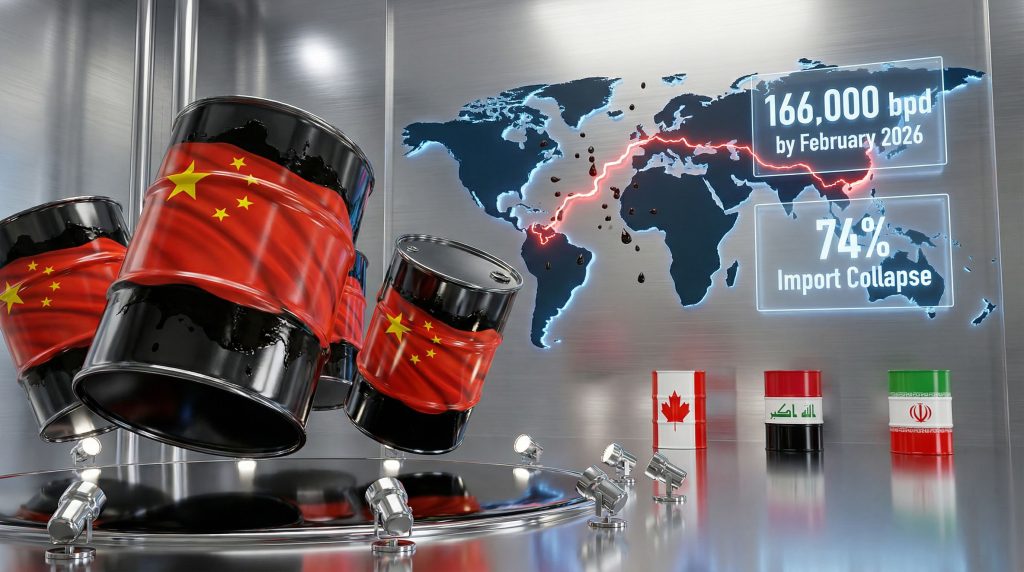
The transformation of China's energy import portfolio represents one of the most significant shifts in global oil trade patterns in recent years. Current projections indicate that China's imports of Venezuelan oil set to crumble dramatically to approximately 166,000 barrels per day by February 2026, representing a substantial 74% reduction from previous levels. This decline fundamentally alters a trade relationship that historically saw China absorbing between 50-89% of Venezuela's total oil exports.
To understand the magnitude of this disruption, consider that the loss of approximately 476,000 barrels per day represents more than just a statistical reduction. This volume constitutes a meaningful portion of global heavy crude availability and reflects the unwinding of what was once a cornerstone of China's energy diversification strategy. Furthermore, this development illustrates broader vulnerabilities in global energy supply chains, as detailed in our recent oil price rally analysis.
| Import Source | Daily Volume (bpd) | Vulnerability Rating | Alternative Availability |
|---|---|---|---|
| Venezuela | 166,000 (projected) | Very High | Limited |
| Russia | 2,100,000+ | Moderate | Partial |
| Saudi Arabia | 1,800,000+ | Low | High |
| Iraq | 1,200,000+ | Moderate | Moderate |
| Iran | Variable | High | Limited |
Quantifying the Energy Security Risk
China's total crude oil import portfolio exceeds 15 million barrels per day, making it the world's largest oil importer. Within this context, Venezuelan crude historically served a specialized role beyond its volumetric contribution. The specific gravity and chemical characteristics of Venezuelan heavy crude made it particularly valuable for certain refining processes and infrastructure investments that Chinese companies had developed specifically for this grade of oil.
The risk assessment framework reveals several critical factors:
- Infrastructure specificity: Chinese refineries have invested heavily in equipment designed to process heavy crude grades
- Economic exposure: Long-term contracts and financing arrangements create financial vulnerabilities
- Geopolitical implications: The reduction reflects broader sanctions enforcement and diplomatic tensions
Why Venezuelan Heavy Crude Matters More Than Volume Suggests
Technical Specifications Driving Chinese Demand
Venezuelan Merey crude possesses distinctive characteristics that differentiate it significantly from lighter crude grades traded globally. With an API gravity of approximately 16-17 degrees, this heavy crude requires specialized refining infrastructure capable of handling high-sulfur, high-viscosity feedstock. The sulfur content typically ranges from 2.4-2.6% by weight, necessitating sophisticated desulfurization processes.
Chinese refineries, particularly the independent "teapot" refineries that represent a substantial portion of the country's refining capacity, have developed specific capabilities for processing heavy crude grades. These facilities invested significantly in:
- Hydrocracking units designed for heavy crude conversion
- Coking facilities for residual fuel processing
- Specialized transportation and storage systems adapted for high-viscosity crude handling
The technical advantages of Venezuelan crude for Chinese refiners include:
- Optimal bitumen production: Heavy crude grades produce superior asphalt and road construction materials
- Fuel oil compatibility: High-viscosity characteristics suited for industrial fuel applications
- Refinery utilization: Existing infrastructure maximizes efficiency when processing similar gravity crude grades
Economic Fundamentals of the Trade Relationship
The pricing mechanisms governing Venezuelan crude sales to China have historically reflected substantial discounts to benchmark crude grades, typically ranging from $13-15 per barrel below comparable international prices. These discounts reflected several factors:
- Quality differentials: Heavy crude naturally trades at discounts to lighter grades
- Transportation costs: Extended shipping distances from South America to Asia
- Credit risk premiums: Political and economic uncertainties in Venezuela
- Processing complexity: Additional refining costs for heavy crude grades
The bilateral trade relationship extended beyond simple commodity transactions to include comprehensive financing arrangements. Chinese institutions provided an estimated $10-12 billion in loans to Venezuelan entities, with crude oil deliveries serving as collateral and repayment mechanism. These debt-for-oil structures created long-term dependencies that transcended normal commercial relationships.
How U.S. Enforcement Actions Reshape Global Oil Flow Patterns
The Mechanics of the U.S. Oil Blockade Strategy
The escalation of enforcement actions since December 2025 represents a comprehensive approach to restricting Venezuelan oil exports through multiple mechanisms. The U.S. Treasury's sanctions enforcement has implemented increasingly sophisticated measures targeting the entire Venezuelan oil export infrastructure.
Key enforcement mechanisms include:
- Vessel seizures: Direct interdiction of tankers carrying Venezuelan crude
- Financial sanctions: Restrictions on institutions facilitating oil trade payments
- Secondary sanctions: Threats against foreign companies engaging in prohibited transactions
- Licensing requirements: Mandatory permits for any Venezuelan oil trade
The impact on shadow fleet operations has been particularly significant. Vessels previously operating under flags of convenience or through complex ownership structures now face enhanced scrutiny and potential seizure. Maritime insurance providers have largely withdrawn coverage for Venezuelan oil transport, further complicating logistics.
Market Response and Price Discovery Mechanisms
The enforcement actions have created significant disruptions to traditional price discovery mechanisms for Venezuelan crude. Brent-Venezuelan crude price differentials have widened considerably as transportation costs and risk premiums increase. Alternative routing through Malaysia and Brazil, previously used to obscure origin tracking, faces enhanced monitoring and potential interdiction.
Licensed trading companies, including Trafigura and Vitol, have secured U.S. permits to continue limited Venezuelan oil trade under strict oversight. These arrangements require:
- Detailed reporting of all transactions and counterparties
- Volume restrictions based on licensed allocations
- Enhanced compliance monitoring and regular audits
- Revenue management ensuring payments support authorized humanitarian purposes
What Alternative Supply Sources Can Fill China's Venezuelan Gap?
Comparative Analysis of Heavy Crude Alternatives
The search for Venezuelan crude alternatives faces several fundamental constraints. Canadian oil sands represent the most technically comparable substitute, offering similar API gravity and processing characteristics. However, Canadian heavy crude faces significant infrastructure limitations. Moreover, the u.s. oil production decline further complicates North American supply dynamics.
Canadian Supply Potential:
- Current production: Approximately 3.2-3.5 million barrels per day
- Export capacity: Limited by pipeline constraints to Pacific terminals
- Transportation costs: Higher shipping distances offset by stable political environment
- Quality specifications: Similar heavy crude characteristics requiring comparable refining infrastructure
Iranian Crude Under Sanctions:
Iran maintains substantial production capacity of approximately 3.2-3.8 million barrels per day, with established historical relationships with Chinese refiners. However, comprehensive U.S. sanctions create significant risks for large-scale imports, including potential secondary sanctions on Chinese entities.
Iraqi Heavy Crude Options:
Iraqi production of approximately 4.5-4.7 million barrels per day includes substantial heavy crude volumes through Basra export terminals. Basra Light, with API gravity of 28-30 degrees, offers a compromise between Venezuelan heavy crude and lighter international grades.
Cost-Benefit Analysis of Supply Diversification
Transportation cost differentials represent a crucial factor in alternative supply evaluation:
| Origin | Distance to China | Estimated Transit Days | Relative Cost Factor |
|---|---|---|---|
| Venezuela | 7,700 nautical miles | 28-32 days | 1.0x (baseline) |
| Canada (Pacific) | 4,500 nautical miles | 16-20 days | 0.7x |
| Iraq (Persian Gulf) | 5,500 nautical miles | 20-24 days | 0.8x |
| Russia (Pacific) | 2,000 nautical miles | 8-12 days | 0.4x |
Refinery modification requirements for processing alternative crude grades involve significant capital expenditures. Converting infrastructure designed for 16-17 API gravity Venezuelan crude to handle 28-30 API gravity Iraqi crude requires:
- Hydrocracking unit adjustments to accommodate different feedstock characteristics
- Desulfurization capacity modifications based on varying sulfur content
- Product slate optimization to maintain economic viability
- Storage and transportation system adaptations for different crude handling requirements
How This Disruption Affects China's Energy Investment Strategy
Existing Chinese Upstream Investments at Risk
Chinese national oil companies have invested substantially in Venezuelan upstream operations through joint ventures with Petróleos de Venezuela (PDVSA). These investments include production-sharing agreements in the Orinoco Belt and equity stakes in various exploration and development projects. The complex dynamics of China's Venezuelan oil investments require careful evaluation.
Current Investment Exposure:
- Bohai Petroleum joint venture operations
- Petrozamora development projects
- Various production-sharing agreements totaling several billion dollars in committed capital
- Infrastructure investments including pipelines, processing facilities, and transportation assets
The enforcement of U.S. sanctions creates significant uncertainty regarding the recovery of invested capital and the continuation of operational activities. Chinese companies face difficult decisions regarding:
- Asset abandonment: Writing off investments to comply with sanctions
- Operational suspension: Maintaining assets while ceasing active operations
- Legal challenges: Pursuing arbitration under bilateral investment treaties
- Alternative arrangements: Restructuring operations to minimise sanctions exposure
Strategic Implications for Future Latin American Energy Investments
The Venezuelan experience has prompted Chinese energy companies to reassess their risk management frameworks for international investments. This reassessment encompasses several key areas:
Enhanced Due Diligence:
- Political risk assessment incorporating sanctions probability analysis
- Legal framework evaluation of host country investment protection
- Exit strategy planning for adverse scenario management
- Currency and payment system resilience evaluation
Geographic Diversification:
Chinese energy investment patterns increasingly emphasise portfolio diversification across multiple Latin American jurisdictions, including Ecuador, Colombia, and Brazil. This approach aims to reduce concentration risk while maintaining regional energy partnership objectives.
The next major ASX story will hit our subscribers first
What This Means for Global Oil Market Dynamics
Supply Chain Vulnerability Assessment
The disruption of China-Venezuela oil trade illustrates broader supply chain vulnerabilities inherent in global energy markets. Heavy crude pricing benchmarks face particular stress when major trade relationships dissolve, as alternative suppliers cannot immediately replace specialised crude grades. These developments align with broader concerns about us-china trade war impact on global markets.
Impact on Pricing Mechanisms:
- Heavy crude spreads widening relative to light crude benchmarks
- Regional price disconnects as transportation routes and logistics costs increase
- Risk premium incorporation in long-term contract negotiations
- Alternative supplier pricing power increasing due to reduced competition
Asian Refinery Margin Implications:
Refineries optimised for heavy crude processing face margin compression when forced to process alternative feedstocks or pay premium prices for comparable crude grades. This dynamic particularly affects:
- Independent refineries with limited feedstock flexibility
- Specialised processing units designed for specific crude characteristics
- Product optimisation strategies based on historical crude slate assumptions
Geopolitical Risk Premium Calculations
Energy markets increasingly incorporate geopolitical risk premiums reflecting the potential for sudden supply disruptions due to sanctions enforcement or diplomatic tensions. However, the trump tariffs economic effects add another layer of complexity to global energy pricing mechanisms.
These premiums affect:
- Forward contract pricing with enhanced volatility expectations
- Insurance and shipping costs for politically sensitive routes
- Strategic petroleum reserve policy considerations
- Long-term supply agreement structure and pricing mechanisms
Market Volatility Factors:
- Enforcement uncertainty: Unpredictable timing and scope of sanctions actions
- Alternative supplier capacity: Limited availability of immediately substitutable crude grades
- Infrastructure constraints: Pipeline and terminal capacity limitations for alternative routes
- Financial system disruptions: Payment and financing complications under sanctions regimes
How Does OPEC's Response Shape Market Expectations?
The Organisation of Petroleum Exporting Countries faces complex decisions regarding production adjustments in response to Venezuelan supply disruptions. Furthermore, opec market influence remains crucial in determining global pricing mechanisms and supply allocation strategies.
OPEC Strategic Considerations:
- Spare capacity utilisation to offset Venezuelan production losses
- Market share implications of increased production from Gulf producers
- Price stability objectives balancing revenue optimisation with market stability
- Coordination challenges among member countries with varying production capabilities
The cartel's response to China's imports of Venezuelan oil set to crumble will likely influence global heavy crude availability and pricing structures. Saudi Arabia and other Gulf producers possess limited heavy crude production capacity comparable to Venezuelan grades, creating potential supply gaps that may persist for extended periods.
Key Takeaways for Energy Market Participants
Investment Decision Framework
Energy companies and financial institutions must incorporate enhanced risk assessment methodologies when evaluating investments in politically sensitive jurisdictions. The Venezuelan experience demonstrates that:
Risk Factors Require Heightened Attention:
- Sanctions probability: Assessing likelihood of future enforcement actions
- Asset seizure potential: Evaluating legal protections and recovery mechanisms
- Operational continuity: Planning for sudden disruption scenarios
- Counterparty reliability: Assessing partner financial stability and compliance capacity
Hedging Strategies for Supply Disruption:
- Diversified supplier portfolios reducing single-source dependencies
- Flexible contract terms allowing for force majeure and supply substitution
- Financial instruments providing protection against price volatility and supply interruption
- Strategic inventory management maintaining adequate emergency reserves
Market Outlook and Scenario Planning
Probability Assessments for Resolution:
The duration and ultimate resolution of the Venezuelan oil trade disruption remain highly uncertain. Multiple scenarios require consideration:
- Extended enforcement period lasting 2-3 years with minimal Venezuelan oil trade
- Partial resolution through limited licensing arrangements for specific buyers
- Political transition enabling sanctions relief and trade normalisation
- Alternative arrangement development circumventing current restrictions through third-party mechanisms
Price Impact Projections:
Different resolution scenarios imply varying market impacts:
- Continued restrictions: $3-5 per barrel risk premium for heavy crude grades
- Limited licensing expansion: $1-2 per barrel premium reduction
- Full normalisation: Potential $2-3 per barrel price decline as Venezuelan crude returns to market
Long-term Implications for Asian Energy Security
The collapse of China's imports of Venezuelan oil set to crumble highlights fundamental challenges facing Asian energy importers. Consequently, regional energy security strategies must evolve to address:
Strategic Reserve Management:
- Increased stockpiling of heavy crude grades to buffer supply disruptions
- Enhanced coordination among Asian consuming nations for emergency sharing arrangements
- Investment diversification across multiple supplier countries and regions
- Technology development for alternative fuel sources and energy efficiency improvements
The transformation represents more than a bilateral trade adjustment. Indeed, it illustrates the increasing intersection of geopolitical tensions with energy security considerations, highlighting the vulnerabilities inherent in specialised supply relationships and the complex calculations required for effective risk management in global energy markets.
Understanding these dynamics provides crucial context for evaluating similar relationships and assessing the potential for future disruptions in an increasingly complex global energy landscape. The lessons learned from this disruption will likely influence energy investment strategies, risk assessment methodologies, and supply chain management approaches for years to come. Moreover, as China's imports of Venezuelan oil set to crumble, market participants must prepare for sustained volatility and structural changes in global energy trade patterns.
Ready to Capitalise on Energy Market Disruptions?
Discovery Alert's proprietary Discovery IQ model delivers real-time alerts on significant ASX mineral discoveries across energy-critical commodities, enabling subscribers to identify actionable opportunities ahead of major market shifts like China's Venezuelan oil import collapse. Explore how historic discoveries can generate substantial returns and begin your 30-day free trial today to position yourself ahead of evolving global energy dynamics.