
July 27, 2026
Global Energy Security Architecture and Market Positioning Strategies
Energy security frameworks across major economies increasingly rely on sophisticated supply chain management that balances strategic partnerships with market responsiveness. The intersection of geopolitical relationships and commercial oil trading creates complex dynamics that extend far beyond simple buyer-seller transactions, particularly when examining how major producers adapt their distribution strategies to maintain competitive positioning while supporting long-term partnership objectives. Furthermore, the Saudi Arabia crude oil supply to China relationship exemplifies these sophisticated energy partnerships in action.
Modern crude oil allocation mechanisms demonstrate advanced forecasting capabilities that respond to multiple market signals simultaneously. These systems consider refinery capacity utilisation, seasonal demand variations, inventory management requirements, and competitive pricing pressures from alternative suppliers. The evolution from rigid contract structures to flexible allocation frameworks reflects the industry's adaptation to increasingly volatile global market conditions.
When big ASX news breaks, our subscribers know first
Strategic Energy Partnership Dynamics in Asian Markets
Understanding Market Leadership Through Supply Consistency
The Kingdom of Saudi Arabia maintains its position as the world's largest crude oil exporter through sophisticated partnership management that extends beyond volume commitments. Current market dynamics reveal how strategic suppliers leverage their position to influence regional energy security whilst adapting to changing demand patterns across Asian economies. In addition, these dynamics are significantly influenced by the OPEC meeting impact on global supply decisions.
Key Market Position Indicators:
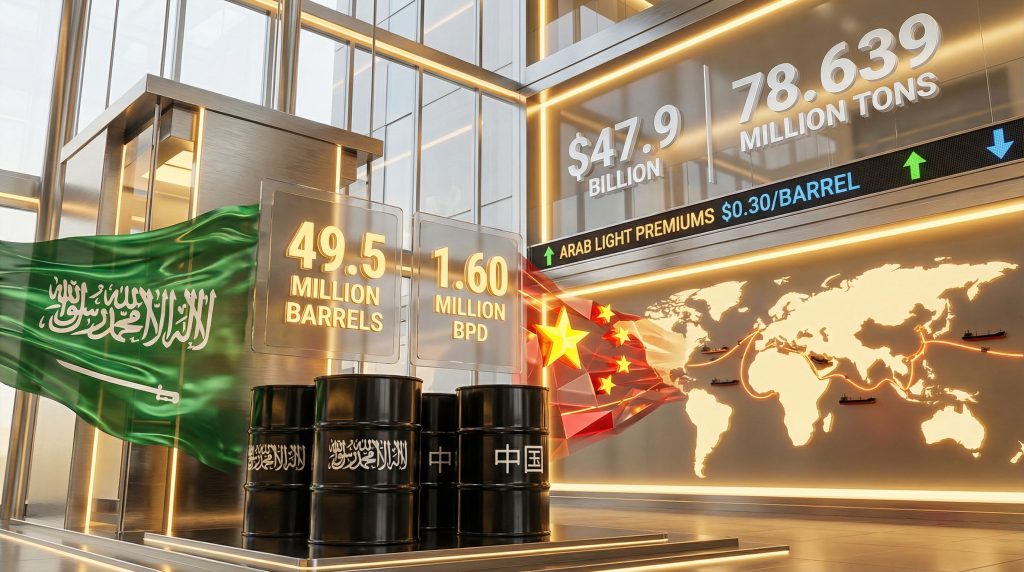
- Daily supply capacity: Approximately 1.60 million barrels per day to major Asian buyers
- Monthly allocation flexibility: 47.5-49 million barrel range demonstrating tactical responsiveness
- Price competitiveness: Arab Light premiums at $0.30/barrel above Oman/Dubai benchmarks
- Market share defence: Three consecutive pricing cuts reflecting aggressive positioning
Buyer Segmentation and Allocation Strategy Analysis
Strategic crude oil distribution reveals sophisticated buyer categorisation systems that prioritise different customer segments based on various commercial and strategic factors. This approach demonstrates how major suppliers balance state-owned enterprise relationships with private sector commercial dynamics. However, recent market turbulence has led to extensive oil price crash analysis affecting these traditional allocation patterns.
Current Allocation Trend Patterns:
| Buyer Category | Allocation Direction | Strategic Significance |
|---|---|---|
| State-Owned Enterprises | Increasing | Priority strategic partnership positioning |
| Chemical Integration Players | Increasing | Long-term industrial relationship building |
| Major National Companies | Decreasing | Portfolio balancing and diversification |
| Private Refiners | Decreasing | Market-driven commercial adjustment |
This allocation methodology demonstrates how suppliers manage relationships across different buyer categories whilst responding to market conditions and maintaining overall supply stability.
Economic Scale and Bilateral Trade Architecture
Quantifying Strategic Energy Relationships
The magnitude of bilateral energy trade relationships provides insight into the economic foundations that support strategic partnerships. Understanding these financial flows reveals why certain supply relationships maintain stability despite market volatility. Consequently, the Saudi Arabia crude oil supply to China represents one of the most significant bilateral energy relationships globally.
2024 Trade Volume Metrics:
- Total crude imports: 78.639 million tons
- Crude oil trade value: Approximately $47.9 billion
- Bilateral trade across all sectors: $107.53 billion
- Supplier export dependency: China represents $53.9 billion of $181 billion total crude exports
These figures illustrate the scale at which energy partnerships operate and explain why supply relationship stability becomes a strategic priority for both importing and exporting nations. For instance, Saudi Arabia has been exploring new opportunities to maintain its dominant position in Asian markets despite emerging challenges.
Alternative Payment Mechanisms and Financial Innovation
The exploration of yuan-denominated oil transactions represents a significant evolution in international energy trading. This development indicates both parties' interest in reducing currency exposure whilst strengthening bilateral financial integration beyond traditional dollar-based systems. Moreover, these innovations are closely tied to broader US-China trade impact considerations affecting global energy markets.
Such payment mechanism innovations reflect broader trends toward financial system diversification and demonstrate how energy relationships can drive changes in international monetary arrangements. The potential implementation of alternative currencies in oil trading could influence global energy market structure and pricing mechanisms.
Regional Market Dynamics and Competitive Positioning
Asian Refinery Market Conditions and Supply Response
Current allocation patterns reflect sophisticated analysis of regional market conditions, including oversupply pressures in Asian refined product markets and seasonal demand variations affecting refinery run rates. These factors influence how major suppliers adjust their distribution strategies to maintain market share whilst supporting customer profitability. Furthermore, Saudi crude pricing strategies have been particularly responsive to these market conditions.
Market Condition Indicators:
- Oversupply pressures creating competitive pricing environment
- Seasonal demand fluctuations requiring flexible supply arrangements
- Refinery utilisation rates affecting crude purchase decisions
- Regional inventory levels influencing storage and procurement strategies
Competitive Landscape and Alternative Supplier Positioning
The Saudi Arabia crude oil supply to China operates within a complex competitive environment where alternative suppliers from Russia, Iran, and other Middle Eastern producers compete for market share. Understanding this competitive dynamic reveals how supply adjustments reflect broader market positioning strategies. However, recent US oil production decline has altered global supply dynamics significantly.
Strategic suppliers must balance competitive pricing with maintaining premium positioning, demonstrating value through supply reliability, product quality, and service flexibility. This approach allows market leaders to defend their position whilst adapting to changing competitive pressures.
Geopolitical Factors and Supply Security Considerations
Energy Security Prioritisation in Supply Decisions
Supply allocation decisions increasingly reflect energy security priorities for both importing and exporting nations. The sanctions environment affecting alternative suppliers, Belt and Road Initiative infrastructure development, and regional stability considerations all influence how supply relationships evolve.
These geopolitical factors create both opportunities and constraints for energy partnerships, requiring sophisticated risk management and strategic planning that extends beyond pure commercial considerations. In addition, Saudi exploration licenses play a crucial role in long-term supply security planning.
Infrastructure Development and Transportation Efficiency
Emerging infrastructure developments significantly impact supply relationship economics and strategic value. Pipeline infrastructure reducing transportation costs, refinery upgrades optimising crude processing capabilities, and digital trading platforms enhancing allocation efficiency all contribute to partnership sustainability.
Infrastructure Impact Areas:
- Transportation cost optimisation through pipeline development
- Processing efficiency improvements via refinery technological upgrades
- Trading platform digitisation enabling more efficient allocation mechanisms
- Carbon capture integration affecting long-term demand projections
Market Scenario Analysis and Strategic Planning
Future Supply Pattern Modelling Under Different Market Conditions
Strategic scenario modelling reveals how supply relationships might evolve under various market conditions. This analysis framework helps understand the resilience and adaptability of current partnership structures.
Tight Market Scenario:
- Increased allocation stability priorities
- Premium pricing acceptance levels
- Strategic reserve accumulation focus
Oversupply Market Scenario:
- Enhanced allocation flexibility requirements
- Competitive pricing strategy intensification
- Market share defence mechanism activation
Geopolitical Disruption Scenario:
- Supply security prioritisation protocols
- Alternative payment mechanism acceleration
- Bilateral coordination framework strengthening
Technology Integration and Market Evolution
Digital transformation in energy trading, including blockchain applications, artificial intelligence in demand forecasting, and automated allocation systems, represents the next evolution in supply relationship management. These technologies enable more sophisticated response mechanisms and improved partnership efficiency.
The integration of environmental, social, and governance (ESG) considerations into supply chain decisions also influences how partnerships develop, with carbon footprint reduction and sustainability metrics becoming increasingly important in supplier selection and contract negotiation.
The next major ASX story will hit our subscribers first
Investment Implications and Policy Considerations
Energy Sector Investment Opportunities
Supply relationship stability suggests several investment opportunities across the energy value chain. Predictable cash flows for energy sector investments, refinery capacity expansion opportunities, transportation infrastructure development potential, and alternative energy transition considerations all represent areas of strategic interest.
Investment Focus Areas:
- Midstream infrastructure development projects
- Refining capacity expansion and optimisation
- Digital trading platform technology development
- Alternative energy transition planning integration
Policy Framework Development and Strategic Planning
Energy policy makers must interpret supply relationship dynamics within broader strategic frameworks. Energy security diversification strategies, strategic reserve management optimisation, international payment system development, and climate transition planning integration all require careful consideration of existing supply partnerships.
These policy considerations highlight the intersection between commercial energy relationships and national security planning, demonstrating why supply allocation patterns receive significant attention from government officials and strategic planners.
Long-term Partnership Evolution and Market Stability
The Saudi Arabia crude oil supply to China relationship demonstrates sophisticated market adaptation within a strategic partnership framework that prioritises both commercial flexibility and relationship stability. Minor allocation adjustments reflect tactical market responsiveness whilst maintaining the fundamental importance of this bilateral energy relationship to global oil market architecture.
Current supply dynamics suggest both nations recognise the value of relationship stability whilst adapting to changing market conditions. This approach positions the partnership as a cornerstone of global energy security architecture, providing a model for how major energy relationships can evolve to meet changing market demands whilst maintaining strategic cooperation.
"Market Analysis Disclaimer: This analysis is based on publicly available market information and industry reports. Energy market conditions, supply allocations, and pricing mechanisms can change rapidly based on geopolitical developments, economic conditions, and regulatory changes. Readers should consult current market data and professional analysis when making investment or policy decisions related to energy sector developments."
The evolution of this strategic energy partnership continues to influence global oil market dynamics, regional energy security frameworks, and international trade relationship development. Understanding these dynamics provides insight into how major energy partnerships adapt to changing global conditions whilst maintaining their fundamental strategic importance.
Looking to Capitalise on Energy Market Disruptions?
Discovery Alert's proprietary Discovery IQ model delivers real-time alerts on significant mineral discoveries across Australian energy and resource companies, instantly empowering subscribers to identify actionable opportunities ahead of the broader market. Discover why major mining discoveries can lead to substantial returns by exploring Discovery Alert's dedicated discoveries page, showcasing historic examples of exceptional outcomes, and begin your 30-day free trial today to position yourself ahead of the market.