July 25, 2026

The Transformation of Global Energy Supply Chains Through Market Disruption
The international energy landscape has reached an unprecedented inflection point where traditional supply-demand relationships face radical restructuring. Major crude oil importing nations find themselves scrambling to secure alternative feedstock sources while established trade routes experience severe disruption. This fundamental market realignment reflects broader shifts in geopolitical stability, technological capability, and strategic resource management that extend far beyond temporary supply chain adjustments.
Market participants across multiple continents report dramatic changes in procurement patterns, with Asian refineries booking unprecedented volumes of North American crude while Middle Eastern suppliers face access restrictions through critical maritime chokepoints. These developments signal a potential permanent alteration in global energy flows rather than cyclical market volatility.
When big ASX news breaks, our subscribers know first
Understanding America's Historic Trade Balance Transformation
The United States has achieved a remarkable milestone in energy independence as us crude net imports hit record low levels while export capacity operates near maximum utilisation. Weekly crude net imports declined to just 66,000 barrels per day during the week ending April 10, 2026, representing the lowest level since the Energy Information Administration began tracking weekly data in 2001.
This dramatic transformation reflects the convergence of multiple factors: domestic crude imports fell by 1.03 million barrels per day to 5.29 million barrels per day, while exports simultaneously surged by 1.08 million barrels per day to 5.23 million barrels per day, marking a seven-month high for outbound shipments.
Critical Market Metrics:
| Indicator | Current Level | Historical Context |
|---|---|---|
| Weekly Net Imports | 66,000 barrels/day | Lowest since 2001 data collection began |
| Weekly Exports | 5.23 million barrels/day | Seven-month peak |
| April Loading Volumes | 147 million barrels | Average 4.9 million barrels/day |
| VLCC Utilisation | Nearly 50% of loadings | Indicates long-haul demand strength |
Ship-tracking data from Vortexa demonstrates that approximately 147 million barrels were scheduled for loading in April 2026, translating to an average export rate of 4.9 million barrels per day for the month. Nearly half of April loading volumes utilised Very Large Crude Carriers (VLCCs), signalling sustained demand from geographically distant markets rather than regional buyers.
Furthermore, this transformation aligns with broader oil price movements that reflect the changing dynamics of global energy markets.
Strategic Implications of Middle Eastern Supply Disruptions
Geopolitical Risk Assessment and Maritime Security
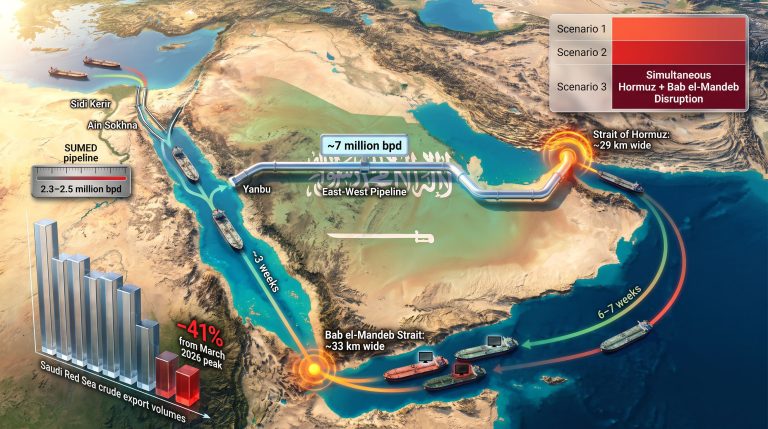
The Iran-US conflict that commenced in late February 2026 has fundamentally altered global crude procurement strategies, with vessel traffic through the Strait of Hormuz experiencing sharp reductions. Iranian authorities have explicitly threatened to prevent exports and imports through the Persian Gulf, Sea of Oman, and Red Sea if US port restrictions continue.
Asian refineries report that access to regular supplies from the Middle East Gulf was effectively cut off by the ongoing conflict, forcing emergency procurement from alternative sources. This disruption affects not only immediate supply availability but also long-term contract reliability and pricing mechanisms.
The current ceasefire agreement between the United States and Iran, which became effective April 7, 2026, is scheduled to expire on April 21, 2026. The uncertainty surrounding potential extensions creates additional volatility in global energy markets and supply chain planning.
In addition, these disruptions significantly impact OPEC production impact on global oil markets.
Infrastructure and Transit Route Vulnerabilities
Traditional energy supply chains relied heavily on Middle Eastern production flowing through the Strait of Hormuz, which historically handled approximately one-fifth of global petroleum liquids. The current disruptions have exposed the strategic vulnerability of concentrated transit routes and prompted major importers to diversify their supply sources rapidly.
Key Vulnerabilities Identified:
- Single-point-of-failure risks through narrow maritime passages
- Insurance premium increases for vessels transiting conflict zones
- Extended delivery timelines from alternative supply sources
- Quality specification mismatches requiring refinery operational adjustments
Asia-Pacific Market Response and Procurement Strategies
Record Volume Commitments and Strategic Stockpiling
Asian refiners have responded to Middle Eastern supply disruptions by booking an estimated 50-70 million barrels of May-loading US crude for July delivery, potentially establishing new import records for the region. This volume translates to approximately 1.6-2.3 million barrels per day of imports into Asia-Pacific markets.
Japan's government announced a $10 billion financial aid package designed to help Asian countries secure alternative crude supplies, particularly from the United States, while strengthening regional supply chain resilience. Prime Minister Sanae Takaichi warned that fuel shortages in Asia could disrupt Japan's access to essential goods, including critical medical supplies such as dialysis equipment and surgical materials.
Regional Import Distribution (April 2026):
| Country/Region | Estimated Volumes | Strategic Significance |
|---|---|---|
| Japan | 15+ million barrels | Emergency diversification strategy |
| South Korea | 15+ million barrels | Industrial continuity planning |
| Singapore | 15+ million barrels | Regional hub capacity expansion |
| Combined Asia-Pacific | 33% of US loadings | Structural market reorientation |
Consequently, this surge in US crude exports has contributed to an oil price rally driven by changing market dynamics and geopolitical factors.
Refinery Configuration Challenges and Operational Efficiency
The transition from Middle Eastern heavy and medium sour grades to American light sweet crude presents significant operational challenges for Asian refineries. Complex refineries designed to upgrade residual fuels into higher-value products may face secondary unit feedstock shortages under lighter crude slates.
Technical Processing Implications:
- Reduced residual fuel oil production affects secondary unit feedstock availability
- Hydrocracker and fluid catalytic cracker units may operate below optimal efficiency
- Vacuum gasoil (VGO) and straight-run fuel oil (SRFO) purchases become necessary at elevated costs
- Crude distillation unit configuration may require adjustment for lighter grades
Vietnamese refiner Nghi Son Refinery and Petrochemical (NSRP), which typically processes medium sour Kuwait Export Crude, has been forced to make unusual secondary feedstock purchases due to reduced residual output after switching to lighter crude grades from the United States.
Quality Premium Economics and Refinery Optimisation
Chemical Properties and Processing Advantages
American light sweet crude offers distinct processing advantages that justify premium pricing in global markets. These grades typically feature API gravity above 35 degrees and sulfur content below 0.5% by weight, characteristics that reduce refinery processing complexity and operational costs.
Processing Benefits Analysis:
- Lower sulfur content reduces catalyst regeneration frequency in hydrotreaters
- Higher API gravity yields greater volumes of gasoline and diesel-range hydrocarbons
- Reduced environmental compliance costs for refiners in strict regulatory jurisdictions
- Enhanced operational flexibility across different refinery configurations
Market participants note that arbitrage economics for May 2026 loadings have improved considerably, supporting continued strong export flows. The convergence of favourable Brent-WTI price spreads, optimised VLCC freight rates, and quality premiums creates sustainable export profitability.
Refinery Yield Optimisation and Product Mix
The shift toward lighter crude inputs fundamentally alters refinery product yields and downstream market dynamics. Japanese refineries, which typically operate cracking configurations, could experience increased light distillate output while sharply reducing residual fuel oil production.
However, this transition creates a paradoxical challenge: complex refineries may find themselves short of feedstock for secondary units, potentially resulting in lower operational efficiency despite processing higher-quality crude inputs. The interdependency between crude input properties and refinery design assumptions becomes critically important during supply source transitions.
For instance, these developments are closely linked to broader economic implications, including US tariff impacts on global trade flows.
Infrastructure Capacity and Export Terminal Optimisation
Physical Loading Constraints and VLCC Scheduling
American crude export infrastructure operates near maximum capacity during peak demand periods, creating potential bottlenecks for sustained high-volume shipments. The concentration of VLCC loadings (nearly 50% of April volumes) indicates that long-haul export demand significantly exceeds short-haul regional shipments.
Infrastructure Utilisation Factors:
- Terminal loading rate optimisation to maximise throughput efficiency
- Storage tank availability for export-grade crude blending operations
- Pipeline capacity limitations from major shale production regions
- Port congestion management during high-volume loading periods
According to the US Energy Information Administration, the ability to maintain export levels approaching 5.23 million barrels per day on a sustained basis depends on continued infrastructure efficiency and coordinated logistics management across multiple Gulf Coast terminals.
Storage and Blending Operations
Export operations require sophisticated storage and blending capabilities to meet specific crude quality requirements for international buyers. American producers must coordinate pipeline deliveries from various shale formations with terminal storage capacity to ensure consistent export-grade crude availability.
The rapid inventory turnover associated with elevated export demand provides operational advantages through reduced storage costs, but also requires precise timing coordination between upstream production, midstream transportation, and downstream loading operations.
The next major ASX story will hit our subscribers first
Economic Multiplier Effects and Regional Development
Gulf Coast Industrial Transformation
The export boom has catalysed significant economic development along the Gulf Coast, creating high-paying employment opportunities in logistics, energy services, and supporting industries. Local and state governments benefit from increased tax revenues while real estate markets experience appreciation in energy-focused communities.
Regional Economic Impacts:
- Direct employment growth in loading, transportation, and marine services
- Indirect service sector expansion supporting increased activity levels
- Tax revenue enhancement for coastal communities and state governments
- Industrial cluster development around major export terminals
Shale Region Economic Acceleration
Increased export demand has amplified economic activity across major shale formations, with drilling activity responding to improved pricing signals and export market access. The shorter-cycle nature of shale development allows for more rapid supply adjustments compared to conventional oil production.
Technology innovation focused on extraction efficiency and transportation optimisation continues to reduce development costs while increasing productive capacity. Regional employment growth extends across multiple skill levels, from technical drilling operations to professional services supporting expanded energy sector activity.
Investment Implications and Capital Allocation Trends
Energy Sector Financial Dynamics
The transformation toward net exporter status influences capital allocation decisions across multiple energy sector segments. Infrastructure companies prioritise export-oriented projects while midstream operators experience increased valuation multiples reflecting higher throughput potential.
Shipping companies adapt their fleet deployment strategies to capitalise on new trade route patterns, particularly trans-Pacific crude movements. Technology development focuses on export optimisation solutions, including advanced logistics coordination and quality management systems.
Currency and Trade Balance Considerations
Sustained crude oil exports contribute significantly to American trade balance improvements, potentially affecting dollar strength through increased energy export revenues. International reserve flows shift as global buyers increase dollar holdings to facilitate energy transactions.
Financial Market Implications:
- Current account dynamics improve through reduced import dependencies
- Monetary policy considerations reflect energy sector growth contributions
- International capital flows respond to changing energy trade patterns
- Currency stability benefits from diversified export revenue sources
Meanwhile, these developments occur alongside the broader US-China trade war impact on global economic relationships.
Risk Assessment and Future Market Scenarios
What Are the Prospects for Sustained Export Leadership?
If current trends persist, the United States could achieve consistent net exporter status within 12-18 months, potentially capturing 15-20% of global export market share by 2027. This scenario assumes continued domestic production growth, infrastructure capacity expansion, and sustained international demand.
Supporting Factors for Sustained Growth:
- Technological advancement in shale extraction efficiency
- Infrastructure investment in export terminal capacity
- Regulatory stability supporting energy development
- Geopolitical demand for supply source diversification
Argus Media reports that this trend represents a fundamental shift in global energy trade patterns.
Alternative Rebalancing Scenarios
Market rebalancing could occur through Middle Eastern supply restoration, domestic refinery capacity expansion, or accelerated alternative energy adoption. Geopolitical normalisation might restore traditional trade patterns, though structural changes in supply chain risk management suggest lasting market shifts.
The sustainability of America's export transformation depends on multiple variables including technological innovation, infrastructure investment capacity, regulatory environment stability, and international market development. However, the strategic implications for energy independence and economic competitiveness appear increasingly permanent rather than cyclical.
Strategic Conclusions and Market Outlook
The emergence of the United States as a dominant crude oil exporter represents a fundamental shift in global energy security architecture. This transformation extends beyond statistical achievements to encompass strategic resource management, geopolitical influence, and economic competitive advantage.
Current market dynamics suggest that us crude net imports hit record low levels while export capacity approaches maximum utilisation, creating conditions for sustained net exporter status. The convergence of domestic supply growth, infrastructure optimisation, and international demand diversification supports continued export leadership.
Critical Success Factors:
- Continued technological innovation in extraction and transportation efficiency
- Strategic infrastructure investment in export capacity and logistics coordination
- Regulatory framework stability supporting energy sector development
- International market access through trade relationship management
The strategic implications of America's energy independence transformation will likely influence global energy markets, geopolitical relationships, and economic development patterns for decades. This change represents not merely a shift in trade flows but a fundamental restructuring of global energy security architecture with lasting implications for international stability and economic growth.
Note: This analysis incorporates market data current as of April 2026. Energy markets remain subject to rapid changes due to geopolitical developments, regulatory modifications, and technological advances. Readers should consult current market information and professional analysis for investment and strategic planning decisions.
Searching for Your Next Energy Investment Opportunity?
Discovery Alert's proprietary Discovery IQ model instantly identifies significant ASX mineral discoveries, including critical energy transition metals and commodities that power tomorrow's energy infrastructure. As global energy supply chains transform and new opportunities emerge, subscribers gain immediate access to actionable insights on major mineral discoveries that could capitalise on these shifting market dynamics.