June 22, 2026
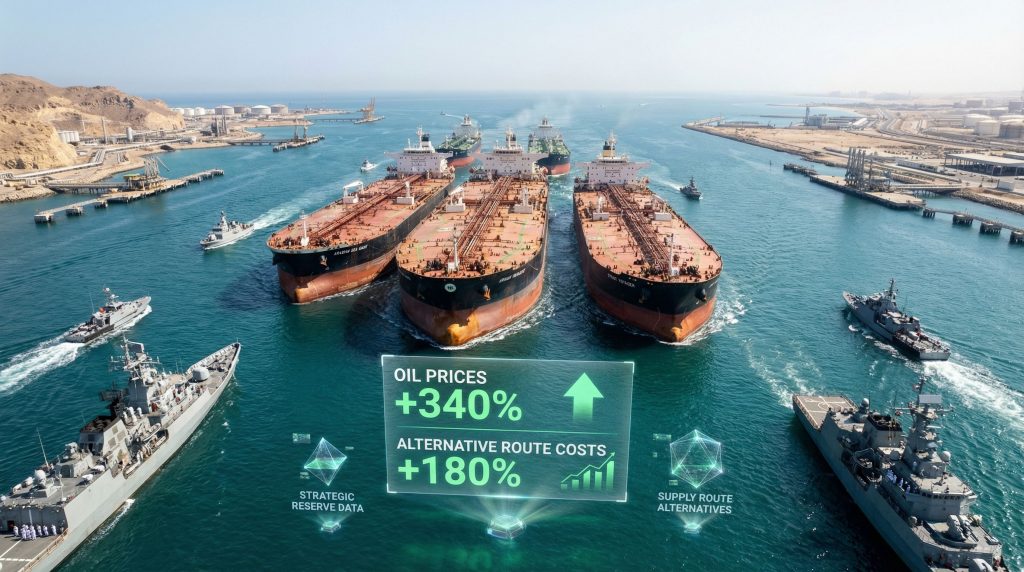
The global energy infrastructure reveals profound vulnerabilities when strategic maritime passages face military interdiction. The U.S. blockade of the Strait of Hormuz has exposed these systemic weaknesses in international trade architecture, creating cascading economic effects that extend far beyond immediate supply constraints and fundamentally altering risk calculations across interconnected markets.
Understanding Blockade Economics in Energy Markets
Military blockades targeting critical energy chokepoints operate through sophisticated transmission mechanisms that amplify initial supply disruptions across multiple market layers. The current crisis demonstrates how physical commodity flows can diverge dramatically from financial market pricing, creating unprecedented arbitrage opportunities and risk exposures.
Key Economic Transmission Channels:
- Price Discovery Disruption: Physical crude trading approximately $40 per barrel above futures prices, indicating severe market dislocation
- Supply Chain Fragmentation: Ten million barrels per day trapped in transit, representing massive inventory disruptions
- Strategic Reserve Activation: Emergency stockpile releases become critical price stabilisation tools
- Demand Destruction: Industrial users reduce consumption as prices surge beyond operational thresholds
The current oil price movements have created extreme contango conditions where immediate delivery commands unprecedented premiums over forward contracts. This $40 per barrel spread between physical and futures markets represents one of the largest such divergences in modern commodity trading history.
Analysis from commodity strategists indicates that futures market volatility has begun stabilising as traders adjust to geopolitical headlines, though underlying physical constraints continue intensifying. The eight percent intraday jump following failed diplomatic negotiations demonstrates how sentiment-driven trading can temporarily override supply fundamentals.
Physical vs. Futures Market Dynamics During Supply Crises:
| Market Segment | Immediate Response | Medium-term Adjustment | Long-term Structural Changes |
|---|---|---|---|
| Futures Trading | High volatility, sentiment-driven responses | Position liquidation and rebalancing | Enhanced geopolitical risk premiums |
| Spot Markets | Extreme price premiums above $140/barrel | Alternative supply route development | Infrastructure redundancy investments |
| Strategic Reserves | Emergency government releases | Coordinated international drawdowns | Expanded storage capacity programs |
| Consumer Markets | Gasoline prices increase $1+ per gallon | Demand destruction in price-sensitive sectors | Accelerated alternative energy adoption |
Consumer price impacts have materialised rapidly, with U.S. gasoline prices increasing more than one dollar per gallon during the seven-week disruption period. This transmission from crude oil supply constraints to retail fuel prices demonstrates the direct economic consequences of chokepoint vulnerabilities.
When big ASX news breaks, our subscribers know first
How Naval Blockades Reshape Global Energy Trade Flows
The interdiction of the Strait of Hormuz, which previously handled approximately 20 percent of daily global oil and gas flows, forces immediate reconfiguration of established energy trade relationships. This disruption creates both severe constraints and strategic opportunities across different regional markets.
Alternative Supply Route Economics:
Saudi Arabian crude exports face particularly acute constraints, with the Bab el-Mandeb Strait representing the only viable bypass route around the blocked Hormuz passage. This geographic limitation creates compounding vulnerabilities when multiple chokepoints face simultaneous threats.
Regional analysts note that Iran-aligned Houthis in Yemen have demonstrated capability to interdict Bab el-Mandeb traffic over the past two years, though they have maintained a relatively low profile during the current conflict. This strategic restraint represents calculated risk management rather than operational inability.
Primary Rerouting Options:
- Extended Maritime Routes: Cape of Good Hope routing increases transportation costs and delivery times substantially
- Overland Pipeline Systems: Saudi-Yanbu and other terrestrial networks provide limited capacity alternatives
- Strategic Port Alternatives: Requires massive infrastructure investments and months of development time
- Regional Storage Hubs: Enhanced inventory capacity becomes critical for supply security
The timeline for market normalisation extends far beyond immediate route reopening. Industry experts indicate that physical supply chain restoration would require months even if the Strait of Hormuz reopened immediately, due to accumulated inventory disruptions and infrastructure constraints.
Regional Price Divergence Patterns:
North Sea crude grades have reached record pricing levels, with Forties blend surging to approximately $147 per barrel during peak supply anxiety. This represents extreme regional market fragmentation where traditional arbitrage mechanisms become constrained by transportation limitations and security risks.
The crisis reveals fundamental dependencies in global energy architecture. Iranian threats regarding Persian Gulf port security create additional escalation risks that could expand supply disruptions beyond the primary Strait closure. Furthermore, these secondary effect possibilities demonstrate how the U.S. blockade of the Strait of Hormuz scenarios can spiral into broader regional supply crises.
Strategic Responses During Chokepoint Crises
Energy companies deploy multi-layered operational strategies to maintain supply security when traditional transportation routes become compromised. These approaches reveal fundamental corporate risk management frameworks under extreme market stress conditions.
Supply Chain Resilience Strategies:
Immediate Response (0-30 days):
- Emergency inventory utilisation from strategic storage facilities
- Premium spot market purchasing to maintain operational continuity
- Alternative supplier activation through existing contingency contracts
- Production schedule adjustments to optimise available feedstock
Medium-term Adjustments (1-6 months):
- Long-term contract renegotiation incorporating force majeure provisions
- Infrastructure capacity expansion at alternative loading terminals
- Strategic partnership development with regional suppliers
- Geographic diversification of supply source portfolios
Long-term Structural Changes (6+ months):
- Permanent supply chain reconfiguration reducing chokepoint dependency
- Enhanced storage capacity development across multiple regions
- Alternative energy source integration for supply security
- Regional market strategy revision emphasising proximity principles
Financial Risk Management During Crisis Periods:
Market participants employ sophisticated derivative strategies to manage extreme price volatility during supply disruptions. The $40 per barrel premium of physical over futures prices creates complex hedging challenges requiring innovative financial instruments.
Risk Management Toolkit:
- Physical Storage Optimisation: Maximising inventory buffers during supply uncertainty periods
- Derivative Strategies: Complex option structures to hedge extreme price movements
- Supply Contract Flexibility: Renegotiating delivery terms with alternative routing provisions
- Insurance Coverage: Comprehensive war risk and political violence protection
Industry analysis suggests that speculative position unwinding rather than fundamental supply changes drove recent futures price declines. However, this divergence between paper market sentiment and physical supply realities creates ongoing volatility and risk management challenges.
Government Intervention Mechanisms
State-controlled energy stockpiles serve as critical market stabilisation tools during major supply disruptions, with release timing and volume decisions significantly impacting global price dynamics. Strategic reserve management becomes a primary policy lever during chokepoint crises.
Strategic Reserve Decision Framework:
| Disruption Level | Recommended Release Volume | Expected Market Impact | Replenishment Timeline |
|---|---|---|---|
| 10-15% supply disruption | 1-2 million bpd | Moderate price stabilisation | 6-12 months post-crisis |
| 20-25% supply disruption | 3-4 million bpd | Significant volatility reduction | 12-18 months coordinated rebuilding |
| 30%+ supply disruption | 5+ million bpd | Major market intervention | 18-24 months emergency procurement |
International coordination mechanisms become essential during major chokepoint disruptions. The severity of current supply constraints may require unprecedented cooperation between consumer nations, producers, and transit countries to maintain global economic stability.
Cooperation Frameworks:
- International Energy Agency (IEA): Coordinated strategic reserve releases across member nations
- Bilateral Energy Partnerships: Direct government-to-government emergency supply agreements
- Regional Security Alliances: Military protection for alternative shipping routes and infrastructure
- Emergency Sharing Agreements: Temporary redistribution of available supplies based on criticality assessments
Policy makers face complex strategic calculations regarding blockade duration and economic costs. The fundamental question of whether chokepoint closure damages target nations faster than the global economy requires sophisticated economic modelling and geopolitical risk assessment.
What Determines Strategic Reserve Release Decisions?
Government officials must balance multiple competing priorities when deciding whether to release strategic petroleum reserves during supply crises. Consequently, these decisions involve complex economic calculations about market stabilisation versus long-term reserve depletion.
The U.S. has begun implementing a partial blockade of Iranian ships attempting to transit the Strait of Hormuz, according to recent reports. This escalation adds further complexity to strategic reserve management decisions.
Long-term Structural Market Evolution
Prolonged energy chokepoint disruptions catalyse permanent shifts in global energy infrastructure development, trade relationship patterns, and security investment frameworks. These changes extend far beyond temporary crisis responses.
Infrastructure Development Acceleration:
Major supply disruptions create powerful economic incentives for infrastructure investments that reduce dependence on vulnerable shipping routes. The current crisis demonstrates how security considerations can override traditional cost-benefit calculations in strategic infrastructure planning.
Priority Infrastructure Projects:
- Pipeline Network Expansion: Connecting alternative supply sources directly to demand centres
- Port Capacity Development: Creating redundant loading and unloading facilities across multiple regions
- Storage Infrastructure: Expanding both strategic and commercial inventory capacity significantly
- Alternative Energy Systems: Accelerating renewable energy deployment for enhanced supply security
Market structure evolution reflects permanent risk reassessment following major supply shocks. Regional energy trade relationships strengthen as supply security considerations override traditional economic efficiency optimisation.
The comprehensive oil price crash analysis reveals how these structural changes reshape long-term market dynamics. In addition, regional energy security analysis demonstrates the fundamental shift toward localised supply chain resilience.
Structural Market Changes:
- Regional Market Integration: Stronger intra-regional energy trade relationships reducing long-distance dependencies
- Supply Chain Localisation: Preference for geographically proximate energy sources despite cost premiums
- Enhanced Risk Premiums: Permanent price increases reflecting supply security costs and geopolitical insurance
- Technology Acceleration: Faster adoption of alternative energy technologies reducing fossil fuel dependencies
Investment themes emerging from the current crisis emphasise energy security, efficiency, and supply diversification. Companies developing technologies and infrastructure that enhance energy independence command premium valuations during chokepoint disruptions.
Macroeconomic Transmission Effects
Energy supply disruptions create cascading economic effects extending far beyond energy markets, influencing inflation dynamics, trade balances, and economic growth patterns across interconnected global systems. The global market impact of the U.S. blockade of the Strait of Hormuz demonstrates these interconnected vulnerabilities.
Primary Transmission Channels:
- Input Cost Inflation: Higher energy costs increase production expenses across manufacturing sectors
- Consumer Spending Shifts: Energy price increases reduce discretionary spending capacity substantially
- Trade Balance Effects: Energy-importing nations face deteriorating current account positions
- Monetary Policy Challenges: Central banks balance inflation control against economic growth support
Different economic sectors experience varying vulnerability levels to energy supply disruptions, creating uneven adjustment patterns across the broader economy. Transportation and logistics industries face direct fuel cost exposure, while renewable energy sectors gain competitive advantages.
High-Impact Sectors:
- Transportation and Logistics: Direct exposure to fuel cost increases affecting operational margins
- Manufacturing Industries: Energy-intensive production processes face significant margin compression
- Chemical and Petrochemical: Feedstock availability and pricing disruptions threaten production continuity
- Power Generation: Fuel supply security becomes critical operational and planning concern
Resilient Sectors:
- Renewable Energy: Competitive position strengthens during fossil fuel supply disruptions
- Energy Efficiency Technologies: Demand acceleration for consumption reduction solutions
- Alternative Transportation: Electric vehicle adoption accelerates due to fuel price volatility
- Digital Services: Lower direct energy exposure provides relative economic stability
The broader economic implications of sustained energy chokepoint disruptions may force fundamental reassessment of globalised supply chain strategies across multiple industries beyond energy itself. Furthermore, analysts examining Australia's energy export challenges highlight how regional producers adapt to these structural shifts.
How Do Central Banks Respond to Energy Price Shocks?
Central bank policy responses to energy-driven inflation create complex economic dynamics that can either amplify or mitigate supply shock impacts. Monetary authorities must distinguish between temporary price spikes and persistent inflationary pressures when setting interest rate policies.
The next major ASX story will hit our subscribers first
Investment Opportunities During Energy Security Crises
Major energy supply disruptions generate distinct investment themes, rewarding companies and technologies that enhance energy security, operational efficiency, and supply diversification capabilities.
Strategic Investment Themes:
Energy security crises accelerate investment flows toward sectors providing supply stability, alternative energy sources, and efficiency enhancement solutions. Current market disruptions create both immediate opportunities and long-term structural investment shifts.
Immediate Opportunity Categories:
- Alternative Energy Infrastructure: Solar, wind, and storage projects gain accelerated approval and financing
- Energy Efficiency Technologies: Industrial and residential efficiency solutions experience increased demand
- Strategic Commodity Storage: Enhanced storage capacity development commands premium valuations
- Transportation Alternatives: Electric vehicle infrastructure and public transit investments accelerate significantly
Geographic proximity to disrupted supply routes creates varying investment opportunity profiles across different regions and markets. Energy-secure markets benefit from relative supply stability while alternative supply hubs gain strategic importance.
Investment Priority Regions:
- Energy-Secure Markets: Benefit from relative supply stability and competitive advantages over constrained regions
- Alternative Supply Hubs: Infrastructure development opportunities in non-disrupted producing regions
- Technology Innovation Centres: Research and development investments in energy alternative technologies
- Strategic Mineral Deposits: Critical materials for energy transition technologies gain enhanced strategic value
The current crisis demonstrates how geopolitical risk fundamentally alters energy market investment calculations, potentially accelerating energy transition timelines and infrastructure development programs across multiple regions simultaneously.
According to recent analysis, Iran has threatened to block all Gulf ports in response to the U.S. naval intervention, escalating regional tensions further.
Disclaimer: This analysis is for educational purposes only and should not be considered as investment advice. Energy market investments carry substantial risks, particularly during geopolitical crises and supply disruptions. Readers should conduct thorough research and consult qualified financial advisors before making investment decisions.
Ready to Invest in the Next Strategic Commodity Discovery?
Discovery Alert's proprietary Discovery IQ model delivers instant notifications on significant ASX mineral discoveries, helping investors identify actionable opportunities in energy security and critical materials sectors ahead of the broader market. Visit Discovery Alert's dedicated discoveries page to understand how historic mineral discoveries can generate substantial returns, or begin your 14-day free trial today to position yourself ahead of market-moving developments.