July 17, 2026
The Global Energy Trilemma: When Security Meets Economic Reality
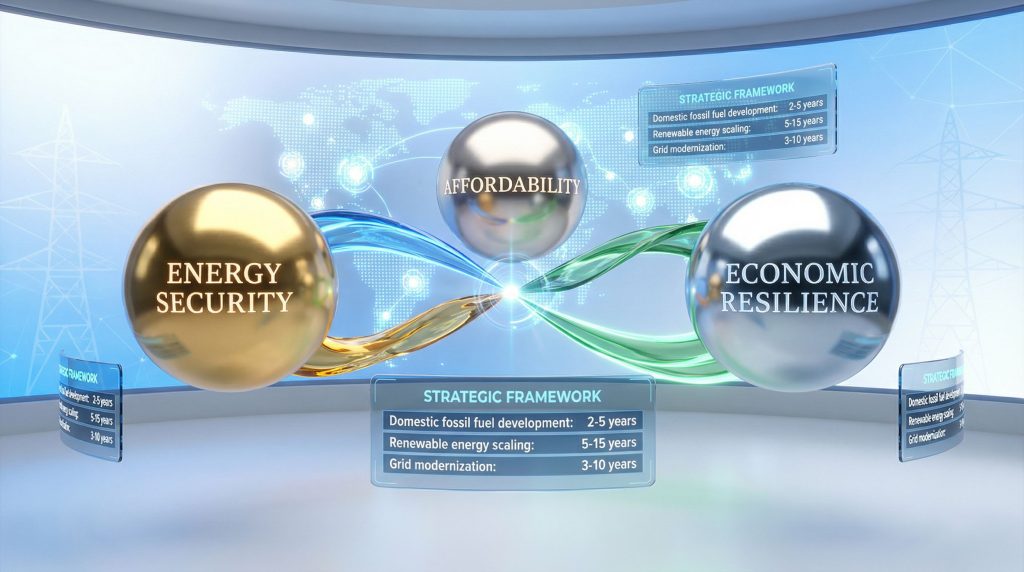
Industrial powerhouses worldwide confront an unprecedented convergence of energy challenges that transcends traditional policy frameworks. The delicate balance between maintaining reliable energy access, controlling costs, and preserving competitive advantages has emerged as the defining test for modern economic governance. This trilemma intensifies as nations recognise that sustainable prosperity requires simultaneous optimisation of energy security and affordability, consumer protection, and industrial competitiveness rather than sequential prioritisation.
When big ASX news breaks, our subscribers know first
What Drives the Fundamental Shift in Global Energy Priorities?
The transformation of international energy discourse reflects measurable changes in policy emphasis and institutional messaging. At the International Energy Agency ministerial meeting in Paris during March 2026, energy security received eight mentions whilst climate considerations garnered only two references in opening addresses. This rhetorical rebalancing quantifies a broader strategic pivot affecting energy investment, industrial location decisions, and national competitive positioning.
Global energy consumption data reveals the scope of this challenge. Current oil demand operates near 105 million barrels daily, with projections indicating growth to approximately 106 million barrels annually. Meanwhile, energy-related CO2 emissions exceed 35,000 million metric tonnes annually, with projections suggesting emissions will remain near current levels for the next 25 years even under optimistic policy scenarios.
Furthermore, the Canada energy transition demonstrates how nations struggle to balance environmental commitments with economic realities. Additionally, oil price dynamics continue to influence strategic energy planning decisions across multiple sectors.
Key Market Indicators Driving Policy Recalibration:
• Industrial relocation risks when energy costs exceed competitive thresholds
• Consumer energy burden thresholds affecting household spending patterns above 6% of income
• Grid reliability challenges during renewable energy integration phases
• Investment capital reallocation toward pragmatic energy solutions prioritising reliability
The European manufacturing sector exemplifies these pressures, with heavy industry facing three primary strategic responses: production relocation to lower-cost regions, technology adaptation for improved efficiency, or market exit when neither option proves economically viable.
How Traditional Decarbonisation Frameworks Encountered Economic Constraints
The decline in net-zero references across successive ministerial meetings provides quantifiable evidence of framework deprioritisation. International communiqués mentioned net-zero concepts 13 times in 2022, increased to 15 references in 2024, then dropped to a single mention in 2026 specifically noted to underline the lack of universal support. This represents a 93% reduction in net-zero emphasis over four years.
Original transition scenarios assumed consumption of oil, natural gas, and coal would follow dramatic reduction curves. However, actual market data demonstrates the opposite trajectory: global demand for all three fuel categories reached all-time highs as of March 2026. The gap between projected and actual consumption patterns has widened rather than narrowed during implementation periods.
Timeline Reality vs. Original Projections:
| Energy Source | Original 2030 Target | 2026 Actual Consumption | Variance |
|---|---|---|---|
| Oil (million barrels/day) | 70 | 105 | +50% above target |
| Annual CO2 emissions (million tonnes) | 25,000 by 2050 | 35,000+ current | +40% above pathway |
| Net-zero policy references | Increasing emphasis | 93% decline | Policy deprioritisation |
Technical implementation challenges emerged where renewable project approvals proceeded despite grid infrastructure limitations, creating cost inflation in system transformation. European countries shut down conventional energy production, including nuclear reactors in Germany, before renewable alternatives achieved sufficient maturity to replace generation capacity.
Consequently, the framework incorporated assumptions about massive fossil fuel reserve abandonment that market behaviour has contradicted. Investment capital allocation shifted away from conventional energy infrastructure based on stranded asset narratives, yet actual demand patterns demonstrate continued reserve development rather than abandonment.
How Nations Navigate Multi-Objective Energy Strategy Development
Countries increasingly adopt technology-neutral approaches prioritising reliability and cost-effectiveness over prescriptive fuel-source requirements. This strategic evolution reflects recognition that successful energy policies must balance multiple objectives simultaneously rather than subordinating economic considerations to environmental targets.
Denmark's recent policy announcement exemplifies this balancing approach. The Danish government, historically a European green energy leader, announced consideration of extending oil and gas drilling in the North Sea. Climate and energy minister Lars Aagaard articulated the strategic rationale: preferring European gas supply from Denmark over dependence on countries outside the continent, acknowledging that green energy alone cannot meet current European needs.
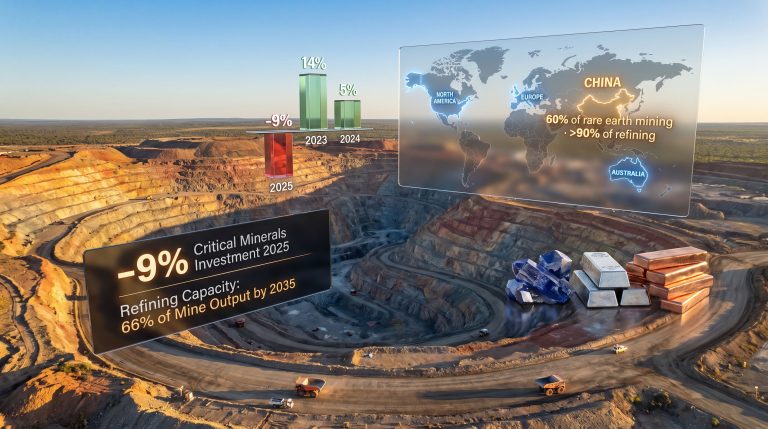
For instance, concerns about critical minerals security have become paramount in energy planning decisions. Moreover, innovations in the lithium industry innovations sector demonstrate how technological advancement can support energy security and affordability objectives.
Multi-Pathway Strategic Framework Components:
Phase 1: Infrastructure Resilience (2026-2030)
• Grid modernisation investments prioritising reliability alongside renewable capacity
• Domestic energy resource development maintaining supply chain diversity
• Energy efficiency programmes targeting industrial and residential consumption patterns
Phase 2: Technology Integration (2030-2035)
• Advanced storage systems enabling renewable cost competitiveness through declining storage costs of 15-20% annually
• Smart grid technologies optimising demand-supply matching capabilities
• Industrial process innovations reducing overall energy intensity requirements
Phase 3: Market Optimisation (2035-2040)
• Regional energy trading mechanisms enhancing supply security coordination
• Carbon pricing systems with revenue recycling mechanisms protecting consumers
• Innovation incentives for breakthrough technologies reducing long-term costs
What Role Does Geopolitical Risk Play in Energy Security Calculations?
Nations increasingly evaluate energy security and affordability through geopolitical stability frameworks rather than purely economic optimisation metrics. Recent policy shifts reflect recognition that energy dependence on politically unstable regions creates systemic economic risks exceeding short-term cost advantages.
Supply chain vulnerability assessments now integrate political risk factors alongside traditional cost-benefit analyses, fundamentally altering energy investment decision frameworks and national strategic planning approaches.
Additionally, effective market volatility hedging strategies become essential during periods of geopolitical uncertainty. Meanwhile, experts emphasise that sustainability can co-exist with energy security when proper planning frameworks are implemented.
Risk Mitigation Implementation Strategies:
• Supplier diversification across multiple geographic regions with varying political stability profiles
• Strategic reserve capacity for critical energy commodities during supply disruption scenarios
• Domestic production capability maintenance for emergency response situations
• Regional partnership development with politically aligned nations for energy cooperation
The European experience with Russian energy dependence demonstrates how geopolitical factors can rapidly transform cost-effective supply arrangements into strategic vulnerabilities. This recognition drives policy recalibration toward supply source geopolitical stability consideration alongside pure cost optimisation.
How Renewable Energy Economics Align with Security and Affordability Objectives
Whilst renewable energy technologies demonstrate declining cost trajectories, their integration requires substantial grid infrastructure investments affecting near-term energy security and affordability calculations. Solar and wind projects approach grid parity in most markets by 2025, yet operational integration necessitates preceding grid modernisation investments.
Long-Term Investment Analysis Framework:
1. Initial Infrastructure Investment Phase (2026-2030)
• Grid modernisation costs affecting short-term affordability metrics
• Energy storage deployment requiring capital investment with 5-12 year payback periods
• Renewable capacity installation alongside conventional backup systems
2. Operational Cost Optimisation Phase (2030-2035)
• Solar and wind achieving operational cost advantages over conventional generation
• Energy storage costs declining sufficiently to enable grid-scale deployment
• Grid efficiency improvements delivering measurable consumer cost reductions
3. System Integration Benefits Phase (2035-2040)
• Grid modernisation investments generating efficiency paybacks within 8-12 years
• Renewable operational costs creating long-term consumer affordability improvements
• Energy independence reducing geopolitical risk premiums in energy pricing
The next major ASX story will hit our subscribers first
What Investment Strategies Emerge from Energy Security and Affordability Prioritisation?
High-Priority Investment Categories:
• Energy efficiency technologies delivering immediate cost reduction potential for industrial and residential applications
• Grid infrastructure development supporting reliability improvements and renewable energy integration capabilities
• Domestic energy resource projects in politically stable regions reducing import dependency vulnerabilities
• Advanced manufacturing processes incorporating energy intensity reduction innovations
Strategic investors increasingly recognise that energy security and affordability considerations create investment opportunity frameworks distinct from pure environmental technology plays. Companies developing dual-use technologies serving both conventional and renewable energy applications position for policy framework flexibility.
Furthermore, analysis suggests that engineering net-zero approaches must incorporate practical security and affordability considerations to achieve sustainable implementation success.
Risk Management Portfolio Construction:
• Geographic diversification across energy technology development regions
• Technology diversification including conventional, renewable, and hybrid energy solutions
• Timeline diversification balancing immediate reliability needs with longer-term cost optimisation
• Regulatory scenario planning for evolving policy frameworks prioritising security and affordability
How Do Economic Constraints Shape Future Energy Development Scenarios?
Scenario 1: Technology-Driven Optimisation (2026-2035)
Breakthrough developments in energy storage and grid management technologies enable renewable energy systems to deliver simultaneous security and affordability benefits. Domestic conventional energy development provides transition period stability whilst technological solutions mature. Industrial energy costs decline through efficiency improvements and renewable operational advantages.
Scenario 2: Balanced Portfolio Approach (2026-2040)
Mixed energy systems combining renewables, natural gas, and nuclear power achieve energy security and affordability objectives through regional optimisation strategies. Technology advancement proceeds at moderate rates, requiring extended transition periods with diverse energy source utilisation. Consumer costs stabilise through efficiency improvements and supply diversity benefits.
Scenario 3: Extended Transition Pathway (2026-2050)
Geopolitical instability and slower technological progress necessitate continued reliance on diverse energy sources with gradual renewable integration as costs and reliability demonstrate sustained improvements. Policy frameworks maintain flexibility for technology-neutral approaches prioritising security and affordability over predetermined fuel source selections.
What Long-Term Implications Emerge for Global Energy Architecture?
The prioritisation of energy security and affordability alongside environmental considerations creates fundamental shifts in global energy investment patterns, technology development priorities, and international cooperation frameworks. Nations developing successful balance strategies gain competitive advantages in industrial location decisions and consumer cost management.
Structural Changes in Energy Policy Framework:
• Technology neutrality replacing fuel-source prescriptive approaches in policy development
• Economic feasibility testing integrated into environmental target setting processes
• Geopolitical risk assessment incorporated into energy supply chain planning
• Consumer affordability protection mechanisms built into transition planning frameworks
This evolution reflects recognition that sustainable energy systems must simultaneously optimise multiple objectives rather than subordinating economic and security considerations to environmental targets alone. The successful navigation of this energy trilemma will likely determine national competitive positioning and economic resilience throughout the next two decades of global energy transformation.
Investment Consideration: The information contained in this analysis is for educational purposes and should not be considered as financial advice. Energy sector investments involve substantial risks including regulatory changes, technology development uncertainties, and geopolitical factors that may significantly impact returns.
Are You Looking to Capitalise on Energy Transition Opportunities?
As global energy priorities shift towards balancing security, affordability, and sustainability, savvy investors are positioning themselves to benefit from the critical minerals driving this transformation. Discovery Alert's proprietary Discovery IQ model delivers instant notifications on significant ASX mineral discoveries in lithium, copper, rare earths, and other energy transition commodities, empowering subscribers to identify actionable opportunities ahead of the broader market. Begin your 14-day free trial today to secure your market-leading advantage in the rapidly evolving energy sector.